
What to Pack for a Road Trip: The Complete Checklist

There’s a particular kind of panic that hits 45 minutes into a road trip when you realize you left something important at home. Your charger. Your sunglasses. That one medication you take every morning.

Road trips feel more casual than flying: no weight limits, no security checks, and no boarding gates, so people pack loosely. And that’s exactly why they forget things.

This guide fixes that. Whether you’re doing a quick weekend drive or a multi-day cross-country adventure, here’s everything you actually need to pack for a road trip, organized so nothing gets missed.

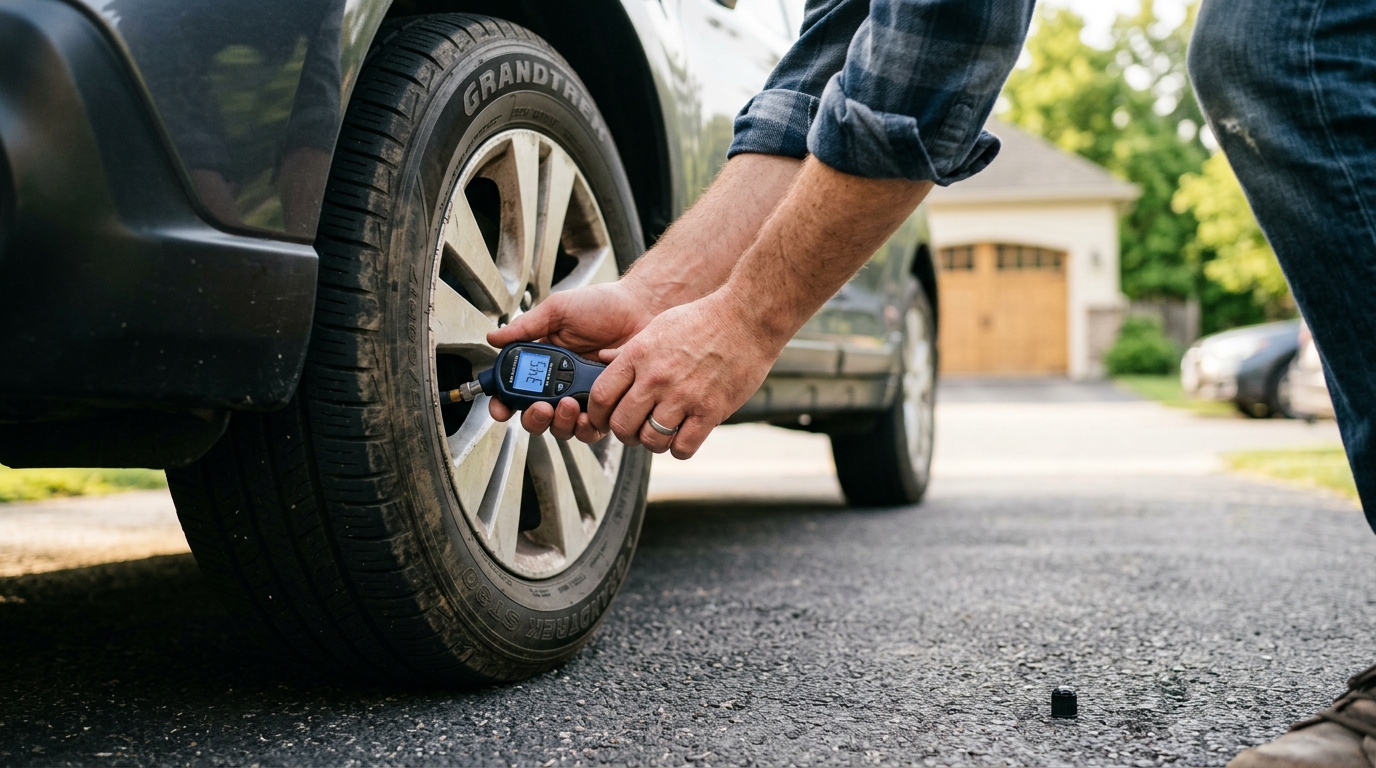
hands checking tire pressure

First: Know What Kind of Road Trip You’re Taking

Packing for a road trip isn’t one-size-fits-all. Before you throw anything in a bag, answer these three questions:

  • How long is the trip? A day trip needs a very different bag than a 5-day drive.
  • Are you staying in hotels or camping? Camping adds a whole gear category.
  • Are you traveling solo or with others? Solo trips mean no one else to cover forgotten items.

Keep your trip type in mind as you work through this list.

The Road Trip Packing Checklist

1. Documents and Important Papers

Don’t laugh — people forget these more than you’d think. Put them in one place before anything else.

  • Driver’s license (valid and not expired)
  • Vehicle registration
  • Proof of auto insurance
  • Hotel or accommodation booking confirmations
  • Any printed itinerary, park passes, or reservation tickets
  • Health insurance card
  • Emergency contact numbers saved offline on your phone

Crossing a border? If your road trip takes you into another country, you also need your passport. Some countries also require an international driving permit on top of your regular license. Check requirements well in advance, not the morning you leave.

2. Car Safety Essentials

This section saves trips — and sometimes lives. Most people skip it because they assume nothing will go wrong. It usually doesn’t. But when it does, you’ll be very glad you packed these.
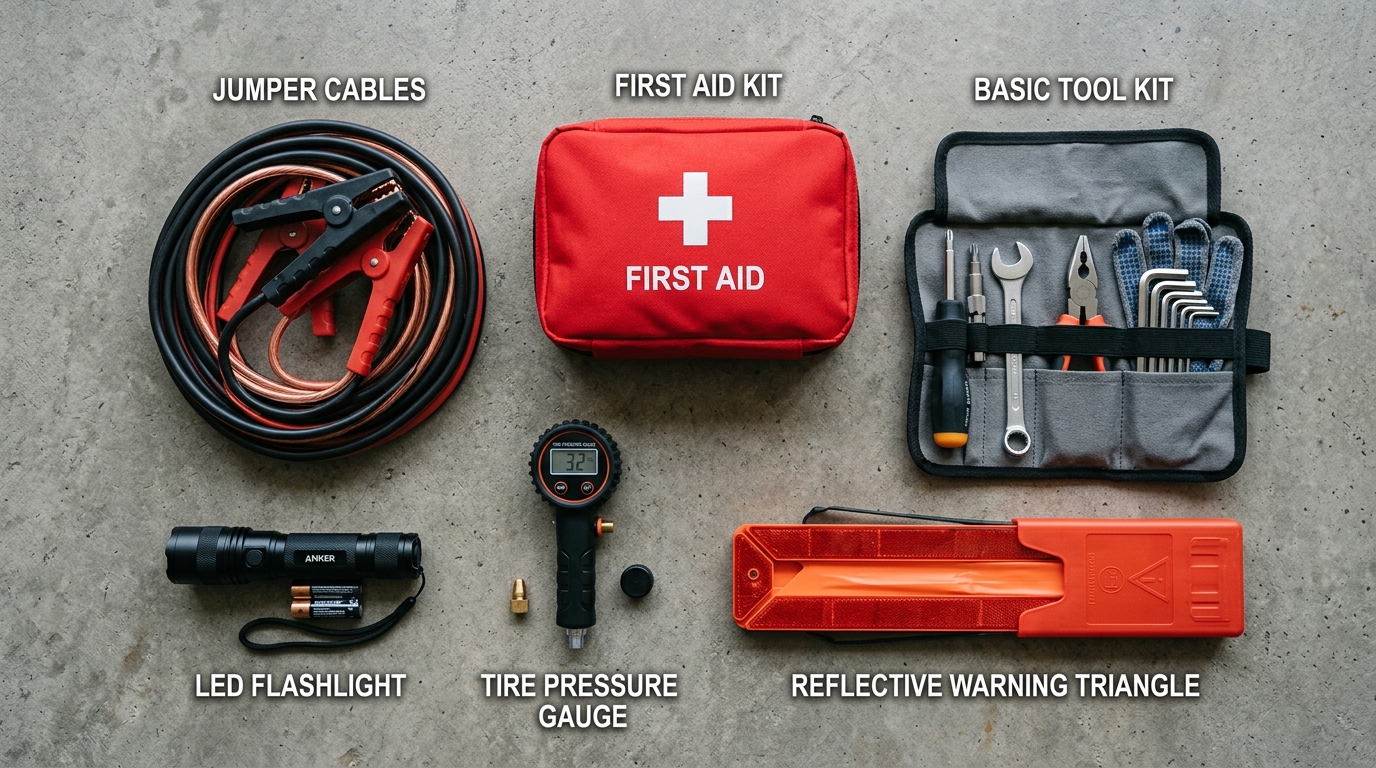
car safety

  • Spare tire (check it’s inflated before you leave)
  • Car jack and lug wrench
  • Jumper cables or a portable jump starter
  • Basic toolkit — screwdriver, pliers, wrench
  • Flashlight with fresh batteries
  • Reflective triangles or road flares
  • Tire pressure gauge
  • Windshield fluid
  • First aid kit (see below)

Pro tip: Do a quick car check the day before you leave. Check your oil, coolant, brake fluid, tire pressure, and engine warning lights. If you’re planning to drive thousands of kilometers, get an oil change first if you’re due for one.
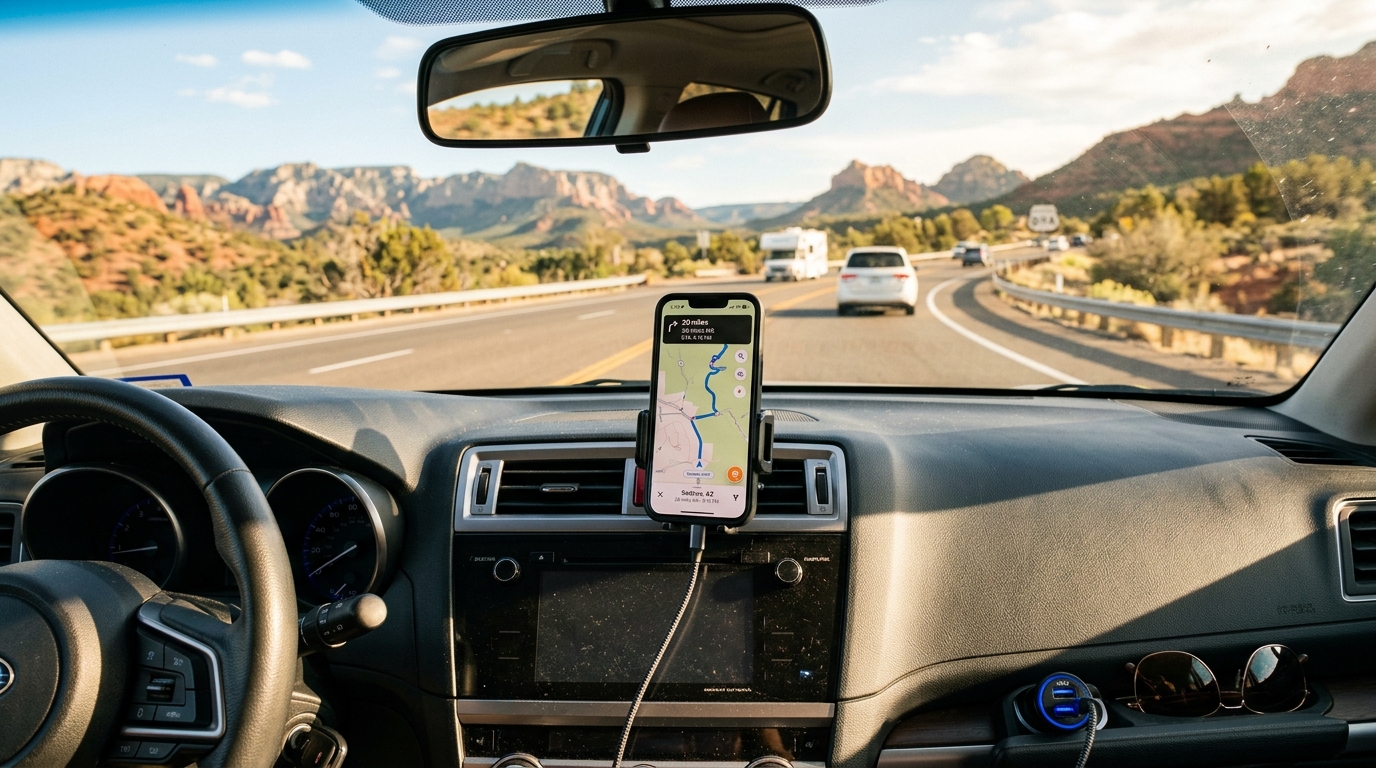
3. Navigation and Tech

Navigation and Tech

  • Phone with navigation app downloaded (Google Maps or Waze)
  • Offline maps downloaded — this is critical for areas with no signal
  • Car charger or USB cable for your phone
  • Portable power bank
  • Backup paper map or road atlas — phones die, signal disappears
  • Dash cam (optional but useful)
  • Bluetooth speaker or audio cable for music

Signal tip: Before you leave, download offline maps of your entire route. In remote stretches, you can drive for hours with no cell service. A downloaded map means navigation keeps working even when your signal doesn’t.

4. Comfort and Cabin Essentials

The inside of your car is your home for the duration of this trip. Set it up well.

  • Neck pillow — for passengers on long stretches
  • Eye mask and earplugs if you’ll sleep in the car
  • Travel blanket — cars get cold, especially at night
  • Sunglasses — driving into sun is genuinely dangerous
  • Reusable water bottle (one per person)
  • Wet wipes — multipurpose lifesavers in the car
  • Small trash bag clipped inside the car keep it clean
  • Hand sanitizer within reach
  • Car seat organizer if you’re carrying a lot

5. Snacks and Food

Airport food is expensive. Gas station food is worse. Car snacks done right save you money and keep everyone happy on long drives.
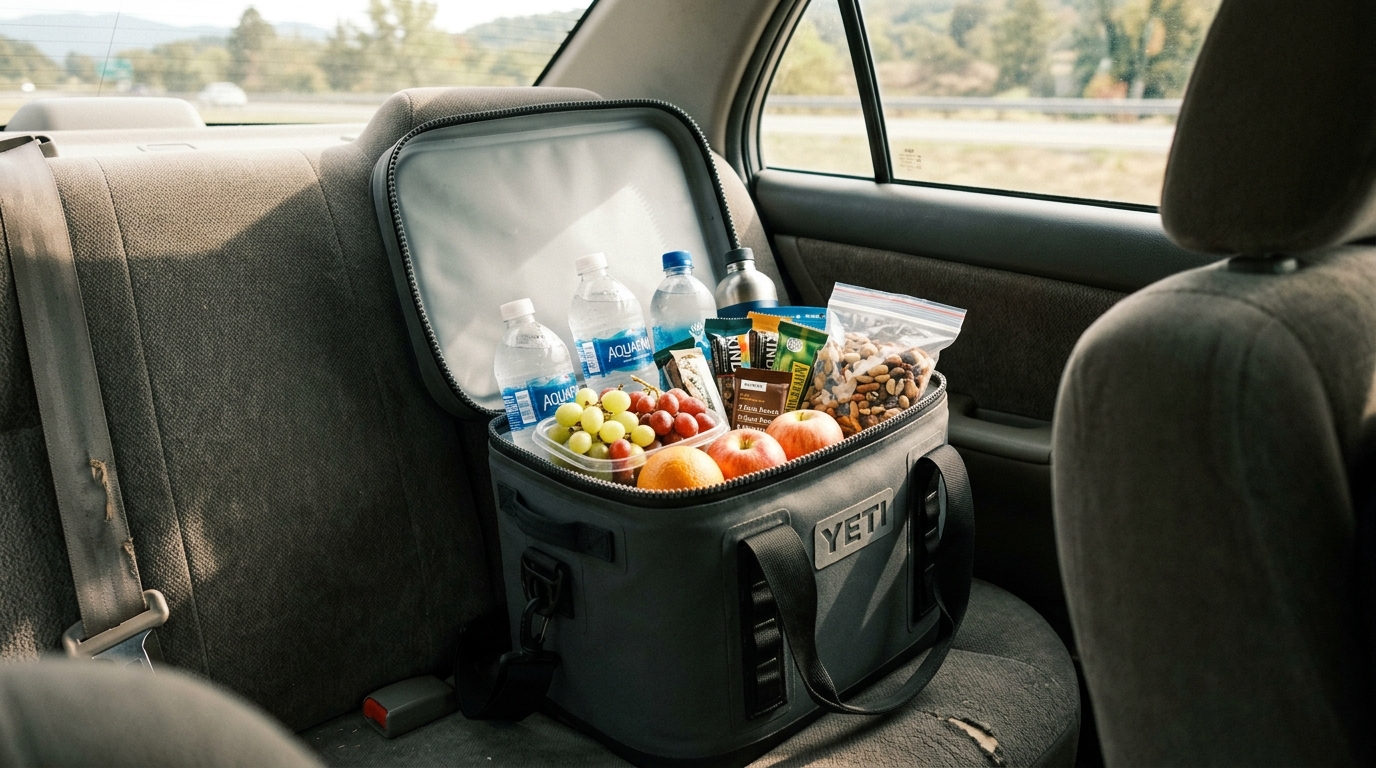
Snacks and Food

Smart snacks to pack:

  • Nuts and trail mix — high energy, no mess
  • Protein bars or granola bars
  • Dried fruit
  • Fresh fruit that travels well (apples, oranges, grapes)
  • Crackers and rice cakes
  • Dark chocolate
  • Pre-made sandwiches for the first day

For multi-day trips:

A small cooler changes everything. It lets you carry cold drinks, fruits, cheese, sandwich fillings, and leftovers from roadside restaurants. A soft-sided cooler fits in most car trunks without taking up too much room.

What to avoid: Anything greasy, crumbly, or strong-smelling. You’re in an enclosed space. Chips everywhere and tuna sandwiches are not a good combination.

6. Clothing

Road trip clothing depends entirely on your destination and how many days you’re driving. But a few principles always apply:

Pack layers. Weather changes along routes, and the inside of a car can be freezing while it’s hot outside.

For a weekend trip (2–3 days):

  • 1 outfit per day plus 1 extra
  • Comfortable driving clothes — loose, not restrictive
  • Shoes you can walk in properly (flip flops for driving are an accident risk)
  • A light jacket or hoodie regardless of season
  • Swimwear if there’s any chance of a pool, beach, or lake
  • Pajamas or comfortable sleepwear

For a longer trip (5+ days):

  • Pack for 5 days and plan to do laundry
  • Neutral colors that can mix and match
  • One smart outfit if you’ll be eating somewhere nicer
  • Rain jacket or waterproof layer

Pro tip: Keep your clothes for the first night easily accessible. If you’re arriving late and tired, you don’t want to unpack your entire bag just to find pajamas.

7. Toiletries and Personal Care

  • Toothbrush, toothpaste, floss
  • Deodorant
  • Shampoo, conditioner, body wash
  • Skincare basics — cleanser, moisturizer, SPF
  • Sunscreen — reapply every two hours on sunny drives
  • Lip balm — car AC dries lips fast
  • Feminine hygiene products
  • Razor
  • Nail clippers
  • Dry shampoo for long driving days when showers aren’t happening

Hotel vs camping: If you’re staying in hotels, you can pack lighter; they provide basics. If you’re camping or staying in budget places, bring everything you need.

8. Health and Medications

  • All prescription medications, with extra supply for a few days beyond the trip
  • Pain relievers (paracetamol or ibuprofen)
  • Anti-nausea tablets — winding roads catch people off guard
  • Motion sickness medication if you or anyone in the car is prone
  • Antihistamines for allergies
  • Anti-diarrhea tablets
  • Plasters and antiseptic wipes
  • Any allergy medication or EpiPen if needed

Pack medications in a visible, accessible spot not buried at the bottom of a bag in the trunk.

9. Entertainment for Long Drives

Long drives need planning. Boredom sets in fast, especially with children in the car.

  • Download podcasts, audiobooks, or playlists; don’t rely on streaming
  • Books or e-reader
  • Road trip games (20 questions, license plate games, trivia apps)
  • Headphones for each passenger
  • Downloaded movies or shows on a tablet for passengers

Audiobooks tip: A good audiobook makes a 6-hour drive feel like 3. Download two or three before you leave so you can switch based on mood.

10. Overnight and Multi-Day Extras

If your road trip involves multiple nights on the road, add these:

  • Packing cubes to keep bags organized across different hotels
  • A dirty laundry bag to separate used clothes
  • Travel-size laundry detergent for washing clothes in a sink if needed
  • Sleep essentials — your own pillow if hotel pillows bother you
  • Extension cord or multi-plug adapter for hotel rooms (often not enough outlets)
  • Reusable bags for groceries or souvenirs

11. Camping Add-Ons (If Applicable)

If any nights involve camping, this kit goes in addition to everything above:
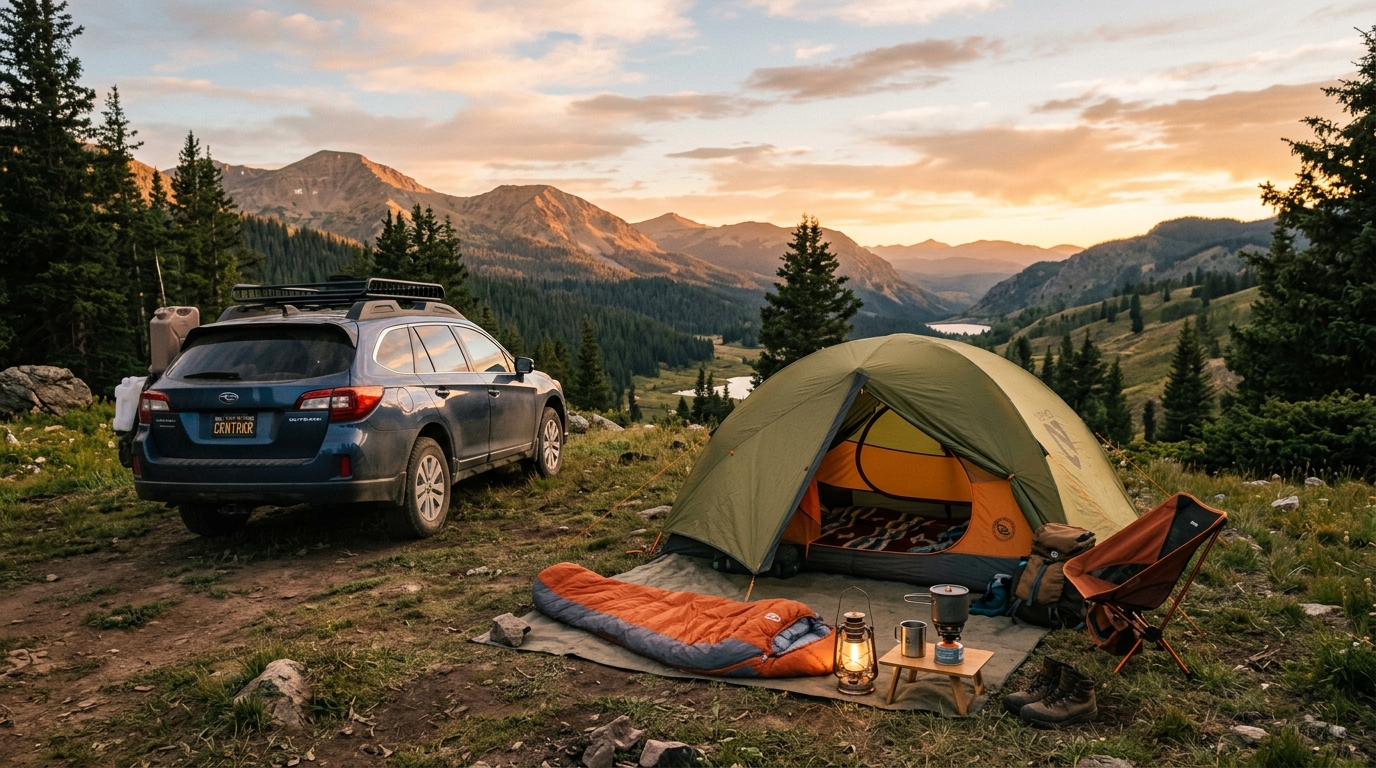
Camping Add-Ons

  • Tent with all poles and pegs (check it’s complete before leaving)
  • Sleeping bag appropriate for the temperature
  • Sleeping pad or air mattress
  • Portable stove and fuel
  • Cooking pot, cutlery, plates
  • Lighter and matches (both)
  • Headlamp with fresh batteries
  • Insect repellent
  • Tarp for rain cover
  • Trash bags — leave the campsite clean

What NOT to Pack for a Road Trip

Most guides skip this section. Here’s what actually wastes space:

  • A full-sized hair dryer: hotels provide them. Don’t pack one unless you’re camping.
  • Too many shoes: two pairs maximum, three if camping adds hiking boots
  • Breakable items in easy-reach bags; they’ll get knocked around constantly
  • Every possible “just in case” item you can stop at a store if you genuinely need something
  • Bulky or heavy books: one physical book or an e-reader
  • Items you use daily that you’ll forget to grab: phone charger, glasses, daily medication. Put these on your checklist specifically.

How to Pack Your Car Smartly

This part makes the difference between a frustrating trip and a smooth one.

Zone your car into three areas:

Zone 1 Driver and front seat reach: Sunglasses, phone, car charger, water bottle, snacks, toll money, and navigation. Anything you need without stopping.

Zone 2 Backseat or passenger access: Blanket, neck pillow, entertainment, extra snacks, wet wipes, trash bag. Things passengers can get while the car is moving.

Zone 3 boot or trunk: Main luggage, camping gear, cooler. Things you only need when you stop.

Don’t block rear visibility. Piling bags up in the back obstructs your view and is a safety risk. Keep the back window clear.

The Night Before Departure Checklist

Night Before Departure Checklist

Go through this before you sleep:

  • Car checked — tires, oil, fuel level
  • Documents in one place and accessible
  • Phone fully charged
  • Offline maps downloaded
  • Medications packed and accessible
  • Snacks and cooler ready
  • Entertainment downloaded
  • Emergency contacts saved offline
  • Accommodation confirmations on your phone and printed
  • Car safety kit in the boot

FAQs

What should I keep in the car and within reach during a road trip?
Your phone and charger, water, snacks, sunglasses, documents, and any medication you might need mid-drive. Keep these in Zone 1 front seat or easy reach so you never need to stop to find them.

How do I pack clothes for a road trip without overpacking?
Pack for 5 days maximum, no matter how long the trip. Use neutral colors that can be mixed and matched, plan to do laundry, and resist the urge to pack “just in case” outfits.

What food should I bring on a road trip?
Nuts, protein bars, fresh fruit, crackers, and dried snacks for in-car eating. A small soft cooler opens up options for cold drinks and fresh food, which saves a lot of money over gas station stops.

What car safety items do I actually need?
Spare tire, jumper cables or a portable jump starter, a basic tool kit, reflective triangles, and a first-aid kit. These are not optional on long or remote drives.

Do I need a paper map for a road trip?
Not always, but it’s worth having one or downloading offline maps. In remote areas, cell signal disappears and GPS fails. A backup map has saved many road trips.

How do I keep the car organized on a long trip?
Use a small trash bag clipped inside the car, zone your bags by how often you’ll need them, and give everyone their own bag for personal items. Clutter in a small space gets stressful fast.

What do I pack for a road trip with kids?
Everything on this list, plus snacks specifically for them; entertainment per child (tablet, activity books, and games); extra changes of clothes for each child; their medications; baby wipes; and a barf bag, just in case.

Conclusion

Road trips have a different energy than any other kind of travel. There’s no airport rush, no baggage carousel, no tight schedule. But that relaxed feeling can make you complacent about packing.

The goal isn’t to bring your entire house. It’s great to have exactly what you need, organized so well that finding anything takes seconds and that the car feels comfortable for the whole journey, not just the first hour.

Pack this checklist, do your car check the day before, and enjoy the drive.