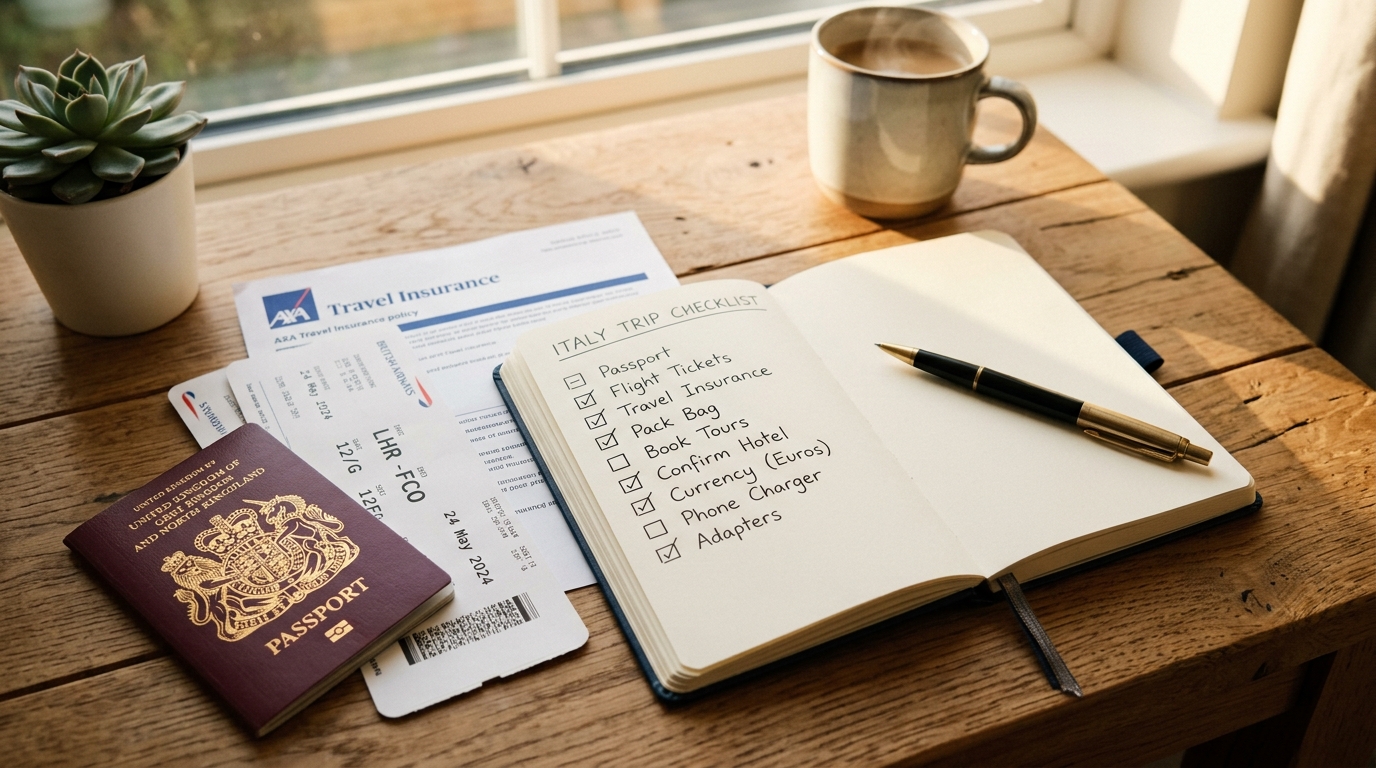
Before You Even Open Your Suitcase: The Pre-Packing Checklist
Most people start packing the night before. That’s where the forgetting happens.
Start at least 5 to 7 days before your trip. Here’s what to check first:
- Passport validity — Many countries require at least 6 months of validity beyond your travel dates. Check this now, not at the airport.
- Visa requirements — Look up whether your destination needs a visa, an eTA, or an arrival stamp. Some countries need advance applications.
- Travel insurance — International travel without insurance is a gamble. Medical bills abroad can be enormous. Get covered.
- Vaccinations — Some countries require proof of specific vaccinations (like yellow fever). Check your destination’s health requirements.
- Currency — Research whether your destination is cash-heavy or card-friendly. Exchange some before you leave, or plan to use an ATM on arrival.
- Power outlets — Different countries use different socket types. Check what plug adapter you need.
Get these sorted before you touch your suitcase.
The Master Packing Checklist
1. Travel Documents (Most Important Category)
These are non-negotiable. Pack them first, and carry copies of everything.
- Passport (with at least 6 months’ validity)
- Visa or entry permit (printed and digital copy)
- Flight tickets — confirmation email or printed copy
- Hotel or accommodation booking confirmations
- Travel insurance documents
- International driving permit (if you plan to drive)
- Emergency contact list — family, your embassy, and your insurance provider
- Photocopies of all documents stored separately from originals
- Digital backup — save scans of everything to your email or cloud storage
Pro tip: Keep your passport, boarding pass, and insurance in one dedicated travel wallet. Never leave it in your checked bag.
2. Money and Banking
- Local currency, a small amount to cover your first day (taxi, food, tips)
- Credit card and debit card: let your bank know you’re travelling so they don’t freeze your account
- A backup card in case your primary gets lost or blocked
- Money belt or anti-theft travel wallet for busy destinations
Don’t carry all your cash in one place. Split it between your bag, your wallet, and a hidden pocket.
3. Electronics and Tech
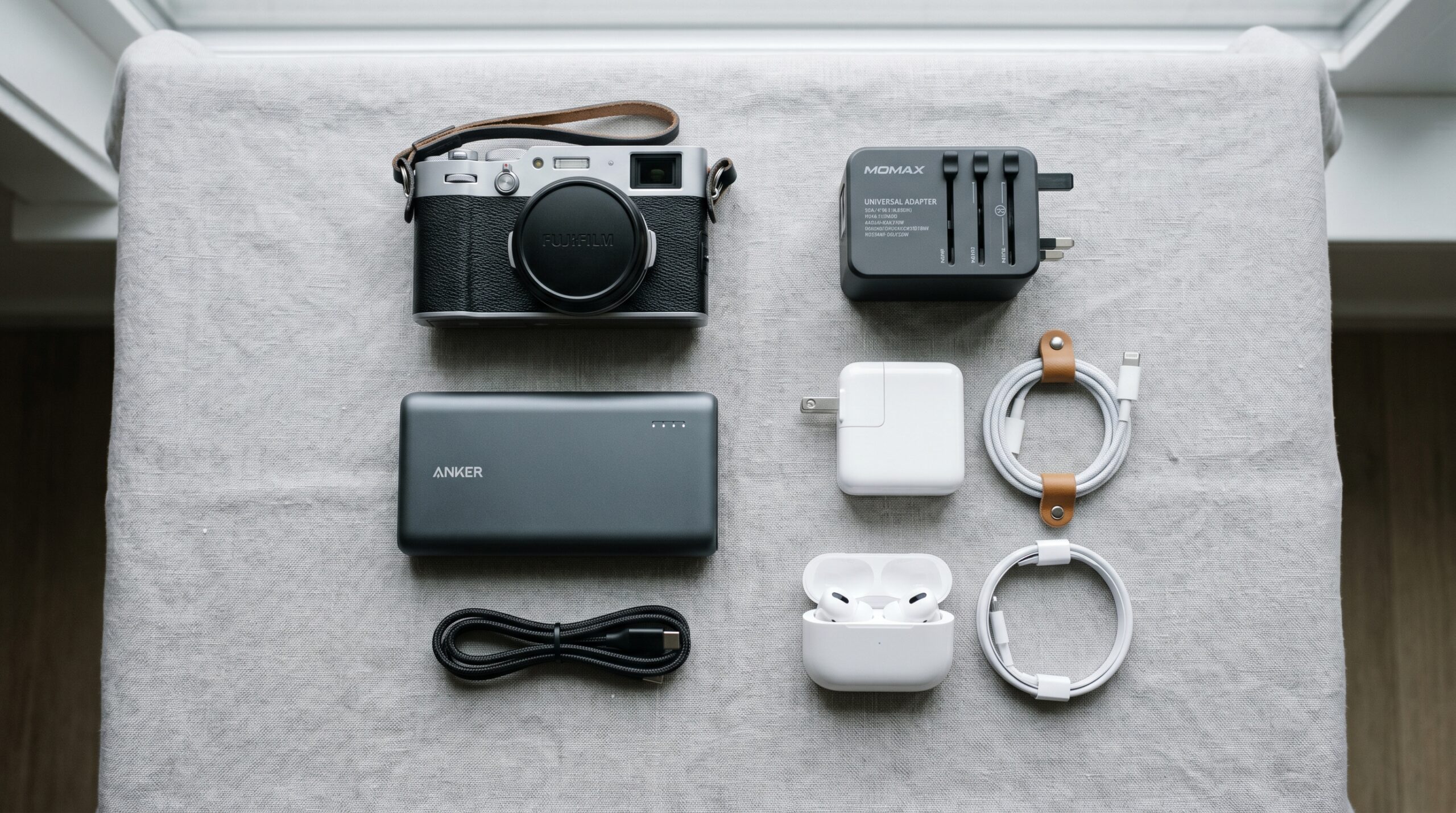
- Phone and phone charger
- Universal power adapter — this is the one people forget most often
- Portable power bank
- Laptop or tablet (if needed) with its charger
- Camera with memory cards and batteries
- Earphones or noise-cancelling headphones for the flight
- E-reader or downloaded entertainment for long layovers
A note on adapters: Don’t assume your charger will work abroad. Many countries use different voltages. A universal adapter handles the socket type, but if your device isn’t dual voltage, you also need a voltage converter. Most modern smartphones and laptops are fine; check the label on your charger.
4. Clothing
This is where overpacking happens. Most people bring too much and wear half of it.
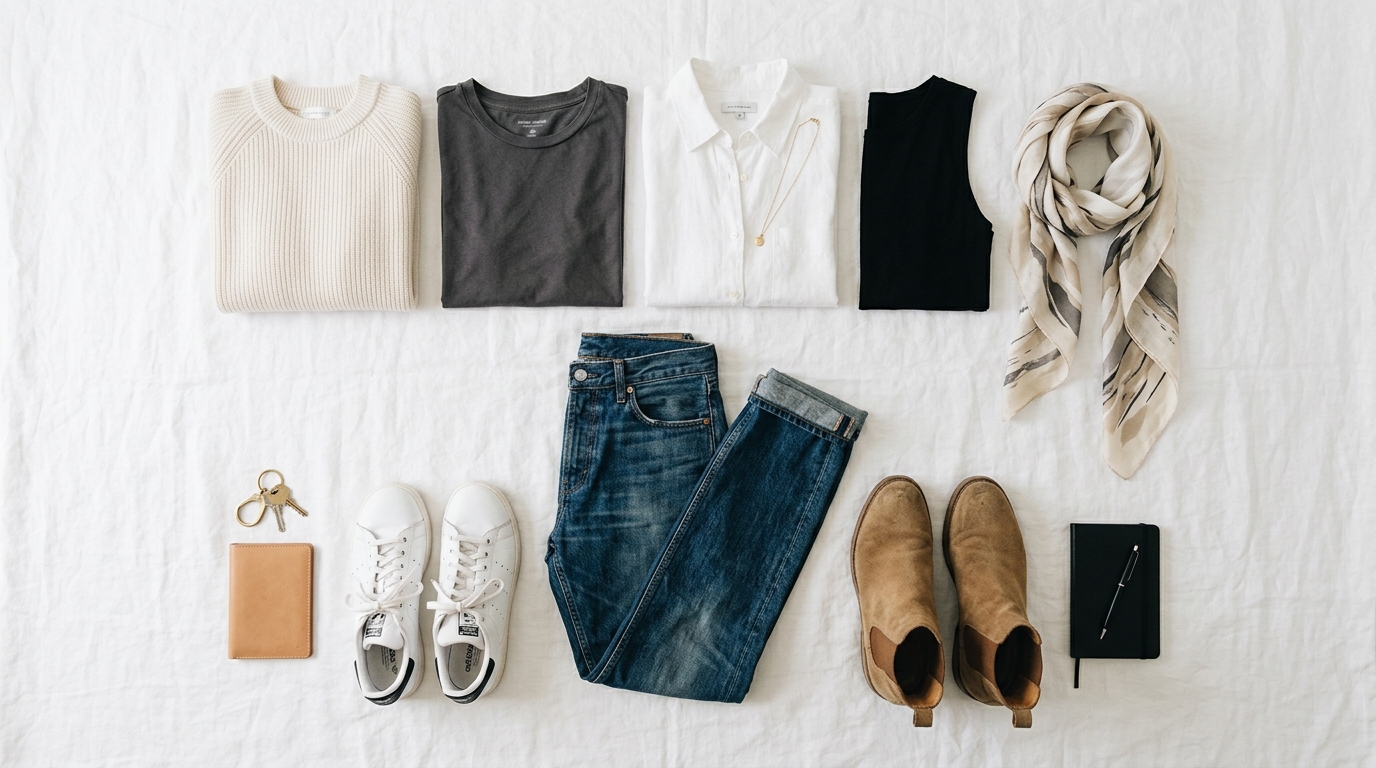
The smart approach is to pack for 7 days maximum, no matter how long the trip.
Why? Most destinations have laundry facilities. And packing less means lighter bags, no checked luggage fees, and easier movement.
What to pack:
- Underwear and socks (one per day, plus 2 extra)
- 3 to 4 versatile tops that can be mixed and matched
- 2 pairs of trousers or jeans (one casual, one slightly smarter)
- 1 dress or outfit for evenings (optional)
- Light jacket or cardigan: planes are cold, and evenings can surprise you
- Comfortable walking shoes — broken in before the trip, not new
- One pair of sandals or lighter shoes
- Sleepwear
- Workout gear (only if you genuinely use it)
Destination-specific clothing tips:
If you’re visiting conservative countries, like Morocco, parts of the Middle East, or Southeast Asia, modest dress is not optional in many places. Women should pack loose-fitting clothes that cover shoulders and knees. A light scarf is a lifesaver; it doubles as a cover-up, a blanket on the plane, and a prayer wrap.
If you’re visiting cold destinations, pack layers instead of one heavy coat.
5. Toiletries and Personal Care
For carry-on, follow the 3-1-1 rule: liquids must be in containers of 100 ml or less, all fitting in one clear zip-lock bag.
Core toiletries:
- Toothbrush and toothpaste
- Shampoo and conditioner (travel-size)
- Body wash or soap
- Deodorant
- Moisturizer and lip balm (planes dry you out)
- Sunscreen — don’t rely on buying it abroad; it can be pricey
- Razors
- Feminine hygiene products (brands and availability vary widely abroad)
- Nail clippers
- Hairbrush or comb
- Dry shampoo (a lifesaver on long travel days)
Packing cubes tip: Keep your toiletries in a hanging toiletry bag. Many hotel bathrooms abroad especially in historic cities or budget stays, have limited counter space. A hanging bag solves that instantly.
6. Health and Medications
This section is the most overlooked in most packing guides, and it’s the most important.
- Prescription medications — bring more than enough for the trip, plus a few extra days
- A copy of your prescription and the generic name of your medication (pharmacies abroad may not recognize brand names)
- Keep medications in original packaging for customs
- Basic first aid kit: plasters, antiseptic wipes, pain relievers, anti-diarrhea tablets, antihistamines
- Rehydration sachets
- Any required vaccinations and documentation
- Motion sickness medication if you’re prone
Important: Some medications that are legal at home are restricted in other countries. Check your destination’s rules before packing anything that could be flagged at customs.
7. Carry-On Bag Essentials
Your carry-on is your lifeline if checked luggage gets lost. Pack it like you could survive 48 hours with just this bag.
- Passport and travel documents
- One change of clothes (in case your luggage is delayed)
- All medications
- Phone, charger, and power bank
- Earphones
- Travel pillow and eye mask
- Water bottle (empty before security, refill after)
- Snacks — airport food is expensive and not always available
- A pen (you’ll need it for custommonths’s on the plane)
- Light scarf or shawl (for the cold air conditioning)
- Small toiletries bag for freshening up
8. Comfort and Sleep Items
Long-haul flights are rough without the right gear.
- Neck pillow
- Eye mask
- Earplugs
- Compression socks: If you’re flying more than 4 hours, they help prevent swelling and reduce the risk of deep vein thrombosis
9. Bags and Organization
- Packing cubes — these change everything. Separate your clothes by category and your bag stays organized even after a week of unpacking and repacking
- A small daypack or crossbody bag for sightseeing
- A foldable tote bag — perfect for markets, shopping, and beach days
- TSA-approved luggage lock for your checked bag
What NOT to Pack (Competitors Don’t Tell You This)
This is where most packing guides fall short. Knowing what to leave behind saves you weight, money, and hassle.
- Full-size toiletries — buy travel sizes or use the hotel’s
- Books — unless you have no e-reader; they’re heavy. Download before you go.
- Multiple pairs of shoes — two pairs maximum for most trips
- Every “just in case” outfit — pack what you know you’ll wear
- Expensive jewelry — it attracts attention and can get lost
- Hair dryers — most hotels provide them. Check before packing.
- Too much foreign currency — ATMs abroad are usually reliable and give better rates than airport exchanges
- Food from home — many countries have strict customs rules on what food can enter. It’s not worth the risk of having it confiscated.
Packing by Destination Type
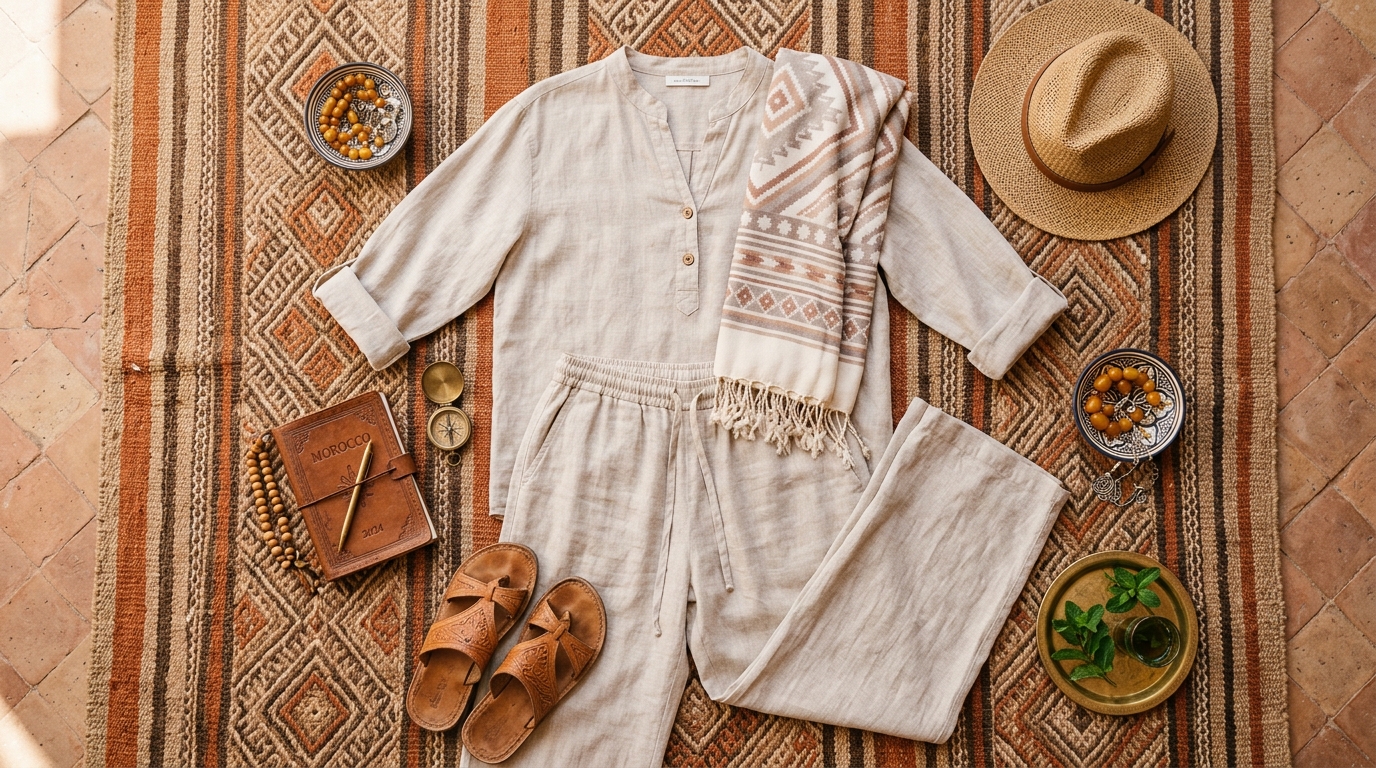
Beach and Warm Weather Trips
- Lightweight, breathable clothing
- Swimwear (pack 2, one to dry while you wear the other)
- Good quality sunscreen (buy at home; beach resorts’ markup is real)
- Insect repellent
- Water sandals and flip flops
- Reusable water bottle — staying hydrated is critical in heat
Cold Weather or Winter Destinations
- Thermal base layers
- Gloves, scarf, and a warm hat
- Waterproof outer layer
- Waterproof boots with grip — icy streets are a genuine hazard
- Hand cream — cold weather destroys your skin
City and Cultural Travel
- Comfortable walking shoes; you’ll cover serious distance
- Smart-casual outfit for nicer restaurants or cultural sites
- A compact umbrella or packable rain jacket
- Portable phone charger — navigation kills battery fast
Conservative or Religious Sites
- Clothes that cover shoulders and knees
- A scarf that can be used as a head cover when needed
- Flat closed-toe shoes for mosques and temples (you’ll remove them at the entrance)
The “One Week Before Departure” Final Checklist
Use this in the days before you leave:

- Passport valid for 6+ months? Check
- Visa sorted and printed?
- Bank notified of travel dates?
- Travel insurance active?
- Medications packed (with extra supply)?
- Adapter packed?
- Phone roaming set up or SIM arranged?
- Copies of all documents saved digitally?
- Checked airline baggage rules?
- Carry-on liquids under 100ml?
- Downloaded offline maps for your destination?
- Emergency contacts saved offline?
FAQs
How do I pack for a long international trip without overpacking?
Stick to a one-week clothing rule and plan to do laundry. Choose versatile pieces in neutral colors that mix and match easily. Only pack what you know you’ll actually wear.
What documents do I need for international travel? At minimum: your passport, flight confirmation, visa (if required), and travel insurance documents. Carry photocopies of everything and save digital backups to your email.
What should I always keep in my carry-on?
Your passport, all medications, a change of clothes, your charger, and your travel documents. If your checked bag is lost, you need these to get through your first day.
What’s the most forgotten item when traveling internationally?
A universal power adapter. It’s consistently the most overlooked item — and without it, every device you packed is useless.
Do I need travel insurance for international trips?
Yes. Healthcare abroad can cost thousands, and medical evacuation even more. Travel insurance also covers lost luggage, trip cancellation, and flight delays.
Can I bring my medications on an international flight?
Yes, but keep them in original packaging, carry your prescription, and check whether your medication is legal at your destination. Some common medications are restricted in certain countries.
What should I pack for countries with conservative dress codes?
Lightweight long-sleeve tops, trousers or long skirts, and a scarf. Dress modestly not just for religious sites, but as a sign of cultural respect throughout your visit.
Conclusion
The goal of packing isn’t to bring everything you might need. It’s to bring exactly what you need, organized so well that finding anything takes seconds.
Start early, use this checklist as your base, and customize it for your specific trip. Every destination has different needs, a trip to Morocco looks nothing like a week in Scotland.
Pack smart. Travel lighter. Enjoy more.