
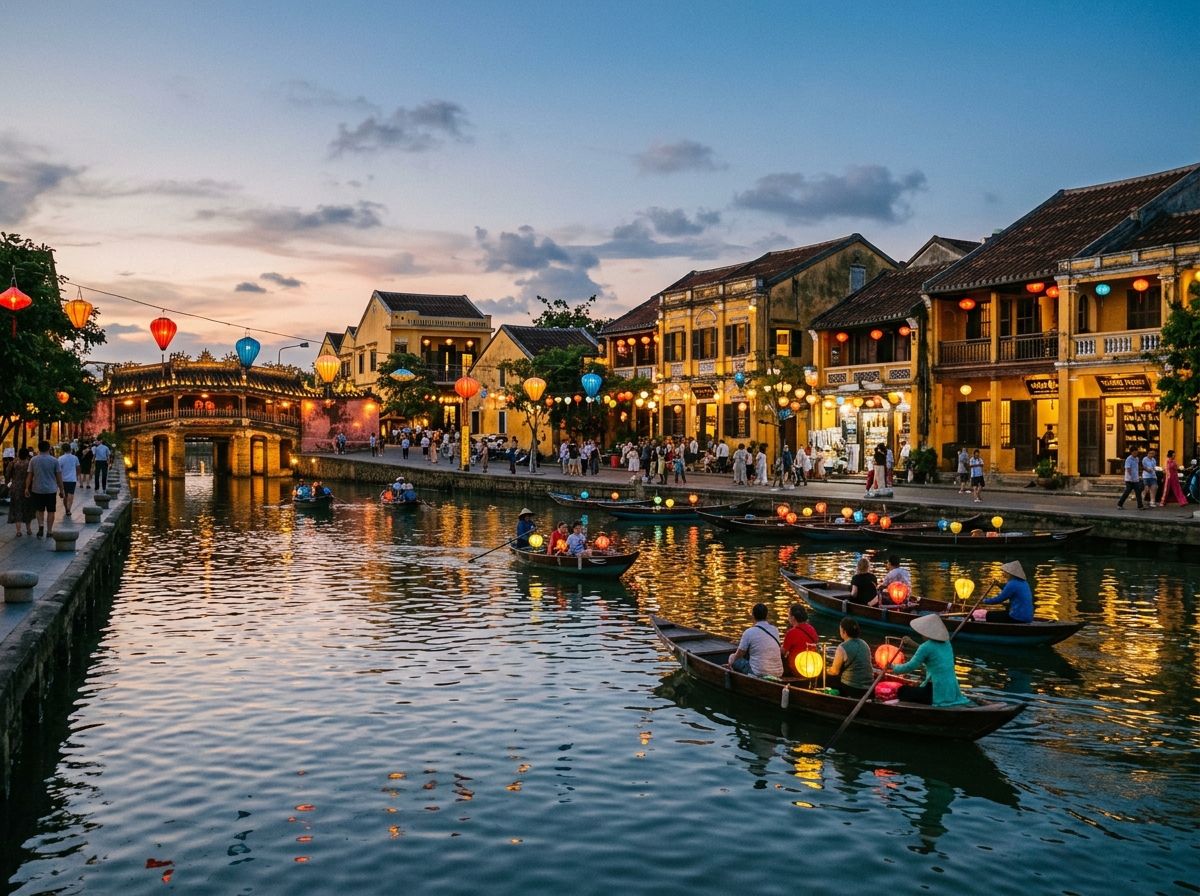
Hoi An sits in central Vietnam, roughly halfway between Hanoi and Ho Chi Minh City. The nearest airport is Da Nang International, about 30 kilometres away. A Grab from Da Nang to Hoi An takes around 45 minutes and costs 300,000 to 400,000 VND ($12 to $16). There are no direct trains — Da Nang is the closest station.
February to April is the sweet spot. Dry, sunny, temperatures around 24 to 28 degrees. Most comfortable for walking and beach time.
May to August is hot — up to 38 degrees — but mostly dry. Plan around early mornings and afternoon rest.
October to November brings heavy rain and flooding. Not ideal for a first visit. Prices drop significantly if you do not mind the risk.
December to January is cooler and transitioning to dry. Beautiful, but book ahead around Lunar New Year when prices spike.
If you are visiting October through December, this matters.
Hoi An’s Ancient Town sits on the Thu Bon River. Heavy rain combined with upstream dam releases causes the river to rise and flood the low-lying old town most years during this period.
What floods: Bach Dang and Cong Nu Ngoc Hoa streets go first, then Nguyen Thai Hoc and surrounding lanes. An Hoi Island floods early.
What closes: My Son Sanctuary, Thanh Ha Pottery Village, Cam Kim Island, and basket boat tours.
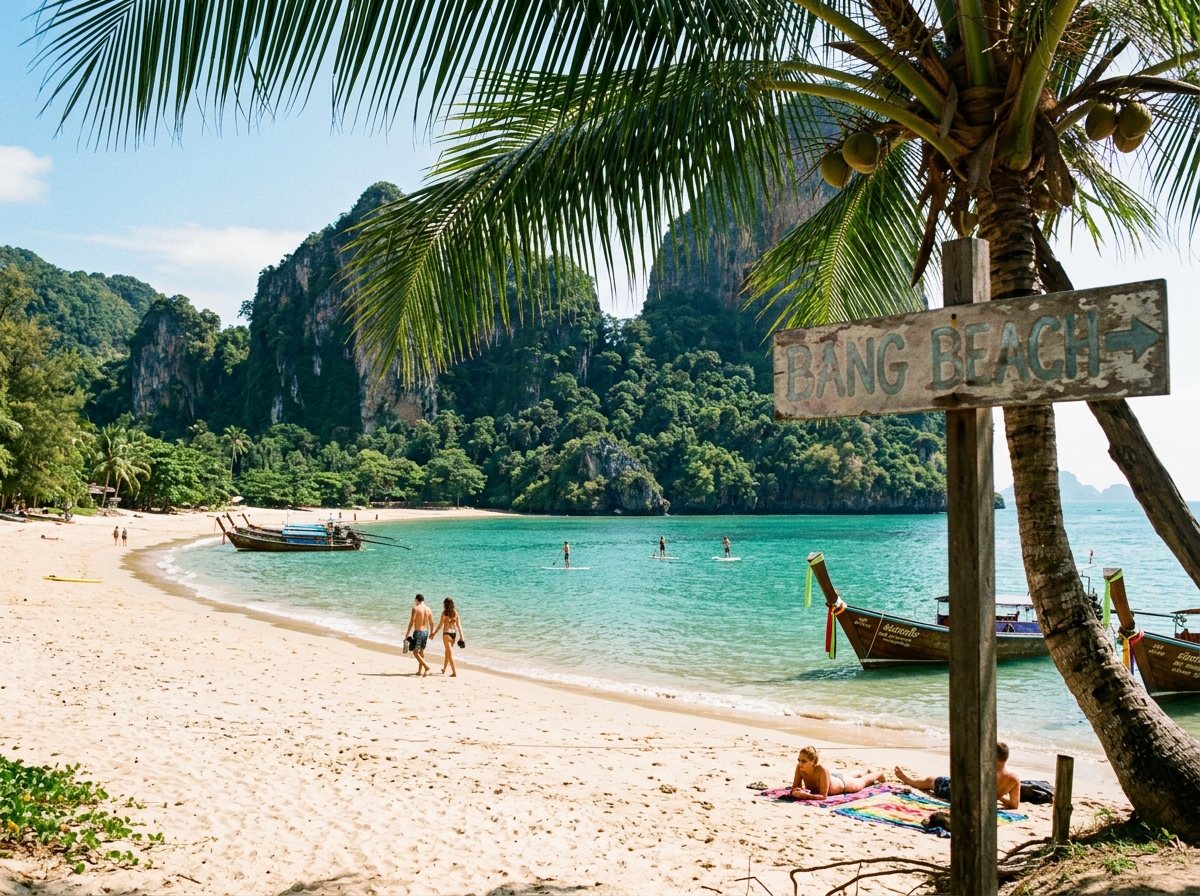
What stays open: An Bang Beach, most restaurants and shops on higher ground, cooking classes in town.
If you visit in this period:
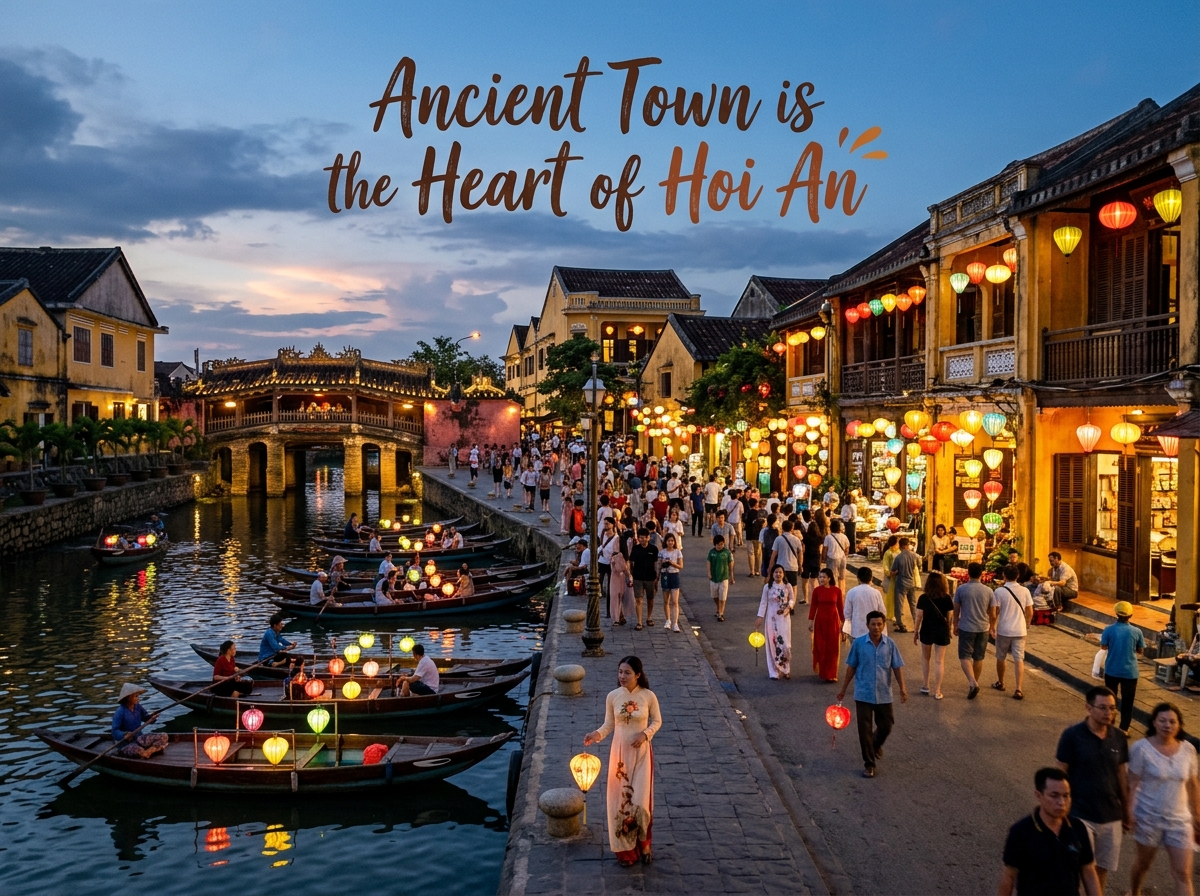
The Ancient Town is the heart of Hoi An — a preserved collection of merchant houses, temples, and shopfronts from the 15th to 19th centuries with Chinese, Japanese, and European influences throughout.
Ticket system: One ticket costs 120,000 VND (about $5) and gives you five coupons, each admitting you to one of 22 ticketed sites. Walking the streets, sitting at cafés, and shopping is free.
Best five sites for your coupons:
Most important tip: Go before 9am. The streets are quiet, the light is beautiful, and you can walk freely. By 10:30am the tour groups arrive and the narrow lanes fill up fast.
Every evening the Ancient Town transforms. Paper lanterns glow above the streets. The river fills with floating candles. It is genuinely beautiful.
Walk the Old Town streets between 6pm and 9pm. Pause at Nguyen Hoang Bridge for the best view of lanterns reflecting on the water.
The Full Moon Lantern Festival falls on the 14th of every lunar month — the town goes car-free and fully lantern-lit from dusk. If your dates align, do not miss it.
One of the best cooking class destinations in Vietnam. Most classes start with a market visit, then four to six dishes cooked hands-on in an open kitchen. You eat everything you make and leave with recipes.
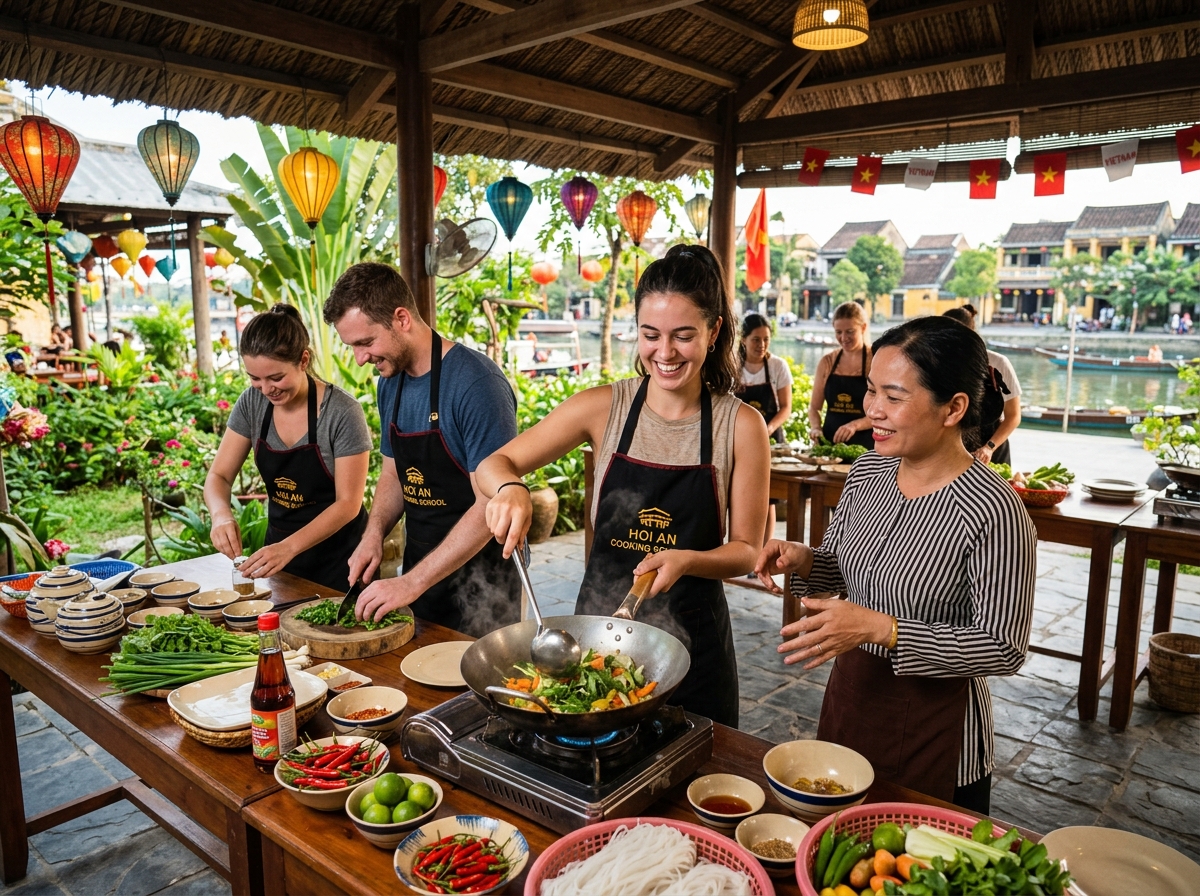
Half-day classes cost 600,000 to 900,000 VND ($25 to $38). Well-regarded options include Red Bridge Cooking School (garden setting, includes a boat ride) and Morning Glory Cooking School.
Only 4 kilometres from the Old Town, An Bang is significantly better than the more famous Cua Dai Beach, which has suffered serious erosion. Rent a bicycle from your guesthouse and cycle there in 20 minutes through rice paddies — one of the nicest short rides in Hoi An.
Ancient Cham Hindu temples are about 40 kilometers from Hoi An. Go early — the site opens at 6am and tour groups arrive by 9am. Most people join a day tour (200,000 to 350,000 VND including transport). Entrance fee: 150,000 VND. Closed during flooding.
Over 200 tailors operate in Hoi An. Getting something custom-made here is one of the town’s great traditions — excellent quality at a fraction of what you would pay at home.
How to do it properly:
Reputable options: Yaly Couture, A Dong Silk, Bebe Tailor. Expect 1,000,000 to 3,000,000 VND ($40 to $120) depending on the garment.
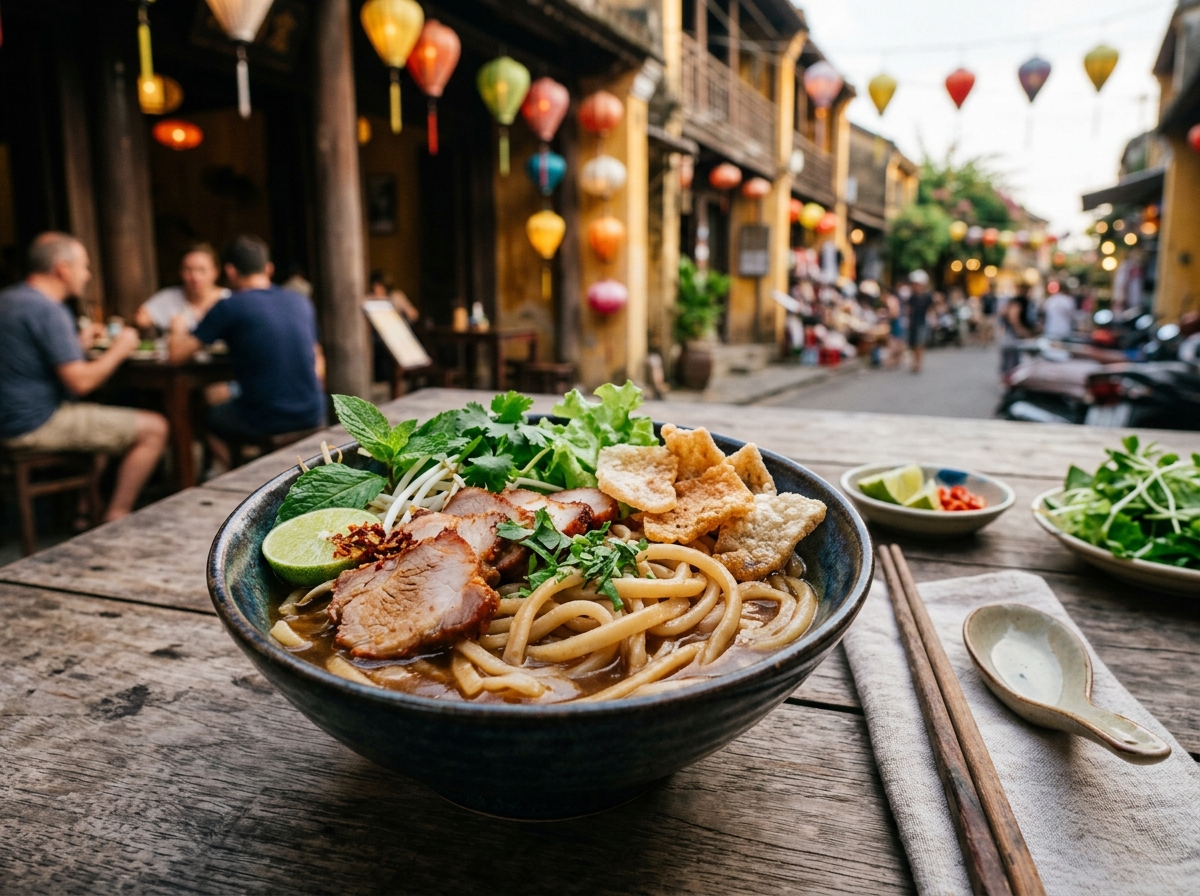
Cao Lau is the dish Hoi An is most famous for. The noodles are made using water from the ancient Ba Le Well in the Old Town — a detail that genuinely affects the taste and texture. Topped with pork, bean sprouts, fresh herbs, and crispy rice crackers, it is served slightly dry rather than in broth. The real thing exists only in Hoi An.
White Rose Dumplings (Banh Vac) are delicate rice flour dumplings shaped like rose petals, filled with shrimp paste. Only one family in Hoi An makes the wrappers — every restaurant buys from them.
Banh Mi Phuong on Phan Chau Trinh Street is the most famous banh mi spot in Vietnam, visited by Anthony Bourdain and still worth the queue. Around 30,000 to 50,000 VND.
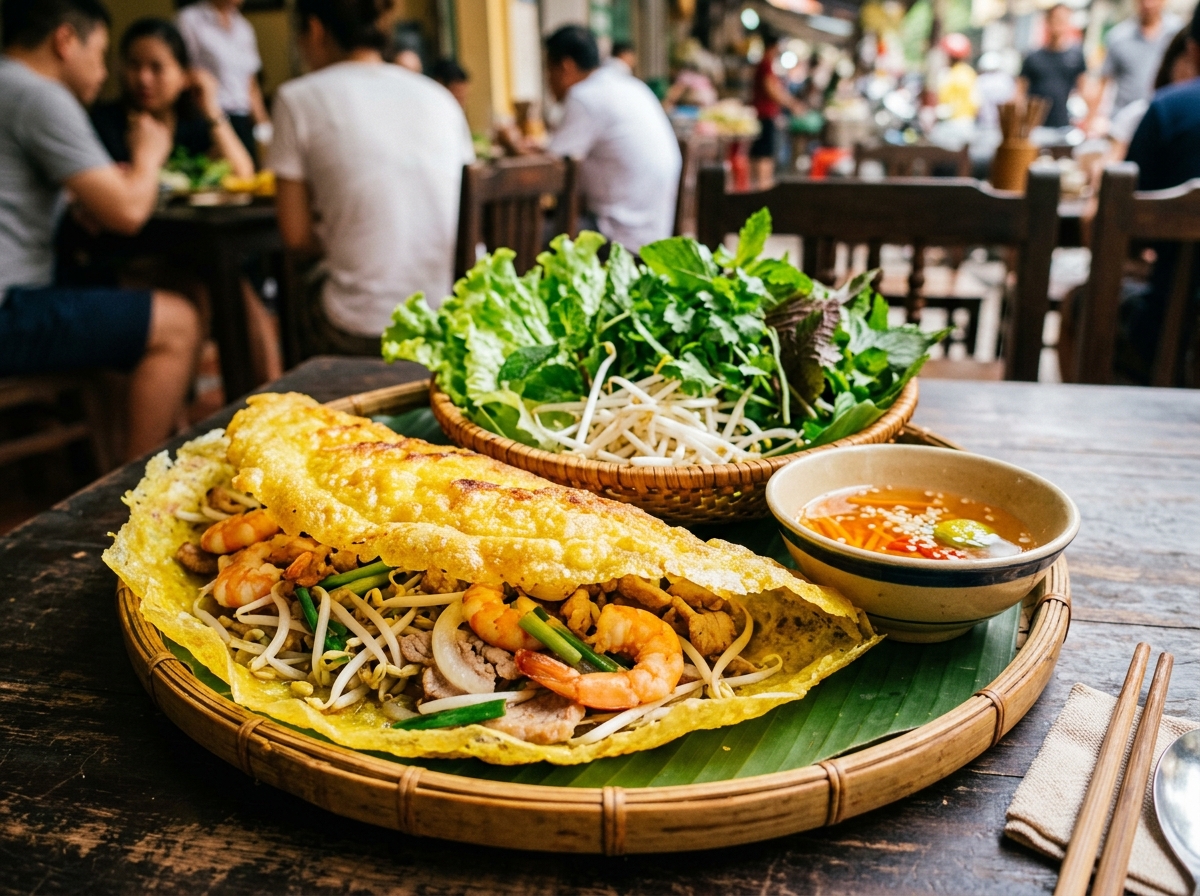
Banh Xeo is a crispy Vietnamese crepe filled with shrimp, pork, and bean sprouts. Tear off pieces, wrap in rice paper with fresh herbs, dip in sweet fish sauce.
Coffee here is exceptional. Atmospheric cafés in yellow colonial buildings and courtyard gardens. Vietnamese coffee brewed through a small metal phin filter — hot or iced, with sweetened condensed milk.
| Category | Budget | Mid-Range |
|---|---|---|
| Accommodation | $10 to $25 | $35 to $80 |
| Food (3 meals) | $6 to $12 | $15 to $30 |
| Transport | $2 to $5 (bicycle) | $8 to $15 (Grab) |
| Activities | $5 to $15 | $25 to $60 |
| Total | $23 to $57 | $83 to $185 |
Tailoring is separate: 500,000 to 3,000,000 VND per garment.
Carry cash. Many local restaurants and tailors do not accept cards. ATMs are easy to find in the Old Town.
Bargain at markets, not restaurants. Starting at 60 to 70 percent of the asking price is normal for crafts. Do not haggle for food.
Keep bags secure. Motorbike bag snatching happens on roads approaching the Old Town. Carry your bag on the building side, not the road side.
Dress for temples. Shoulders and knees covered for all ticketed sites. Keep a scarf in your bag.
A foldable rain poncho is worth having year-round. The Frogg Toggs Ultralight Rain Jacket (available on Amazon) packs down to almost nothing and is genuinely waterproof.
For tailoring, bring photos of what you want. The MyMi Body Measuring Tape (available on Amazon) is compact and useful if there is any language barrier with measurements.
A lightweight daypack like the Osprey Daylite 13L (available on Amazon) is ideal for moving between the Old Town, beach, and day trips without overheating.
How many days do you need in Hoi An?
Three to four days is ideal. You can cover the Ancient Town, take a cooking class, visit An Bang Beach, and do a day trip to My Son. Two days is possible but rushed.
When is the best time to visit Hoi An?
February to April for dry weather and comfortable temperatures. Avoid October and November due to heavy rain and flooding risk.
Does Hoi An flood?
Yes, regularly during October and November. Floods usually last one to three days. Stay away from the riverside, do not prepay for activities, and check the weather daily.
Is Hoi An expensive?
No. Budget travelers manage on $25 to $40 per day. Mid-range travelers spending $80 to $120 will be very comfortable.
What is Hoi An famous for?
Its UNESCO Ancient Town, lantern festivals, custom tailoring, and unique local food — particularly cao lau, white rose dumplings, and banh mi.
Is Hoi An safe for solo female travelers?
Very safe. Violent crime is extremely rare. The town is compact, well-lit at night, and has a strong solo traveler community. Use Grab instead of negotiating with individual drivers.
How do I get from Da Nang to Hoi An?
Grab is the easiest option — about 45 minutes and 300,000 to 400,000 VND. There is no direct train to Hoi An.
Hoi An earns its reputation. The lanterns are as beautiful as the photos suggest. The food is as good as people say. The Ancient Town in the early morning, before the crowds arrive, is the kind of thing you will remember clearly years later.
Go early, eat everything, give your tailor enough time, and explore beyond the Old Town. Three or four days here, done properly, will be some of the best days of your Southeast Asia trip.