

That said, the right answer genuinely depends on what kind of traveler you are, how long you have, and what you’re looking for. This guide breaks down every key difference so you can make the call yourself.
Most articles compare Bali and Thailand like they’re equivalent options. They’re not and understanding why changes how you think about this decision.
Thailand is an entire country. Bangkok, Chiang Mai, Koh Samui, Koh Lanta, Phuket, Pai, Chiang Rai — these places are dramatically different from each other. Choosing Thailand means choosing a diverse country with cities, mountains, jungles, and islands. You’ll need internal flights or long bus rides to experience all of it.
Bali is one island. It’s part of Indonesia a country of 17,000 islands but most visitors only go to Bali. And Bali itself is only about 95 miles wide. The upside is simplicity: you can move between Ubud, Canggu, Seminyak, and Uluwatu in a single day. The downside is that after two weeks, you’ve largely seen it.
This size difference matters more than anything else when you’re planning your first trip.
Thailand wins — clearly.
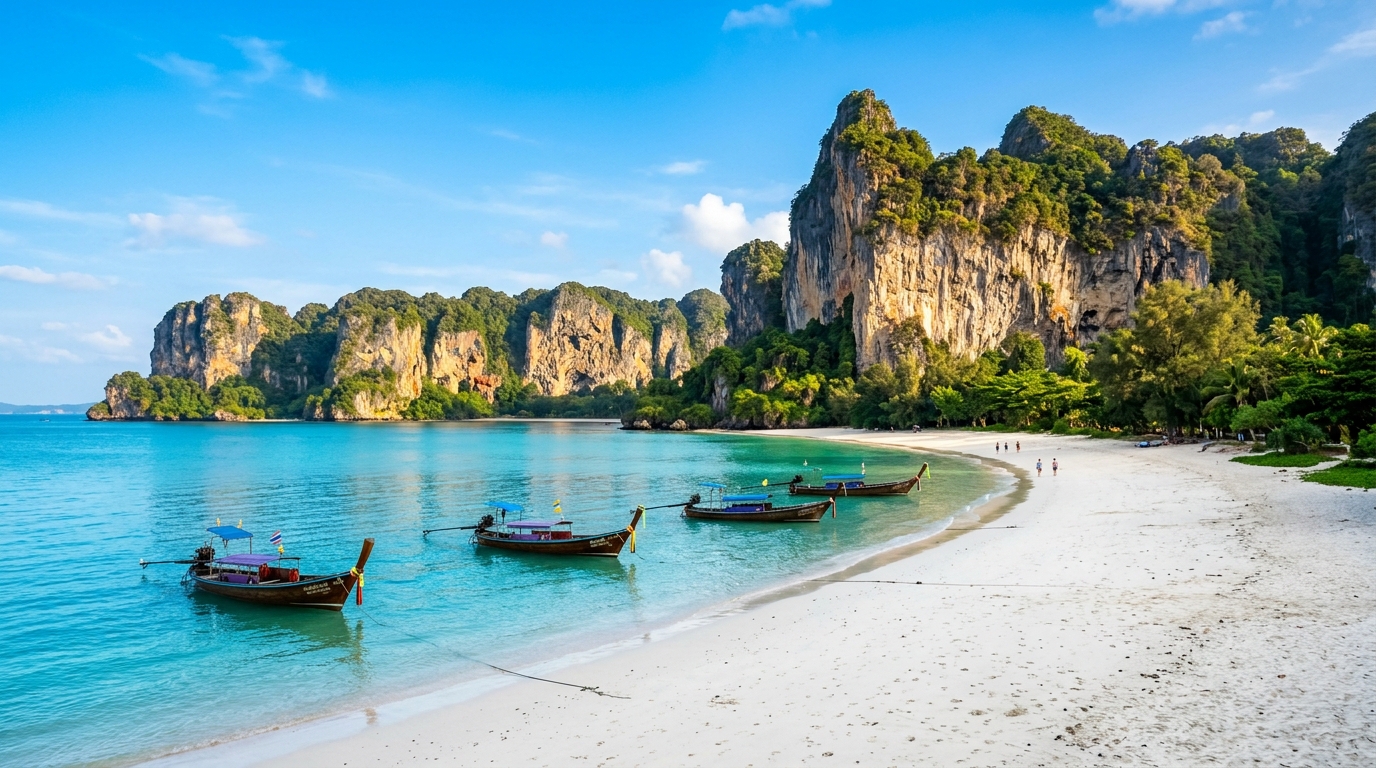
Thai island beaches Railay, Koh Lanta, Koh Tao, and the Phi Phi Islands have white sand and calm, clear turquoise water. They’re the kind of beaches that look exactly like the photos. Swimming, snorkeling, and island-hopping are all excellent.
Bali’s beaches are beautiful, but in a different way. Most are dark volcanic sand with strong surf, stunning to look at, but not ideal for swimming. Kuta and Seminyak beaches are popular but crowded and not particularly clean. If you want Bali-style beaches that are actually good for swimming, you’ll need to head to the Gili Islands or Nusa Penida; both require ferry rides from Bali.
For surfers, the equation flips completely. Bali’s waves — especially around Uluwatu and Canggu — are some of the best in Asia. If surfing is a priority, Bali wins this category easily.
Both are exceptional but very different.
Thailand has over 40,000 Buddhist temples. The culture is deeply rooted in Theravada Buddhism monks in saffron robes are a normal part of daily life, temple ceremonies happen year-round, and the religious architecture ranges from ancient Lanna-style wooden temples in Chiang Mai to gleaming golden spires in Bangkok.
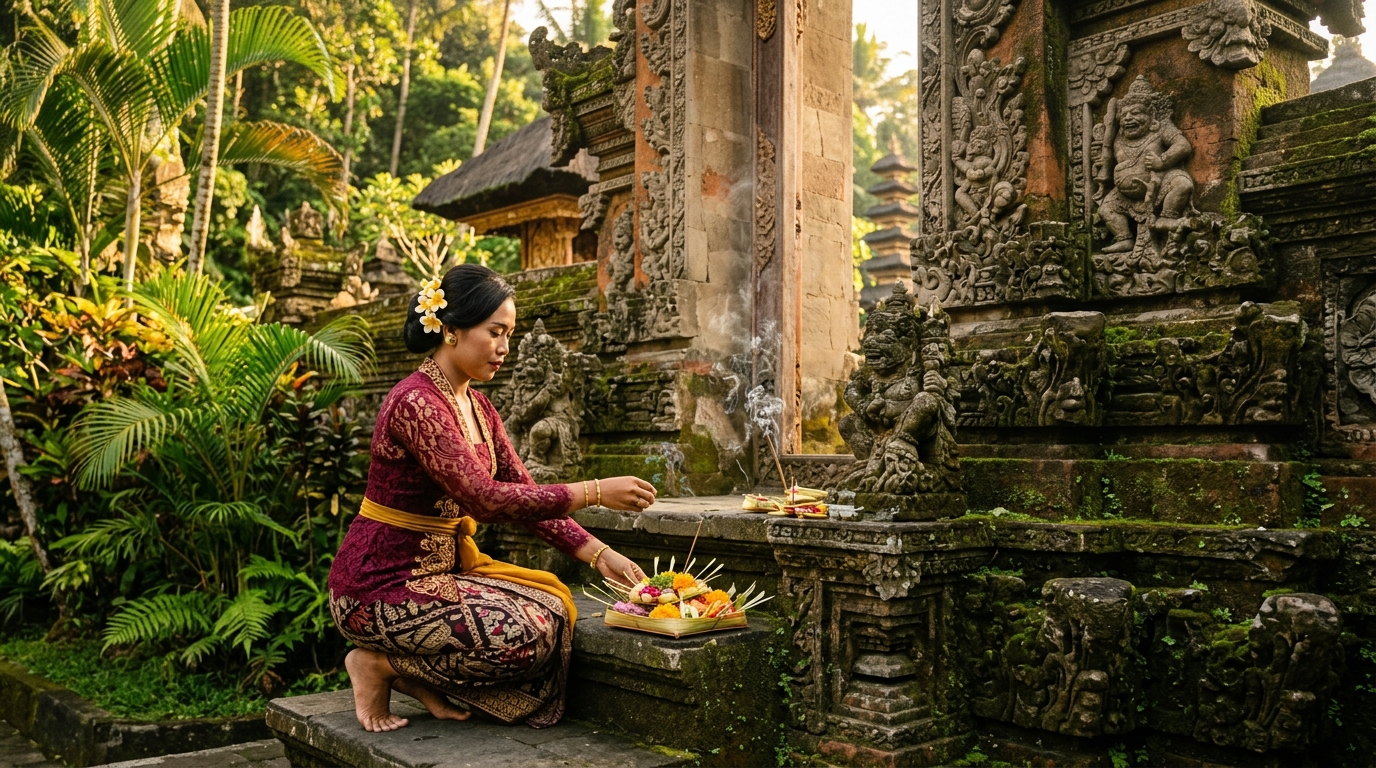
Bali has a completely different religious identity. It’s the only Hindu-majority island in Indonesia, surrounded by a Muslim-majority country. The result is a unique Balinese Hindu culture that shapes everything the temples, the daily offerings (small woven baskets of flowers and incense placed on doorsteps every morning), the ceremonies, the music, the art. Walking through Ubud during a temple ceremony feels unlike anywhere else in Southeast Asia.
If deep cultural immersion is your priority, Bali offers something genuinely unique. The spiritual atmosphere in places like Ubud is hard to replicate elsewhere.
Thailand wins by a significant margin.
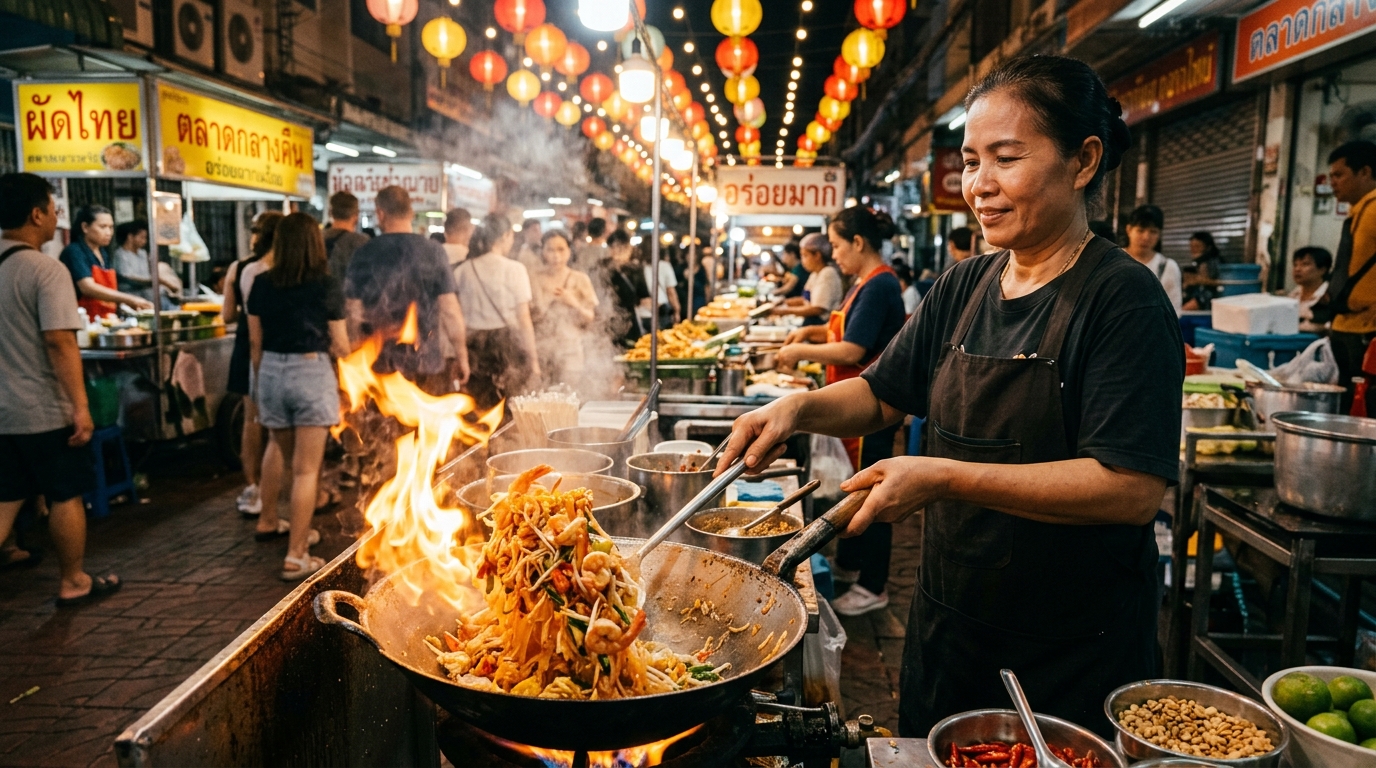
Thai street food is world-famous for good reason. The variety, the flavour, the price — eating in Thailand is one of the highlights of any trip. Pad thai, khao soi, som tam, massaman curry, mango sticky rice — you could eat something different and delicious three times a day for two weeks without repeating yourself.
Balinese food is good but more limited in variety. Nasi goreng (fried rice), mie goreng (fried noodles), satay, and babi guling (roast suckling pig) are the local staples. They’re tasty, but the range is narrower.
Where Bali pulls ahead is the café and wellness food scene. Canggu and Ubud have some of the best vegan, vegetarian, raw food, and health café options anywhere in Southeast Asia. If clean eating and smoothie bowls are your thing, Bali is genuinely excellent.
Thailand is cheaper overall — but the gap is smaller than you’d expect.
| Category | Thailand (per day) | Bali (per day) |
|---|---|---|
| Budget accommodation | $10–20 | $15–30 |
| Mid-range hotel | $40–80 | $50–100 |
| Street food meal | $1–3 | $2–5 (local warungs) |
| Mid-range restaurant | $8–20 | $10–25 |
| Transport (daily) | $5–15 | $8–20 |
| Budget total/day | $25–50 | $35–65 |
| Mid-range total/day | $70–130 | $85–160 |
Thailand has a bigger street food culture, which keeps food costs very low. Bali’s local warungs (small family-owned restaurants) are also cheap, but Western-style cafés — which are everywhere in Canggu and Ubud — push daily spending up fast.
Transport is more expensive in Bali because there’s no public transport system. You’re paying for Grab bikes, private drivers, or rented scooters for almost everything. Thailand has songthaews, tuk-tuks, the BTS in Bangkok, ferries, and cheap internal flights — far more options at lower prices.
Thailand is much easier to navigate.
Thailand has an extensive transport network, budget airlines, overnight trains, sleeper buses, shared minivans, and the Bangkok metro. Moving between cities is straightforward and affordable.
Bali has no public transport to speak of. Everything requires a Grab, a private driver, or a rented scooter. This is fine once you’re used to it, but for first-time visitors it adds complexity and cost. Traffic in South Bali (especially between Canggu, Seminyak, Kuta, and Ubud) is notoriously bad. A 20-kilometer drive can take 90 minutes during busy periods.
Short trip (1–2 weeks): Thailand is easier to manage. You can fly into Bangkok, spend a few days, and then fly south to the islands. Everything connects logically.
Medium trip (2–3 weeks): Either works well. Thailand gives you more variety — you can do Bangkok + Chiang Mai + islands in three weeks comfortably. Bali in three weeks means a slower, deeper experience — Ubud, Canggu, a few day trips, maybe the Gili Islands.
Longer trip (1 month+): Bali becomes more appealing. The slower pace rewards longer stays. You can take a yoga retreat, do a cooking course, spend a week in Ubud, and genuinely settle in. Thailand in a month means you can see the whole country from north to south.
This is where the comparison gets genuinely useful because Thailand and Bali have opposite seasons.
| Best Season | Rainy Season | |
|---|---|---|
| Thailand | November – February | June – October |
| Bali | May – September | October – March |
This means:
If your travel dates are fixed, let the seasons decide for you. Going to Bali in December in the middle of monsoon season, or Thailand’s islands in September during the worst of the rains, will significantly affect your experience.
Most articles skip this entirely, but it’s worth knowing about for both destinations.
Thailand: Chiang Mai has a serious burning season from late February through April. Agricultural burning creates hazardous air quality that has ranked the city among the most polluted in the world on bad days. If you’re visiting northern Thailand, time it for November through January.
Bali: Less talked about, but Bali also has real air quality issues — particularly in South Bali (Canggu, Seminyak, and Kuta). Trash burning, motorbike exhaust, and seasonal rice field burning combine to create consistently poor air quality in busy areas. It rarely makes headlines the way Chiang Mai does, but people who spend weeks in Bali often notice it.
Beach areas and higher elevation spots like Ubud tend to have better air. But if you have respiratory sensitivities, it’s worth factoring in.
Thailand wins for variety. Bali wins for vibe.
Thailand’s nightlife ranges from full-moon parties on Koh Phangan to rooftop bars in Bangkok to jazz clubs in Chiang Mai. It’s energetic, diverse, and available at every budget level.
Bali’s nightlife centres on Seminyak and Canggu — beach bars, sunset cocktails, DJ events. It’s more chilled, more wellness-adjacent, and generally winds down earlier than the Thai party islands. Kuta is the exception — it’s Bali’s version of a party strip, popular with Australian backpackers, and generally not what people are thinking of when they picture Bali.
Both destinations are generally safe for solo female travelers. Some practical differences:
Thailand has a larger backpacker infrastructure — it’s easier to meet people at hostels, join group tours, and find travel companions. Grab is widely available and reliable, reducing the need to negotiate with individual drivers.

Bali has a strong yoga and wellness community, which tends to attract solo female travelers and creates a warm, community feel, especially in Ubud. However, navigating Bali without a scooter (which carries real risk for inexperienced riders) means relying on Grab bikes — which are fine in most areas but require more confidence to use on busy roads.
For solo female travelers who are newer to Southeast Asia, Thailand is slightly easier. For those looking for a more spiritual, community-focused experience, Bali’s Ubud area is hard to beat.
Go to Thailand first if you:
Go to Bali first if you:
Yes — and many people do. The flight between Bali (Ngurah Rai Airport, DPS) and Bangkok (Suvarnabhumi, BKK) takes about 5–6 hours. Budget airlines like AirAsia and Scoot often make it very affordable.
A practical 3-week itinerary that covers both:
| Days | Destination |
|---|---|
| Days 1–4 | Bangkok — city exploration |
| Days 5–7 | Chiang Mai — temples, elephant sanctuary |
| Days 8–10 | Thai islands — Koh Lanta or Koh Samui |
| Day 11 | Fly Bangkok → Bali |
| Days 12–15 | Ubud — rice terraces, temples, cooking class |
| Days 16–18 | Canggu or Seminyak — beaches, cafés |
| Days 19–21 | Uluwatu or Nusa Penida — cliffs, snorkelling |
The key is to visit Thailand November through February and Bali in the same window (note: Bali’s wet season runs October to March, so this is shoulder season for Bali — not ideal, but manageable). Or flip the trip: do Bali May through September when it’s dry, then fly to Thailand for the north before moving south.
The packing list overlaps heavily between the two.
For Bali specifically, a dry bag is useful for boat trips to the Gili Islands or Nusa Penida. The Earth Pak Waterproof Dry Bag (available on Amazon) is a good option — it protects cameras, phones, and documents on ferry rides where bags can get wet from spray.

For both destinations, a lightweight travel organizer keeps everything sorted when you’re moving between multiple spots. The Eagle Creek Pack-It Cube Set (available on Amazon) is a popular choice for travellers who move hotels frequently — it compresses clothes down significantly and keeps bags from becoming chaotic.
For women traveling solo to either destination, a Pacsafe anti-theft crossbody bag (available on Amazon) with slash-proof straps and lockable zips is worth having for busy markets and transport hubs in both countries.
Is Bali or Thailand cheaper?
Thailand is generally cheaper overall, especially for budget travelers. Street food in Thailand is significantly cheaper than in Bali, and public transport costs are far lower. Bali can match Thailand on accommodation if you choose local guesthouses or homestays, but the lack of public transport pushes daily spending up. Mid-range travelers will find both destinations comfortable at similar budgets.
Which has better beaches — Bali or Thailand?
Thailand has better beaches for swimming — white sand, clear water, calm conditions on the gulf coast islands. Bali has better surf beaches. If swimming, snorkelling, and island-hopping are your priorities, go to Thailand. If you want to surf or prefer dramatic cliff-backed beaches, Bali delivers.
Is Bali or Thailand better for first-time visitors?
Thailand is generally easier for first-time visitors to Southeast Asia. Better public transport, lower cost, more variety, and a well-established tourist infrastructure make it more forgiving. Bali is an excellent first destination too, but the lack of public transport and the need to navigate by scooter or private car add complexity.
Which is better for a honeymoon — Bali or Thailand?
Both are popular honeymoon destinations. Bali has the edge for pure romance — private pool villas, rice terrace views, candlelit dinners in Ubud, and a spiritual atmosphere that feels genuinely special. Thailand offers more variety — luxury resorts on private Thai islands or in Bangkok for couples who want a mix of city and beach. Your choice depends on whether you want quiet and intimate (Bali) or vibrant and varied (Thailand).
Can I visit Bali and Thailand in the same trip?
Yes, and it works well. The flight between Bali and Bangkok is about 5–6 hours and often very affordable on budget airlines like AirAsia. Three weeks is enough to combine both comfortably — roughly 10 days in Thailand and 10 days in Bali. Check the seasonal guide above to plan which one to visit first based on your travel dates.
Is Bali or Thailand better for solo female travelers?
Both are safe and welcoming. Thailand has a larger backpacker community which makes it easier to meet people and join group tours. Bali’s Ubud area has a strong female-traveler community centred on yoga and wellness. Thailand is slightly more straightforward logistically; Bali’s Ubud is hard to beat for a spiritual solo experience.
Which has better food — Bali or Thailand?
Thailand. The variety, flavour, and price of Thai food is hard to match anywhere in Southeast Asia. Bali has excellent local food and a superior healthy café and plant-based dining scene, but for overall food experience, Thailand wins clearly.
What is the best time to visit Bali vs Thailand?
Thailand is best from November to February (dry season). Bali is best from May to September (dry season). The seasons are roughly opposite, which means if you’re visiting both in one trip, you’ll hit shoulder season for one of them, manageable but worth knowing in advance.
If you’re choosing one for your first Southeast Asia trip, start with Thailand.
It’s more diverse, easier to navigate, cheaper, and offers a broader range of experiences that will give you a strong feel for the region. The beaches are better for most travelers. The food is exceptional. And the connections between Bangkok, Chiang Mai, and the islands make for a logical, satisfying route.
Come back for Bali. Give it two weeks minimum. Stay in Ubud for a few days and slow down completely. Go to Uluwatu for the sunsets. Take the ferry to Nusa Penida. Rent a scooter if you’re comfortable on one, or hire a driver for the day. Bali at its best is deeply beautiful — but it rewards patience and time more than a quick visit.
And if you can manage three weeks or more? Visit both. You won’t regret it.