
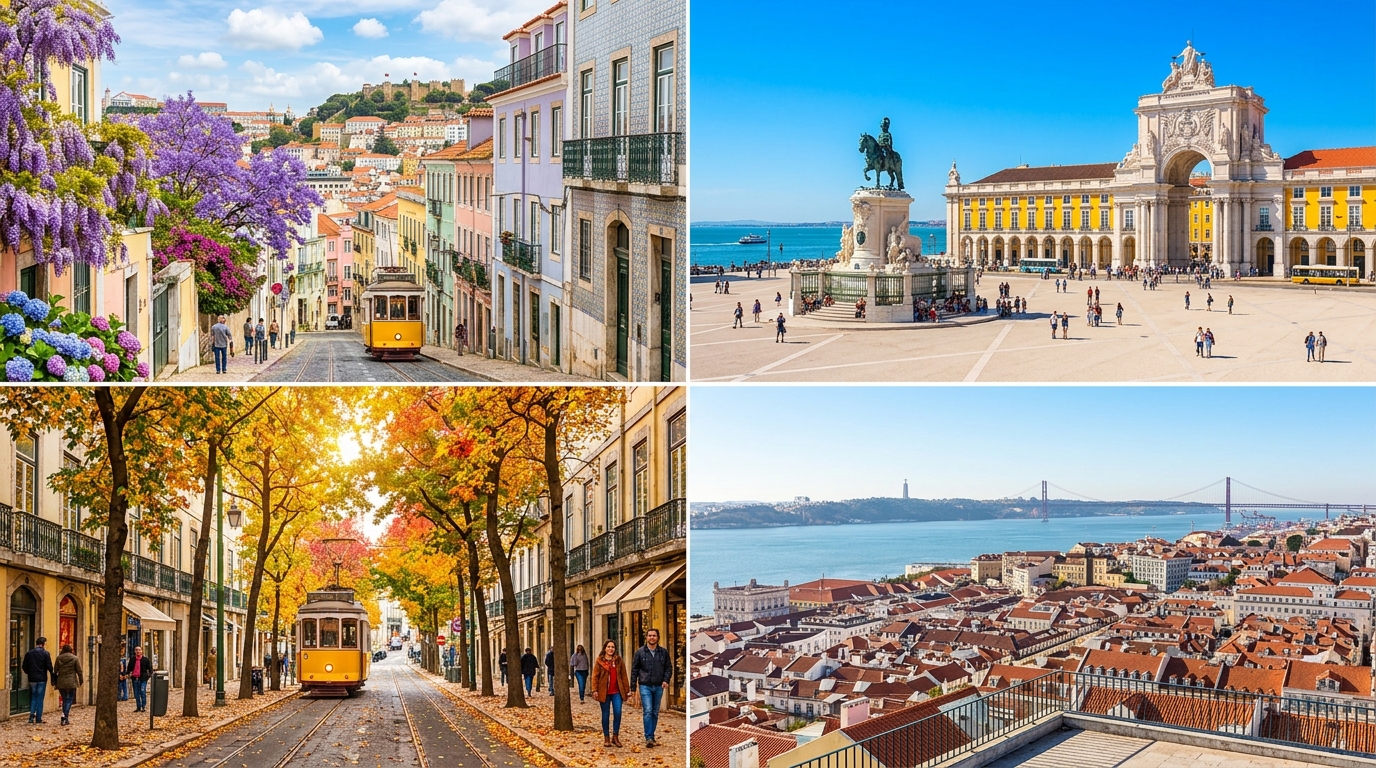
Most people need at least three full days in Lisbon to see the main highlights without rushing. If you want to add a day trip to Sintra or Cascais, plan for four to five days total.
Two days is doable if you are short on time, but you will need to pick between Belem and a day trip, since trying to do both in 48 hours usually means you end up exhausted and seeing very little properly.
Spring (March to May) and early autumn (September to October) are the best months. The weather is warm but not brutal, the crowds are smaller than summer, and prices for hotels are noticeably lower.
Summer (June to August) is peak season. Temperatures regularly hit the low 30s Celsius, the Belem area gets packed by mid morning, and popular restaurants need reservations days in advance.
Winter is mild compared to most of Europe, rarely dropping below 10 degrees Celsius during the day, and it is actually a great time to visit if you want fewer crowds and cheaper flights.
Lisbon is built on seven hills, and that is not an exaggeration. Comfortable shoes are non negotiable here, no matter how nice your outfit photos need to look.
Buy a Viva Viagem card at any metro station and load it with either single trips or a 24 hour pass. This card covers the metro, buses, trams, and the funiculars, which is a big deal because riding the famous funiculars and trams individually adds up fast.
If you are heading to Belem, take the 15E tram or bus 728 rather than walking. It is further from the center than most first time visitors expect, and the walk along that road is not pleasant.
A small cross body bag with a zip closure is genuinely useful in Lisbon, especially on crowded trams where pickpocketing is common. This anti-theft crossbody bag from Amazon is a practical pick that keeps your phone and cards secure while you explore.
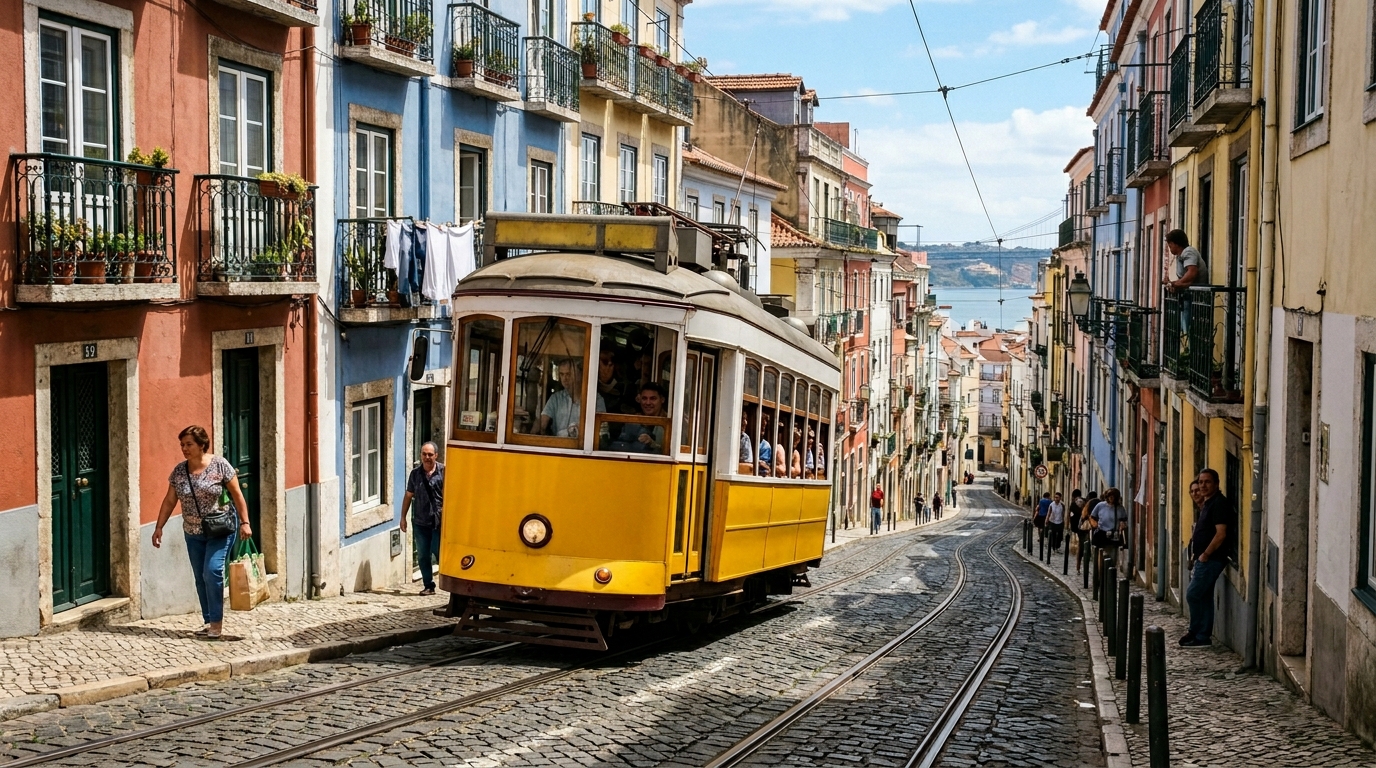
Alfama is Lisbon’s oldest neighborhood, and it survived the massive 1755 earthquake that destroyed most of the city. Walking through it feels like stepping into a different century. Narrow alleys, laundry hanging between buildings, tiny squares with locals chatting outside cafes.
There is no real route to follow here. Just start walking uphill from the river and let yourself get a little lost. You will stumble onto viewpoints, churches, and tiny shops that never make it onto a map.
Lisbon’s viewpoints, called miradouros, are some of the best free things to do in the entire city. The two most popular are Miradouro de Santa Luzia and Miradouro das Portas do Sol, both in Alfama, and both looking out over the orange rooftops toward the river.
For a quieter option with arguably a better view, head to Miradouro da Senhora do Monte. It takes more effort to reach, but you will share it with far fewer tourists, especially at sunset.
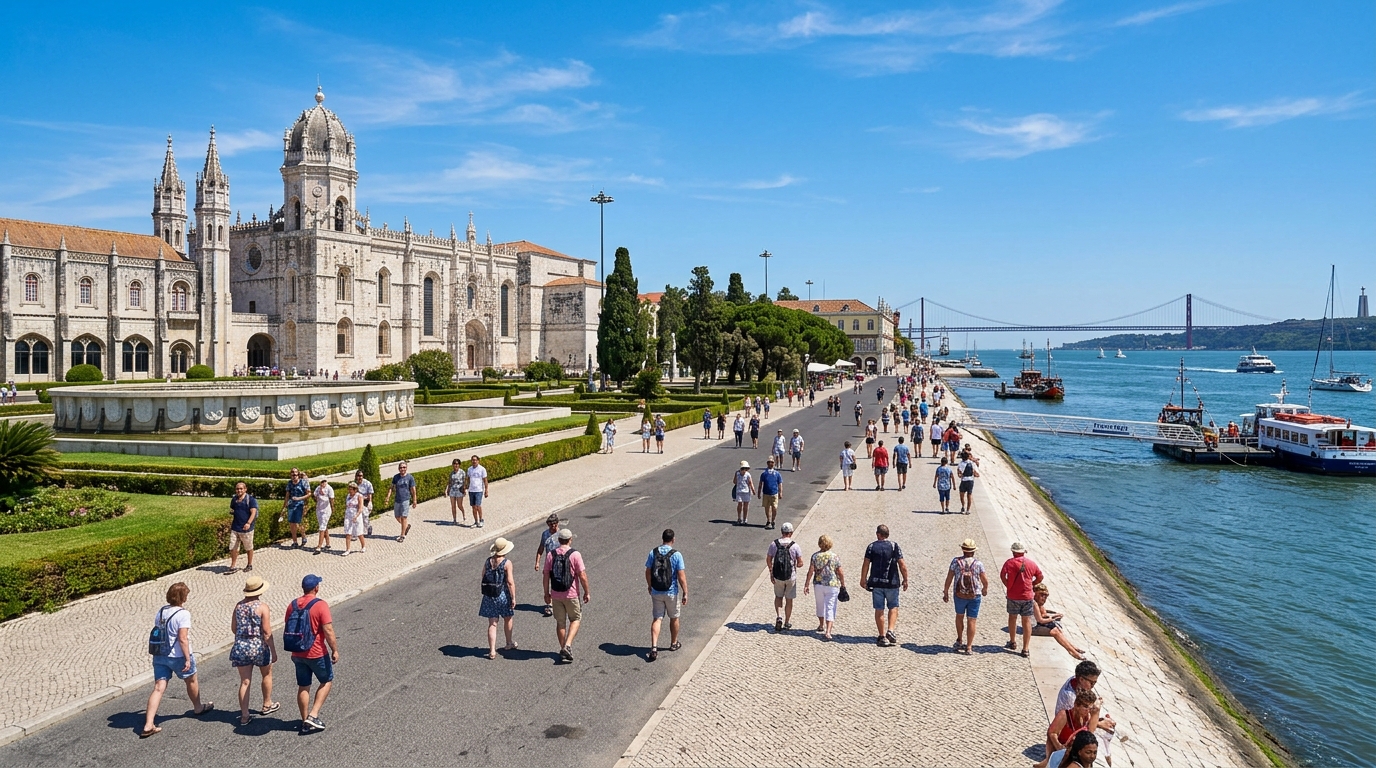
Belem sits along the river, about a 30 minute tram ride from the city center, and it is where Portugal’s Age of Discovery is most visible. Three things to prioritize here.
Jeronimos Monastery is one of the most striking buildings in Portugal, built in the early 1500s in a style called Manueline, full of carved ropes, shells, and sea creatures that reflect Portugal’s maritime history. The cloister costs around 18 euros to enter, and lines can be long, so booking a timed ticket in advance saves a lot of waiting.
Belem Tower was the gateway for ships leaving on voyages of exploration. The inside is small and the lines are often long for what you get, so most visitors are happy admiring it from outside.
Pasteis de Belem is the bakery where the pastel de nata was invented, and it is still using the original recipe. Expect a queue, but it moves quickly, and there are two lines, one for takeaway and one for sitting inside. Either way, eat it warm with a dusting of cinnamon.
Tram 28 is the famous yellow tram that winds through Alfama, Graca, and Baixa, and it has become one of the most photographed things in Lisbon. Here is the honest truth though. It is often packed, pickpockets target it specifically, and during peak hours you might not even get a seat.
If you want the experience, go early in the morning, around 7 or 8 am, before the crowds build up. Otherwise, walking the same route gives you the same views without the squeeze.
This castle sits at the top of Alfama and has been used by Phoenicians, Romans, Moors, and Portuguese royalty over the centuries. The real draw is walking along the castle walls, where you get a 360 degree view over the entire city and the river beyond. Entry costs around 10 euros.
By day, Bairro Alto is quiet, full of small shops and cafes. By night, it transforms into Lisbon’s nightlife district, with bars spilling out onto the streets and people drinking on the sidewalks until late.
Even if late nights are not your thing, it is worth walking through in the early evening for the energy and the food. Many of the city’s best small restaurants are tucked into this neighborhood.
Fado is Portugal’s traditional music style, often described as deeply emotional or even melancholic, usually performed with just vocals and a Portuguese guitar. Alfama and Bairro Alto are the best neighborhoods to find it.
Some venues require a dinner reservation with a cover charge, while smaller bars let you stand at the counter for the price of a drink. Either way, this is one of the most culturally rich experiences in Lisbon and something that genuinely cannot be replicated anywhere else.
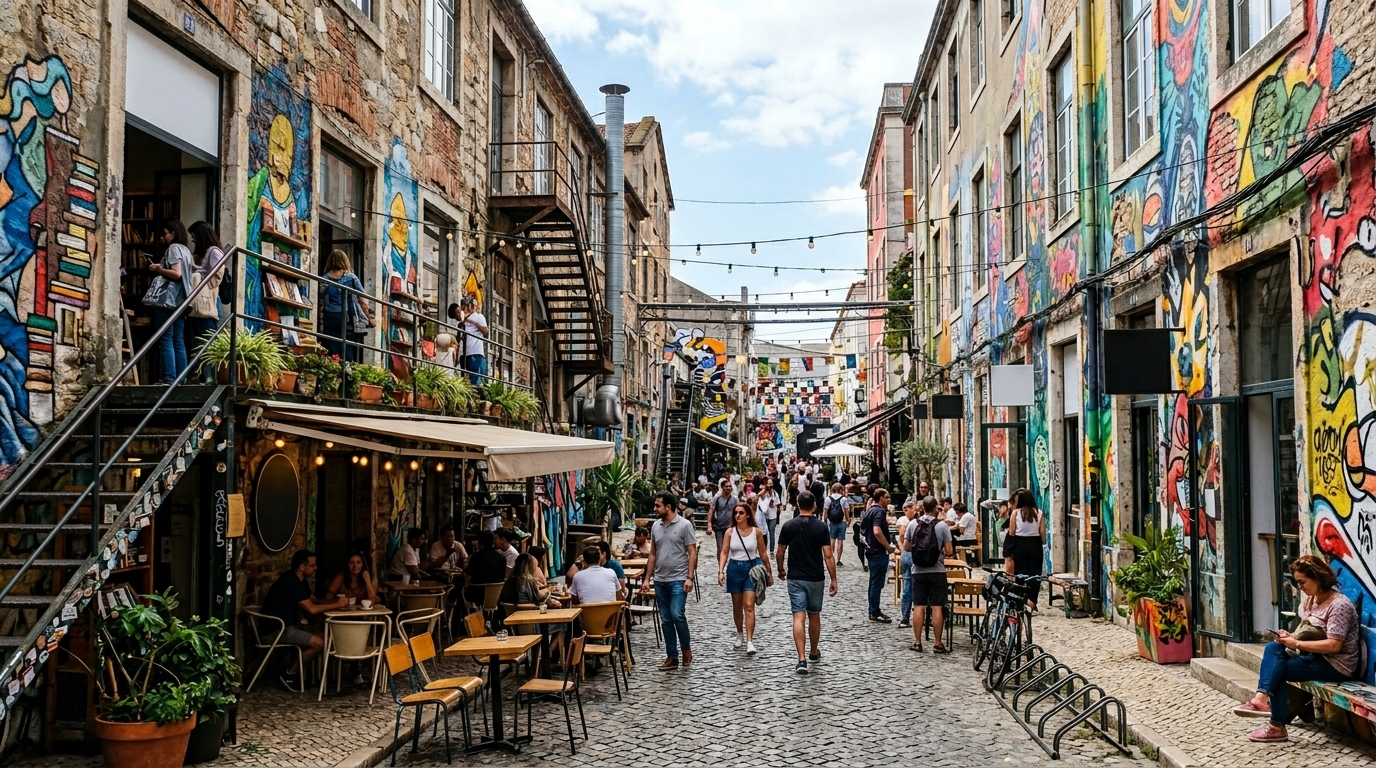
LX Factory is a former industrial complex turned into a creative hub, packed with independent shops, bookstores, restaurants, and street art. It sits along the same tram route as Belem, so it pairs well as a stop on your way there or back.
The standout here is Ler Devagar, a multi floor bookstore with a huge flying bicycle sculpture hanging from the ceiling. Even if you are not buying books, it is worth a wander.
This is a large food hall near Cais do Sodre station, bringing together some of Lisbon’s best restaurants and food stalls under one roof. It is touristy, but it is also genuinely useful if you are traveling with people who all want different things to eat.
Almost no guides mention this, but if your trip lines up with a Tuesday or Saturday, Feira da Ladra in the Alfama area is one of the most interesting things you can do in Lisbon. It is a sprawling flea market with vintage clothes, old records, antiques, and handmade crafts. Locals shop here too, which makes it feel completely different from the souvenir stalls near the main attractions.
Most guides avoid giving real numbers, so here is a rough breakdown for a mid range traveler.
Budget travelers can get by on around 50 to 70 euros a day, covering a hostel or budget guesthouse, public transport, street food, and one paid attraction.
Mid range travelers should plan for 100 to 150 euros a day, which covers a comfortable hotel, sit down meals, transport passes, and a couple of paid attractions or tours.
Luxury travelers can expect 250 euros and up per day, depending on hotel choice, since Lisbon has a growing number of high end boutique hotels, especially in Chiado and Principe Real.
Lisbon is generally considered one of the safer European capitals for solo travelers, but a few practical tips make a real difference.
Pickpocketing is the main issue, particularly on Tram 28, in crowded squares like Praca do Comercio, and around Rossio Station. Keep bags zipped and worn across the body, not on your back.
Avoid walking alone through quieter parts of Alfama or Mouraria late at night. Stick to well lit, busier streets after dark, which is easy since most nightlife areas like Bairro Alto and Cais do Sodre are well populated until late.
Taxis and ride share apps like Uber and Bolt are widely available and affordable, so there is rarely a reason to walk somewhere that feels uncomfortable.
A portable charger is one of those small things that makes solo travel so much easier, especially if you are relying on maps and ride share apps all day. This compact power bank on Amazon is lightweight enough to carry in a small bag and charges a phone multiple times over.
The cobblestones in Lisbon are uneven, often slippery when wet, and steep in many neighborhoods. Cute shoes that look great in photos can genuinely ruin a trip if they are not comfortable for walking.
Pack shoes with real grip and support. These comfortable walking shoes on Amazon are a popular choice for travelers who want something that looks good but can also handle a full day of hills and cobblestones.

Sintra is a 40 minute train ride from Rossio Station and feels like a completely different world, with colorful palaces tucked into forested hills. Pena Palace is the most famous, but Quinta da Regaleira, with its mysterious spiral well, is just as memorable and usually has fewer crowds.
One important tip. Sintra gets extremely busy, especially on weekends and during summer. Arrive as early as possible, ideally on the first train, to avoid long queues at the main attractions.
Cascais is a relaxed beach town about 40 minutes from Lisbon by train, and it is an easy half day or full day trip if you want some coastal time without leaving the Lisbon area entirely.
For first time visitors, Chiado and Baixa are the best base. Both are central, walkable, well connected by metro, and close to most of the attractions in this guide.
For a quieter, more local feel with great cafes and boutique shops, Principe Real is a great alternative, particularly popular with female travelers looking for a stylish, safe neighborhood close to the action but slightly removed from the busiest tourist crowds.
Avoid staying too close to Bairro Alto if you are a light sleeper, since the nightlife noise can carry late into the night.
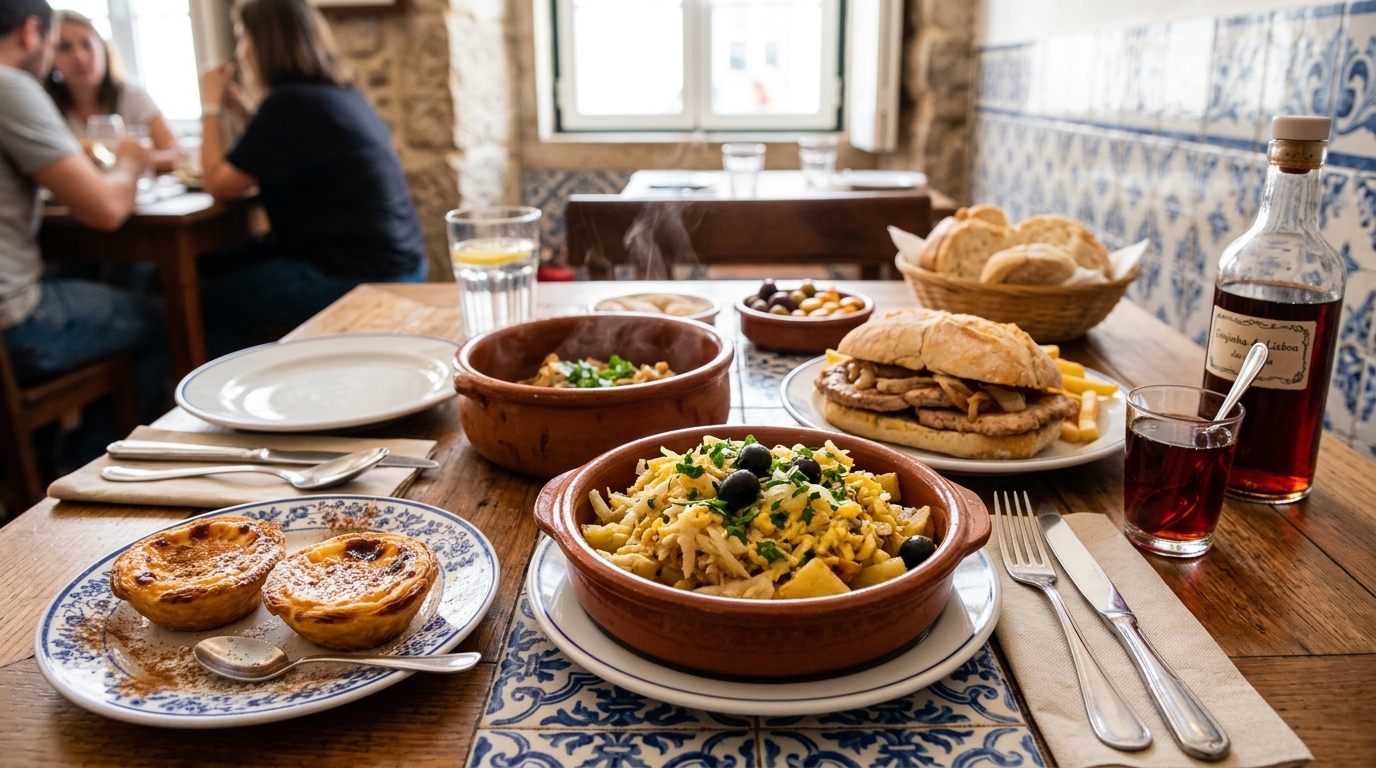
Pastel de nata is the obvious one, but do not stop at just trying it once. Different bakeries have different textures, and comparing a few is part of the fun.
Bifana is a simple pork sandwich that locals eat constantly, usually from small no frills spots rather than restaurants.
Bacalhau, or salted cod, appears on almost every traditional menu, prepared dozens of different ways across the country.
Ginjinha is a cherry liqueur often served in a small chocolate cup, and trying one standing at a tiny bar counter is a classic Lisbon moment.
Is Lisbon expensive to visit?
Lisbon is one of the more affordable capital cities in Western Europe. A mid range traveler can comfortably manage on 100 to 150 euros a day, including hotels, food, and transport.
How many days should I spend in Lisbon?
Three days is enough to cover the main highlights. Add an extra day or two if you want to include Sintra or Cascais.
Is Lisbon safe for solo female travelers?
Yes, Lisbon is considered one of the safer cities in Europe for solo travelers. The main risk is pickpocketing in crowded areas, not violent crime.
What is the best month to visit Lisbon?
May, June, September, and October offer the best balance of warm weather and manageable crowds.
Do I need to book Jeronimos Monastery tickets in advance?
Yes, especially during spring and summer. Lines without a pre booked ticket can take over an hour.
Is Tram 28 worth it?
It is worth experiencing once, ideally early in the morning. The views are great, but it gets crowded fast and pickpockets are known to target it.
Can I visit Lisbon and Sintra in one day?
You can visit Sintra as a day trip from Lisbon, but trying to combine it with major Lisbon sightseeing on the same day usually means rushing both. Dedicate a full day to Sintra alone.
Lisbon rewards travelers who slow down. The biggest mistake people make is treating it like a checklist city, rushing from one landmark to the next. The real magic happens in the quiet alleys of Alfama, the unexpected viewpoints you stumble onto, and the small bakeries where nobody is rushing you out the door.
Plan your must see attractions, but leave room in your schedule for wandering. That is when Lisbon shows you its best side.