
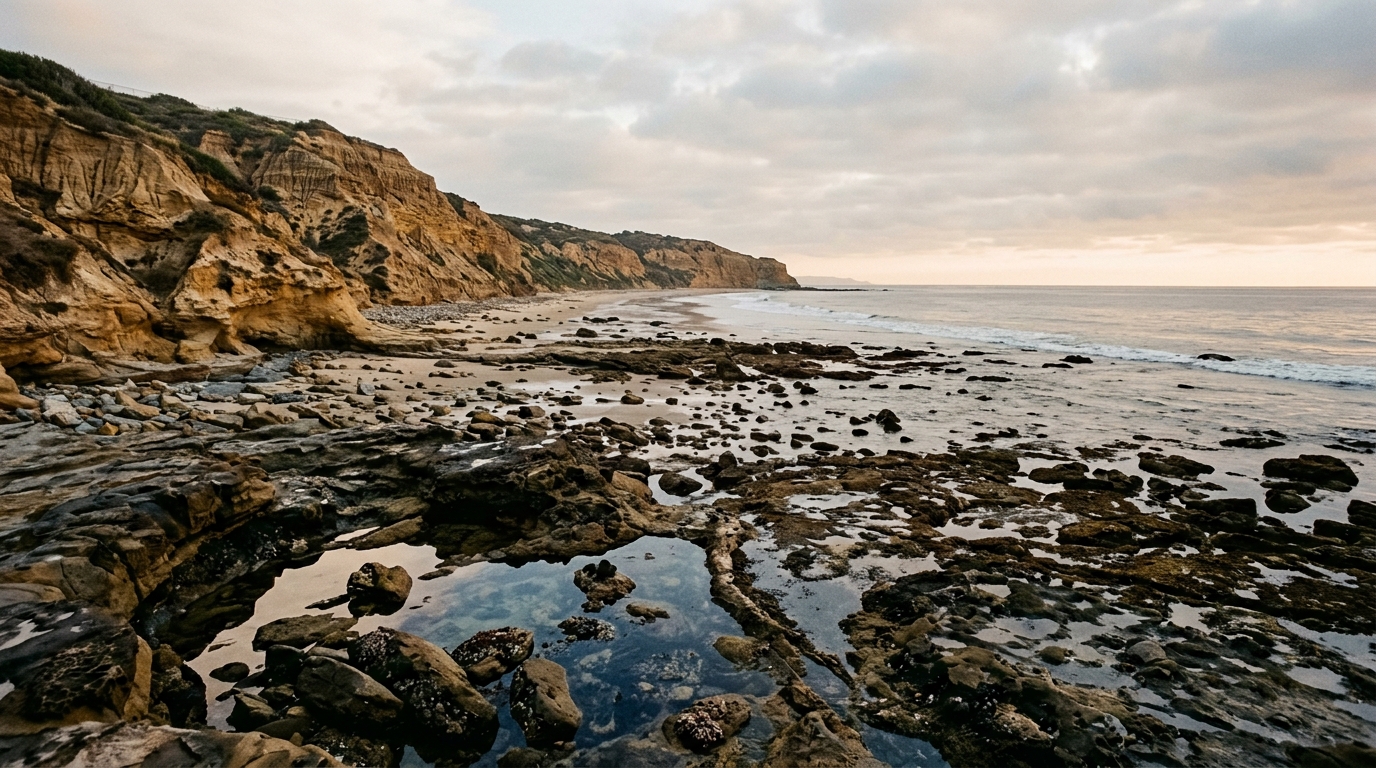
It sits between Newport Beach and Laguna Beach on Pacific Coast Highway. Close enough to LA for a day trip. Complete enough to justify a week. Most visitors spend a few hours on the beach and leave. This guide shows you how much they missed.
Day use fee: $15 per vehicle ($20 in summer). Open 6 AM to sunset.
Crystal Cove covers 2,791 acres of coastal and backcountry land in Orange County. The park combines three miles of undeveloped Pacific coastline with an 18-mile trail network, a federally protected Historic District of original 1930s cottages, four tide pool areas, a sea cave, a mini waterfall, a campground, and two restaurants right on the beach.
It is one of the largest stretches of open space and natural seashore remaining in the greater LA area.
Crystal Cove is not one beach. It is five connected sections, each with different characters and access points.
A favorite among tide poolers and scuba divers. Four bluff-top parking lots with restrooms and showers. The paved Bluff Top Trail runs along the sandstone cliffs here with sweeping ocean views and minimal elevation change. Best for families and casual walkers.
Popular with surfers and scuba divers. The underwater reef is part of why the park is a designated marine protected area. Snorkeling here reveals rockfish, garibaldi (California’s bright orange state marine fish), kelp forests, and on good days, a leopard shark on the sandy bottom.
The most exciting section most visitors never find.
The sea cave at Little Treasure Cove is accessible at low tide. The entrance leads through to a rocky cove on the other side. Interior walls are covered in mussels and barnacles. Waves echo inside. The light at the far opening is extraordinary for photography.
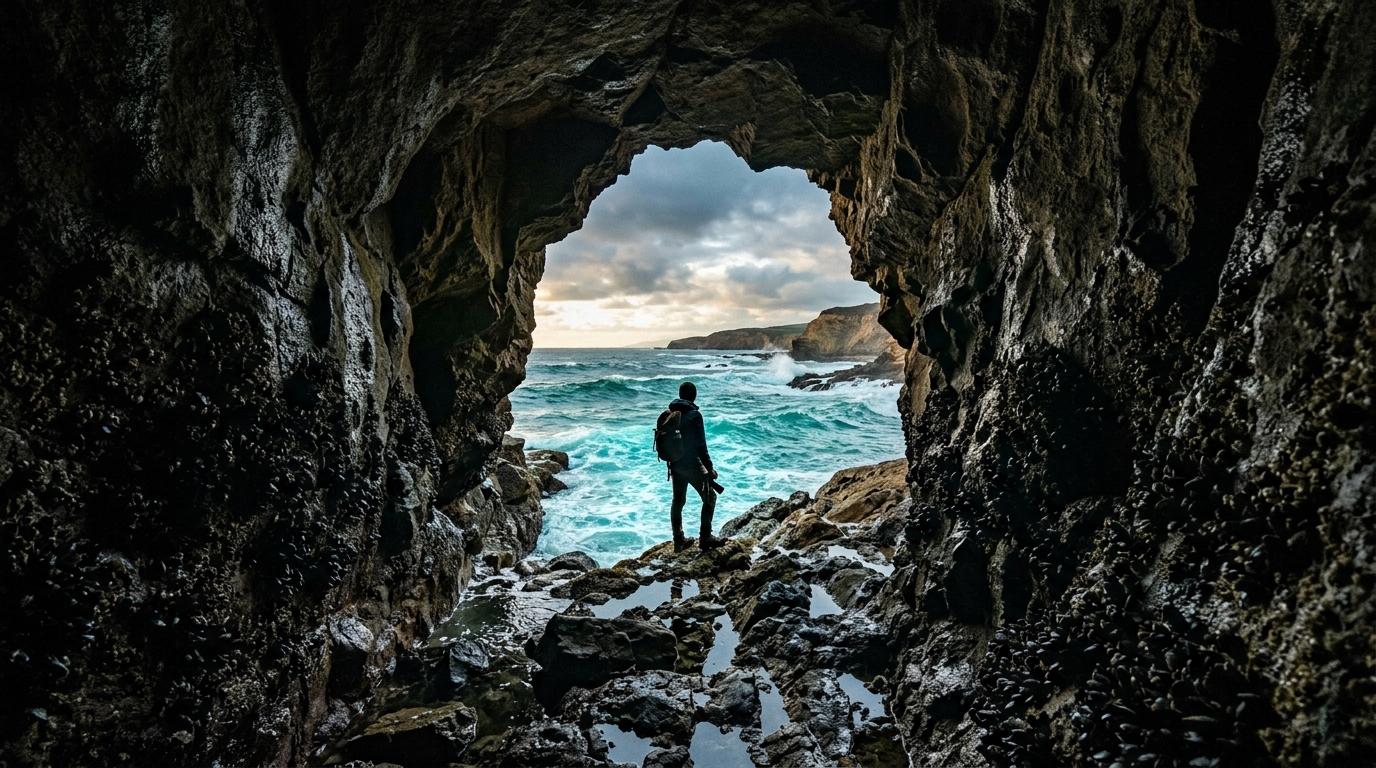
Safety rule: Only enter during a confirmed low-tide window. If waves are moving significantly inside, come back at a lower tide.
The social center of the park. The Beachcomber Café sits directly on the sand. The 1930s cottages frame the beach behind. Scuba diving, snorkeling, surfing, and whale watching all operate from here. Best swimming beach in the park.
Best for tide pools and hiking access. A steep but short trail leads to the shoreline. At low tide the rock shelf extends far enough to spend an hour exploring without retracing steps.
Four tide pool areas: Reef Point, Pelican Point, Treasure Cove, and Rocky Bight.
What you might see: sea anemones, hermit crabs, shore crabs, chitons, limpets, opaleye perch, tidepool sculpin, and ochre seastars.
Go at low tide. Aim for 0.5 feet or lower. Negative tides expose rock formations that are underwater most of the year. Check NOAA tide tables at tidesandcurrents.noaa.gov for the Laguna Beach station before you go.
No collecting allowed except sea glass and driftwood (50 lbs maximum). Do not remove animals, shells, or rocks.
First-timers: Start at the Historic District and walk south to Rocky Bight. Less slippery, easier access, great for kids.
Experienced explorers: Treasure Cove and Little Treasure Cove for the sea cave and the most varied rock formations.
Water shoes are essential. Bare feet get cut on barnacles and flip flops come off in surge. The WHITIN Minimalist Water Shoes provide real grip on wet rock, drain fast, and protect properly on barnacle-covered surfaces. Shop on Amazon
All backcountry trails start from the Lower Moro parking lot on the inland side of PCH.
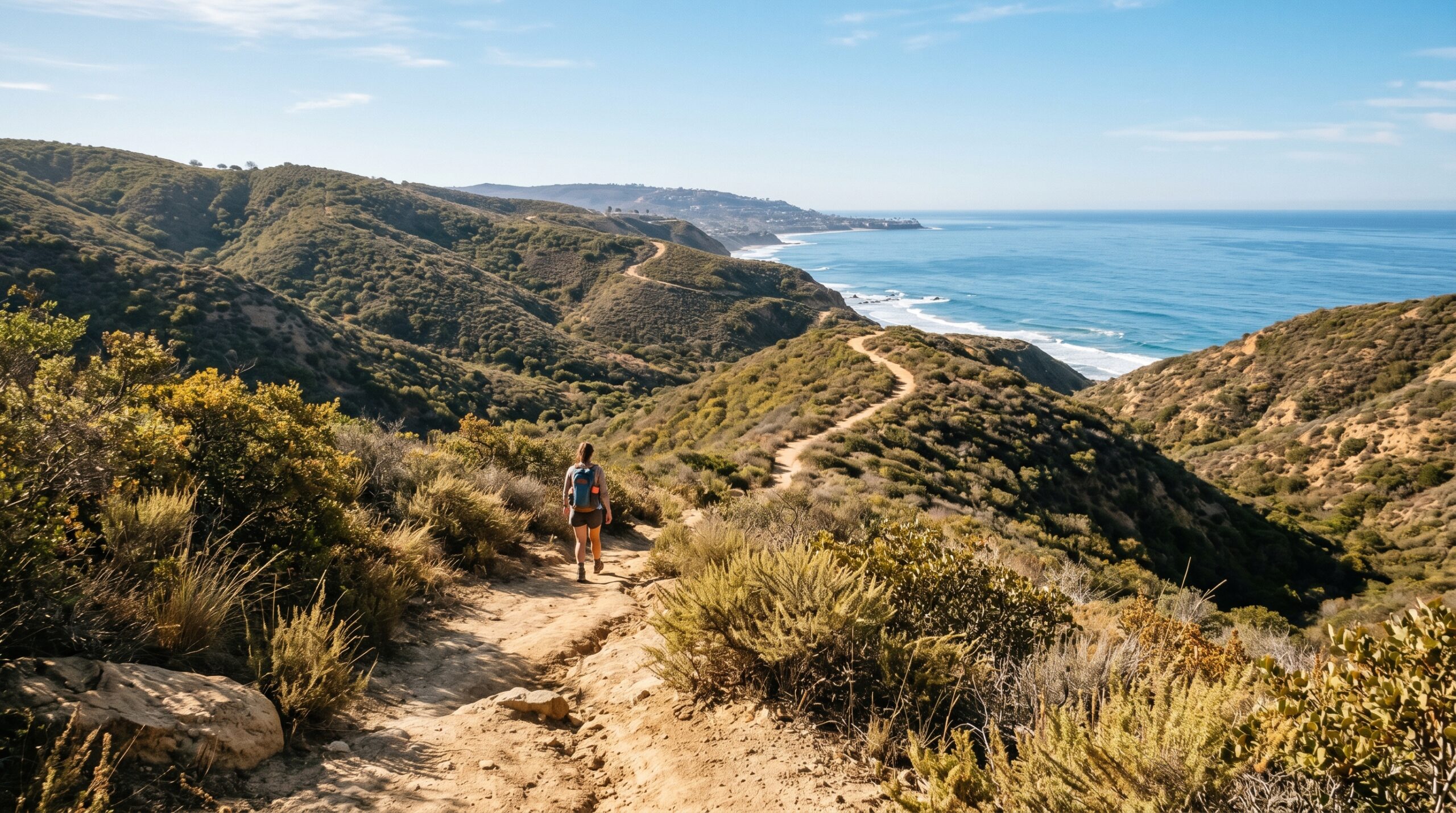
Easy: Bluff Top Trail (2 miles roundtrip) Paved, ocean views the entire way, minimal elevation change. Best for families and sunset photography.
Moderate: El Moro Canyon Loop (5 miles roundtrip) Climbs through scrub oak and coastal sage with views toward Catalina Island on clear days. The canyon creek runs year-round in sections. The mini waterfall along the lower canyon runs January through April after winter rains.
Moderate: Reef Point and Crystal Cove Trail (5.2 miles roundtrip) Best single trail for combining beach, bluff views, and the Historic District in one loop.
Challenging: Crystal Cove Perimeter Loop (9.4 miles roundtrip) The most complete way to experience the park in a single day. Covers coast to upper ridgelines and back down through all ecosystems.
Horseback riding and mountain biking are both permitted on the trail network. No horse rentals in the park but private equestrian companies in the area can arrange guided rides.
The Crystal Cove Historic District is a federally listed enclave of 46 vintage rustic cottages originally built as a seaside colony in the 1930s and 1940s, nestled around the mouth of Los Trancos Creek.
Walking through it feels like stepping into a different California. Before the coastal highway. Before the development. Before everything.
Half the 46 cottages are available to book overnight. This is the most unique accommodation in Orange County, and most people do not know it exists.
Prices range from $35 to $250 per night. The best cottages face directly onto the beach with unobstructed ocean views.
Booking: Through the Crystal Cove Conservancy at crystalcovebeachcottages.org. Summer weekends book months in advance. Weekday and off-season availability is much better. Cancellations come up regularly.
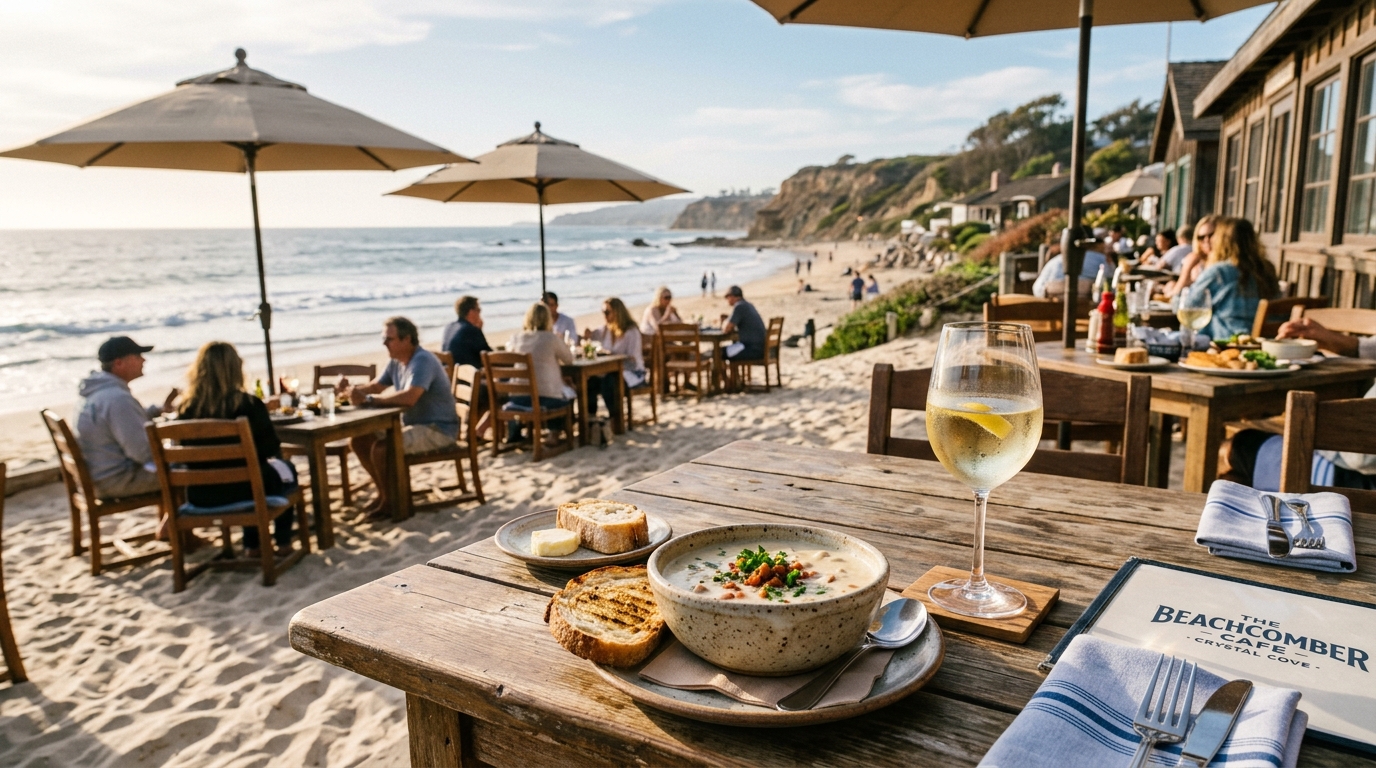
The Beachcomber Café is the signature experience. Nestled inside a restored beachfront cottage, patio tables literally on the sand. The clam chowder, fish tacos, and crab cakes are the standouts. Book dinner reservations in advance June through September.
Shake Shack Crystal Cove is one of the most scenic fast-casual spots in California. Standard Shake Shack menu, extraordinary ocean views from the outdoor seating. Both restaurants are reached from the Los Trancos lot by shuttle or a 10-minute walk.
The Moro Campground sits on the inland side of PCH with standard sites, premium sites with electrical hookups, and primitive backcountry sites further up the canyon trails.
The primitive sites are the most atmospheric — genuinely removed from the urban surroundings despite being minutes from the coast. All reservations through ReserveCalifornia (reservecalifornia.com). Summer weekends book fast. Weekdays and off-season are much more available.
Los Trancos Lot — Historic District, Beachcomber Café, cottage access. $2 shuttle to the beach. Hourly parking via the Yodel app.
Lower Moro Lot — All hiking trails, El Moro Canyon, camping check-in.
Reef Point Lot — Southern beaches, tide pools, rocky formations. Steep trail to beach access.
Pelican Point Lot — Northern beaches, Bluff Top Trail. Park in Lot P-2 and take the boardwalk to the paved bluff trail.
Parking fee: $15 per day, $20 in summer. Park fills by 9 AM most summer weekends. Arrive before 8 AM or go mid-week.
For a comfortable full day carrying tide pool gear, a change of clothes, and snacks, the L.L.Bean Boat and Tote Canvas Bag is open-topped, machine washable after a sand day, and durable enough for rocky trail access without tearing. Shop on Amazon
Crystal Cove is a designated marine protected area. The kelp forests offshore attract garibaldi, calico bass, sheephead, moray eels, and bat rays. Visibility ranges 10 to 30 feet depending on swell and season. Best visibility is September through November.
Enter from Los Trancos or Treasure Cove Beach. No boat needed.
Best conditions: Calm days after a week without significant swell. Check Surfline for Laguna Beach before going.
The Seaview 180° Full Face Snorkel Mask gives beginners a panoramic view, an integrated dry-top snorkel that does not flood, and a secure fit for OC surge conditions. Shop on Amazon
Free ranger-led tidepool walks run on weekends during low-tide windows and are excellent for families. Rangers identify species and know exactly which pools are most active on a given day. Check crystalcove.org for the current schedule. A self-guided Geology Discovery Trail brochure is available for download on the park website.
Best time to visit: September and October. Crowds are thin, water is warmest (68 to 72°F), blue and humpback whales are active offshore, and June Gloom is gone.
June Gloom: Marine layer keeps mornings overcast from late May through mid-June. Burns off by noon most days.
What to bring:
Dogs: Not permitted on the beach or backcountry trails. Service animals only.
Swimming: No lifeguards at Crystal Cove. Watch for shore break at Reef Point and Treasure Cove.
How much does Crystal Cove State Park cost? $15 per vehicle for day use, $20 in summer. $2 shuttle separate. Cottage rentals are $35 to $250 per night.
Where is Crystal Cove State Park? On PCH between Newport Beach and Laguna Beach, Orange County. Main entrances: 8471 PCH (Los Trancos) and 8 Reef Point Drive (southern beaches).
How do I book the Crystal Cove cottages? At crystalcovebeachcottages.org. Summer weekends book months ahead. Weekdays much easier. Cancellations come up regularly.
What are the best trails at Crystal Cove? Bluff Top Trail for easy ocean views. El Moro Canyon Loop (5 miles) for a real hike. Crystal Cove Perimeter Loop (9.4 miles) for a full day. All start from Lower Moro Lot.
Is Crystal Cove good for snorkeling? Yes. Designated marine protected area. Best September through November. Enter from Los Trancos or Treasure Cove.
Does Crystal Cove fill up? Yes. Summer weekends, lots fill by 9 AM. Arrive before 8 AM or go mid-week.
What time does Crystal Cove open? 6 AM to sunset daily.
Crystal Cove changes depending on when you go.
In the morning at low tide it belongs to the tide pool explorers. At midday, families take over the sand. At sunset the bluff trail fills with photographers watching the light shift over the water. At night in one of the cottages, it becomes a stretch of dark Pacific coastline with the sound of waves and nothing else.
Most Southern California parks feel like they are fighting the city around them. Crystal Cove feels like it won.