This guide is written specifically for women traveling solo. It covers what to pack, how to pack smart, what to leave behind, and the safety essentials most packing lists completely ignore.
Before you open your suitcase, remember this: every extra kilogram you pack is a kilogram you’re dragging through airports, up hostel stairs, across cobblestone streets, and onto crowded buses alone.
Heavy bags slow you down. They make you a target. They tire you out before the day even starts.
The goal is one bag you can carry comfortably, move quickly with, and keep an eye on at all times. For most solo trips, that means a carry-on-sized bag or a 40–50 liter backpack. Checked luggage is fine for longer trips, but the lighter you go, the freer you feel.
Your bag is the most important decision you make before packing anything else.
For city and cultural travel: A structured backpack or rolling carry-on works well. Look for one with anti-theft features, hidden zippers, slash-resistant material, and lockable compartments. The Osprey Fairview 40 is a favorite among solo female travelers — lightweight, fits as a carry-on, and has a harness built specifically for women’s frames.
For backpacking or multi-destination trips: A travel backpack that opens like a suitcase (clamshell style) is ideal. It’s easier to pack, easier to find things, and more manageable on the move than a top-loading backpack.
Your everyday daypack: Bring a small crossbody bag or anti-theft shoulder bag for sightseeing. It should sit close to your body, have a secure zip, and ideally have RFID-blocking pockets for your cards and passport. Never use a tote bag in busy tourist areas — it’s too easy to reach into.
This is non-negotiable. Organize it before anything else.
Tip: Keep your passport and key documents on your person during travel days, not in your checked bag or at the bottom of your backpack. A hidden travel pouch that sits flat under your clothes is worth buying — it holds your passport, cards, and emergency cash without any visible bulk.
This is where solo female packing differs most from general lists. These items are small, lightweight, and genuinely useful.
Share your location: Before every trip, share your itinerary with a trusted friend or family member. Use Google Maps location sharing so someone always knows where you are. Check in at each new destination. This costs nothing and matters enormously.
Book well-reviewed accommodation. Women-only hostel dorms are worth considering — especially in destinations like Tulum where the solo travel community is huge.
Pack a capsule wardrobe — a small collection of versatile pieces that all work together.
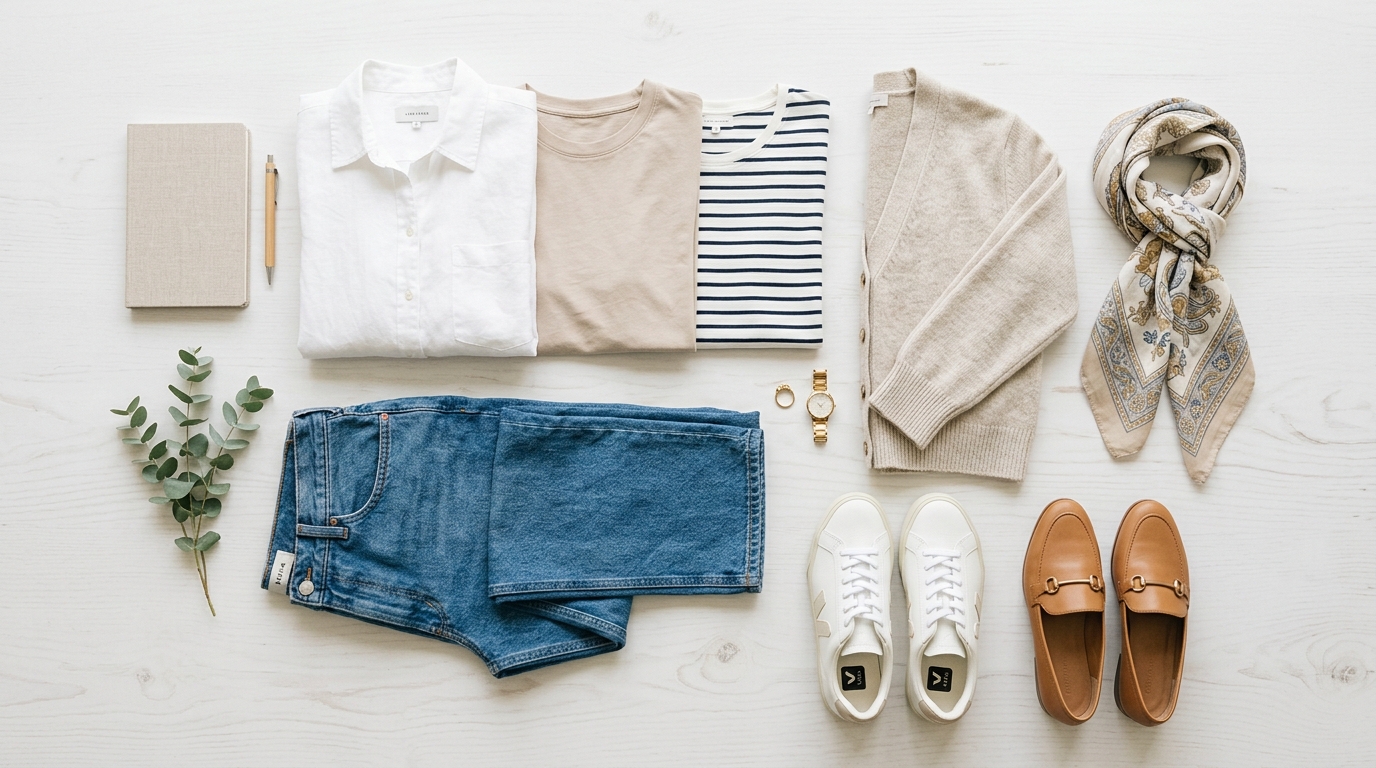
Color strategy: Choose 2–3 neutral base colors (black, white, navy, beige). Everything will mix and match, you’ll look put together in every photo, and you won’t need as many outfits as you think.
For a 7–10 day trip:
Packing for conservative destinations: If you’re visiting countries like Morocco, Egypt, Turkey, or parts of Southeast Asia, modest dress isn’t just respectful; it also reduces unwanted attention. Pack loose-fitting tops that cover your shoulders, trousers or long skirts, and a lightweight scarf. A scarf is one of the most versatile items a solo female traveler can carry; it covers shoulders at religious sites, keeps you warm on cold flights, and works as a wrap at the beach.
Blend in where you can: Avoid overly flashy or expensive-looking clothing in areas where you stand out as a tourist. Practical, understated clothing helps you move through spaces more comfortably.
Keep this minimal. Most toiletries can be bought almost anywhere in the world.
TSA tip: Keep all liquids in containers of 100ml or less in a clear zip-lock bag in your carry-on. Put it at the top so it’s easy to pull out at security.
Keep medications in your carry-on, never your checked bag. If your luggage is lost or delayed, you need your medications with you.
Solo photo tip: A lightweight phone tripod lets you take your own photos without depending on strangers. Set up a timer, use burst mode, and you’ll have better shots than most posed photos anyway.
Long travel days solo are tiring. Make them easier.
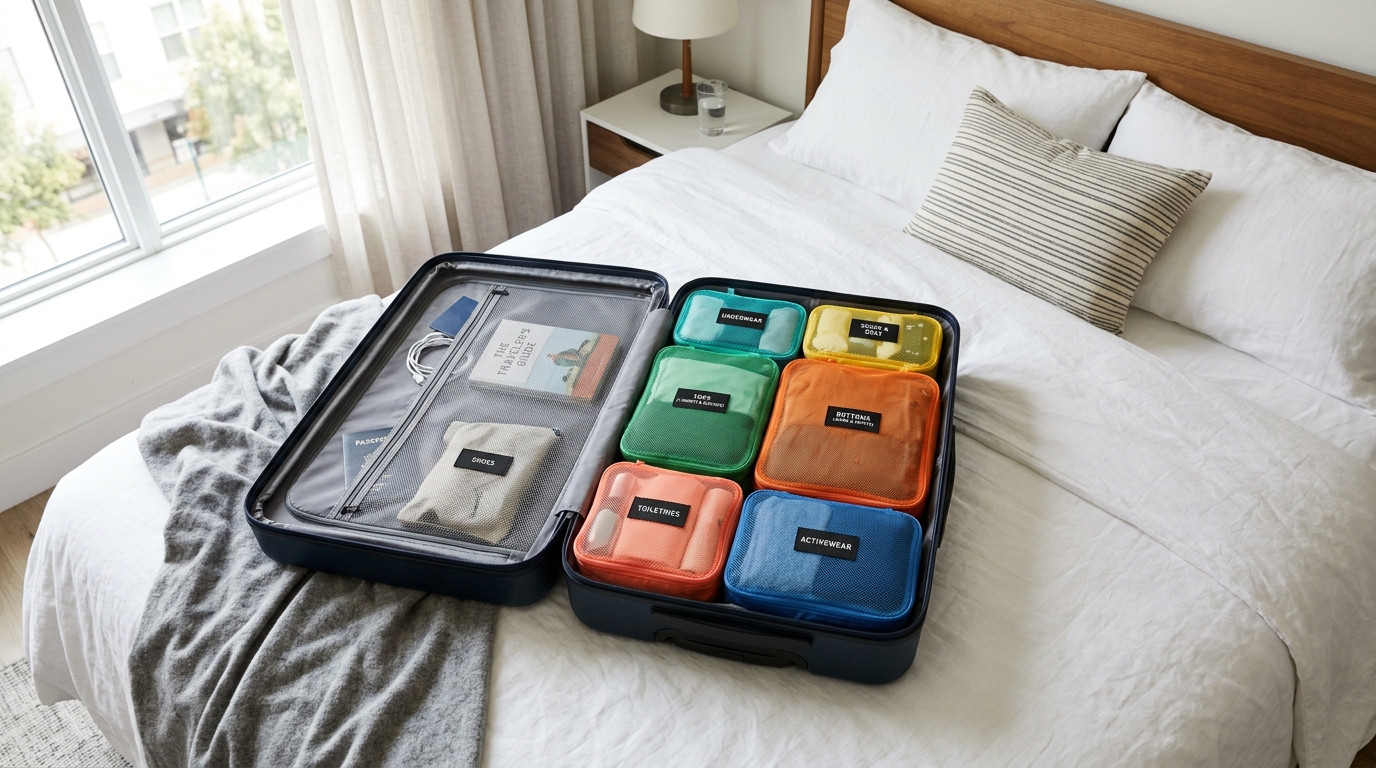
Staying organized makes solo travel smoother and reduces stress.
These aren’t packing items — but they’re just as important.
Research your destination before you arrive. Understand local customs, dress codes, which neighborhoods are safe at night, and how public transport works. Arriving informed means arriving confident.
Book your first night in advance. Always. Arriving somewhere new, alone, without accommodation sorted is stressful and sometimes unsafe. After that, you can be more spontaneous.
Stay in well-reviewed accommodation. Read reviews specifically from other solo female travelers. Women-only hostel dorms are worth considering for your first solo trips — they’re a fast way to meet other travelers and feel safe.
Trust your instincts. If something feels wrong, it probably is. Leave the situation. You don’t owe anyone an explanation.
Don’t announce you’re alone. In conversations with strangers, especially in tourist areas, you don’t need to confirm that no one else is with you. A simple “my group is nearby” is perfectly fine.
Keep one card and some emergency cash separate from your main wallet tucked into your hidden travel pouch. If your wallet is stolen, you’re not stranded.
What type of bag is best for solo female travel?
A carry-on sized anti-theft backpack or rolling suitcase works for most trips. The key is something you can carry entirely on your own, keep an eye on, and move quickly with. Add a small anti-theft crossbody for daily sightseeing.
How do you stay safe as a solo female traveler?
Pack a doorstop alarm, use a hidden travel pouch for documents and backup cash, share your location with someone at home, trust your instincts, and choose well-reviewed accommodation. Confidence and awareness matter more than any single item.
What should I wear as a solo female traveler?
Comfortable, practical clothing that suits your destination. In conservative countries, modest dress reduces unwanted attention and is a sign of cultural respect. In any destination, avoid flashy or expensive-looking clothing that makes you stand out as a wealthy tourist.
Do I need travel insurance for solo travel?
Yes. When you’re alone, there’s no one to help if something goes wrong. Medical emergencies, lost luggage, flight cancellations — travel insurance covers all of it. It’s not expensive and it’s not optional.
What should I always keep in my carry-on as a solo traveler?
Passport, all medications, one change of clothes, charger, power bank, and your travel insurance documents. If your checked bag is lost, you can survive on this until it’s found.
How do I take good photos when traveling alone?
A small phone tripod is the best investment. Set a timer, use burst mode, and take photos at locations when they’re quieter — early morning is usually best. You’ll get better results than rushed photos taken by strangers.
Is solo female travel safe?
With preparation, yes. Millions of women travel solo every year across every continent. Safety comes from research, smart packing, trusted accommodation, and trusting your instincts — not from avoiding it altogether.
Solo travel as a woman teaches you something no group trip can — that you’re more capable, more resourceful, and braver than you gave yourself credit for. The first morning you wake up in a new city, entirely on your own schedule, entirely free — that feeling is worth every bit of careful packing.
Pack light. Stay aware. Trust yourself. The world is waiting.