
I’ve pulled together everything first-timers and repeat visitors actually need. No fluff. Just real tips that save you time and money.
Toronto has four real seasons, so timing matters.
May to September is prime time. Summer (June-August) brings warm days around 21–27°C (70–81°F), long daylight, and outdoor patios everywhere. That’s when the city hosts big events, including six FIFA World Cup 2026 matches. Expect crowds and higher prices, but the vibe is unbeatable.
Shoulder seasons win for most people. Late April–May and September–October offer pleasant weather (15–22°C / 59–72°F), fewer lines, and lower hotel rates — often 30–40% cheaper than July. Fall brings stunning leaf colors in High Park and along the waterfront.
Winter (December–March) is cold and snowy, but wonderful if you like ice skating, holiday markets, and indoor museums. Hotel deals are excellent then.
Quick tip: Book summer trips 4–6 months ahead, especially around FIFA dates. September 2026 strikes the best balance of weather, events, and value.
Most people fly into Toronto Pearson International Airport (YYZ). It’s the main hub with direct flights from pretty much everywhere. From the airport, take the UP Express train — 25 minutes straight to Union Station for about C$12–13 one way.
Billy Bishop Toronto City Airport (YTZ) sits right on the waterfront. Porter Airlines uses it a lot. A quick ferry or tunnel walk lands you downtown in minutes — perfect if you hate long airport transfers.
Trains and buses work well too. VIA Rail pulls into Union Station from Montreal, Ottawa, and beyond. Megabus and Greyhound serve many U.S. cities.
You don’t need a car. Toronto is very walkable downtown.
The TTC (Toronto Transit Commission) runs subways, streetcars, and buses. Grab a PRESTO card or use your contactless credit card. A day pass costs about C$13.50 and covers unlimited rides — smart if you’re bouncing between neighborhoods.
Bike Share Toronto has thousands of bikes. Uber and Lyft fill the gaps at night or for longer trips. Walking the waterfront or PATH (the 30 km underground network) keeps you dry in inclement weather.
Pro move: Download the TTC app before you land. It shows real-time arrivals and helps you avoid waiting in the cold.
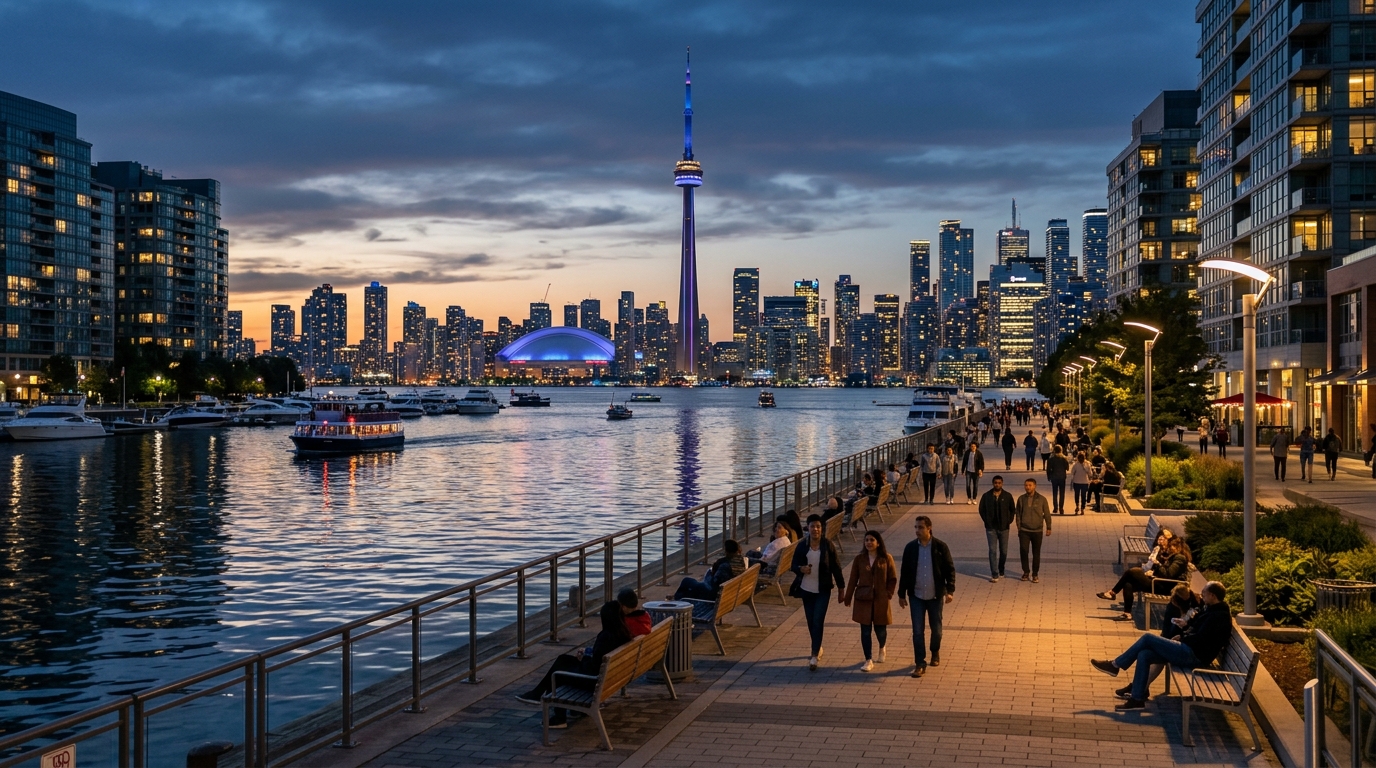
Downtown / Entertainment District — Best for first-timers. You’re steps from the CN Tower, Ripley’s Aquarium, and Union Station. Hotels here cost more but save you transit time.
Queen West — Cool, creative, full of shops and street art. Great mid-range and boutique options.
Kensington Market / Chinatown — Budget-friendly, colorful, and walkable. Hostels and Airbnbs shine here.
Distillery District / Harbourfront — a charming historic feel with waterfront views. Ideal for couples or families.
Yorkville — Upscale shopping and galleries. Luxury hotels cluster here.
Budget: Hostels and basic hotels run C$80–150/night. Mid-range: C$200–350. Luxury: C$400+ (higher in summer).
Start with the icons:
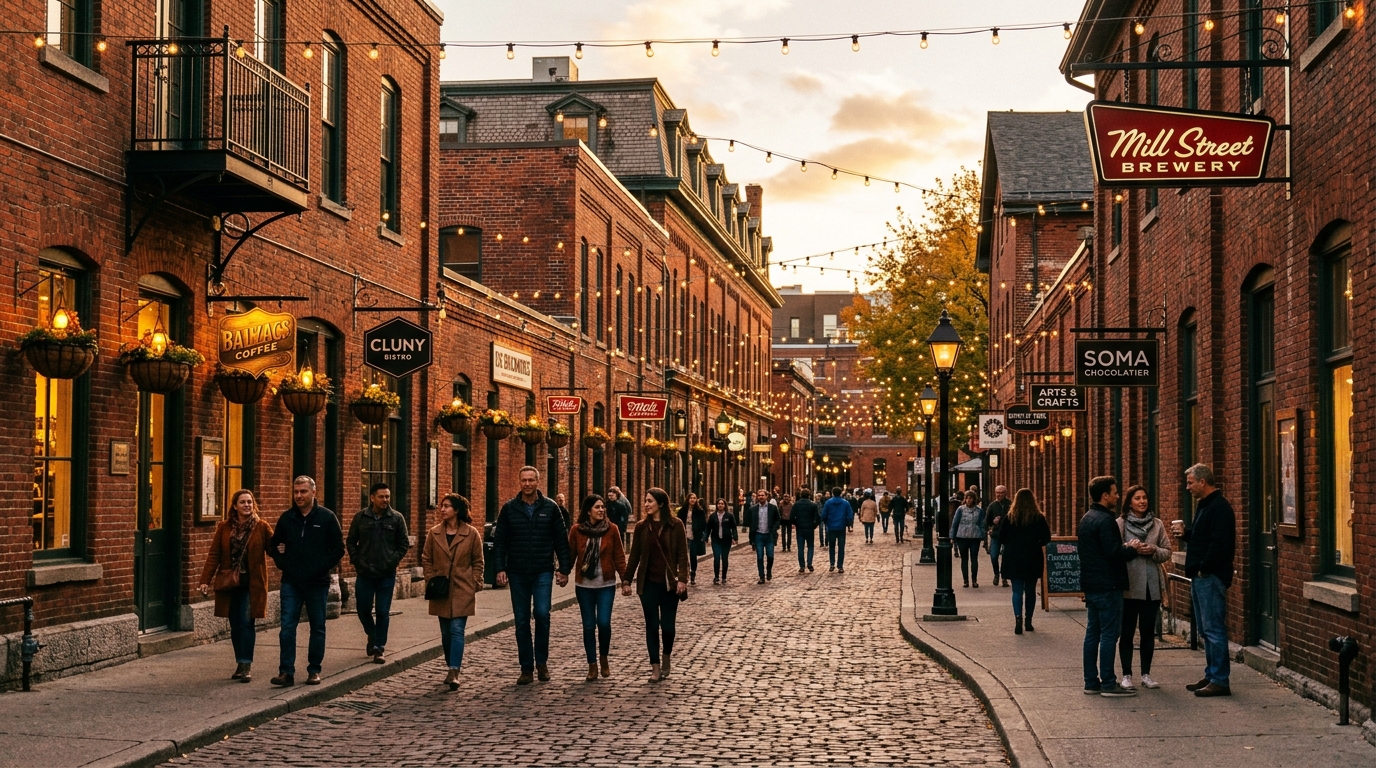
Wander neighborhoods on foot. Queen West for vintage shopping, Ossington for bars, or the waterfront for relaxed walks.
Toronto eats like no other Canadian city. You’ll find authentic versions of almost every cuisine.

Must-tries:
For a sit-down meal, try fresh seafood downtown or Italian in Little Italy. Street food and food halls keep costs low — expect C$15–25 for a solid lunch.
Patio season (May–October) is sacred. Book popular spots a few days in advance during summer.
Pick up unique souvenirs at Spacing Store (Toronto-themed gifts) or local designers in Queen West. St. Lawrence Market has spices, maple syrup, and local honey. Boutiques in Yorkville suit higher-end tastes.
Niagara Falls is the obvious winner, 1.5 hours away by bus or car. Book a tour with a boat ride and time in Niagara-on-the-Lake for wineries and charm.
Other easy options include Hamilton for waterfalls, the Toronto Islands (half-day), or Stratford for theater festivals in summer.
Here’s a realistic daily breakdown per person (excluding flights):
Add C$50–80 for big attractions like CN Tower. Food and transit add up fast, but the CityPASS can save 30–40% on major sights.
Toronto is generally safe. Stick to well-lit areas at night and use common sense in crowds. The city feels welcoming and multicultural — you’ll see people from everywhere.
Visas and entry: Most visitors need an eTA (electronic travel authorization) or visitor visa. Check the official Government of Canada site based on your passport. Apply early — processing can take weeks.
What to pack (the stuff that actually matters):
These three items are cheap on Amazon and make a huge difference on any Toronto trip.
Day 1: Downtown icons — CN Tower, aquarium, waterfront stroll. Day 2: Neighborhoods — Kensington Market, Distillery District, evening in Queen West. Day 3: Islands or day trip to Niagara. Add museums if it rains.
Toronto rewards curious travelers. Take the ferry, eat at the market, chat with locals, and slow down. The city feels alive because of its people and its mix of old and new.
You’ll leave wanting more — whether it’s another Toronto weekend or a bigger Canadian road trip. Safe travels!
Is Toronto expensive?
It’s pricier than smaller Canadian cities but cheaper than New York or London. Budget travelers can keep daily costs under C$150 with planning.
Do I need a car?
No. Public transit and walking work great. Rent one only for day trips.
Is it family-friendly?
Very. The islands, aquarium, and High Park are perfect for kids.
What about winter?
Bundle up and enjoy indoor attractions and holiday lights. It’s quieter and cheaper.
How many days do I need?
Three full days for the highlights. Five or more if you want day trips and a relaxed pace.