This guide covers everything actually worth doing here, organized so you can build a trip that goes deeper than the famous viewpoint in Oia. It also covers the things most guides leave out entirely, including how to handle the crowds, what a realistic budget looks like, and which village actually suits the way you want to travel.
Santorini is shaped the way it is because of one of the largest volcanic eruptions in recorded history, around 1600 BCE, which collapsed the center of the island and created the caldera, the dramatic cliff edge that all those famous photos are taken from.
The island has several distinct villages, and where you base yourself changes your entire experience.
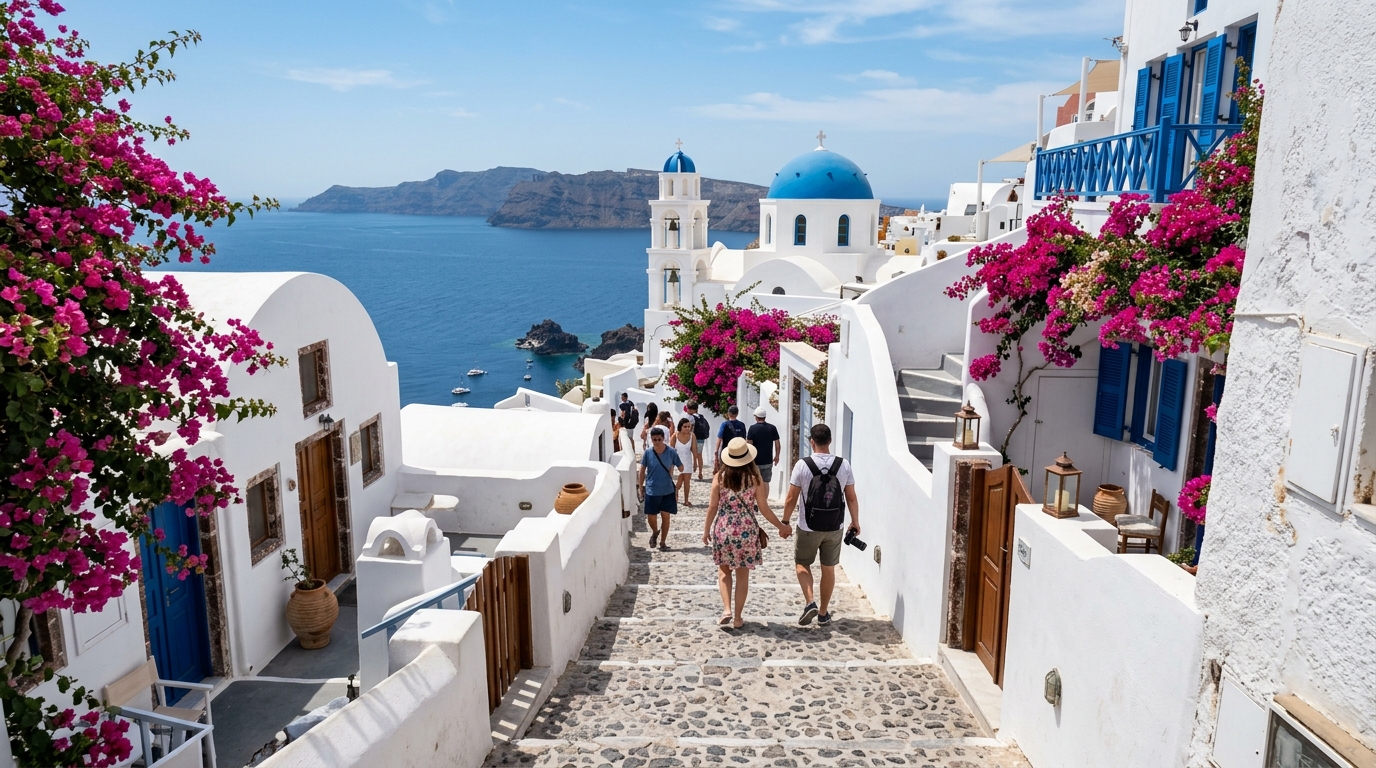
Oia is the village with the blue domes and the most famous sunset view. It is also the most crowded, the most expensive, and the most photographed square mile in the Aegean.
Fira is the capital, busier and more commercial, with the cable car down to the old port and a livelier nightlife scene than Oia.
Imerovigli sits between Fira and Oia on the highest point of the caldera rim, offering caldera views that rival Oia’s with noticeably fewer crowds.
Akrotiri and Perissa, on the southern and eastern parts of the island, are flatter, quieter, closer to the black sand beaches, and considerably cheaper than the caldera villages.
Knowing this upfront changes how you plan. Trying to see everything from a single base in Oia means a lot of driving or bus time. Splitting your stay, or basing yourself somewhere central like Imerovigli or Fira, often makes more sense for a first visit.
Pack light but bring real walking shoes. Santorini’s villages are built on steep, uneven stone steps and cobbled paths, and flip flops genuinely do not hold up here. These slip resistant walking sandals on Amazon are a popular choice for travelers who want something comfortable enough for hours of walking but still presentable for dinner.
The sunset in Oia, viewed from the Castle of Agios Nikolaos ruins, is the single most famous experience on the island, and it deserves its reputation. But it also draws enormous crowds every single evening, with people claiming spots an hour or more in advance during peak season.
Here is what most guides do not tell you. The Oia Castle viewpoint is not the only good sunset spot, and in many ways it is not even the best one anymore given the crowds. Imerovigli, particularly the area known as Skaros Rock, offers a caldera view sunset with a fraction of the people. Fira’s caldera path also gives you the sunset without needing to fight for a viewing spot.
If you do want the specific Oia experience, arrive at least 45 minutes before sunset in summer, and consider watching from one of the restaurant terraces along the caldera path rather than the main castle ruins, where you can sit, order a drink, and skip the crowd entirely.
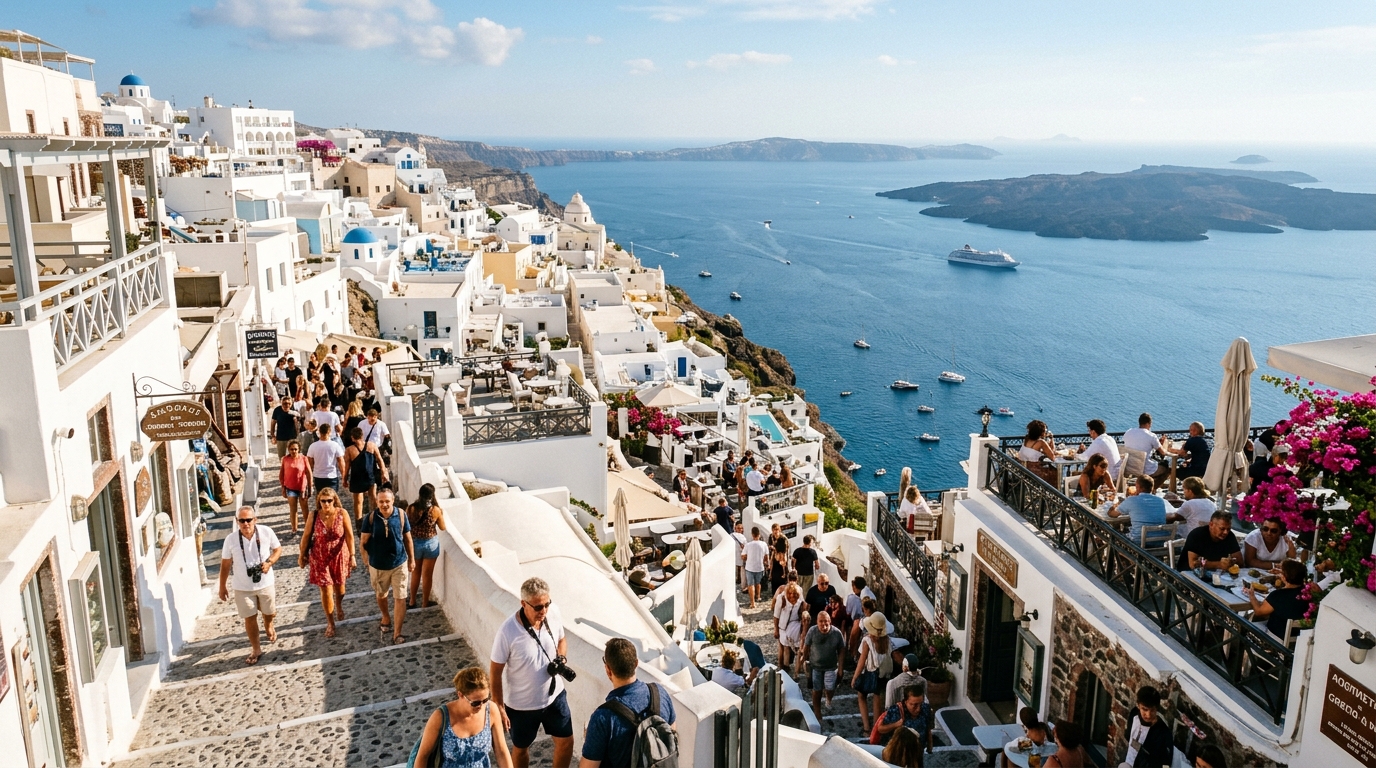
Walking the narrow lanes of Oia, Fira, and Imerovigli without a fixed plan is one of the best ways to experience Santorini. The architecture here, whitewashed cube shaped buildings, blue dome roofs, cave style homes carved into the volcanic rock, is unlike almost anywhere else.
A genuinely underrated walk is the caldera path connecting Fira to Oia, roughly 10 kilometers along the cliff edge through Imerovigli and Firostefani. It takes around 3 to 4 hours at a relaxed pace and gives you constantly changing views of the caldera that you simply do not get from a car or bus. Start early in the morning to avoid the heat, and carry water, since shade is limited along most of the route.
A boat trip around the caldera is consistently named one of the best things to do in Santorini, and it earns that reputation. These tours typically run 5 to 8 hours and take you past the volcanic islets in the center of the caldera, including a stop to hike the active volcano crater, a swim at the hot springs, and time along the colorful southern cliffs, where the volcanic rock shifts dramatically between black, red, and white.
Catamaran tours with food and drinks included tend to be more relaxed and social than smaller speedboat tours, which move faster but spend less time at each stop. Sunset catamaran tours are especially popular, giving you the famous Santorini sunset from the water instead of a crowded clifftop.
Because Santorini is volcanic, its beaches are nothing like the white sand most people picture for a Greek island. Red Beach, near Akrotiri, gets its color from the iron rich red volcanic cliffs that surround it, and it is one of the most photographed beaches on the island. It is small and can get crowded, and the path down has been affected by rockfall in the past, so check current access conditions before you go.
Perissa and Kamari are the island’s main black sand beach towns, both with long stretches of dark volcanic sand, organized beach clubs, sun loungers, and a much more relaxed, less touristy atmosphere than the caldera villages. The black sand gets noticeably hot underfoot by midday in summer, so water shoes are worth packing.
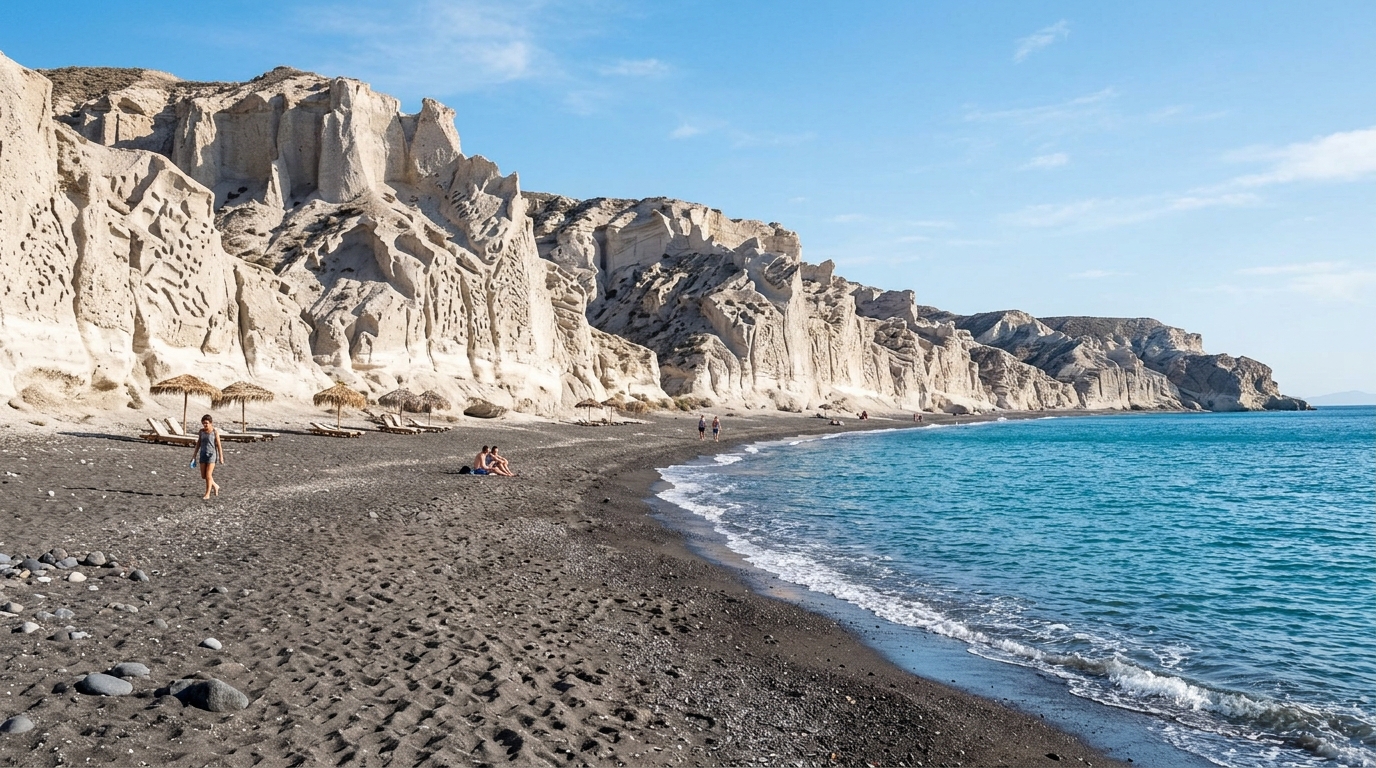
Vlychada Beach, on the southern coast, is less visited and known for its unusual white, wind sculpted cliff formations that look almost lunar.
Santorini has a genuinely unique winemaking tradition because of its volcanic soil and near constant wind, which forced winemakers centuries ago to develop a basket shaped vine training method called kouloura, where vines are coiled close to the ground to protect the grapes.
Santo Wines, perched on the caldera rim, is the most visited winery and combines tasting with a caldera view that rivals Oia’s, minus the crowds. Assyrtiko is the signature white grape of the island and worth trying specifically here, since the volcanic soil gives it a mineral character that is hard to find anywhere else.
Akrotiri is a remarkably preserved Bronze Age settlement, buried and protected by the same volcanic eruption that shaped the island, sometimes called the Pompeii of the Aegean. Multi story buildings, frescoes, and a sophisticated drainage system survive here, giving a genuinely fascinating look at a Minoan era settlement frozen in time.
The site is now covered by a large protective roof structure and is well organized for visitors, with clear walkways and information panels. It is considerably less crowded than the caldera villages and worth a couple of hours, particularly if ancient history interests you.
From Fira, you can descend roughly 600 steps down the cliff face to the old port, either by cable car, on foot, or famously by donkey. The cable car is fast, costs a small fee, and is the most practical choice for most visitors. The donkey ride is a classic Santorini experience but has drawn increasing criticism over animal welfare concerns in recent years, and many travelers now prefer to skip it for that reason.
Walking down on foot takes about 20 to 30 minutes and gives you close up views of the cliff face and the harbor below that you miss entirely from the cable car.
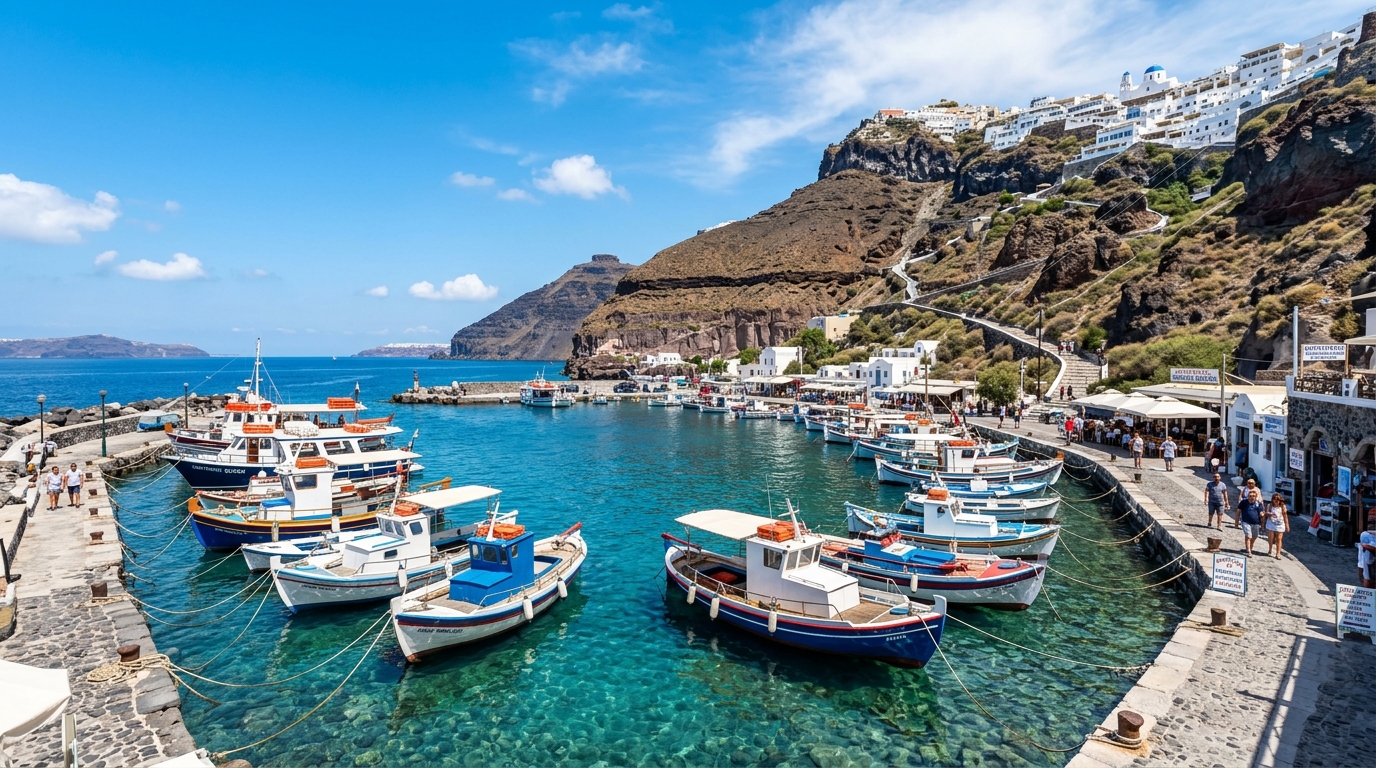
This deserves its own mention because so few guides separate it clearly from the catamaran day tours. A dedicated evening sunset cruise, typically 2 to 3 hours, departs specifically timed to be on the water for sunset, usually with a meal or drinks included. This solves the entire Oia crowd problem at once, since you get arguably a better, unobstructed view of the sun setting behind the caldera, from the caldera itself, with none of the jostling for a viewpoint.
Santorini has a reputation for being expensive, and parts of it genuinely are, particularly accommodation in Oia with a caldera view.
Budget travelers can manage on around 70 to 100 euros a day, staying in Perissa or Kamari rather than the caldera villages, eating at local tavernas, and using public buses instead of rental cars or taxis.
Mid range travelers should plan for 150 to 250 euros a day, covering a comfortable hotel with at least partial caldera views, a rental car or ATV, sit down meals, and one or two paid tours like a catamaran trip.
Luxury travelers staying in the famous caldera view cave suites in Oia or Imerovigli should expect 400 euros a day and up, sometimes considerably more during peak summer for the most sought after properties.
One practical tip nobody mentions enough. Staying in Imerovigli or Firostefani gets you caldera views for noticeably less than equivalent Oia properties, while putting you a short walk or drive from both Fira and Oia.
Santorini’s bus system connects Fira to most major points on the island, including Oia, Akrotiri, Perissa, and the airport, and it is the most budget friendly way to get around. Buses can be infrequent and crowded in peak season though, so build in extra time if you are relying on them for anything time sensitive, like making it to Oia before sunset.
Renting a car or ATV gives you far more flexibility, particularly for reaching beaches and viewpoints away from the main bus routes. Roads on Santorini are narrow and winding, and parking in Oia and Fira during peak season is genuinely difficult, so factor that into your plans if you are driving.
Taxis exist but are limited in number and can be hard to book on demand, especially around sunset time when everyone is trying to get to or from Oia simultaneously.
Santorini is one of the more comfortable Greek islands for solo female travelers, with a steady stream of solo and small group travelers throughout the season, particularly around the caldera villages and wine tours.
Walking the caldera path between villages during the day is well trafficked and safe. Evening walks through Oia and Fira are also generally comfortable given how busy these areas stay until late.
Boat tours and wine tastings are good solo friendly activities here specifically because they are inherently social, often including shared tables or small groups, which makes them easy ways to meet other travelers if you want to.
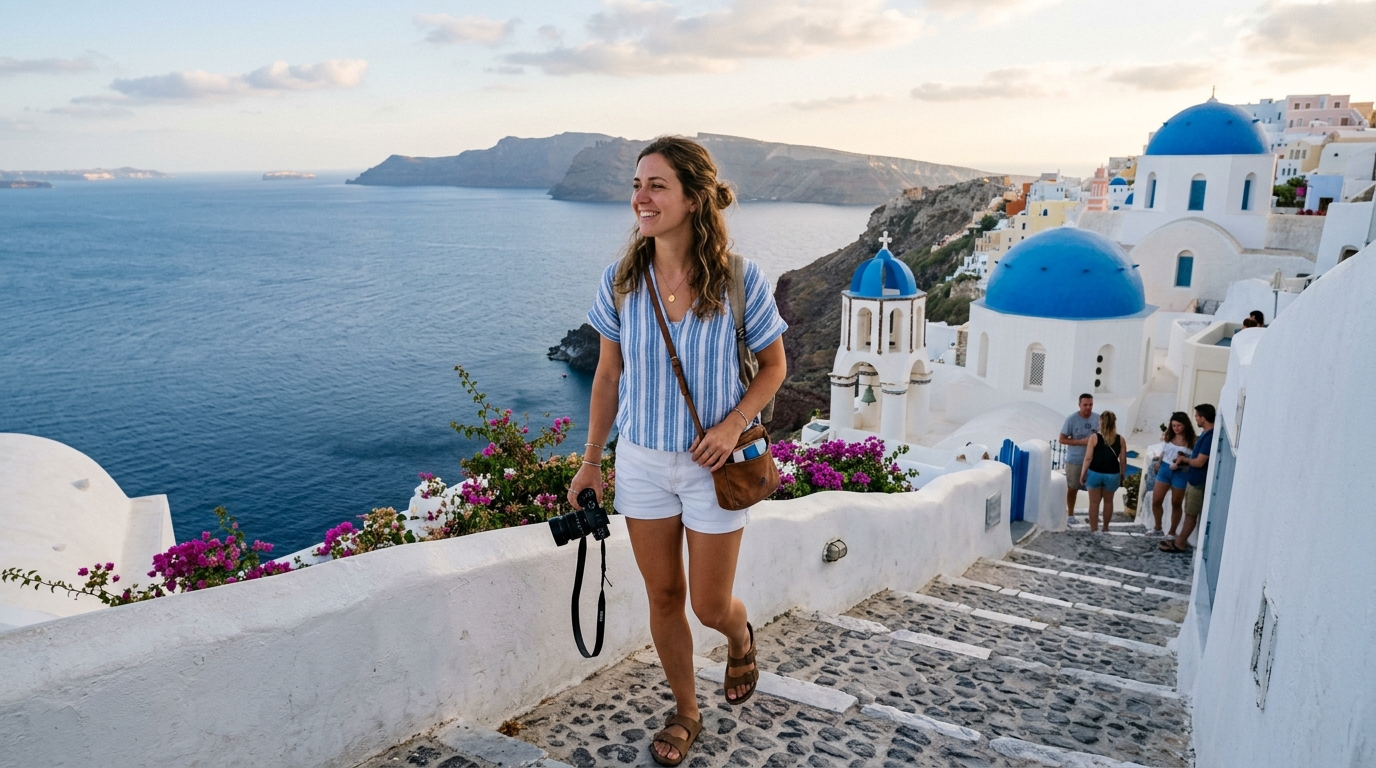
Most guides vaguely say “shoulder season is better” without giving real detail. Late May and the first half of June offer warm weather and significantly thinner crowds than July and August, when cruise ship arrivals can flood Fira and Oia with day trippers in the late morning and early afternoon.
If you are visiting in peak summer regardless, structure your day around the cruise ship schedule where possible. Mornings before 10am and the period after 4pm, once day trippers head back to their ships, tend to be calmer in Fira and Oia.
September into early October is another strong window, with warm sea temperatures, fewer crowds than summer, and the wine harvest happening across the island’s vineyards.
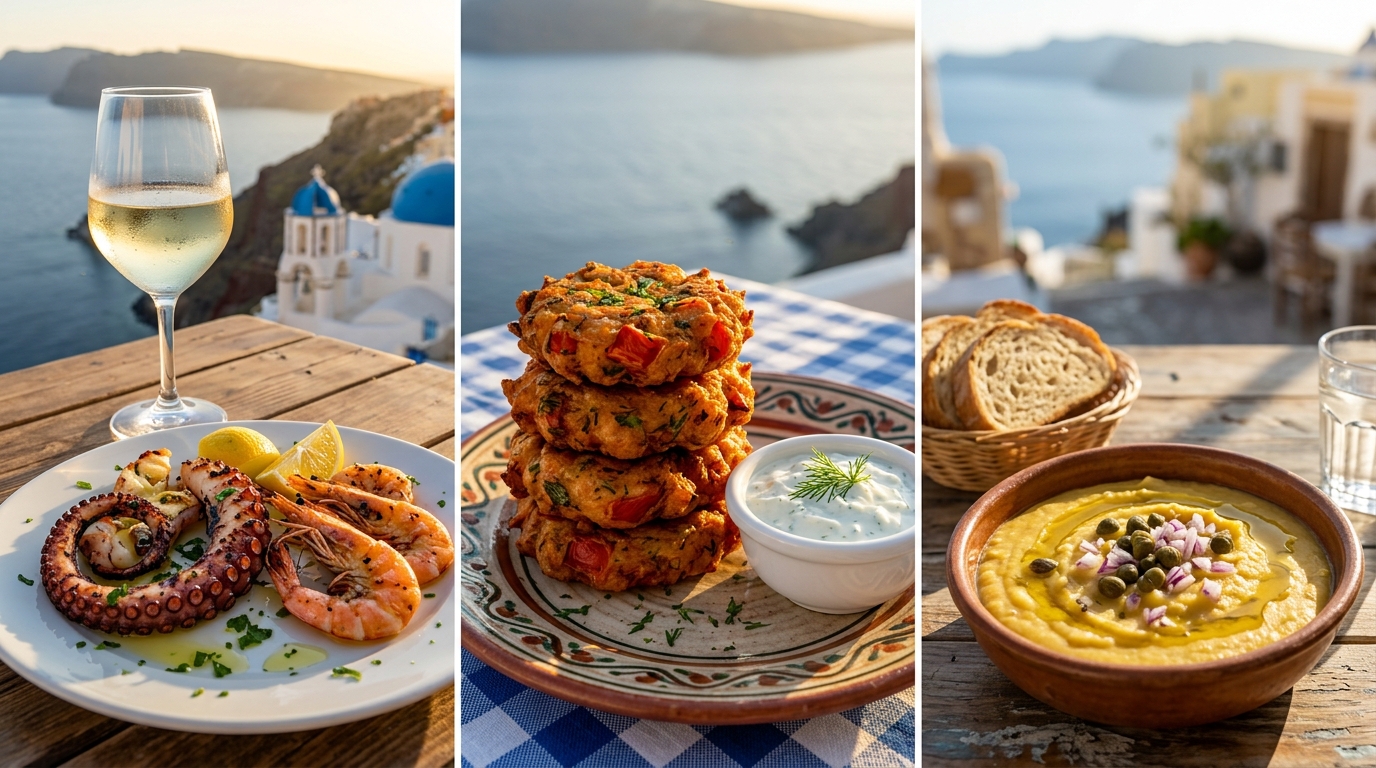
Fava, a puree made from yellow split peas grown specifically on Santorini’s volcanic soil, is a island specific dish you will not find made quite the same way anywhere else in Greece.
Tomatokeftedes, fried tomato fritters made from Santorini’s distinctively sweet local tomatoes, are a signature starter worth seeking out specifically here rather than the more generic version found elsewhere in Greece.
Assyrtiko wine, the volcanic soil white grape mentioned earlier, pairs naturally with the island’s seafood focused tavernas, particularly in Akrotiri and around the old port.
For sunset dinner reservations in Oia specifically, book well in advance, sometimes weeks ahead in peak season, since the caldera view restaurants are limited in number and extremely popular.
A reusable insulated water bottle is worth packing for long days walking the caldera path or exploring Akrotiri, since the volcanic terrain offers little shade and refill points are not always convenient. This insulated stainless steel water bottle on Amazon keeps drinks cold for hours, which matters more than people expect in the summer heat here.
How many days do you need in Santorini?
Three to four days covers the main villages, a boat tour, and at least one beach day without feeling rushed. Two days is workable if your time is limited, but you will need to prioritize.
Where is the best place to watch the sunset in Santorini?
Oia’s Castle of Agios Nikolaos is the most famous spot but also the most crowded. Imerovigli and Skaros Rock offer comparable caldera views with significantly fewer people.
Are Santorini beaches sandy or volcanic rock?
Most Santorini beaches have dark volcanic sand or fine black pebbles, not white sand. Red Beach has distinctive red volcanic cliffs and sand, while Vlychada has unusual white cliff formations.
Is Santorini expensive?
It can be, particularly caldera view accommodation in Oia. A mid range trip staying in Imerovigli or Fira with a rental car and a few paid tours runs roughly 150 to 250 euros per day.
What is the best village to stay in for first time visitors?
Imerovigli or Fira offer strong caldera views with easier access to both Oia and the rest of the island. Oia is best if the famous sunset view is your top priority and budget allows for it.
Is Santorini good for solo female travelers?
Yes, Santorini is considered comfortable and safe for solo travelers, with well populated walking paths and social activities like wine tours and boat trips that make it easy to meet people.
Do you need a car in Santorini?
Not strictly, since buses connect the main villages and beaches, but a rental car or ATV gives far more flexibility, especially for reaching quieter beaches and viewpoints off the main bus routes.
What is the best time of year to visit Santorini?
Late May through mid June and September through early October offer warm weather with noticeably smaller crowds than the July and August peak season.
Santorini earns its reputation, but the postcard image is only one layer of what the island actually offers. The caldera sunset is genuinely beautiful. It is also one experience among many, and the people who come away loving Santorini the most tend to be the ones who also explored the volcanic beaches, walked the quieter villages, and got out on the water at least once.
Build your trip around two or three of the experiences in this guide that genuinely interest you, rather than trying to check off everything on a list. Santorini rewards travelers who slow down just as much as it rewards the ones chasing the perfect sunset photo.