Ancient Rome.
Vatican City.
Historic center.
That gives you the best of Rome in a way that feels exciting, not exhausting.
Three days will not show you every corner of Rome. But it is enough for a great first trip.
You can see the Colosseum, Roman Forum, Pantheon, Trevi Fountain, Vatican Museums, St. Peter’s Basilica, Piazza Navona, and Trastevere.
You just need to group places by area. That saves time. That saves energy. And that makes the whole trip smoother.
This should be your first booking. It is one of the busiest attractions in Rome.
If you leave it too late, you may get bad time slots or miss out.
This is the second must-book attraction. The Vatican gets crowded fast.
An early entry time is usually the best option.
If you only have three days, location matters a lot.
Good areas include:
A central stay means less time on transport and more time enjoying Rome.
Rome looks flat on a map. It does not feel flat when you walk it. The streets are long.
The stones are uneven. You will walk a lot more than you think.
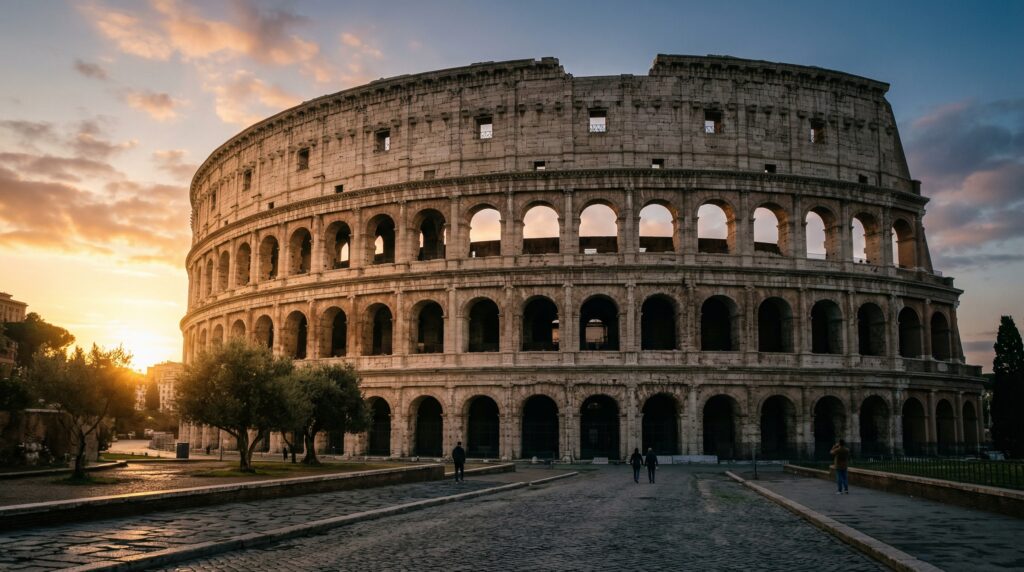
Start your trip at the Colosseum. Go early. This is the best way to avoid the biggest crowds and start strong. Give yourself around 1.5 to 2 hours here. If you book extra access, you may want more time.
After the Colosseum, continue straight to the Roman Forum and Palatine Hill. Do these together. They make more sense as one experience. If you rush, it feels like broken ruins.
If you slow down, you start to understand the power and scale of ancient Rome. Set aside 2 to 3 hours.
After a heavy morning, head to Monti for lunch.
It is close.
It is easy.
And it gives you a nice break from the most crowded tourist zones.
Do not overload this part of the day. Pick one relaxed activity.
Good options include:
This is the smart move.
Not every hour needs a major attraction.
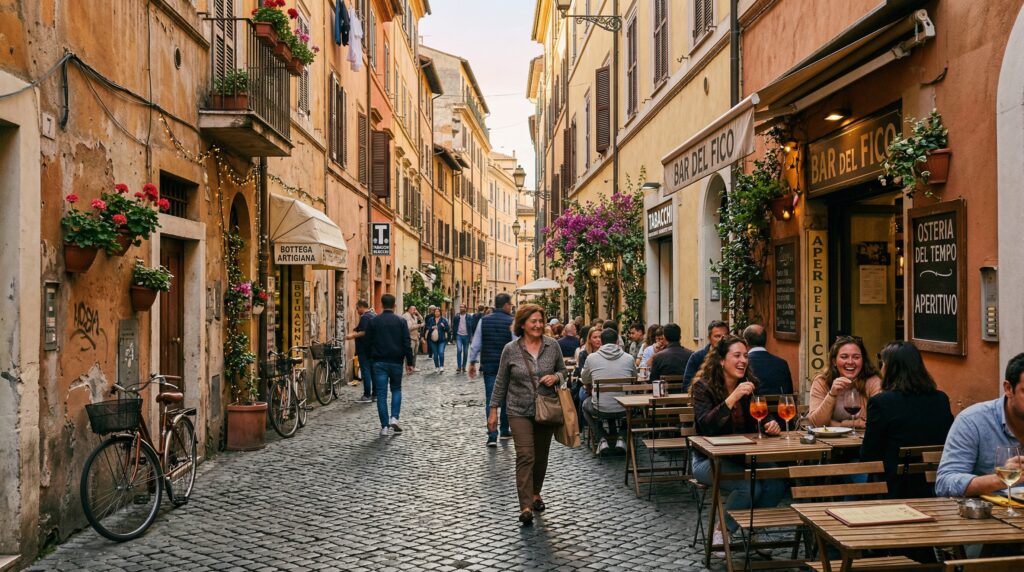
Spend your first evening in Trastevere. This is one of the best areas in Rome for atmosphere. Walk the streets.
Have dinner.
Stay out a little longer. It feels different from the grand monuments. And that is exactly why it belongs in your itinerary.
Start early again. The Vatican Museums are huge. They are also one of the most crowded places in the city. The earlier you go, the better your experience will usually be.
Give this 3 to 4 hours if you want a solid visit without rushing.
After the museums, head to St. Peter’s Basilica. Keep these on the same day. It saves time and keeps your route simple.
Dress respectfully. This is a church, not just a tourist stop.
Prati is a smart lunch area after the Vatican. It is calmer than some tourist-heavy zones. It is also close and practical. That matters when you only have three days.
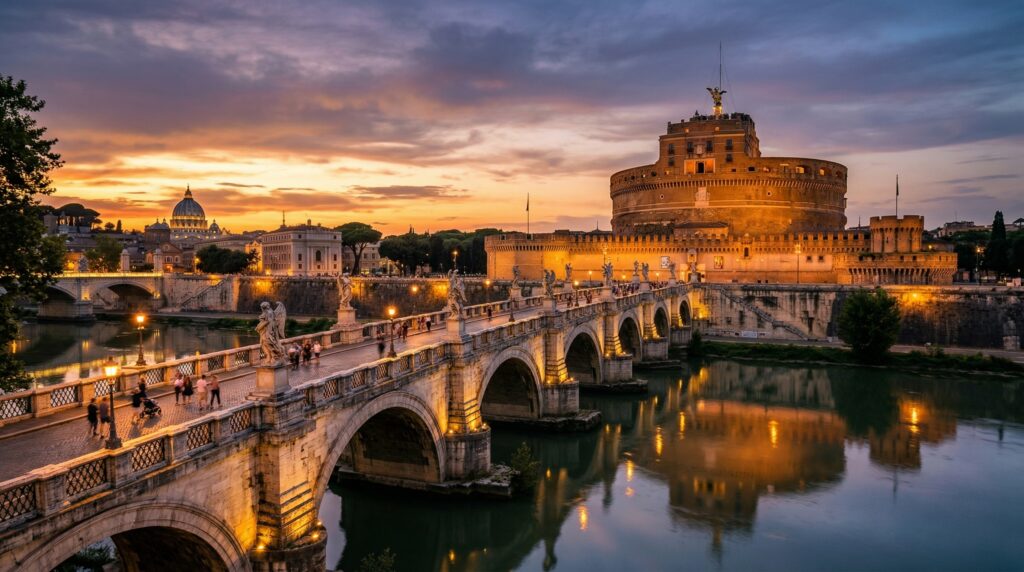
After lunch, walk toward Castel Sant’Angelo. Even if you do not go inside, the area is worth your time. The bridge views are beautiful. The walk along the river feels more open after the Vatican crowds.
End the day in the historic center. Piazza Navona is lively and beautiful at night.
Campo de’ Fiori adds another fun stop nearby. This is the kind of evening that makes Rome feel alive.
Day three should feel lighter. Not less important.
Just lighter. By now, your legs will be tired. So plan smart.
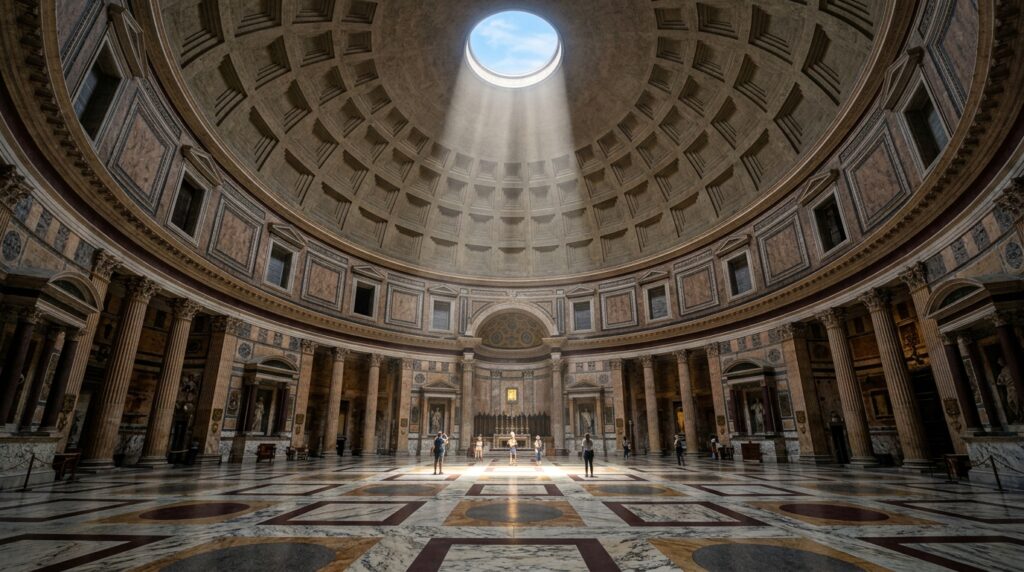
Start the day at the Pantheon. It is one of the most impressive buildings in Rome.
And it is even more powerful in person than in photos. Go early for a calmer visit.
From the Pantheon, enjoy the nearby streets at a slower pace. This is where Rome really shines. Not just in famous landmarks. But in the little details.
Fountains.
Churches.
Cafes.
Stone lanes.
Windows with plants.
That is part of the experience too.
Next, head to Trevi Fountain.
Try to visit earlier in the day or later in the evening if you can. That usually gives you a better chance of avoiding the heaviest crowds.
Have lunch somewhere nearby in the historic center.
Keep it simple.
You do not need every meal to be a big event. Sometimes a good pasta and a short break are exactly enough.
This is where your itinerary should stay flexible. Pick based on your mood and energy.
Best for art lovers.
This is a strong choice if you still want one more major sight.
Best for views.
Easy effort.
Great reward.
Best for travelers who want to enjoy the city without rushing.
This may sound basic.
It is not.
Rome is a city that rewards slowing down.
For your last evening, go back to the place you liked most.
Maybe Trastevere.
Maybe the historic center.
Maybe a quiet piazza you found by accident.
This is better than chasing one last checklist item.
Best for first-time visitors who want to stay near Ancient Rome.
It is central.
It is walkable.
And it has a nice local feel.
Best for people who want classic Rome right outside their door.
This is one of the most convenient areas for short stays.
Best for travelers who want a calmer base near the Vatican.
It feels more organized and less chaotic.
Best for atmosphere and evenings. Great for food and nightlife.
A little less efficient for nonstop sightseeing. But excellent if vibe matters to you.
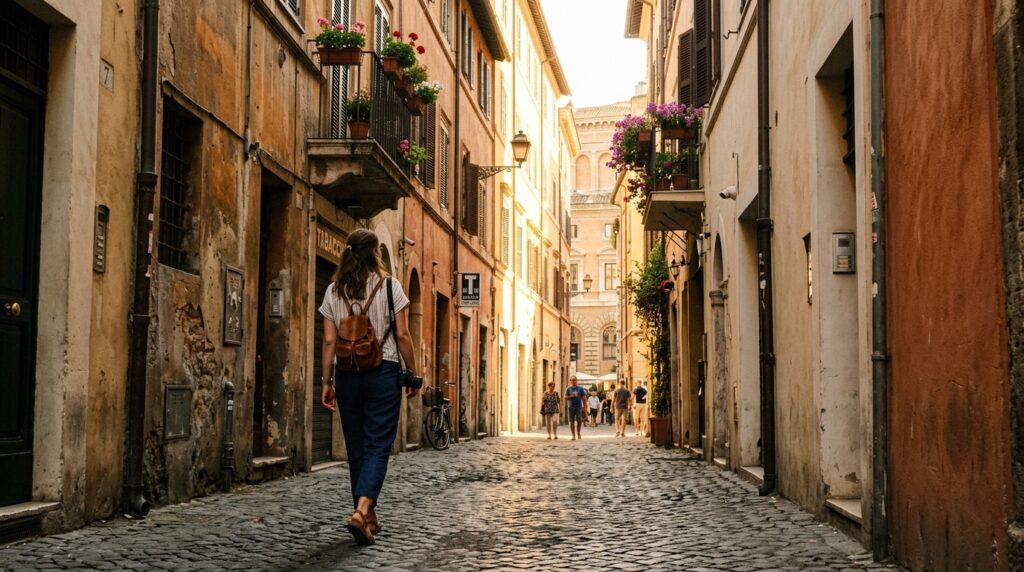
Walking is the best way to see Rome. That is the truth. But you will still need transport sometimes. Use public transport or taxis when it saves real time and energy.
Do not waste your trip bouncing across the city for no reason. The smartest approach is simple. Walk within each area. Use transport only between major zones.
Rome is crowded. That changes everything. A short trip is not hard because the city is too big.
It is hard because lines, backtracking, and slow movement can eat your day.
The biggest problems are usually:
That is what ruins short trips.
Not the city itself.
Many itineraries are too packed. They look good on paper. They feel terrible in real life.
Rome needs breathing room.
A coffee stop matters.
A slow lunch matters.
A random church you did not plan for matters.
That is not wasted time. That is part of seeing Rome properly.
Focus on these first:
Leave the rest more flexible.
This is the best Rome tip for first-timers. Do not jump across the city all day.
Group nearby places together.
The earlier you start, the easier your day becomes.
This matters most for:
Do not fill every hour.
Leave one part of each day open for rest, food, or wandering.
Wear comfortable shoes.
Bring clothing that works for church visits.
Keep a light layer with you if needed.
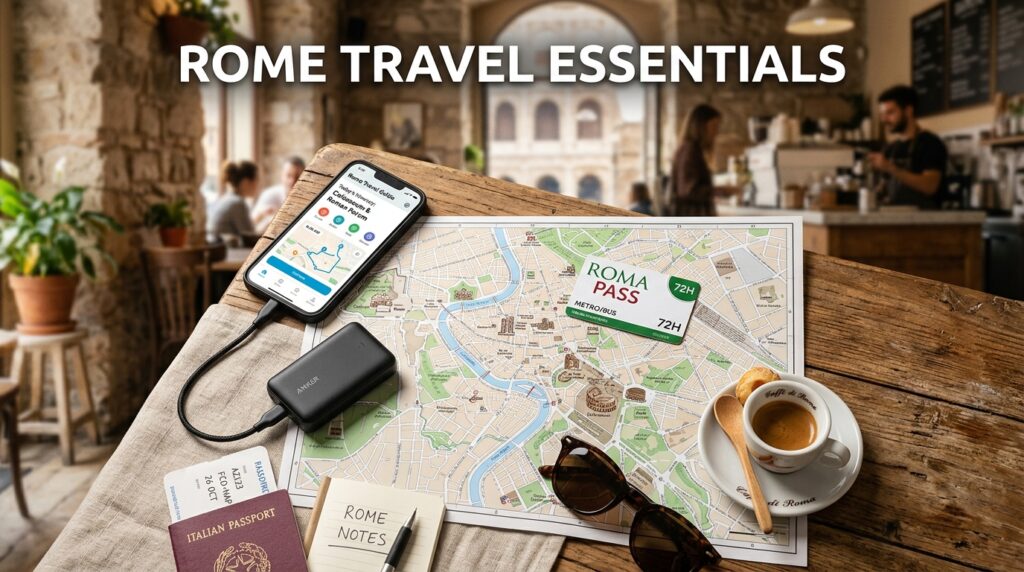
Why it is useful:
Rome days are long.
And your phone will be working all day.
Maps, tickets, photos, Google… everything.
This adapter lets you charge multiple devices at once without carrying extra plugs.
One device.
Less mess.
Who should use it:
Perfect for travelers with phones, laptops, smartwatches, or cameras.
Key features:
Fast GaN charging (much quicker than old adapters)
Works in most countries
Multiple USB ports in one compact device
Why it is useful:
Your phone dying in Rome = problem.
You lose maps.
You lose tickets.
You lose directions.
This power bank keeps you going the whole day without stress.
Who should use it:
Anyone doing full-day sightseeing.
Especially solo travelers and content creators.
Key features:
10000mAh capacity (enough for 1–2 full charges)
Built-in cables (no extra wires needed)
Slim and easy to carry
Why it is useful:
Short trips get messy fast.
These cubes keep your clothes organized so you don’t waste time searching for things.
And yes… they actually save space.
Who should use it:
Carry-on travelers
Minimalists
Anyone who hates messy luggage
Key features:
Compression design (fit more in less space)
Multiple sizes for easy sorting
Lightweight and travel-friendly
A great Rome itinerary 3 days long is not about doing everything.
It is about doing the right things in the right order.
Focus on Ancient Rome.
Give one day to the Vatican.
Use the last day for the historic center and a few slower moments.
Book the big sights early.
Stay central.
Do not overpack your days.
That is how you enjoy Rome instead of just racing through it.
Yes.
Three days is enough for a strong first trip if you plan carefully and focus on the main areas.
Book the Colosseum and Vatican Museums first.
Those are the two biggest priority attractions.
Monti, Centro Storico, Prati, and Trastevere are all strong choices.
Pick the one that matches your style and budget.
Yes.
Rome is very walkable.
But it also involves a lot of walking, so good shoes are important.
Day 1 for Ancient Rome.
Day 2 for Vatican City.
Day 3 for the historic center and flexible extra stops.
No.
Rome is better when you leave space in your itinerary.
That is often what makes the trip memorable.