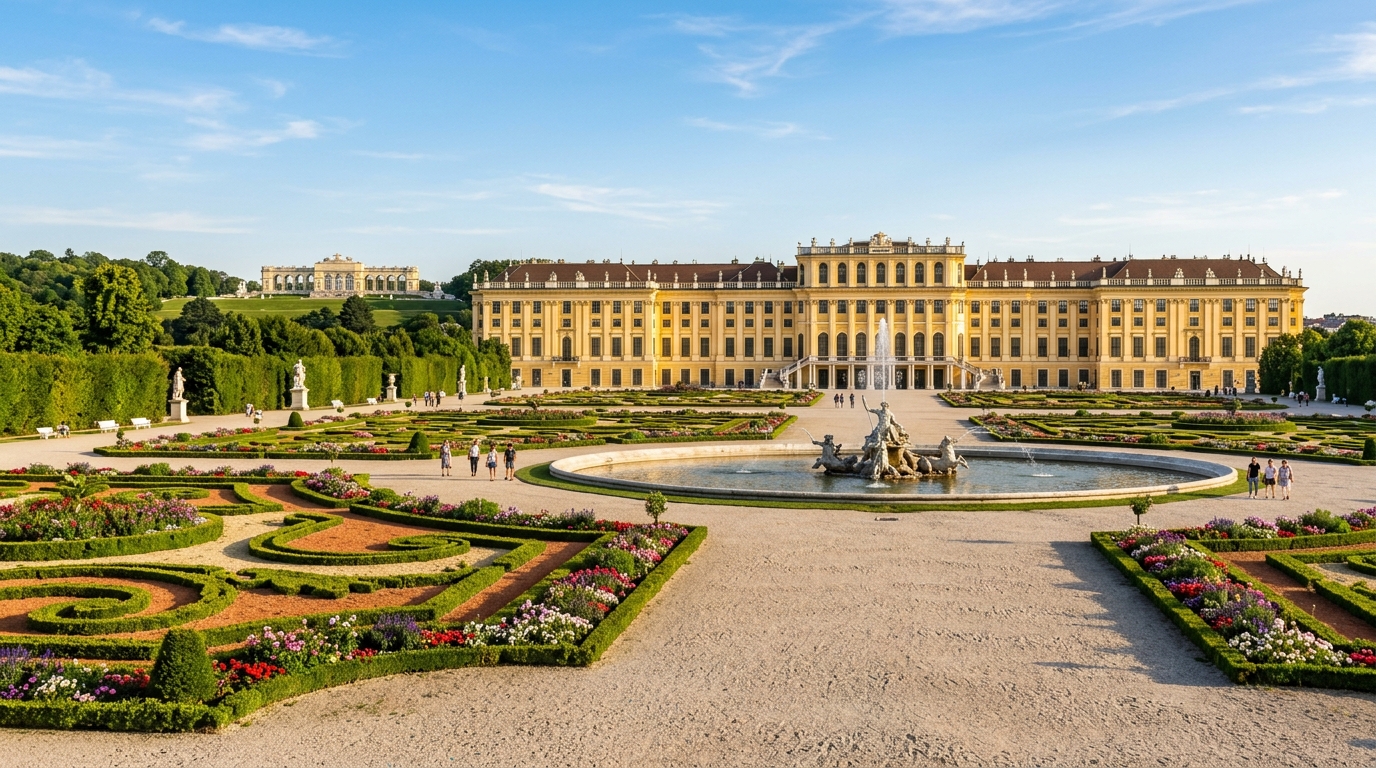
Schönbrunn is the most visited attraction in Austria, and the moment you see it, you understand why.
The palace has 1,441 rooms. It was the primary summer residence of the Habsburg emperors for nearly 300 years. The gardens stretch for over a kilometer, lined with sculpted hedges, fountains, and marble statues. At the far end, the Gloriette sits on a hill with one of the best views in all of Vienna.
You do not need to tour the entire palace. The Grand Tour (40 rooms, about 50 minutes with an audio guide) is the most popular option and covers the highlights including the Great Gallery, the Hall of Mirrors, and the bedroom where Emperor Franz Joseph I slept every night until his death in 1916.
Practical tips:
If Schönbrunn was where the emperors relaxed, Hofburg was where they worked and ruled.
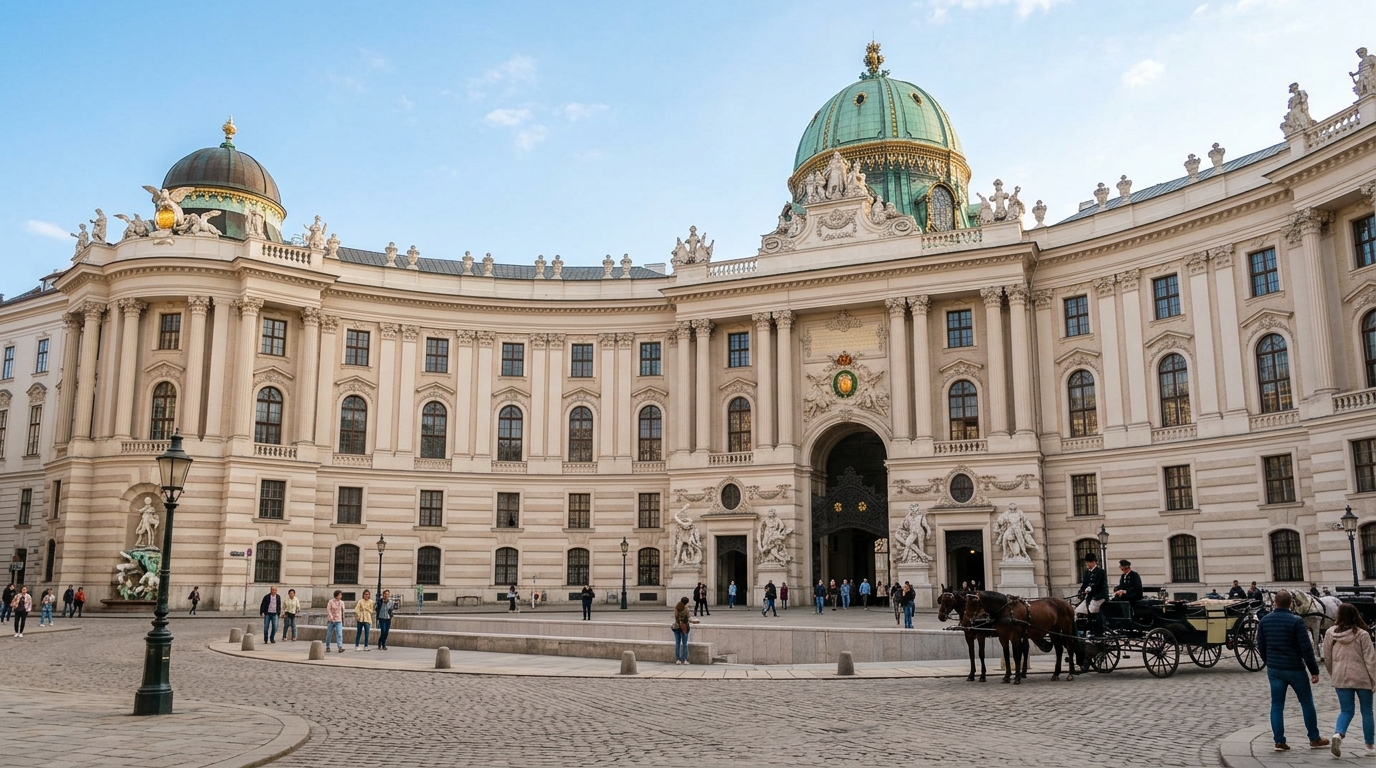
This sprawling complex in the center of Vienna served as the Habsburg imperial headquarters for over 600 years. Today it houses several of Vienna’s best museums, the Austrian National Library, and the Spanish Riding School.
What to prioritize inside Hofburg:
The Sisi Museum is the most popular stop. It tells the story of Empress Elisabeth, the Austro-Hungarian version of Princess Diana, whose fashion choices, obsessive exercise routines, and tragic assassination in 1898 still captivate visitors today. Her actual traveling scales and measuring tape are on display. She weighed herself every single day.
The Imperial Apartments next door show you where the imperial family actually lived and worked. The contrast between Elisabeth’s strict, almost ascetic private rooms and Franz Joseph’s spartan military desk tells you everything about their very different personalities.
The Austrian National Library Prunksaal (State Hall) is one of the most beautiful rooms in Europe. An 18th-century Baroque hall with floor-to-ceiling bookcases, ceiling frescoes, and 200,000 old books. Entry is €10 and worth every cent.
The Belvedere is technically two palaces. Upper and Lower Belvedere sit at opposite ends of a formal garden, and together they house one of the most important art collections in Austria.
The main reason most visitors come is Klimt’s The Kiss. The original painting is enormous, nearly two meters square, and the gold leaf shimmers in person in a way no photograph can capture. It is in the Upper Belvedere, Room 4, on the first floor.
Allow yourself more time than just The Kiss. The Belvedere collection includes extraordinary works by Egon Schiele, Oskar Kokoschka, and Monet. The views back down the formal garden toward Vienna from the upper terrace are spectacular.
Entry: Upper Belvedere is €17 for adults. The Vienna Pass includes entry to both palaces.
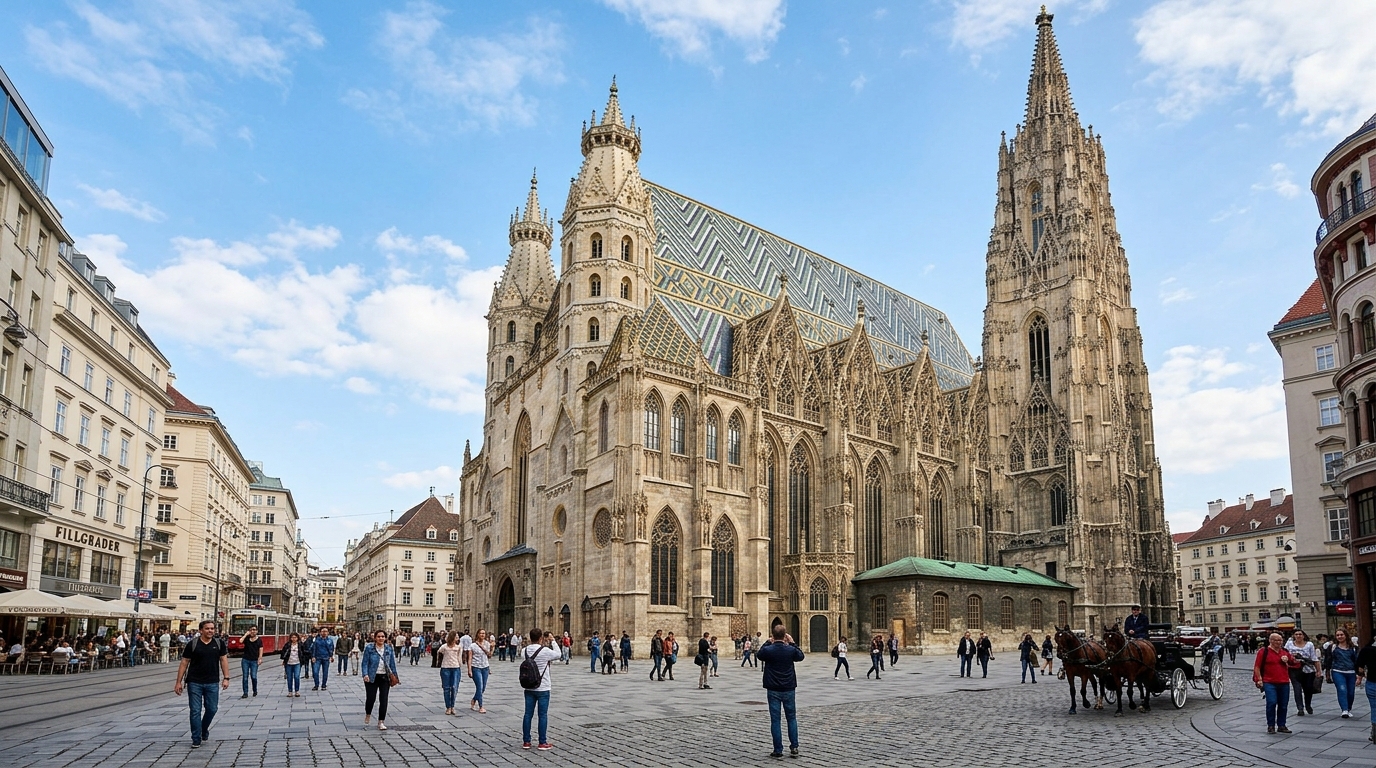
Stephansdom sits at the very center of Vienna and has stood in some form since 1137. The current Gothic structure is predominantly 14th and 15th century, and the South Tower reaches 136 meters into the sky.
You can visit the cathedral interior for free. The South Tower climb (343 steps) costs €6 and gives you one of the best elevated views in the city. The North Tower has a lift and houses the Pummerin, a 21,383 kilogram bell cast from melted-down Ottoman cannons.
Below the cathedral, the catacombs hold the remains of thousands of plague victims and the internal organs of Habsburg family members (their hearts are in the Augustinerkirche nearby, their bodies in the Imperial Crypt). Tours run regularly and cost about €6.
Vienna’s coffee house culture is UNESCO listed as an Intangible Cultural Heritage. That sounds like bureaucratic language until you actually sit in one.
A Viennese coffee house is not a cafe in the usual sense. You order one coffee and they bring you a glass of water alongside it. You can sit for three hours reading the newspapers they provide. Nobody will rush you. Nobody will ask if you want anything else. This is deliberate.
The coffee houses were historically the living rooms of Vienna’s intellectuals. Freud, Trotsky, Stefan Zweig, and Arthur Schnitzler all had their regular tables.
The ones worth visiting:
Cafe Central is the most famous, inside the Palais Ferstel with cathedral-like vaulted ceilings. Yes, there is a queue. Yes, it is worth it. The Apfelstrudel with vanilla sauce and the Melange (Viennese coffee with frothy milk) are exceptional.
Cafe Landtmann sits on the Ringstrasse and is where Freud actually had his regular table. Politicians and theater directors still come here. Less tourist-heavy than Central. Excellent sachertorte.
Cafe Hawelka in the first district has barely changed since 1939. Dark wood, regulars who have been coming for decades, and a no-frills atmosphere that feels completely authentic.
Kleines Cafe near the Franziskanerplatz is tiny, beautiful, and almost entirely undiscovered by tourists. Outdoor seating in summer on one of Vienna’s prettiest squares.
What to order:
The Naschmarkt runs along the Wienzeile for about two kilometers and is the most important food market in Vienna.
During the week it is a working market where Viennese locals buy their produce. On Saturday mornings a large flea market joins it, spreading antiques, clothing, books, and vinyl records across the surrounding streets.
For food, walk the full length before buying anything. The best stalls are often in the middle and far end rather than at the tourist-heavy entrance. Look for:
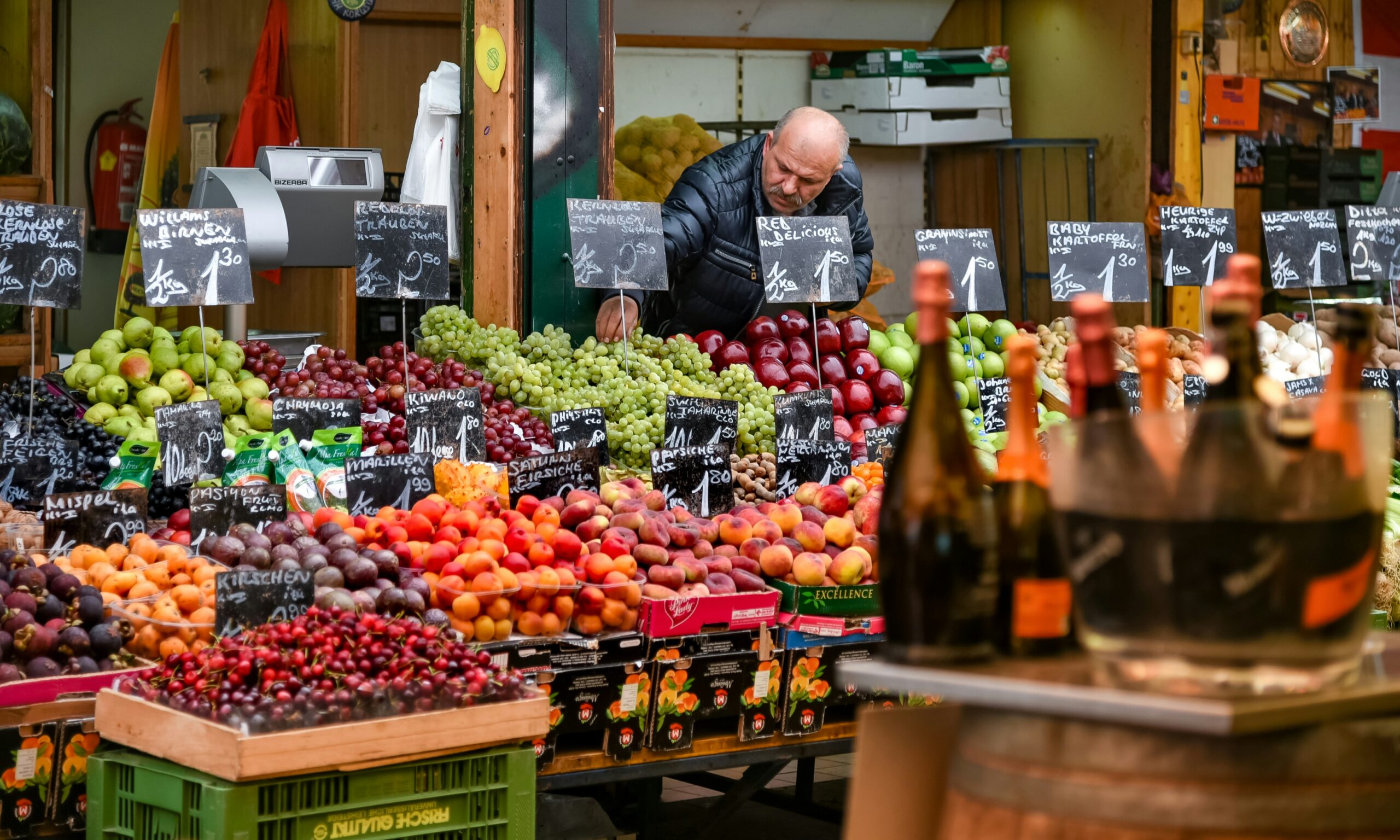
The Naschmarkt is also surrounded by good mid-range restaurants. Gasthaus Petz and Neni am Naschmarkt both do excellent lunch.
The MuseumsQuartier is a massive cultural complex just off the Ringstrasse that houses several of Vienna’s best contemporary museums in a series of former imperial stables.
What is inside:
The Leopold Museum holds the world’s largest Egon Schiele collection. If you know nothing about Schiele, this will change that. His raw, unflinching self-portraits and nudes are extraordinary.
The Kunsthistorisches Museum (Museum of Art History) across the road is one of the great art museums in the world. Works by Bruegel, Raphael, Vermeer, Caravaggio, and Titian, all housed in a palatial building that is itself worth seeing. The cafe inside the museum, set under the painted ceiling of the main hall, is genuinely beautiful.
The MUMOK (Museum of Modern Art) sits beside the Leopold and covers 20th century art from Fluxus to Pop Art to Vienna Actionism.
But even if you do not visit any of the museums, the MuseumsQuartier courtyards are worth coming to. In summer they fill with locals lounging on giant curved benches. There are good cafes and a relaxed atmosphere completely different from the formal grandeur of the Ringstrasse.
The Prater is Vienna’s large public park, stretching for several kilometers along the Danube canal. At its center sits the Riesenrad, the giant Ferris wheel built in 1897 that has become one of the symbols of Vienna.
A ride on the Riesenrad takes about 20 minutes and costs €13.50. The views over Vienna from the top are excellent, particularly at sunset.
The Wurstelprater (amusement park) around the Riesenrad has been operating since the 18th century and is one of the oldest amusement parks in the world. It is charmingly old-fashioned rather than modern. Roller coasters from the 1950s alongside contemporary rides. Viennese families come here on weekends.
Beyond the amusement park, the Prater proper is a lovely place to walk or cycle. The Hauptallee, a five-kilometer chestnut tree-lined avenue, is the main path through the park and is beautiful in spring when the trees are in bloom.
Vienna is the music capital of the world. Mozart, Beethoven, Brahms, Schubert, and the Strauss family all lived and worked here. The Vienna Philharmonic is based here. The State Opera has been running since 1869.
Most visitors assume classical music requires expensive tickets and formal dress. It does not.
The Staatsoper (Vienna State Opera): Standing room tickets cost €4 to €10 and go on sale 80 minutes before each performance. Arrive about 90 minutes before the show to queue. The standing areas have good sight lines and the acoustics are extraordinary. The opera house itself is one of the most beautiful buildings in Vienna.
The Musikverein: Home of the Vienna Philharmonic and the famous New Year’s Concert. Standing room tickets are available here too. The Golden Hall, with its gilded ceiling and exceptional acoustics, is worth seeing even from a standing position.
Church concerts: Many of Vienna’s historic churches hold regular concerts. The Karlskirche in particular holds Vivaldi and Mozart concerts in an extraordinary Baroque setting for around €35. Less formal than the opera, still excellent musically.
A practical note on etiquette: Arrive on time. Applauding between movements of a symphony is frowned upon. Wait until the piece is complete.
Emperor Franz Joseph I ordered the construction of the Ringstrasse in 1857 and it remains one of the great urban planning achievements of the 19th century.
This circular boulevard runs around the first district and is lined with some of the most impressive public buildings in Europe. Walking or cycling the full ring takes about 90 minutes and passes the Vienna State Opera, the Kunsthistorisches Museum, Parliament, the Rathaus (City Hall), the Burgtheater, and the University of Vienna.
The best free thing to do in Vienna is simply walk this boulevard at your own pace and look at the buildings.
The historic center and home to most of the major sights. Beautiful to walk but expensive for food and drinks. Best in the early morning before the crowds.
Mariahilfer Strasse is Vienna’s main shopping street. The side streets hold excellent independent cafes, vintage shops, and neighborhood restaurants.
A small grid of cobblestone streets in the seventh district with beautifully preserved Biedermeier houses. One of the most charming areas in Vienna to walk through. Excellent independent restaurants and cafes.
Across the Danube Canal from the first district, Leopoldstadt is where Vienna’s Jewish community was historically centered and is now one of the most interesting neighborhoods in the city. The Karmelitermarkt here on weekday mornings is where local Viennese shop rather than tourists. Excellent coffee shops and a genuinely local atmosphere.
Vienna’s creative neighborhood. Independent designers, bookshops, concept stores, and some of the best cafes in the city. Burgasse24, a vintage store with its own cafe inside, is particularly good.
Vienna is one of the only capital cities in Europe with working vineyards within the city limits. The hills of Grinzing, Nussdorf, and Kahlenberg in the 19th district produce over two million liters of wine annually.
A Heuriger is a traditional Viennese wine tavern, run directly by the winemaker, where you drink the current year’s wine with simple food in a garden setting. They are indicated by a pine branch hung above the door.
The Heuriger tradition is one of the most authentic things you can do in Vienna and almost no tourist ever does it.
To find them: Take the D tram to its northern terminus at Nussdorf, walk uphill into the vineyard neighborhoods, and look for the pine branch signs. Most are open from late afternoon.
The Kahlenberg at the top of the vineyard hills offers a panoramic view over all of Vienna and the Danube. Take Bus 38A from Heiligenstadt U-Bahn station. Go at sunset.
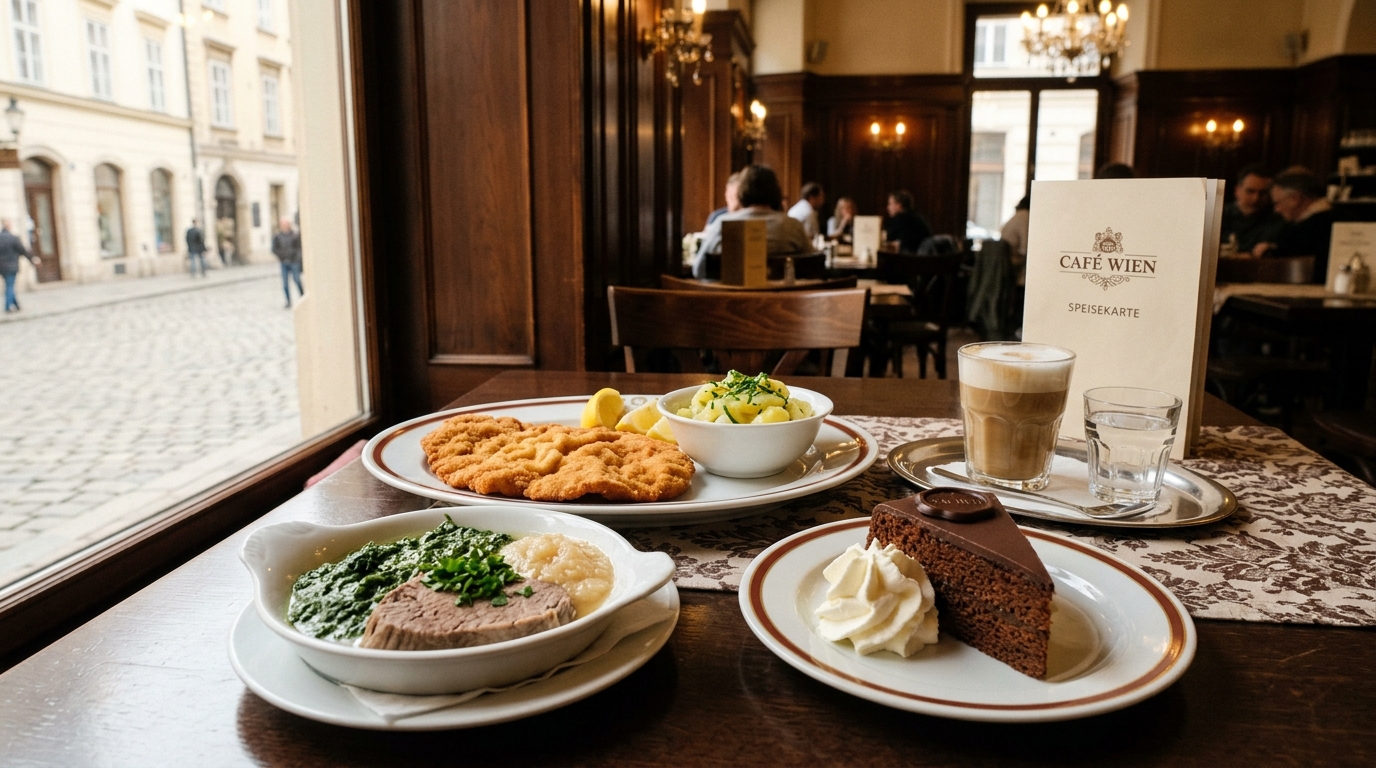
Wiener Schnitzel: Veal (not pork, despite what most tourist restaurants serve) pounded thin, breaded, and fried in clarified butter until golden and slightly wavy. Figlmüller in Wollzeile is the most famous address. The schnitzel is larger than the plate.
Tafelspitz: Boiled beef with horseradish sauce, roasted apples, and chive sauce. This was Emperor Franz Joseph’s favorite dish. Plachutta on Wollzeile is the best place to eat it.
Käsekrainer: Cheese-stuffed pork sausage grilled until the cheese bubbles out. Available from street sausage stands (Würstelstand) across the city. A must at 11 PM after a night out.
Sachertorte: Dense chocolate cake with an apricot jam layer, covered in dark chocolate glaze. The Hotel Sacher and Cafe Demel have been arguing for over 100 years about whose version is the original. Try both and decide for yourself.
Kaiserschmarrn: Fluffy shredded pancake with powdered sugar and plum compote. Technically a dessert but often eaten as a main meal. Available at most traditional Austrian restaurants.
Vienna involves more walking than most visitors expect, and the first district cobblestones can be hard on your feet by day three.
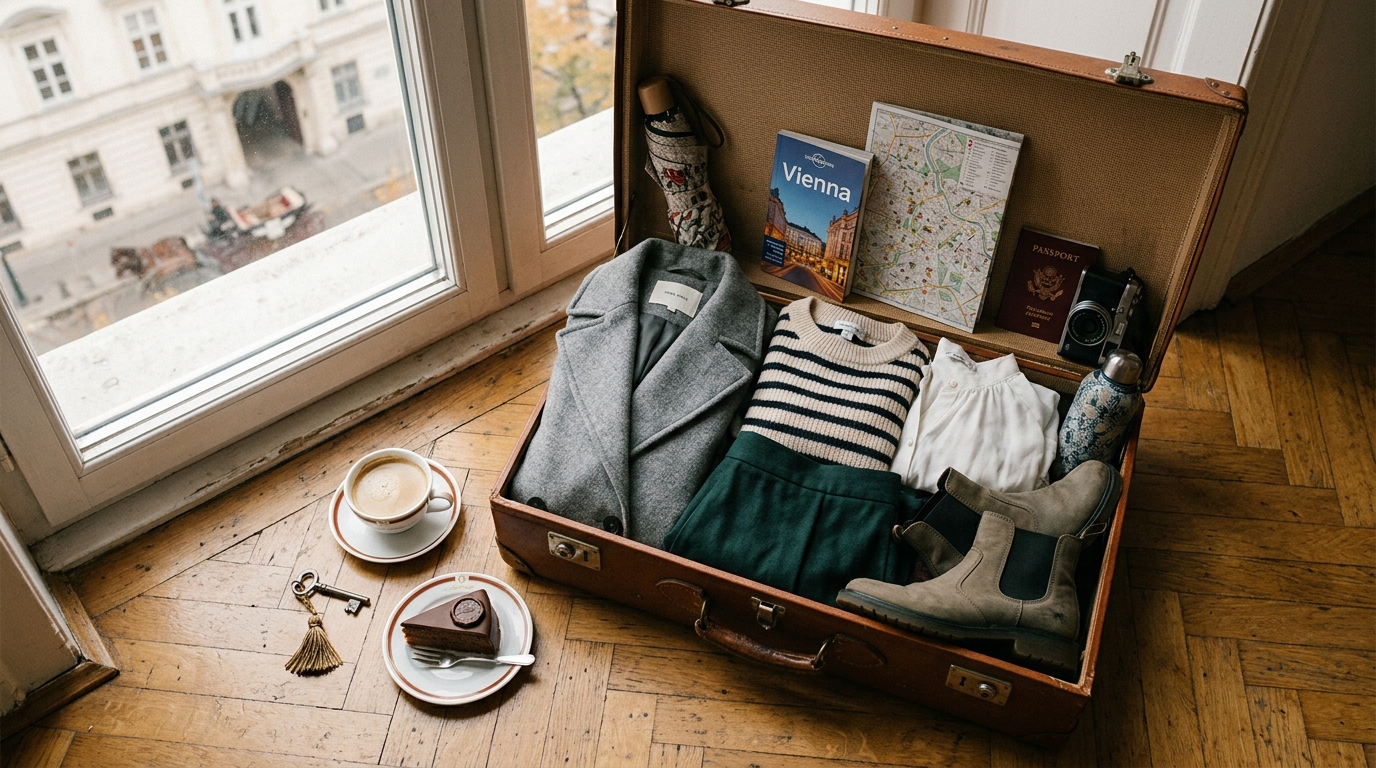
Comfortable walking shoes are essential. The Skechers Go Walk Arch Fit are consistently recommended for European city trips. Lightweight, supportive on uneven stone, and not obviously tourist shoes.
Vienna’s weather is unpredictable, particularly in spring and autumn. A lightweight packable rain jacket is genuinely useful. The Uniqlo Blocktech Parka packs down small, keeps the wind and light rain out, and looks good enough for a restaurant or the opera.
For the museums and coffee houses, a small crossbody bag keeps your essentials accessible without being cumbersome. The Travelon Anti-Theft Classic Crossbody Bag has slash-proof straps and locking zips, making it genuinely practical in crowded tourist areas without looking like a hiking pack.
The Vienna City Card covers unlimited public transport and includes discounts at over 210 museums and attractions. A 48-hour card costs €17. Worth it if you plan to use public transport more than a few times daily.
The Vienna Pass covers entry to 70+ attractions including Schönbrunn, Belvedere, Hofburg museums, and the Kunsthistorisches Museum. A 2-day pass costs around €109. Calculate whether it saves you money based on what you actually plan to visit.
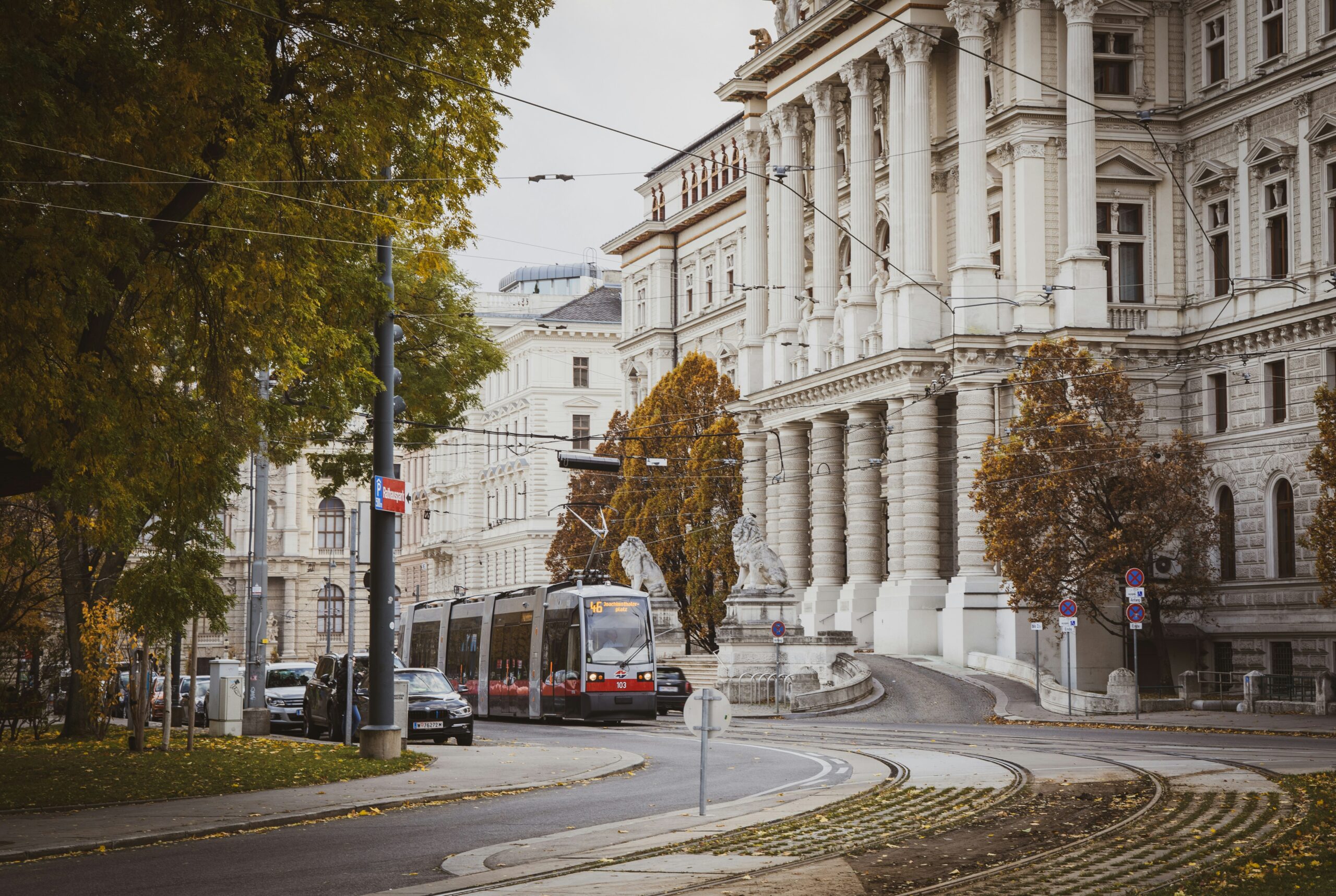
Public transport is excellent. The U-Bahn (metro), trams, and buses cover the entire city. Buy tickets from machines at U-Bahn stations. Validate your ticket before boarding.
Vienna is very walkable. The first district where most sights are concentrated is about two kilometers across. Many of the best experiences come from simply walking.
Cash is still useful. Many smaller cafes, market stalls, and Heurigen prefer cash.
Tipping: Round up to the nearest euro or add 10% in restaurants. Hand the tip directly to the server when paying rather than leaving it on the table.
Best time to visit: April, May, September, and October offer mild weather and manageable crowds. December is magical for Christmas markets but very cold and very busy. July and August are hot and crowded.
Bratislava, Slovakia is just one hour by train or boat. A completely different atmosphere from Vienna, with a compact old town, good food, and far fewer tourists.
Hallstatt is the photogenic Alpine lake village that went viral on social media. About three hours from Vienna by train and bus. Book transport in advance in summer.
Salzburg is three hours by fast train and combines perfectly with a Vienna trip. Mozart’s birthplace, the Sound of Music locations, and a beautiful old town.
Klosterneuburg is 30 minutes from Vienna and has a magnificent imperial monastery overlooking the Danube. Combines well with wine tasting in the surrounding vineyards.
Baden bei Wien is one hour south by train and was a favorite summer retreat of the Habsburg court. Beautiful spa town with rose gardens and thermal baths.
How many days do you need in Vienna?
Three days covers the main sights comfortably. Four or five days lets you slow down, explore the neighborhoods, and do a day trip. Two days is possible but rushed.
Is Vienna expensive?
It is moderately expensive by European standards. Coffee house culture is actually affordable since coffee prices are reasonable. The big costs are museum entries, which the Vienna Pass can reduce significantly.
What is the best neighborhood to stay in Vienna?
The first district puts you closest to everything but is the most expensive. The sixth and seventh districts (Mariahilf and Neubau) are well-connected, more local in atmosphere, and more affordable.
Is Vienna good for solo female travelers?
Yes, Vienna is considered one of the safest cities in Europe. Public transport is reliable and well-lit. The coffee house culture is particularly good for solo travelers since sitting alone for hours is completely normal and accepted.
Do I need to book attractions in advance?
Schönbrunn Palace and the Belvedere are worth booking online in advance from April through October. The opera standing room tickets cannot be booked in advance and must be bought in person on the day.
What is a Heuriger?
A Heuriger is a traditional Viennese wine tavern run by the winemaker, serving the current year’s wine with simple food. They are concentrated in the vineyard villages of the 19th district and are indicated by a pine branch above the door. One of the most authentic and undervisited experiences in Vienna.
What food should I try first in Vienna? Start with a Melange and Apfelstrudel at a traditional coffee house, a Käsekrainer from a street Würstelstand, and a Wiener Schnitzel at Figlmüller. That covers the three experiences most worth having in the first 24 hours.
Vienna rewards people who slow down and pay attention.
The visitors who rush from palace to palace and leave after two days miss the part that actually gets under your skin. The hour spent reading a newspaper in Cafe Hawelka. The Heuriger in the vineyard hills at sunset. The moment when you look up from the Naschmarkt and realize you have been standing at a cheese stall for 40 minutes just because the conversation was interesting.
Give Vienna time. It will give you a lot in return.