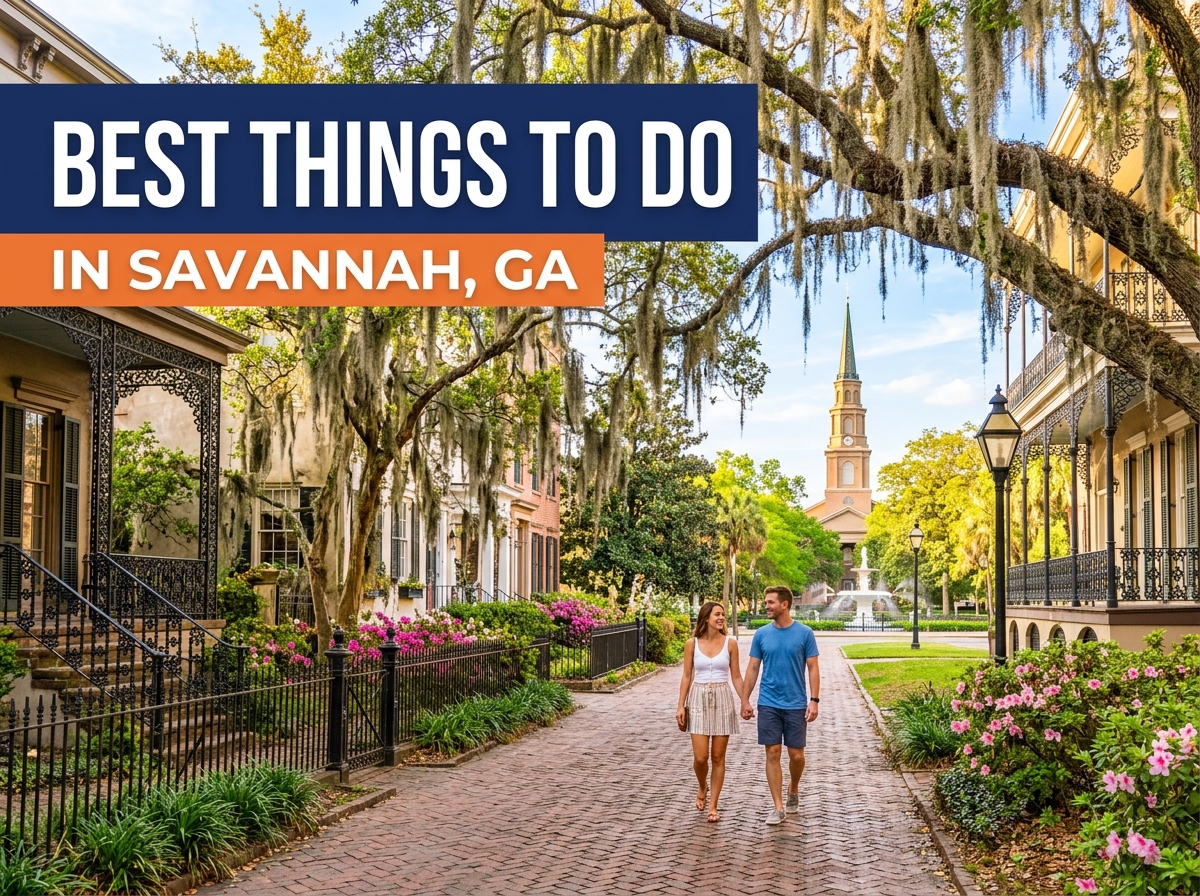
Three days is ideal for a first visit. That gives you enough time to walk the Historic District properly, take a day trip to Tybee Island, spend an evening on a ghost tour, eat your way through the city, and actually sit in a square for long enough to feel the pace of the place.
Two days covers the highlights without much breathing room. Four days or more suits anyone who wants to explore neighborhoods beyond the Historic District, take a longer day trip, or simply enjoy the unhurried rhythm that Savannah does better than almost any American city.
Savannah has one of the most unusual and genuinely enjoyable laws in the United States. You can legally carry an open alcoholic drink in a plastic cup on the streets of the Historic District. This is not a gray area. It is a city ordinance, and it is part of why the evening atmosphere in Savannah feels relaxed and sociable in a way that most American cities simply do not. Pick up a cocktail from a bar on Congress Street or River Street and keep walking. It is completely legal and completely normal here.
The rule is plastic cups only, not glass bottles or cans. Most bars will automatically transfer your drink before you head out the door.
Savannah was designed in 1733 by General James Oglethorpe as America’s first planned city, built around a grid of squares, small park spaces embedded into the street layout throughout the Historic District. Twenty two of the original twenty four squares are still standing, each one different in feel, planting, and the monuments or fountains at their centers.
Most visitors walk through several squares without really stopping in any of them. The better approach is to pick three or four that genuinely interest you and spend real time in each one. Sit on a bench. Read the historical marker. Watch people walking their dogs in the shade.
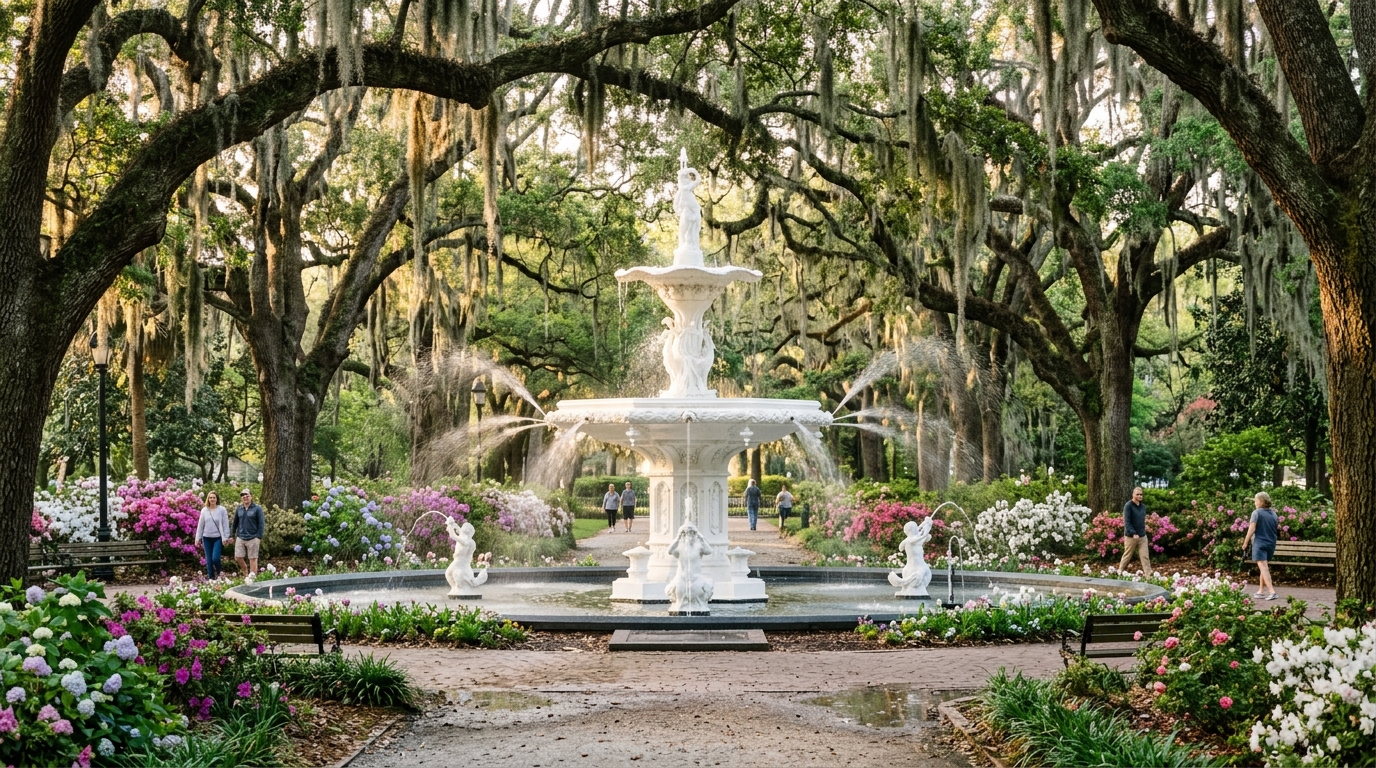
Forsyth Park is the largest and most famous, anchored by a white fountain that appears in nearly every Savannah photograph. It is at its best early on a weekend morning when the farmers market sets up around the edges of the park, with local produce, honey, baked goods, and coffee.
Chippewa Square has a different kind of fame: it was the filming location for the bench scenes in Forrest Gump. The actual bench from the film is in the Savannah History Museum, not the square, but the square itself is genuinely beautiful and worth visiting beyond the movie association.
Madison Square, Lafayette Square, and Monterey Square each have a distinct character and architecture, and the houses surrounding them represent some of the finest examples of antebellum design in the country.
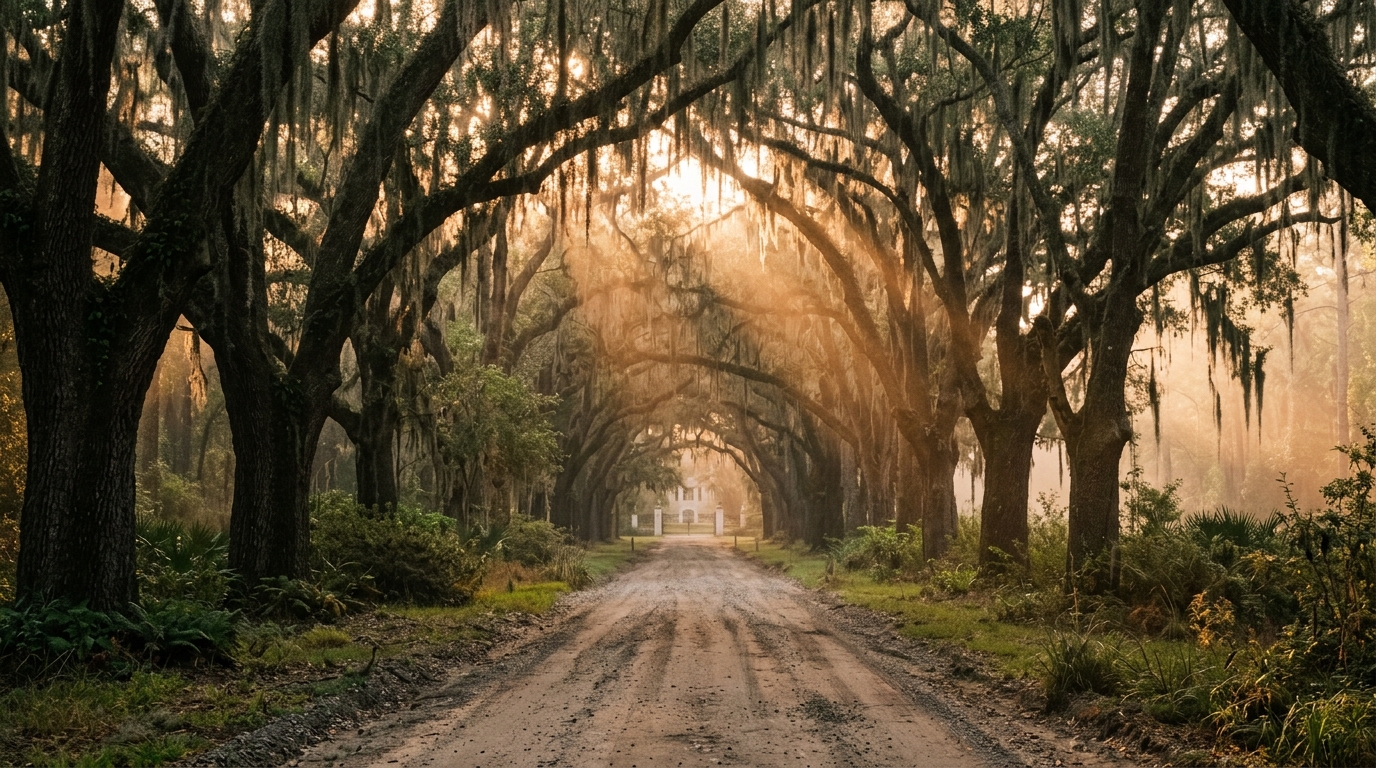
The most photographed image in Savannah is not a square or a building. It is the avenue of live oak trees at Wormsloe Historic Site, a mile long tunnel of Spanish moss covered oaks framing a dirt road that leads through a colonial era estate east of the city.
Every guide mentions Wormsloe. Almost none of them say the single most important thing: go at dawn, before the site officially opens, when the light comes through the trees horizontally and the road is completely empty. The main gate opens at a set time each morning, but the avenue is visible and accessible from just outside the gate in the very early morning, and the experience of being there alone in that light is completely different from arriving at 10am with tour groups.
If you go at regular hours, entry costs around 10 dollars per adult. The site also has a seven mile nature trail through coastal marshland, a small museum covering colonial Georgia history, and costumed interpreters on certain days demonstrating 18th century skills.
Savannah is consistently named one of the most haunted cities in America, and the ghost tour industry here is genuinely well developed, with multiple operators covering everything from walking tours of the historic squares to lantern tours through Colonial Park Cemetery to paranormal lock in experiences at the Sorrel-Weed House.
Even committed skeptics tend to enjoy Savannah’s ghost tours because the history woven into the stories is genuinely interesting regardless of whether you believe in the supernatural component. The city has a long and layered past, including its role in the Civil War, yellow fever epidemics that killed thousands, and centuries of complicated human history embedded in every building and square.
Hearse Ghost Tours and Savannah Shadows are both well regarded by recent visitors. The Ghosts and Gravestones tour is the most popular and runs in a modified trolley through the historic streets and cemeteries. Book in advance, especially in October and around Halloween when availability disappears weeks ahead.
Bonaventure Cemetery sits on a bluff overlooking the Wilmington River about 15 to 20 minutes east of downtown, and it is one of the most hauntingly beautiful outdoor spaces in the South. The Victorian era cemetery is shaded entirely by enormous live oaks hung with Spanish moss, with elaborate statuary, family mausoleums, and grave markers spanning centuries.
The cemetery gained wider fame after John Berendt’s book Midnight in the Garden of Good and Evil was published in 1994 and used it as a central location. The famous Bird Girl statue that appeared on the book’s cover has since been moved to the Telfair Museum for preservation, but the cemetery itself remains extraordinary.
Walking through Bonaventure is free and requires no reservation. Go in the morning when the light through the trees is at its best and crowds are minimal. It is a 20 minute Uber ride from downtown. Pre arrange your return trip before you go because rideshare pickups from this location can take longer than in the city center.
River Street runs along the Savannah River below the bluff that the Historic District sits on, connected to the upper city by steep ramps and cobblestone streets. The area has shops, restaurants, bars, and the Georgia Queen riverboat departure point.
The thing that surprises most visitors here is the cargo ships. Savannah has one of the busiest ports in the United States, and enormous container vessels pass through the river channel directly in front of River Street several times daily. They are so large they tower over the buildings along the waterfront in a way that is genuinely startling the first time you see it.
The Marine Traffic website and app shows you a live map of vessels in the area and lets you check when the next large ship is scheduled to pass. This is the kind of specific tip that turns a pleasant afternoon on River Street into something genuinely memorable.
The Georgia Queen is an authentic paddlewheel riverboat that runs sightseeing, sunset, dinner, and Sunday brunch cruises on the Savannah River. The 90 minute harbor sightseeing cruise is the best starting point for first time visitors, giving you a full view of the city from the water alongside narration covering Savannah’s maritime history.
The highlight for many passengers happens when the Georgia Queen passes Old Fort Jackson, one of the oldest standing American brick military fortifications. The fort fires its cannon in salute to the riverboat as it passes, timed to coincide with the cruise. It is unexpected and genuinely spectacular.
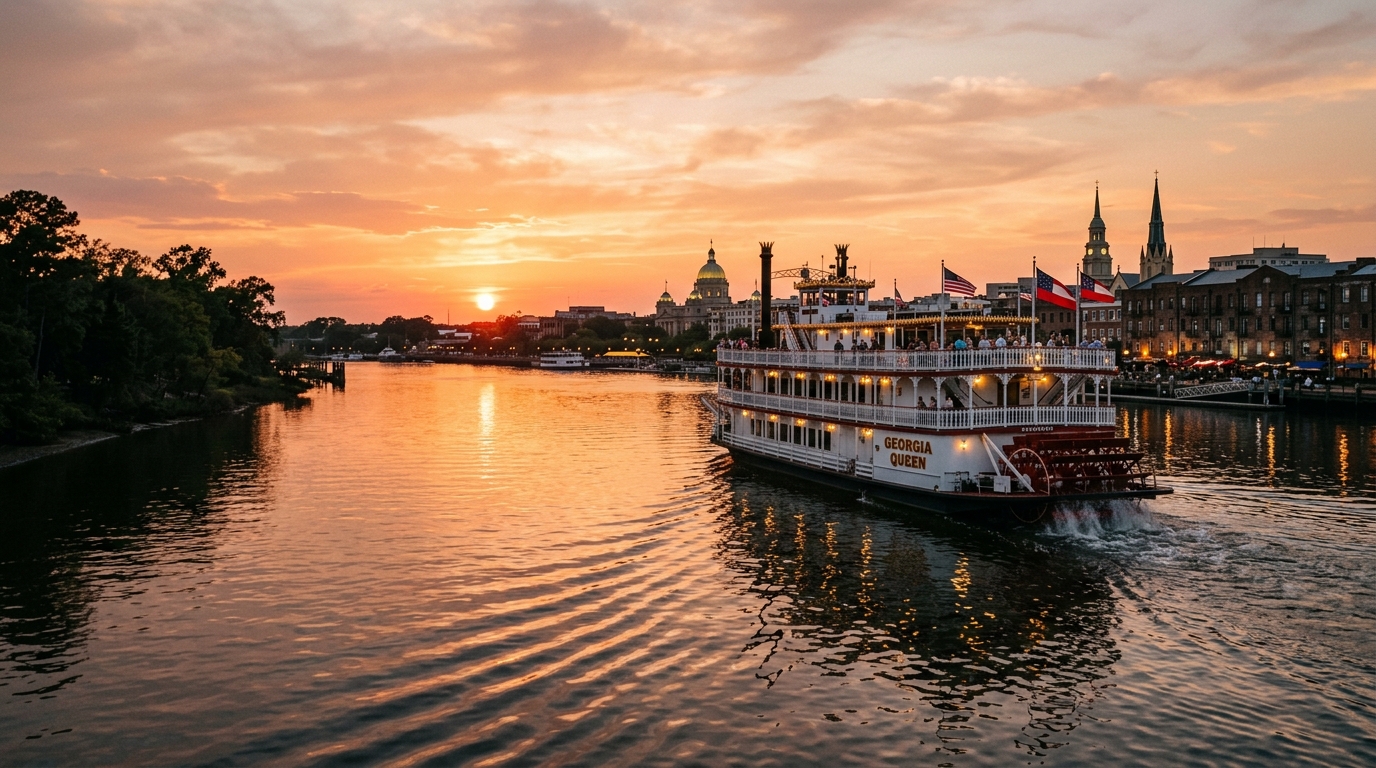
Sunset cruises sell out fastest. Book at least a few days in advance in spring and fall when Savannah’s weather is at its best and river traffic is high.
Savannah has several important historic house museums, and the one worth prioritizing above all others for a first visit is the Owens-Thomas House on Oglethorpe Square. Completed in 1819, it is one of the finest examples of English Regency architecture in the country, and the guided tours cover both the elaborate main house and the preserved urban slave quarters at the rear of the property.
The slave quarters section was one of the first such spaces to be preserved and interpreted as a significant historical site rather than a secondary afterthought to the main house. The tours here are honest and detailed in a way that makes the visit more meaningful than a typical historic house tour. Budget about 90 minutes.
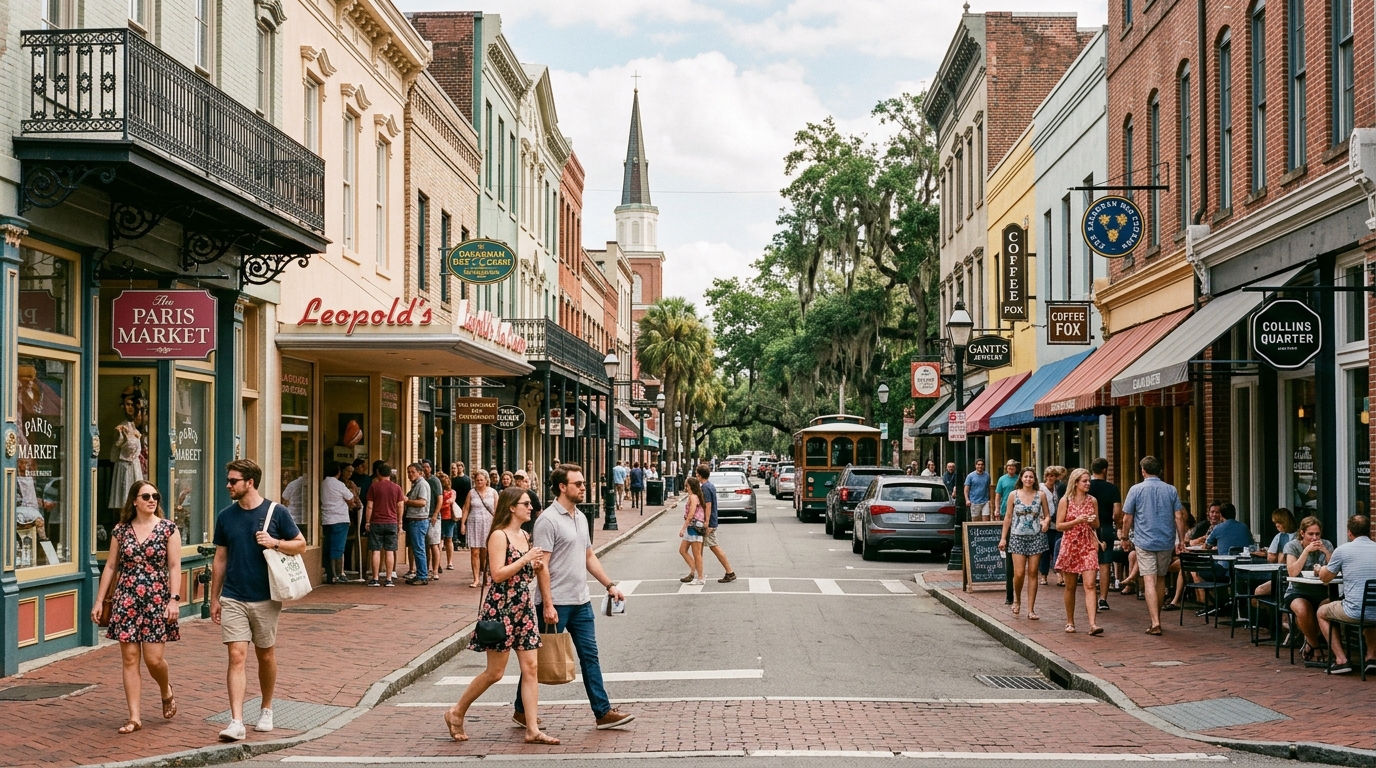
Broughton Street is Savannah’s main commercial street, running through the heart of the Historic District with a mix of local boutiques, national brands, bookshops, restaurants, and the kind of covered arcade buildings that make afternoon window shopping genuinely pleasant.
The Starland District, roughly a mile south of Forsyth Park, is the neighborhood most visitors never reach and the one most worth adding to your itinerary if you have more than two days. Savannah College of Art and Design (SCAD) has transformed this area over the past two decades, filling former industrial buildings with galleries, studios, cafes, and independent restaurants. It is where the city feels most alive and contemporary, and where you get a sense of what Savannah is becoming alongside what it has always been.
E. Shaver Bookseller, located in the Historic District but with the kind of personality that belongs in Starland, is one of the best independent bookshops in the South, stocked with local authors and Georgia focused history and culture titles alongside general fiction and gifts that do not look like souvenir shop contents.
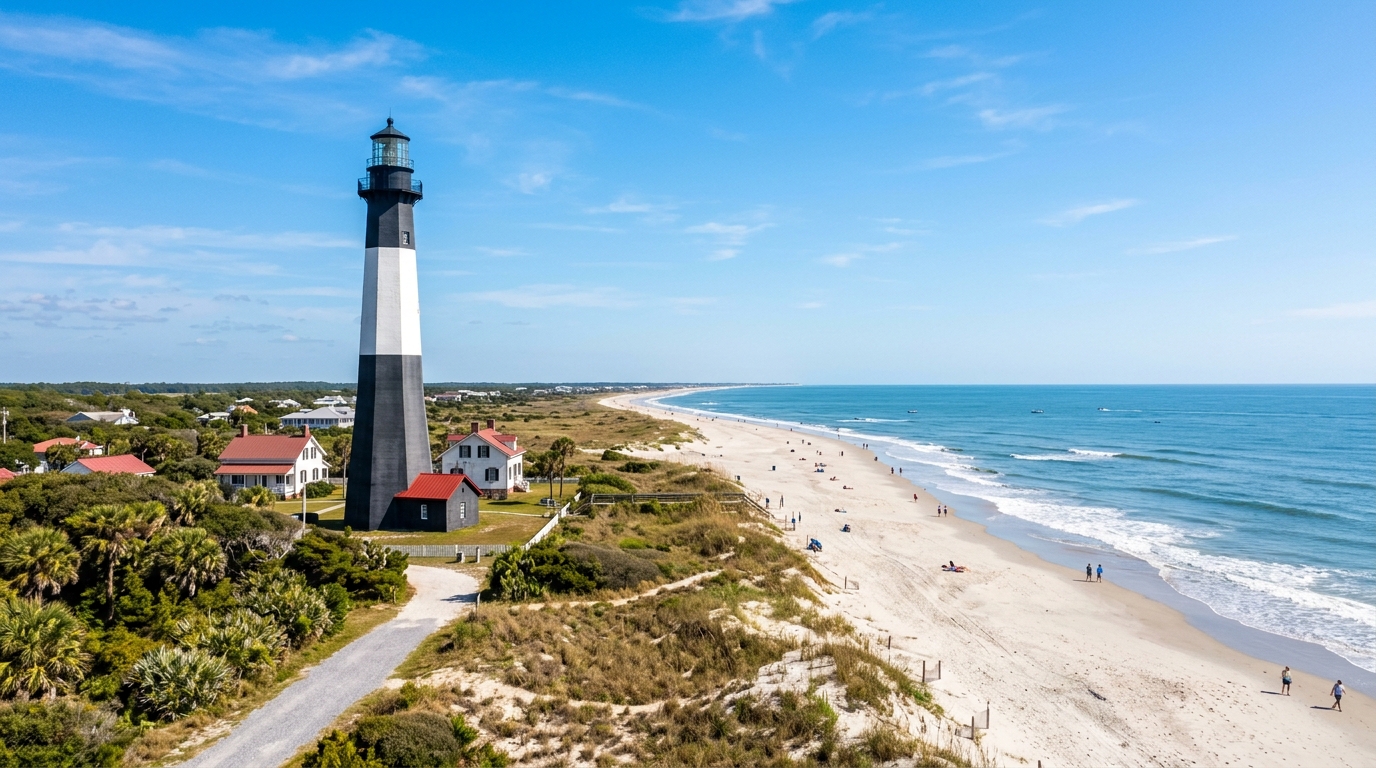
Tybee Island sits 18 miles east of downtown Savannah, about a 20 to 25 minute drive along a causeway through coastal marshland. It is a small, relaxed beach town with five distinct beach areas, a famous red and white striped lighthouse, and the kind of low key seafood restaurant scene that belongs to a coastal Georgia island rather than a tourist destination.
The Tybee Island Lighthouse is the oldest and tallest lighthouse in Georgia, dating from 1736 with the current structure rebuilt in 1867. Climbing to the top costs around 10 dollars and gives you views across the barrier islands and marshes in every direction.
Tybee Beach Bus runs a service from downtown Savannah to Tybee that includes transport and basic beach gear, which is the most practical option for visitors without a rental car who want a full beach day.
Dolphin watching boat tours depart from Tybee’s Back River dock with Bull River Cruises and Captain Mike’s Dolphin Tours, both well reviewed for actually spotting dolphins in the tidal channels around the island.
Savannah College of Art and Design enrolls around 15,000 students across its Savannah and international campuses and is embedded so deeply into the city’s identity that you feel its influence everywhere, from the restored historic buildings it occupies to the murals on walls throughout the Starland District.
The SCAD Museum of Art on Martin Luther King Jr. Boulevard is free to visit and houses genuinely excellent rotating exhibitions alongside a permanent collection that spans contemporary work, fashion, and design. The museum cafe is one of the better lunch spots near the museum district and is consistently underestimated by visitors who expect university museum food.
First Fridays in Savannah, which runs the first Friday of each month, involves SCAD and independent galleries across the city opening for free evening viewings with food and drinks. If your visit lines up with this, it is one of the best ways to experience the city’s creative side.
Savannah is genuinely one of the more affordable historic cities in the American South, with free access to most of its famous outdoor spaces.
The Historic District squares, Forsyth Park, River Street, Broughton Street, and the cobblestone riverfront are all free to walk and explore. The Forsyth Farmers Market on Saturday mornings is free. Bonaventure Cemetery is free. Most of the coastal views and moss draped streets that make Savannah famous cost nothing.
Budget travelers staying in a hostel or budget hotel, eating at local diners and grabbing pralines from River Street Sweets, can manage on around 70 to 100 dollars per day including accommodation.
Mid range travelers in a comfortable Historic District hotel, eating at proper sit down restaurants and taking one or two paid tours, should plan for 150 to 220 dollars per day.
Accommodation in the immediate Historic District carries a premium. Staying a few blocks south toward the Victorian District or in Midtown brings rates down noticeably for equivalent comfort.
Savannah is considered one of the more comfortable Southern cities for solo female travelers. The Historic District is walkable, well populated during the day and into the evening, and has an unusually friendly culture where strangers genuinely talk to each other in ways that feel natural rather than intrusive.
Evening ghost tours are a practical solo friendly activity because they are naturally group based, typically including eight to twenty people, making them an easy way to be out in the city at night without navigating unfamiliar streets alone.
A few practical notes worth knowing. The area around River Street directly beneath the bluff can feel quieter and more isolated than the streets above it after 10pm. Stay on the well lit parts of the main strip after dark rather than wandering the side streets.
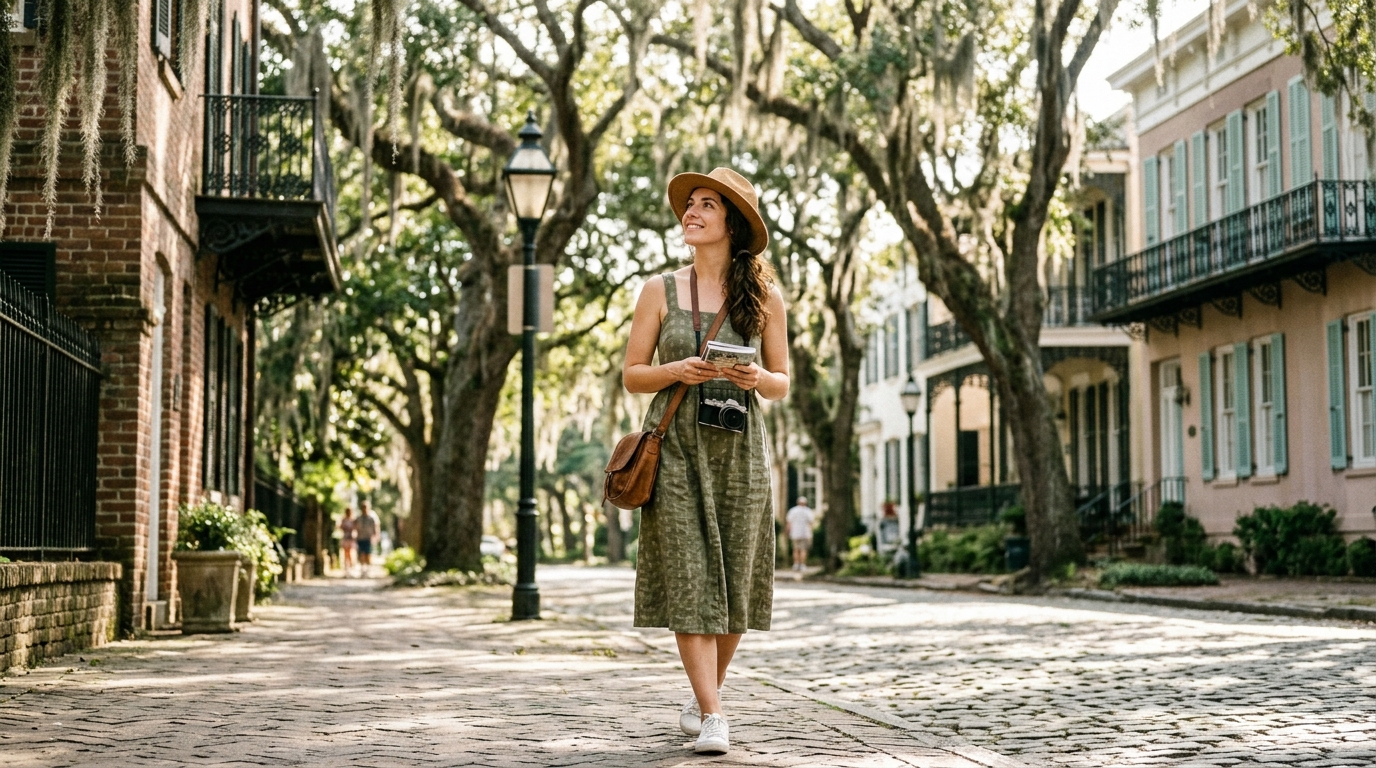
Open container laws mean people are carrying drinks on the street throughout the evening, which changes the atmosphere but also means you are rarely truly alone in the Historic District during evening hours.
For context: Savannah’s Southern hospitality feel is genuine rather than performative, similar to how Nashville’s warmth toward visitors makes solo travel there easier than most comparable American cities. If you are building a Southern cities itinerary, the best things to do in Nashville covers everything worth doing there with the same depth as this guide.
Lowcountry cuisine is the food tradition this part of coastal Georgia and South Carolina does better than anywhere else. Shrimp and grits, a combination of stone ground corn grits topped with local shrimp in a butter and cream sauce, is the dish most associated with this region and available at nearly every proper Savannah restaurant.
The Olde Pink House on Reynolds Square is the most historic dining experience in the city, a 1771 mansion converted into a restaurant serving classic Southern food in genuinely beautiful rooms. Reservations are essential.
Crystal Beer Parlor on Jones Street has been operating since 1933 and serves some of the best burgers and seafood in the city in a setting that looks almost exactly as it did when it opened. No reservations, cash friendly, and always busy.
Leopold’s Ice Cream on Broughton Street is a Savannah institution since 1919 and should be on the itinerary regardless of when you visit. The butter pecan with Georgia pecans is the classic order. The line moves faster than it looks.
Huey’s on the River and Rancho Alegre Cuban Restaurant in the Starland District both represent sides of Savannah’s food scene that most visitors miss by staying exclusively around River Street and the squares.
For a quick, authentic breakfast before a morning walk, PERC Coffee Roasters consistently ranks among the best coffee in the city, with multiple locations and a roasting operation that supplies several local restaurants.
Savannah is walkable in a way that very few American cities are. The Historic District is compact enough that most first time visitors can cover it entirely on foot across two or three days without needing a car or rideshare for the main sights. Bring comfortable shoes for cobblestone streets, which are beautiful but uneven underfoot.
The heat and humidity in summer are significant. June through August in Savannah is genuinely hot and heavy with moisture. Plan outdoor walking for morning and evening, and find indoor or shaded spaces in the middle of the day. Carry water constantly.
Spring (March through May) and fall (September through November) are the best visiting windows. Spring brings azalea blooms that transform the Historic District into something extraordinary. St. Patrick’s Day in Savannah is one of the largest celebrations in the United States, with green dyed fountains and parades drawing enormous crowds. Plan weeks ahead if you want to visit during that period, or give it a wide berth if crowds are not your thing.
A good quality insect repellent is worth packing for any Savannah visit that includes evening outdoor time, particularly near the squares and Forsyth Park where mosquitoes are active in warm months. This DEET free plant based bug repellent on Amazon works well for extended outdoor time in coastal Georgia humidity and does not leave the chemical residue that heavier formulations do.
Downloading maps offline before arriving is useful in Savannah specifically because the square grid is slightly disorienting until you have walked it a few times, and cell service inside some of the historic buildings and shaded streets can be patchy. A portable battery pack keeps your navigation running through a full day of walking. This slim power bank on Amazon is small enough for a crossbody bag and charges a phone twice over, which is enough for a full day of maps, photos, and ghost tour bookings.
How many days should I spend in Savannah GA? Three days is ideal for a first visit. Two days covers the main highlights at a full pace. Four or five days allows for a relaxed rhythm and deeper neighborhood exploration.
Is Savannah walkable? Yes, the Historic District is one of the most walkable areas in any American city. Most of the main attractions are within comfortable walking distance of each other. A car or rideshare is useful for Wormsloe, Bonaventure Cemetery, and Tybee Island.
Can you drink alcohol on the streets of Savannah? Yes. Open container laws allow you to carry an alcoholic drink in a plastic cup throughout the Historic District. Most bars will transfer your drink to a to go cup before you leave.
What is the best time to visit Savannah GA? March through May and September through November offer the best weather. Spring azalea season is particularly beautiful. Summer is very hot and humid but has fewer crowds and lower hotel prices.
Is Savannah safe for solo female travelers? Yes, Savannah is generally considered comfortable for solo female travelers. The Historic District is well populated throughout the day and evening. Standard urban awareness applies particularly on quieter side streets at night.
What is Savannah known for? Savannah is known for its 22 historic squares, Spanish moss draped live oak trees, antebellum architecture, lowcountry food, and a reputation as one of the most haunted cities in America. It was also the setting for the book and film Midnight in the Garden of Good and Evil.
Do you need a car in Savannah? Not for the Historic District. For Wormsloe, Bonaventure Cemetery, Tybee Island, and the Starland District, a rideshare or rental car is useful.
What should I eat in Savannah? Shrimp and grits, lowcountry boil, Leopold’s butter pecan ice cream, pralines from River Street Sweets, and anything on the menu at the Olde Pink House. The Saturday Forsyth Farmers Market is also worth a visit for local produce and food stalls.
Savannah is the kind of city that rewards people who stop moving. Every square has a bench that looks out on something beautiful. Every street has a story attached to the buildings lining it. Every evening has a ghost tour or a riverfront sunset or a long dinner at a table that nobody is rushing you away from.
Come with a loose plan and the willingness to deviate from it. The best moments in Savannah tend to happen when you sit down somewhere unexpected and let the city come to you.