If this is your first trip, you probably have one simple question. What should you actually do here, and how much time do you need to do it right? This guide answers both, along with the things most other guides forget to mention, like what a realistic budget looks like and whether Savannah is safe if you are traveling alone.
This is a full guide to the best things to do in Savannah, Georgia for first time visitors, written so a total beginner can plan a trip from start to finish without getting overwhelmed.
Two full days is the minimum for a first visit. That gets you the Historic District, one museum, one meal on River Street, and time to just walk the squares.
Three days is the sweet spot. It adds breathing room for a day trip to Tybee Island, a proper ghost tour at night, and a slower morning in a coffee shop instead of rushing everywhere.
Four days works well if you want to add Bonaventure Cemetery, more museums, and a couple of the smaller neighborhoods like the Starland District. Savannah rewards slow travel more than most cities, so if your schedule allows it, give yourself the extra day.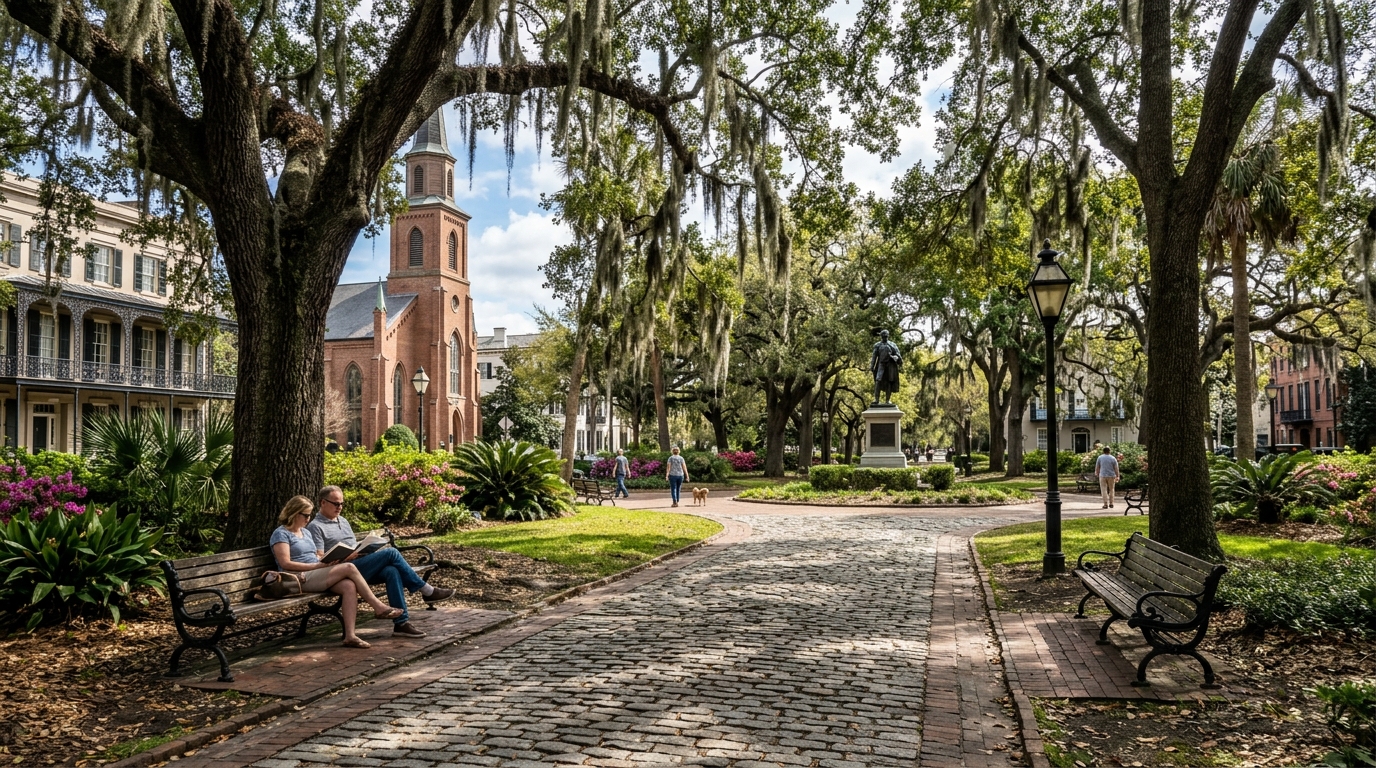
The Historic District is small and almost entirely walkable. Most of the squares, River Street, and the main restaurants sit within a fifteen minute walk of each other.
For Tybee Island, you will need a car or a rideshare, since it sits about eighteen miles east of downtown. If you are not renting a car for the whole trip, booking a rideshare just for that one day trip is the easiest option.
The free Savannah Belles Ferry crosses the river in a few minutes and gives you a nice view without costing anything. Parking downtown can be tight and expensive, so if you do rent a car, look into a hotel that includes parking, since street parking fills up fast during peak season.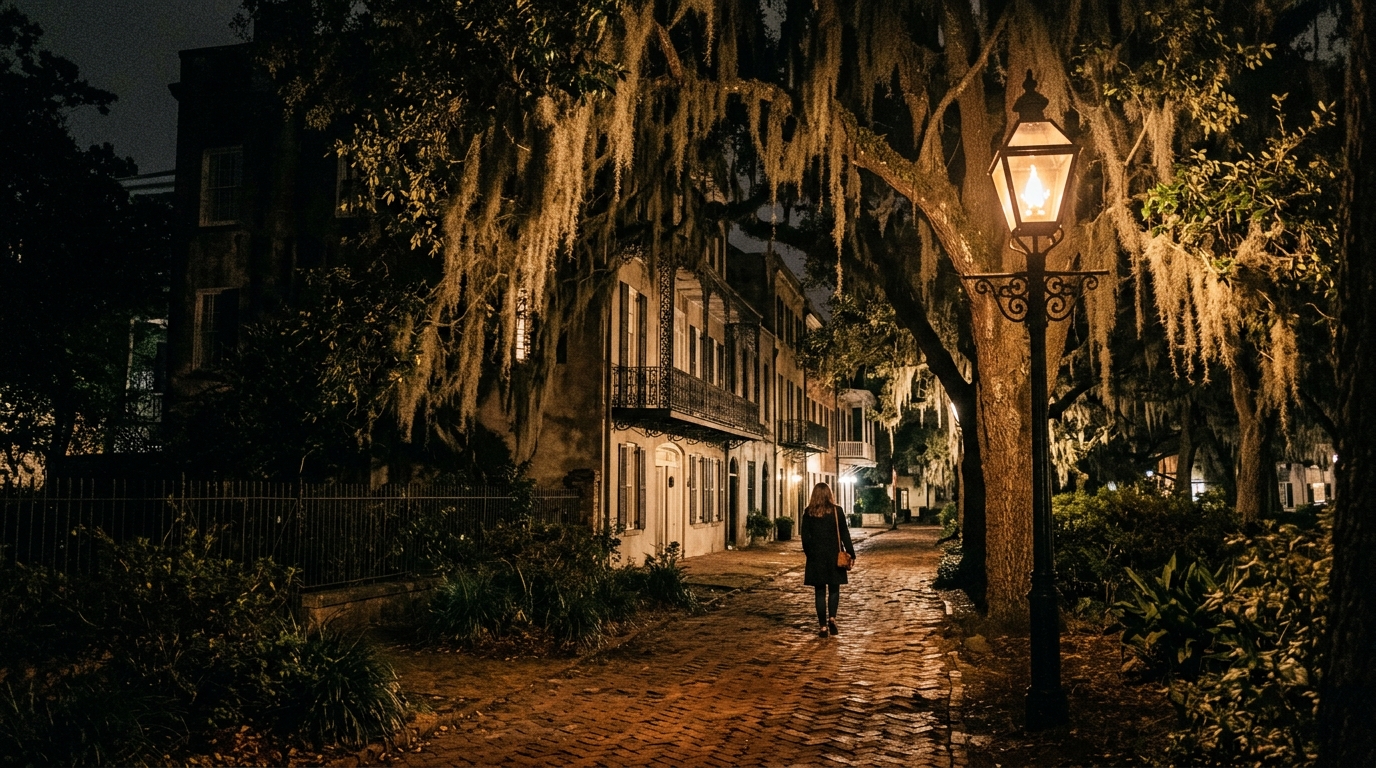
Start here. Forsyth Park is the heart of Savannah, thirty acres of oak trees, walking paths, and that famous white fountain everyone photographs. On Saturday mornings a farmers market takes over the south end, with local produce and food stalls. It is free, it is beautiful, and it is the easiest way to understand why people fall for this city.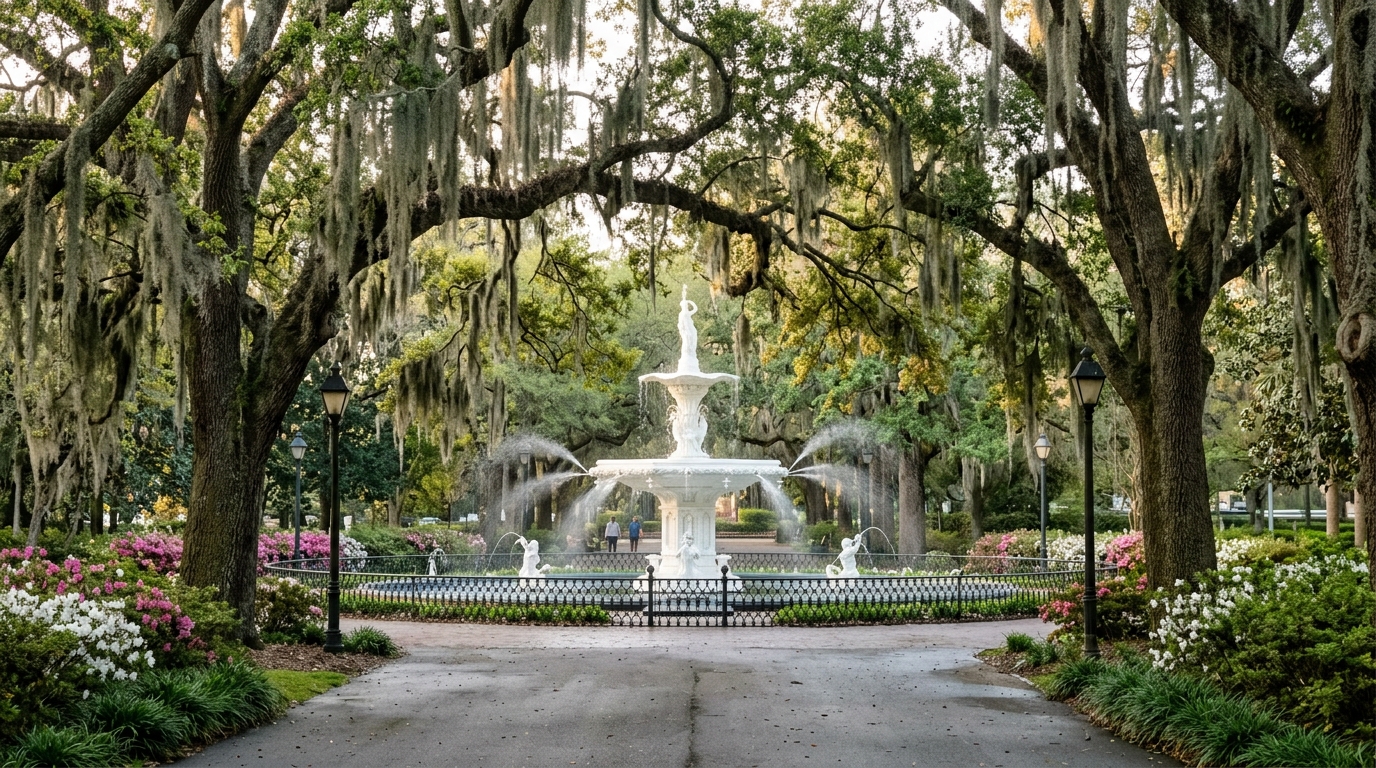
Savannah has 22 public squares spread across the Historic District, each one a little different. Some have monuments, some have benches under huge oak canopies, some are just quiet corners with a bench and a view. You do not need a plan here. Just start walking and let one square lead to the next. This alone can fill half a day and it costs nothing.
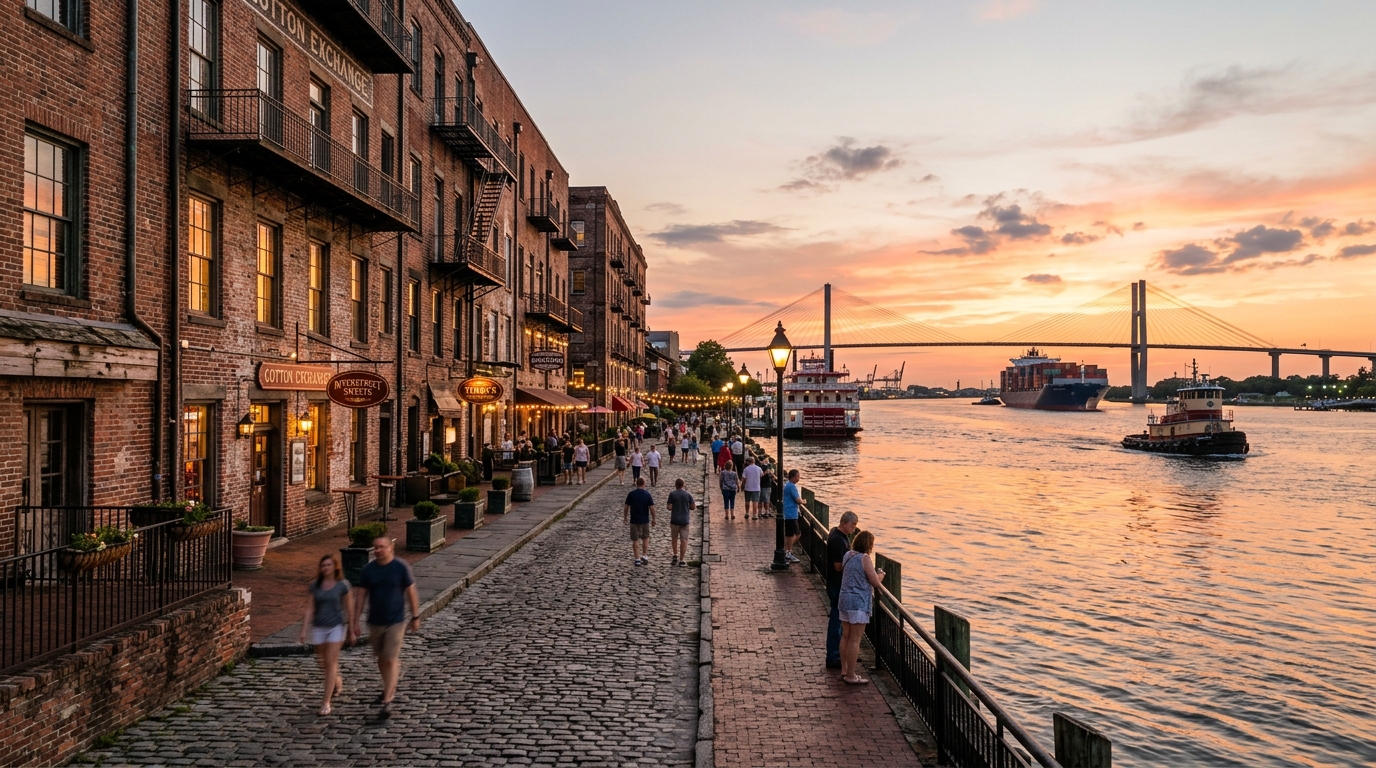
River Street runs along the Savannah River and is lined with old cotton warehouses turned into shops, candy stores, and restaurants. It gets busy, especially in the evening, but it is worth seeing at least once, ideally around sunset when the light hits the water.
The Georgia Queen riverboat runs sightseeing, lunch, and dinner cruises along the river. It is a relaxed way to see the port and the skyline from the water, and a good option if you want a slower afternoon after a morning of walking.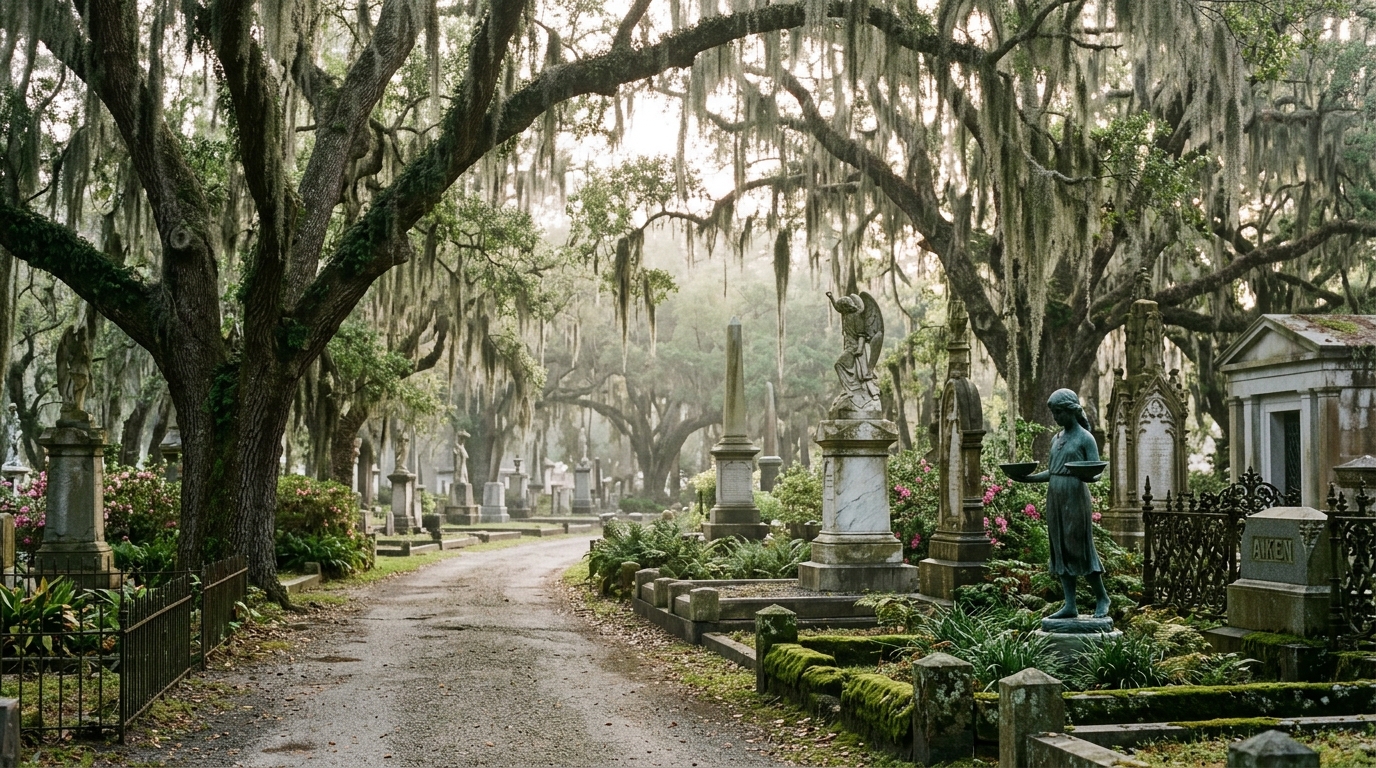
This one surprises people. Bonaventure Cemetery sits along the river a short drive from downtown, and it is genuinely one of the most beautiful places in Savannah, not just one of the spookiest. Moss covered oaks, ornate statues, and quiet paths make it worth an hour or two, especially early in the morning when it is nearly empty.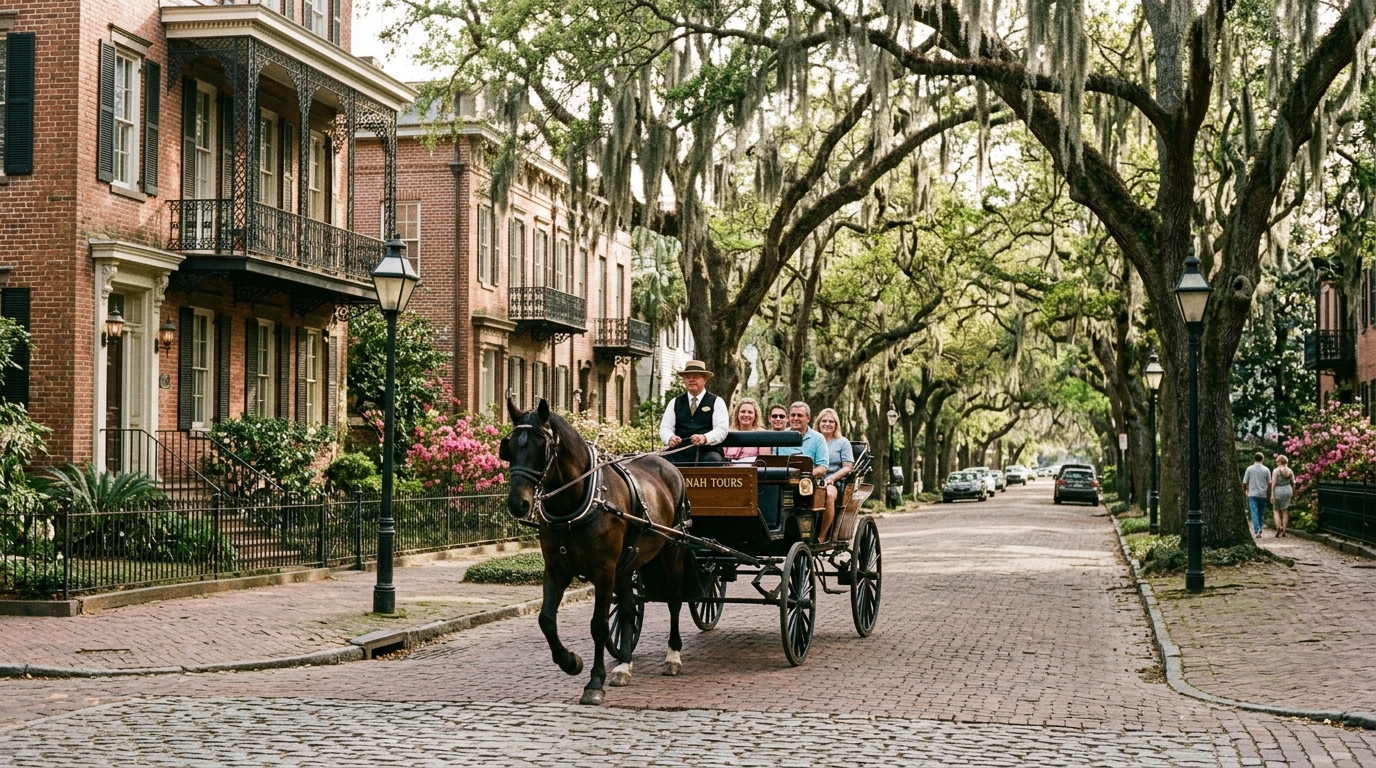
Savannah is considered one of the most haunted cities in America, and a nighttime ghost walking tour is one of the most popular first time visitor activities for a reason. You will hear real local history mixed in with the ghost stories, and it is a fun, easy way to see the squares from a different angle after dark.
Tybee Island is about twenty minutes from downtown and gives you a completely different side of the trip, sandy beaches, a lighthouse you can climb, and fresh seafood right on the water. If your schedule allows a third day, this is the one to add.
Savannah has a serious art scene thanks to the Savannah College of Art and Design. The SCAD Museum of Art is housed in a beautifully restored building and rotates modern exhibits. The Telfair Museums, spread across three historic sites, cover everything from decorative arts to Southern history. Both are worth a couple of hours if museums are your thing.
Savannah takes food seriously. Try shrimp and grits, a proper low country boil, and biscuits that will ruin every other biscuit for you. Leopold’s Ice Cream has been a local institution for decades and is worth the short wait. Foxy Loxy Café is a favorite for coffee and a relaxed lunch in the Starland District.
Savannah has a genuine literary streak. E. Shaver Bookseller and The Book Lady are both worth a slow browse, especially if you want a break from walking and a souvenir that is not a magnet.
Most Savannah guides stop at the attraction list. Here is what they usually leave out, and what first time visitors actually ask.
Budget travelers staying outside the immediate Historic District, walking most places, and eating one sit down meal a day can manage on around 90 to 130 dollars per day. Mid range travelers staying downtown with a couple of paid tours and nicer meals should plan for 200 to 280 dollars per day. Many of the best things to do, like walking the squares and Forsyth Park, are completely free, which keeps the daily cost lower than most people expect.
Yes, generally. The Historic District is well lit, walkable, and busy with other tourists well into the evening. River Street can get rowdy on weekend nights, so the same common sense that applies to any city nightlife area applies here. Daytime exploring alone in the squares and parks is very comfortable, and locals tend to be genuinely friendly and quick to help if you look lost. If you are planning more solo trips after this one, the guide on whether Southeast Asia is safe for solo female travelers is a useful read for comparing safety across very different destinations.
Spring, from March through May, is the best time to visit Savannah. The weather is warm but not brutal, and the azaleas are in bloom across the squares. Fall, from late September through November, is a close second. Summer is hot and humid enough to affect how much walking you actually want to do, so plan for slower mornings and evenings if you visit then.
You will be walking a lot, mostly on uneven brick and cobblestone, so comfortable shoes matter more here than in most cities. A pair of proper walking shoes built for travel makes a real difference by day three.
Summer humidity is no joke, and even spring afternoons can get warm fast. A packable wide brim sun hat and a good insulated water bottle will keep you comfortable during long walks between squares.
Savannah’s parks and cemeteries sit close to marshland, so bring insect repellent, especially for evening ghost tours or a Tybee Island beach day.
Between navigating with your phone, taking photos in every square, and using it for tickets and rideshares, your battery will not last a full day of sightseeing. A compact portable phone charger is one of those small things that saves the whole day. This is the same advice covered in more detail in the guide to travel accessories smart travelers never leave behind, which is worth a look before any trip, not just this one.
Forsyth Park has two playgrounds, so it works well for younger kids who need to burn energy between museum stops. The riverboat cruise is an easy win for families, since kids generally enjoy being on the water. Ghost tours can be adjusted, many companies run lighter, family friendly versions earlier in the evening instead of the late night adult tours.
How many days do you need in Savannah?
Two days covers the highlights. Three days is ideal and allows time for a Tybee Island day trip. Four days suits anyone who wants a slower pace with more museums and neighborhoods.
Is Savannah walkable?
Yes. The Historic District, where most attractions sit, is compact and easy to explore entirely on foot.
What is Savannah best known for?
Its historic squares, oak trees draped in Spanish moss, Southern food, and reputation as one of the most haunted cities in America.
Is Savannah expensive?
Not particularly. Many top activities, like walking the squares and Forsyth Park, are free. A realistic mid range budget is around 200 to 280 dollars per day including hotel, food, and one or two paid tours.
Do I need a car in Savannah?
Not for the Historic District. You will want a car or rideshare only for Tybee Island or Bonaventure Cemetery, both a short drive from downtown.
What is the best time to visit Savannah?
Spring, from March through May, offers the best weather and blooming azaleas. Fall is a close second with milder temperatures than summer.
Is Savannah safe for solo female travelers?
Yes, generally. The Historic District is walkable and well populated with visitors throughout the day and most of the evening. Standard nighttime awareness applies around River Street on weekends.
Savannah is one of those cities that works whether you have two days or five. The squares alone could fill an entire trip, and the food, history, and slower pace give you a reason to come back. If you are building out a longer Southern U.S. itinerary, pairing Savannah with the guide to the best things to do in Nashville for first timers makes for a great two city trip, and if beach time is on your list too, the roundup of charming beach towns in Florida is worth checking before you finalize your route. You can also browse more USA destination guides on the site for other ideas nearby.
Come for the squares. Stay for the food. Leave already planning your next visit.