You do need a little planning, though. Winter weather can be harsh, the roads snowy, and some famous places harder to visit than in summer. That is why this guide keeps things simple and practical.
Banff is a fantastic winter trip if you want the following:
It may not be the best fit if:
December is particularly delightful if you want a festive atmosphere, holiday lights, and classic winter charm.
January usually brings lots of snow and beautiful winter scenery. It is also one of the coldest times to visit.
February is a strong choice because it gives you a good balance of snow, winter activities, and a lively winter feel.
March is ideal if you want a slightly easier winter trip. Days are a bit longer, and the weather can feel a little more manageable.
Freezing.
You need proper winter clothing. A normal jacket and basic sneakers are usually not enough. Even when the sky looks clear and sunny, the air can feel freezing, especially with wind.
To stay warm and comfortable in freezing temperatures, the secret is layering. Here is your checklist:
The Outer Shield: A high-quality insulated winter jacket and waterproof snow boots are non-negotiable for staying dry.
The Insulation: Pack thermal base layers and fleece-lined leggings to trap body heat close to your skin.
The Essentials: Keep your extremities warm with warm wool socks, a thick beanie, and a scarf or neck warmer.
The Protection: Don’t forget gloves or mittens and polarized sunglasses to protect your eyes from the intense snow glare.
Most travelers fly into Calgary first, then head to Banff from there. That is the easiest route for most people.
From Calgary, you can get to Banff by:
No, not always.
This information is important because many travel guides make it sound like renting a car is the only option. It is not.
If you are not confident driving in snow, do not force it. Banff is one of the better mountain destinations for travelers who want a winter trip without dealing with icy roads.
If you do rent a car, it helps to have a few basics with you. A compact snow brush, a windshield scraper, a phone mount, and a portable power bank are all small Amazon buys that can make winter driving much easier.
If this is your first trip, Banff town is usually the best place to stay.
Why?
Lake Louise is a suitable option if you want a quieter, more scenic, more peaceful stay. But it has fewer services and less convenience than Banff town.
For most first-time visitors, stay in Banff town.
For most people, 3 to 4 days is ideal.
That gives you enough time to:
A 2-day trip can work, but it may feel rushed.
Occasionally the simplest thing is one of the best. Banff Avenue looks beautiful in winter, and the mountain backdrop makes even a casual walk feel special.
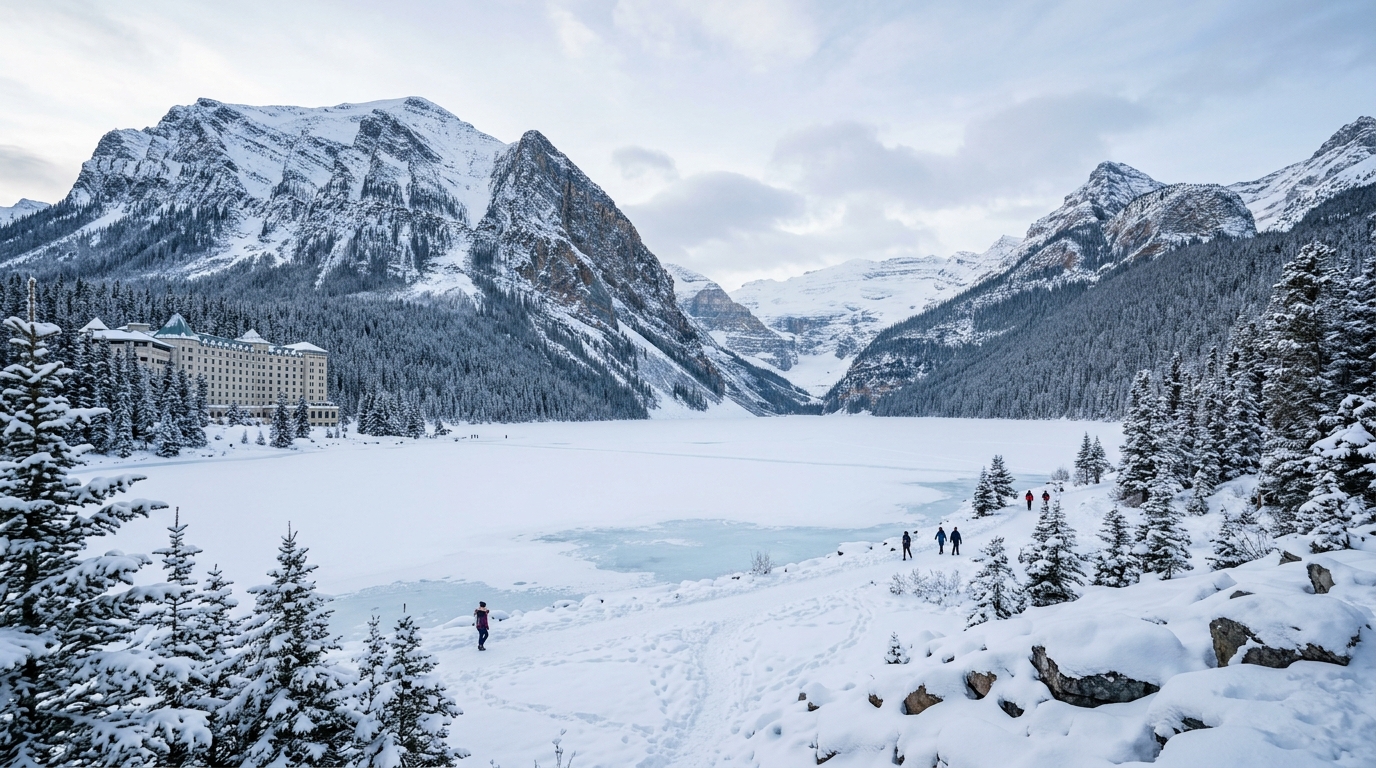
This is one of the biggest highlights of any Banff winter trip. The frozen lake, snowy mountains, and iconic scenery make it a must-see.
If conditions are right, skating is one of the most classic winter experiences in Banff. It is fun, scenic, and great even if you are not doing a full ski trip.
A gondola ride is perfect if you want incredible views without doing a hard winter hike. It is also one of the best activities for non-skiers.
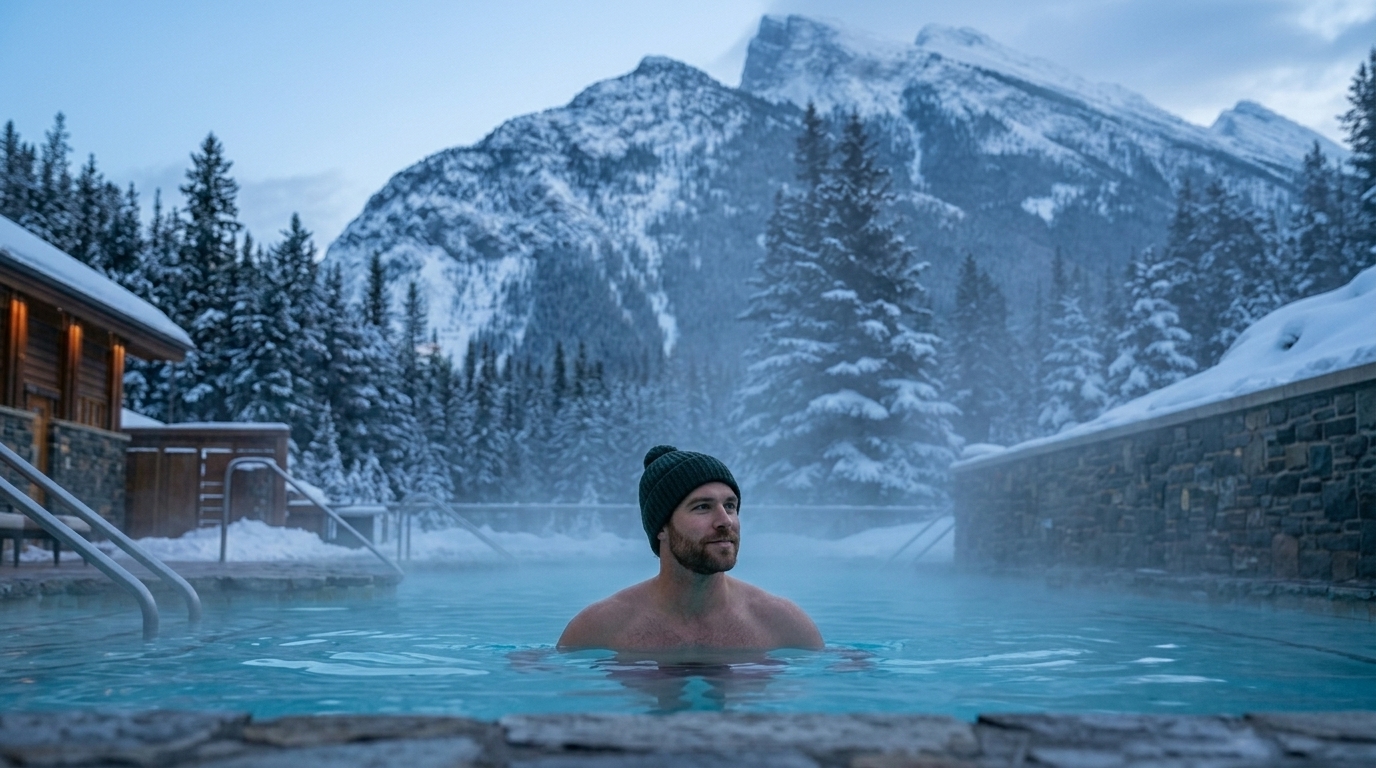
This is easily one of the most enjoyable things to do in winter. Sitting in hot water while surrounded by cold mountain air is nearly impossible to beat.
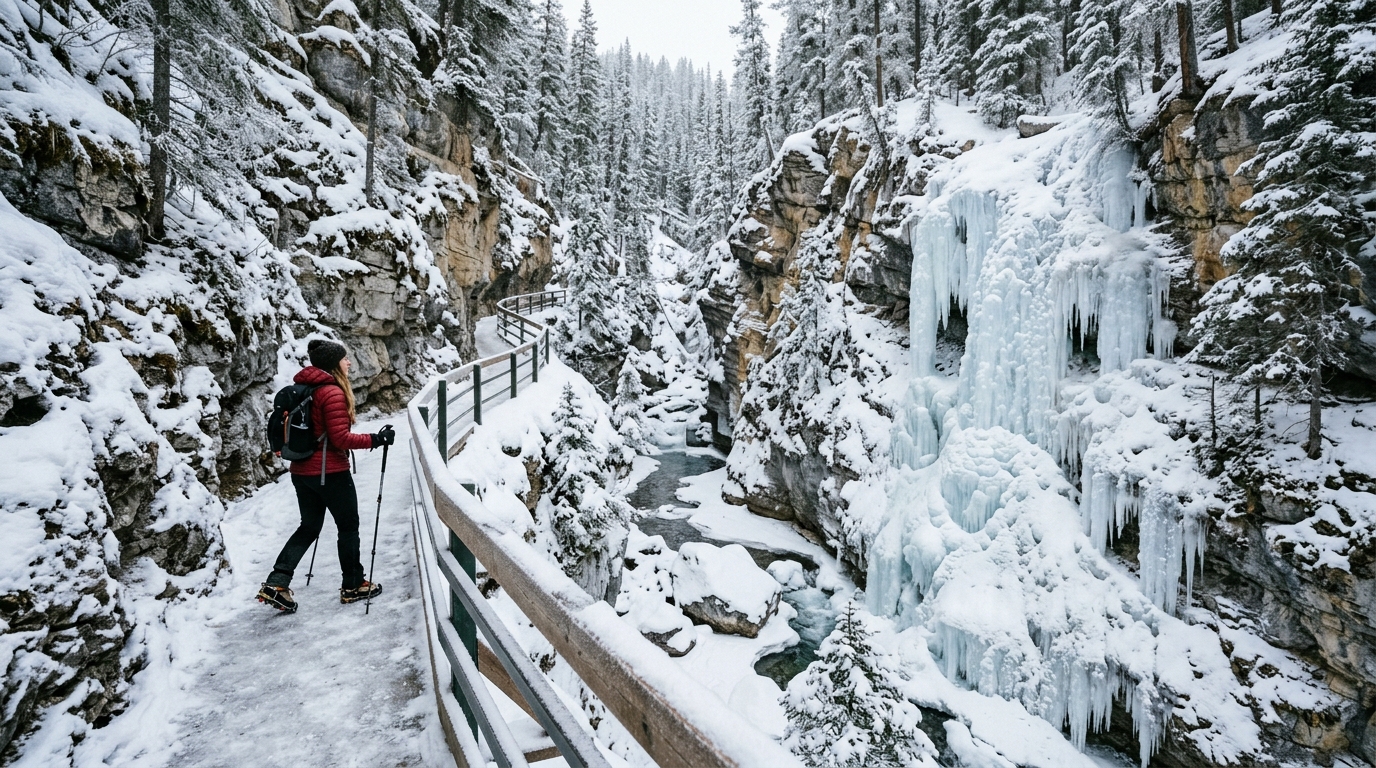
This is one of the most popular winter activities in the area. Frozen waterfalls and icy canyon views make it very memorable.
You do not need to make your whole trip about skiing. Even one beginner-friendly ski day can be enough if you want to try it.
If you want something active without doing downhill skiing, cross-country skiing is a great choice.
Many first-time travelers assume they can easily add Moraine Lake to a winter Banff trip. In reality, it is not a simple winter sightseeing stop.
So if you are planning a normal first-time trip, do not build your itinerary around Moraine Lake.
This matters because many people assume Banff only makes sense for skiers. That is not true.
Banff works very well for general travelers because you can still enjoy the following:
You can easily fill 3 to 4 days without skiing.
This is something many travel articles mention too lightly.
Not every trail is safe in winter. Snow and ice can change conditions fast. A path that looks easy online may feel completely unique in real life.
Simple rules:
Usually, yes.
Your budget will likely go toward:
Choose based on your style.
This kind of itinerary is much more realistic than trying to do too much in freezing weather.
The “better” season depends on your travel style:
Choose Winter for Atmosphere: Enjoy snow-covered peaks, a cozy mountain vibe, winter sports, and significantly smaller crowds.
Choose Summer for access: it’s best for hiking, seeing the turquoise blue lakes, easier road trips, and longer, milder days.
The Verdict: Winter is for the magic; summer is for the views.
Banff is absolutely worth visiting in winter, even if you aren’t a skier or an expert traveler. All it takes is the right expectations and a bit of preparation to fully enjoy the magic. For a smooth first-time experience, stay in Banff town for 3 to 4 days, making Lake Louise a top priority and picking one or two standout winter activities to try.
By packing properly for the cold and taking safety seriously, you’ll ensure your mountain getaway is both comfortable and unforgettable.
Yes. Banff is one of the best winter destinations in Canada for scenery, atmosphere, and a mix of skier and non-skier activities.
No. Many travelers can stay in Banff town and enjoy the main attractions without renting a car.
For most people, 3 to 4 days is ideal.
Yes. You can enjoy Lake Louise, hot springs, gondolas, skating, winter walks, and the town itself without skiing.
It is not a normal, easy sightseeing stop. It is not something most first-time winter visitors should plan around.
Bring a warm jacket, waterproof boots, gloves, thermals, a hat, warm socks, and proper winter layers.
Usually, yes. Hotels, food, transport, and activities can add up quickly.