
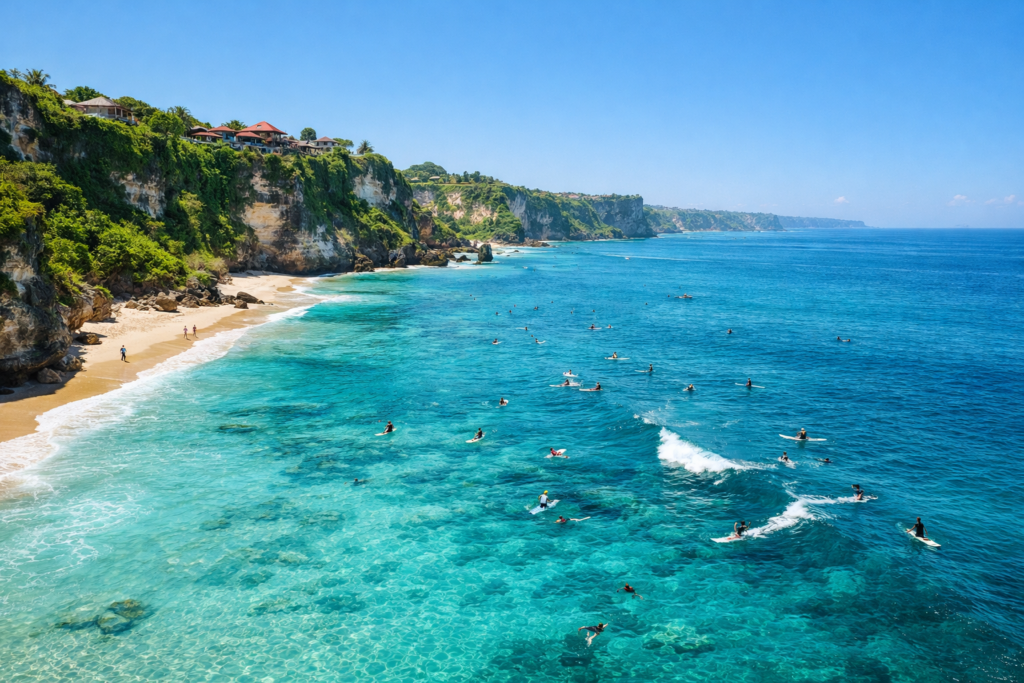
Bali has a tropical climate with consistent heat throughout the year, averaging around 28–30°C. The main difference is between dry and wet seasons.
Rain usually comes in bursts rather than lasting all day, so it rarely ruins the entire day.
May, June, and September offer the best balance of weather, crowd levels, and pricing. These months give you dry conditions without the peak-season chaos.

Best for slow travel and budget trips. Not ideal for beaches or outdoor-heavy plans.
This is one of the most underrated times to visit.
In areas like Canggu, a short drive can take significantly longer due to traffic. Good for first-time visitors, but not for those seeking peace.
This period offers one of the best overall experiences.
Early November is still a good value window. Late December is crowded and expensive.
May to September provides the best conditions with clear skies and calm water.
February, March, and November offer the lowest prices on accommodation and flights.
May, June, and September provide a quieter and more comfortable atmosphere.
April to October is ideal due to reduced rainfall.
May and September offer better lighting and fewer crowds.

Two months can have similar weather but completely different experiences due to crowd levels.
The wet season can feel significantly more exhausting even if temperatures remain similar.
Most rainfall occurs in short bursts, often in the afternoon or evening.
Ubud tends to be wetter, while coastal areas like Uluwatu are generally drier.
Most travel mistakes in Bali come from poor packing decisions, not planning errors. Small oversights can reduce comfort, affect your energy, and even limit your activities.

On the first day, many travelers underestimate the sun because it feels manageable. By evening, the result is often sunburn, discomfort, and difficulty enjoying the next few days. This is a common mistake.
Bali’s sun is stronger than it appears. A proper sunscreen should:
Skipping this can impact several days of your trip.
Daily movement in Bali is higher than expected. You will likely move between cafes, beaches, and attractions frequently.
A heavy or poorly designed bag quickly becomes uncomfortable in humid conditions. A lightweight backpack helps:
This small choice has a noticeable impact over multiple days.
This is often overlooked but becomes useful quickly.
Situations where it helps:
A foldable bag adds flexibility without taking up space.
Instead of asking when the best time is, define your goal first.
Choosing based on purpose leads to a better overall trip.
The best overall months to visit Bali are May, June, and September due to the balance of weather, pricing, and crowd levels. Budget travelers should consider February or November, while those prioritizing perfect weather can choose July or August despite higher costs.
May, June, and September offer the best balance of conditions.
February, March, and November are typically the most affordable.
Yes, but expect higher prices and increased rainfall during peak holiday periods.
Seven to ten days is ideal for a balanced experience.
No. Rain usually occurs in short bursts rather than lasting all day.