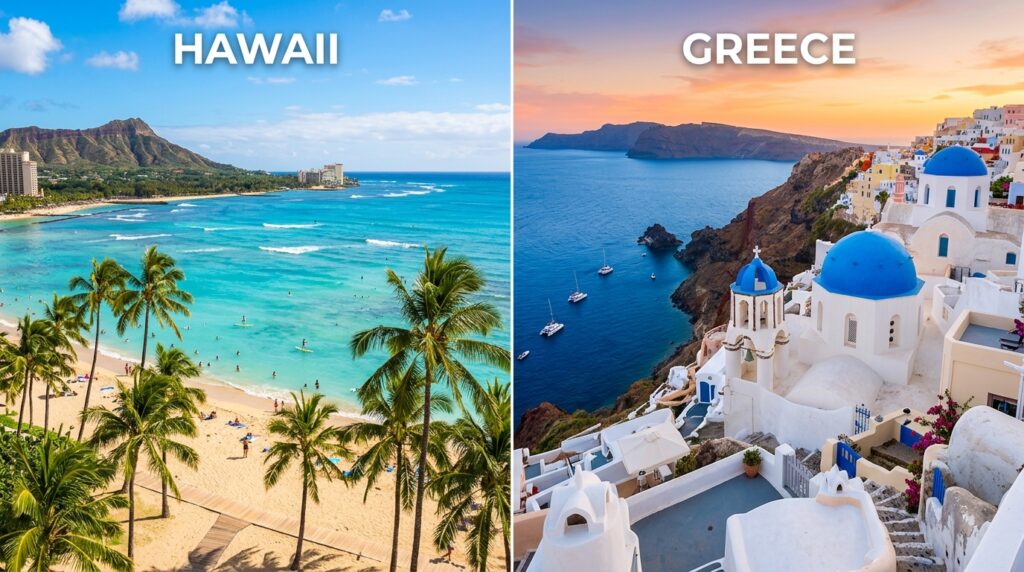
Greece: Similar to January. Orthodox Easter sometimes falls in late April, but preparations begin. Cold, damp, not ideal for beaches.
Winner: Hawaii
March
Hawaii: Spring break crowds arrive mid-month. Whales still abundant. Weather improving, but rain still possible.
Greece: Spring begins. Athens starts warming up. Islands remain mostly closed, but some restaurants reopen for Easter if it falls in April.
Winner: Hawaii (unless Greek Easter appeals to you)
April
Hawaii: Excellent month. Spring break ends, crowds thin, weather stabilizes. Lei Day celebrations on May 1st mean festive atmosphere.
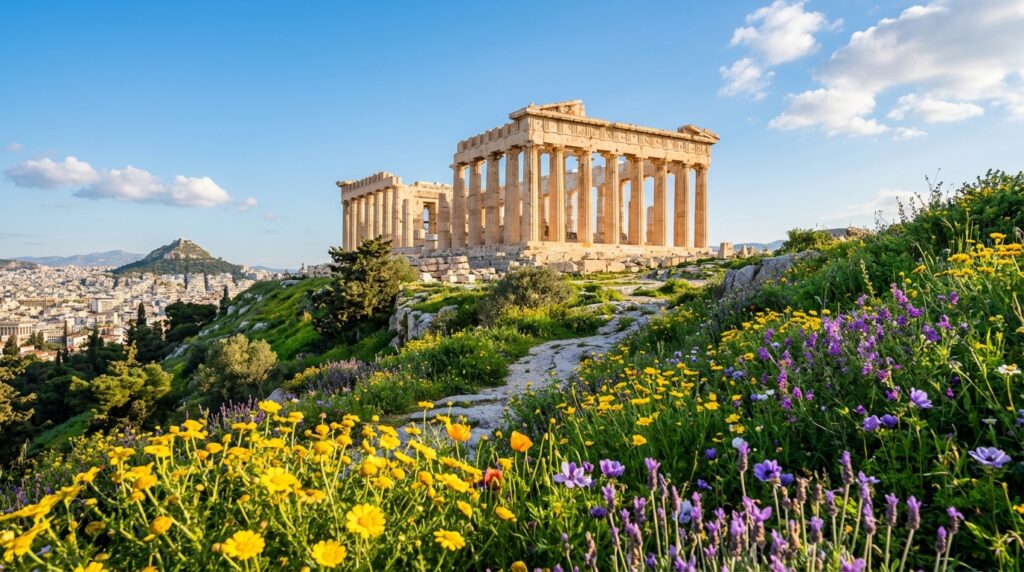
Greece: One of the best months. Easter celebrations are spectacular if timing aligns. Wildflowers cover the hillsides. Islands reopen, though some tourist services remain limited until mid-month. Comfortable 70°F days.
Winner: Greece (slightly) for culture and value; Hawaii for guaranteed beach weather
May
Hawaii: Perfect weather, moderate crowds. Lodging prices reasonable before summer surge.
Greece: Peak shoulder season. Ideal temperatures, everything open, pre-summer crowds. This is when locals say Greece shines.
Winner: Tie—both excellent
June
Hawaii: Summer crowds arrive. Schools let out. Prices jump. Ocean conditions remain perfect.
Greece: Summer begins. Heat builds, especially in Athens. Islands get busy but not yet unbearable. Early June is still manageable.
Winner: Greece (early June) or Hawaii (if you must choose summer)
July
Hawaii: Peak season. Hot, crowded, expensive. Book everything months ahead.
Greece: Avoid if possible. Brutal heat in Athens (90-95°F). Islands packed. Prices highest of the year. Ferries overbooked.
Winner: Hawaii (marginally—both are crowded)
August
Hawaii: Continued peak season. Japanese Obon festival brings additional visitors mid-month.
Greece: Europeans on holiday. Athens empties as locals flee to islands. Islands at maximum capacity. Ferries require reservations weeks ahead.
Winner: Hawaii
September
Hawaii: The best month. Warmest ocean temperatures, lowest rainfall, summer crowds gone, prices drop. Aloha Festivals add cultural events.
Greece: The best month. Sea still warm from summer, crowds thin after Labor Day, harvest festivals begin, prices fall. Perfect beach weather without the August crush.
Winner: Tie—this is the magic window for both
October
Hawaii: Still good, but rain chances increase. Surf swells grow, making north shore swimming dangerous. Fewer visitors, good deals.
Greece: Excellent for food and wine travelers. Olive harvests begin. Weather cools to pleasant 70s. Some islands start closing late October, but major ones (Santorini, Mykonos, Crete) remain active.
Winner: Greece for culture; Hawaii for last-minute beach trips
November
Hawaii: Rainy season begins, but brief showers. Thanksgiving week brings crowds and high prices. Otherwise quiet and affordable.
Greece: Most islands closed. Mainland only. Cold, rainy, not recommended for first-time visitors.
Winner: Hawaii
December
Hawaii: Christmas through New Year’s is the busiest, most expensive time. Book 6+ months ahead. Whales return.
Greece: Cold, rainy, many closures. Christmas in Athens is charming but not a beach vacation.
Winner: Hawaii (despite the crowds)
What Competitors Don’t Tell You: Critical Timing Details
The 60-Day Booking Rule (Hawaii)
Most guides say “book 45-60 days ahead.” Here’s the reality: for Hawaii, book accommodations 4-6 months ahead for winter holidays and summer peak. For September (the best month), 2-3 months suffices. Last-minute deals exist in late January and May, but don’t count on them during high season.
Greece’s Ferry Problem
Island hopping requires precision. Ferry schedules finalize 2-3 months before departure. Book international flights first, then monitor ferry websites. In peak summer, ferries sell out. In shoulder season, they reduce frequency—sometimes to every other day.
The Water Temperature Factor
Hawaii’s ocean ranges from 74°F (winter) to 80°F (summer). You can swim year-round.
Greece’s sea swings from 60°F (May) to 77°F (August). May and October swims require wetsuits for some. September offers the best balance of warm water and tolerable air temperatures.
Hurricane vs. Earthquake Reality
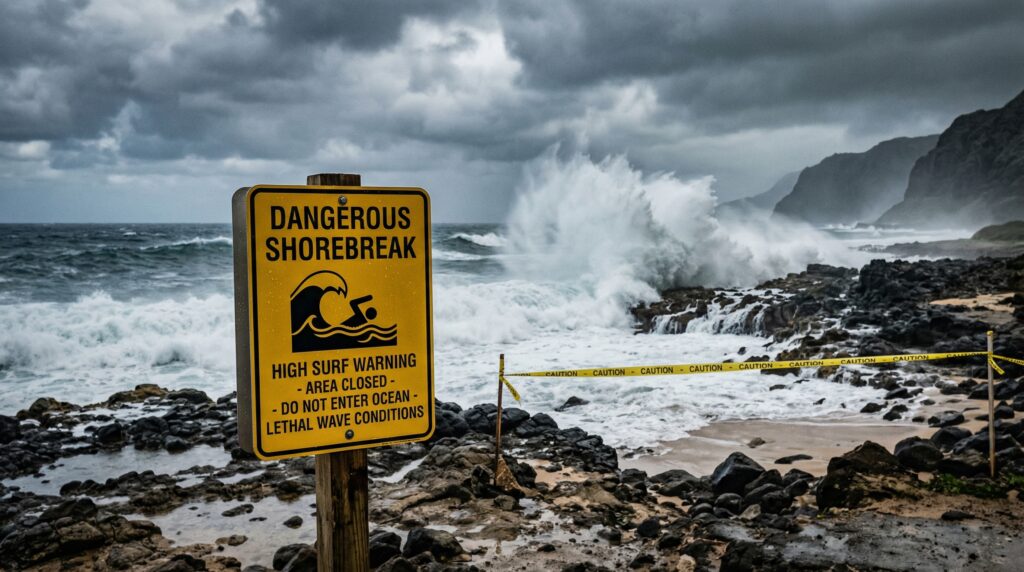
Hawaii: Hurricane season runs June-November, but direct hits are rare. More relevant: winter storms create dangerous surf on north shores. Check
Hawaii Beach Safety daily.
Greece: Earthquakes happen but rarely affect travel. More common: meltemi winds in July-August—strong northern winds that can cancel ferries and make beach days unpleasant.
Budget Reality Check
Hawaii Costs (Per Day, Two People)
Peak (Dec-Mar, Jun-Aug): $400-600 (hotel $250-400, meals $100, activities $50-150)
Shoulder (Apr-May, Sep-Nov): $300-450 (hotel $180-280, meals $80, activities $40-100)
Budget Tip: Oahu is cheapest due to hotel competition. Maui and Kauai cost 30-40% more.
Greece Costs (Per Day, Two People)
Peak (Jun-Aug): $250-400 (hotel $150-250, meals $60, ferries/activities $40-90)
Shoulder (Apr-Jun, Sep-Oct): $180-300 (hotel $100-180, meals $50, ferries/activities $30-70)
Budget Tip: Mainland is 40% cheaper than islands. Crete offers best island value.
The Verdict: Greece is generally cheaper, but Hawaii offers more consistent value year-round due to its developed tourism infrastructure.
Special Interest Timing
For Whale Watching
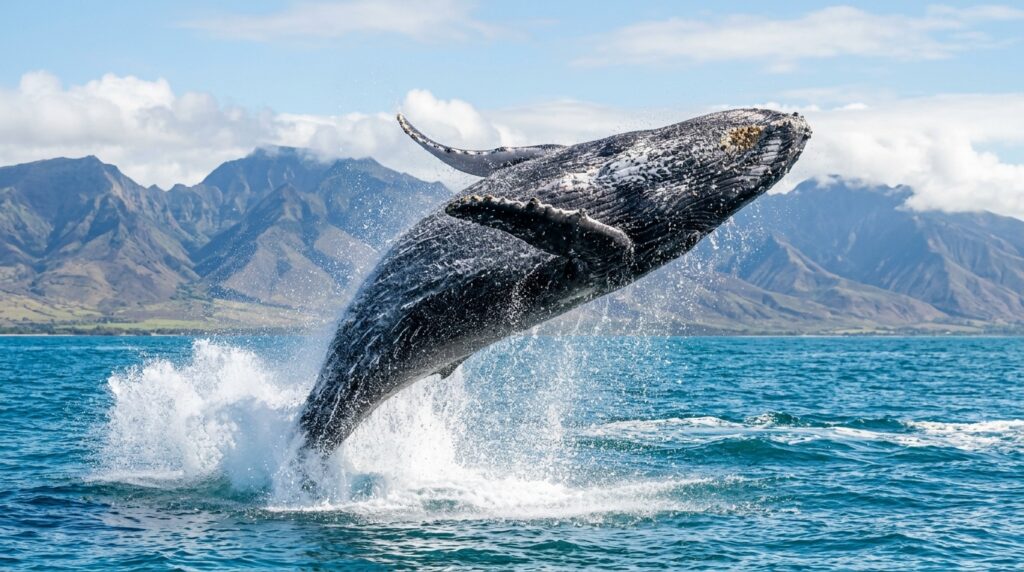
Hawaii: January through March. Maui is the undisputed capital—up to 10,000 humpbacks winter there.
Greece: Sperm whales exist in the Mediterranean but sightings are rare and unpredictable. Not a primary whale destination.
For Surfing
Hawaii: Winter (Nov-Mar) for big waves on north shores. Summer for beginner-friendly south shore waves.
Greece: Limited surf culture. Some wind/kitesurfing in the Cyclades during meltemi season (July-August).
For Food and Wine
Hawaii: Year-round, but September features the Hawaii Food & Wine Festival. Farmers markets peak in summer.
Greece: September-October is harvest season. Santorini’s vedema (grape harvest), olive picking in Crete, chestnut festivals in the Peloponnese. This is when food travelers should visit.
For Hiking
Hawaii: April-May and September-October offer dry trails without summer heat. Avoid July-August inland—dangerously hot.
Greece: April-June and September-November. Summer hiking in Greece is miserable due to heat and lack of shade on ancient sites.
What to Pack: Season-Specific Lists
Hawaii Essentials
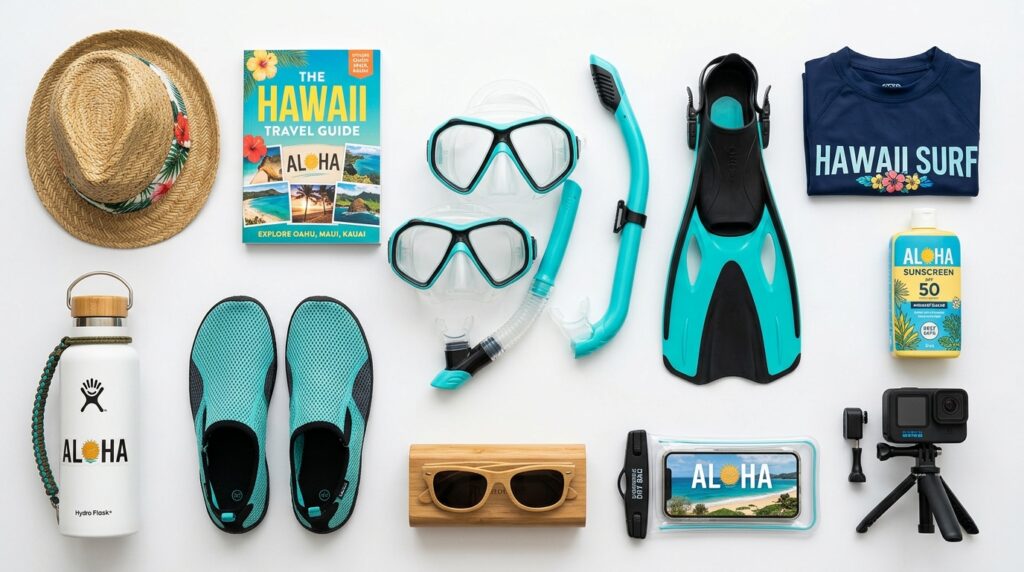
Reef-safe sunscreen (required by law in Hawaii to protect coral)
Light rain jacket (for winter/shoulder season)
Water shoes (lava rock beaches are sharp)
Snorkel gear (rental gear often ill-fitting; consider bringing your own mask)
Greece Essentials
Modest clothing for churches (covered shoulders and knees required at monasteries)
Sturdy walking sandals (cobblestones destroy flip-flops)
Sun hat with strap (meltemi winds blow hats away)
Portable charger (outlets scarce at ancient sites)
Sustainable Travel Considerations
Both destinations suffer from overtourism, but you can minimize impact:
In Hawaii:
Visit during shoulder seasons to reduce peak crowding
Stay in locally-owned accommodations (not international chains)
Never touch coral or turtles—fines are steep
Participate in beach cleanups (many hotels organize these)
In Greece:
Avoid cruise ship day-tripping—stay overnight on islands to spread economic benefit
Visit lesser-known islands (Naxos, Paros) instead of Santorini/Mykonos
Respect water scarcity—many islands have limited freshwater
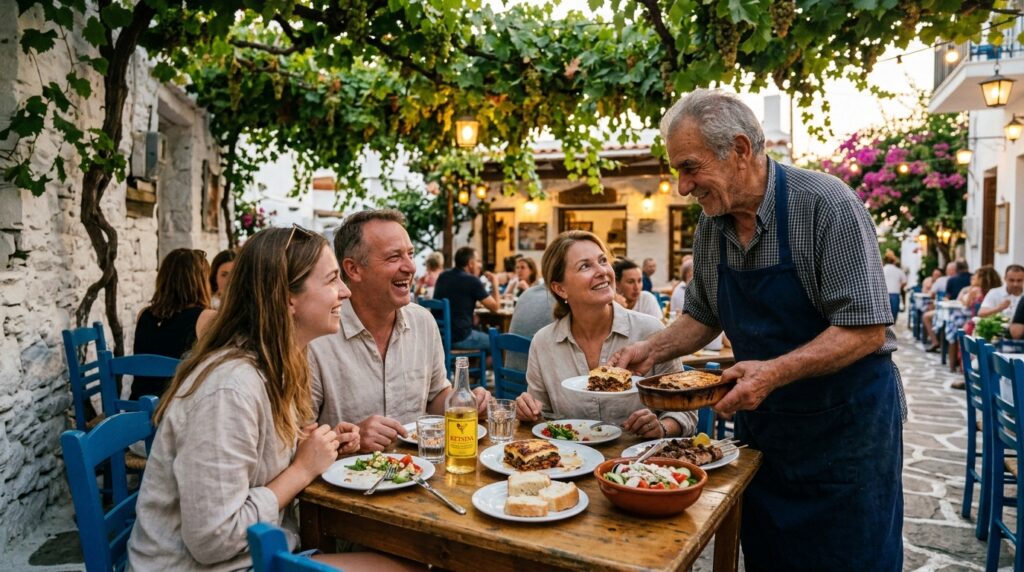
Support family tavernas over tourist traps near major sites
Final Verdict: Which Destination, Which Month?
Choose Hawaii if:
You want guaranteed warm weather and swimming any time of year
Whale watching is a priority
You prefer developed tourism infrastructure
You’re traveling with kids (easier logistics, familiar language/food options)
Choose Greece if:
You value history and culture alongside beaches
You enjoy shoulder-season travel with lower costs
You want to combine multiple islands with distinct personalities
Food and wine experiences drive your travel decisions
The Sweet Spot: If your dates are flexible, September offers the best of both worlds for either destination. You’ll avoid the peak crowds, save 20-30% on accommodations, and experience ideal weather.
FAQs
Q: Can I visit Hawaii or Greece on a budget?
Yes, but timing matters. For Hawaii, visit in May or September-October. Stay in condos with kitchens to save on meals. For Greece, travel in April-May or October. Use ferries instead of flights between islands, and eat gyro lunches (€3-4) instead of sit-down dinners.
Q: Is it safe to swim in Hawaii during winter?
Yes, but location matters. South shores remain calm year-round. North shores have dangerous surf November through March. Always check beach flags and
hawaiibeachsafety.com.
Q: Do I need to book Greek island ferries in advance?
During July-August, yes—2-4 weeks ahead. In shoulder season, you can often book 1-2 days ahead, but popular routes (Athens-Santorini) still fill up.
Q: Which Greek island is best for avoiding crowds?
Skip Santorini and Mykonos in summer. Try Naxos, Milos, or Kefalonia for similar beauty with fraction of the tourists. Crete is large enough to absorb crowds.
Q: Is Hawaii or Greece better for a honeymoon?
Greece wins for romance on a budget—Santorini’s sunsets are legendary. Hawaii wins for activity variety and luxury resorts. For September honeymoons, either is perfect.
Q: Can I island-hop in Hawaii like in Greece?
Not really. Hawaii’s islands require flights (expensive, limited schedules) or long ferry rides. Most visitors pick one or two islands. Greece’s ferry network makes multi-island trips easier and cheaper.