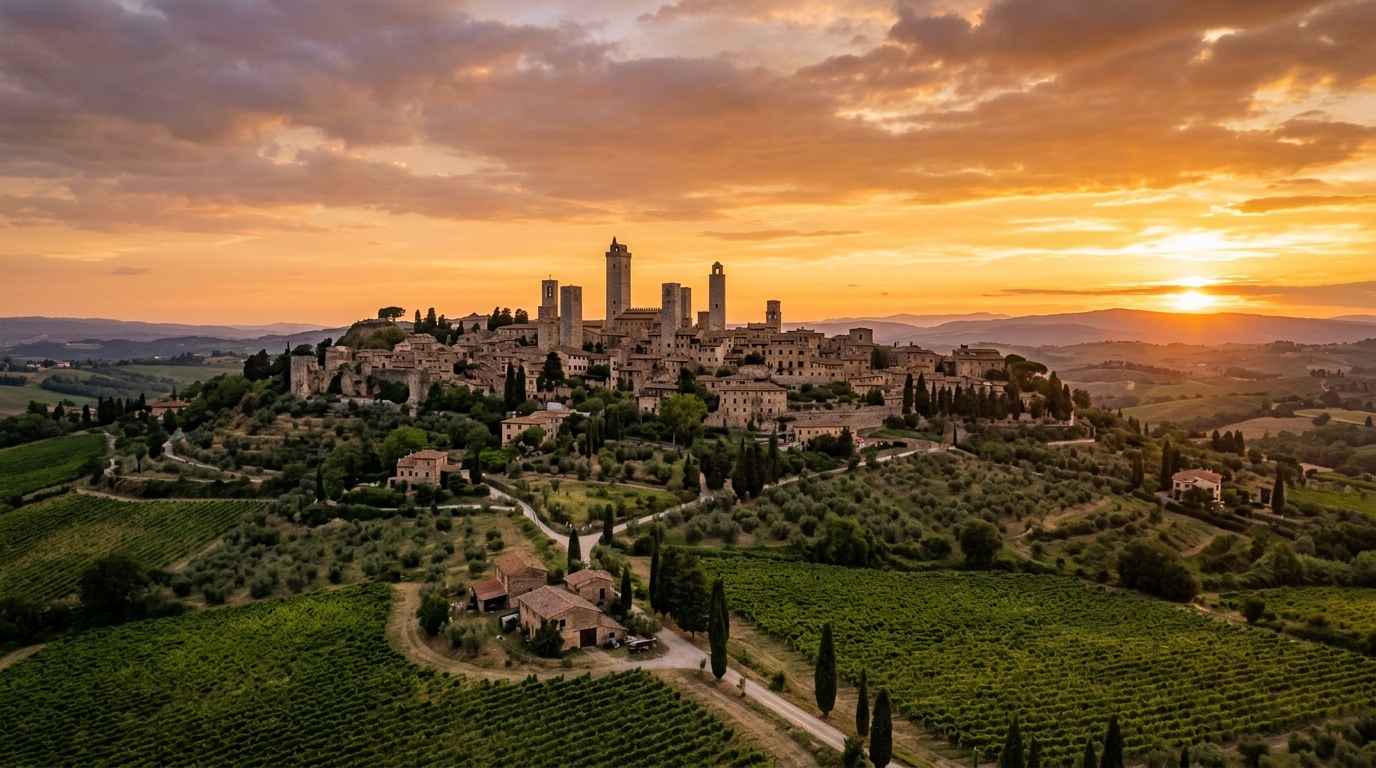
Tuscany is famous for Florence, but the small towns are where the region actually feels like Tuscany. Stone walls, hilltop views, quiet piazzas, and vineyards stretching out below every town wall. Many of these towns are only a short drive apart, which makes them easy to combine into a single day or a slow week long trip.
If you are already planning a longer visit, our 10 day Italy itinerary for first time visitors includes a full Tuscany day trip option, and it pairs well with the towns below.
Known for its medieval stone towers, San Gimignano is one of the most photographed towns in Tuscany. Out of seventy two original towers, only fourteen still stand, but they give the skyline a look unlike anywhere else in the region. There is no train station here, so you need a car or a day tour from a nearby city. The town gets busy by midday, so early morning is best.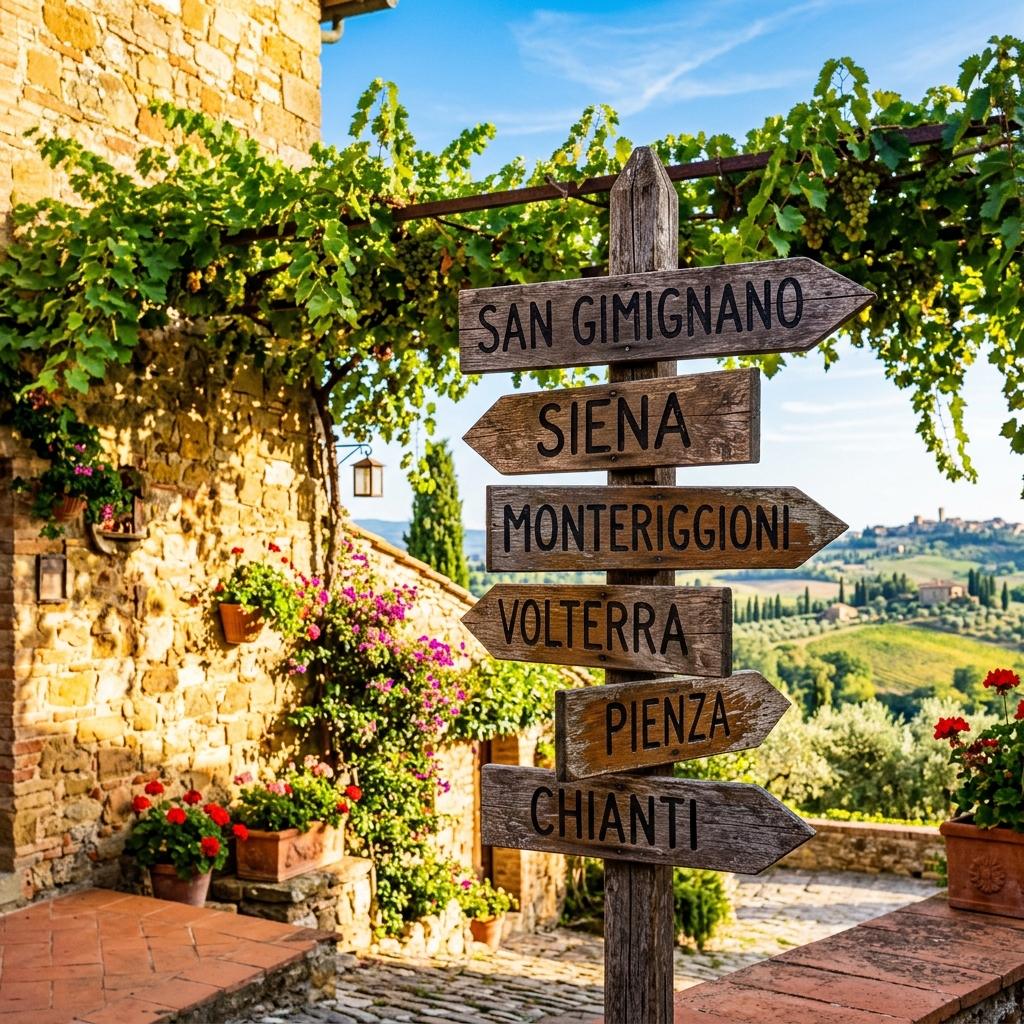
Pienza is often called the ideal Renaissance town, and it earned a spot on the UNESCO World Heritage List for its planned architecture. It sits in the Val d’Orcia region, between Montepulciano and Montalcino, which makes it easy to pair with both in one day. The town is small enough to explore in two hours, but the views over the valley are worth lingering for.
Sitting on a hilltop with sweeping valley views, Montepulciano is known for its wine, especially Vino Nobile. The Fortezza Medicea at the edge of town is worth the walk, and the wine cellars built into the hillside are a cool escape on a hot afternoon.
Home of Brunello di Montalcino, one of Italy’s most respected wines, Montalcino is quieter than Montepulciano but just as beautiful. The fortress at the top of town offers one of the best panoramic views in the entire Val d’Orcia.
Made famous by the book and film Under the Tuscan Sun, Cortona sits high above Lake Trasimeno with a mix of medieval and Etruscan history. The historic center is walkable in a few hours, and the artisan shops and galleries give it a different feel from the wine towns nearby.
Volterra is less crowded than most towns on this list, which makes it a good choice if you want the Tuscany feeling without the crowds. It is known for alabaster carving, Etruscan history, and a small but excellent archaeology museum.
This tiny walled town is easy to underestimate from the outside, but its round stone walls are almost entirely intact. You can walk the perimeter in under an hour, which makes it a perfect quick stop between Siena and San Gimignano.
Unlike the other towns on this list, Bagno Vignoni is built around a natural thermal pool that sits right in the main square instead of a piazza. It is one of the smallest towns in Tuscany, but a stop here feels completely different from anywhere else on this list.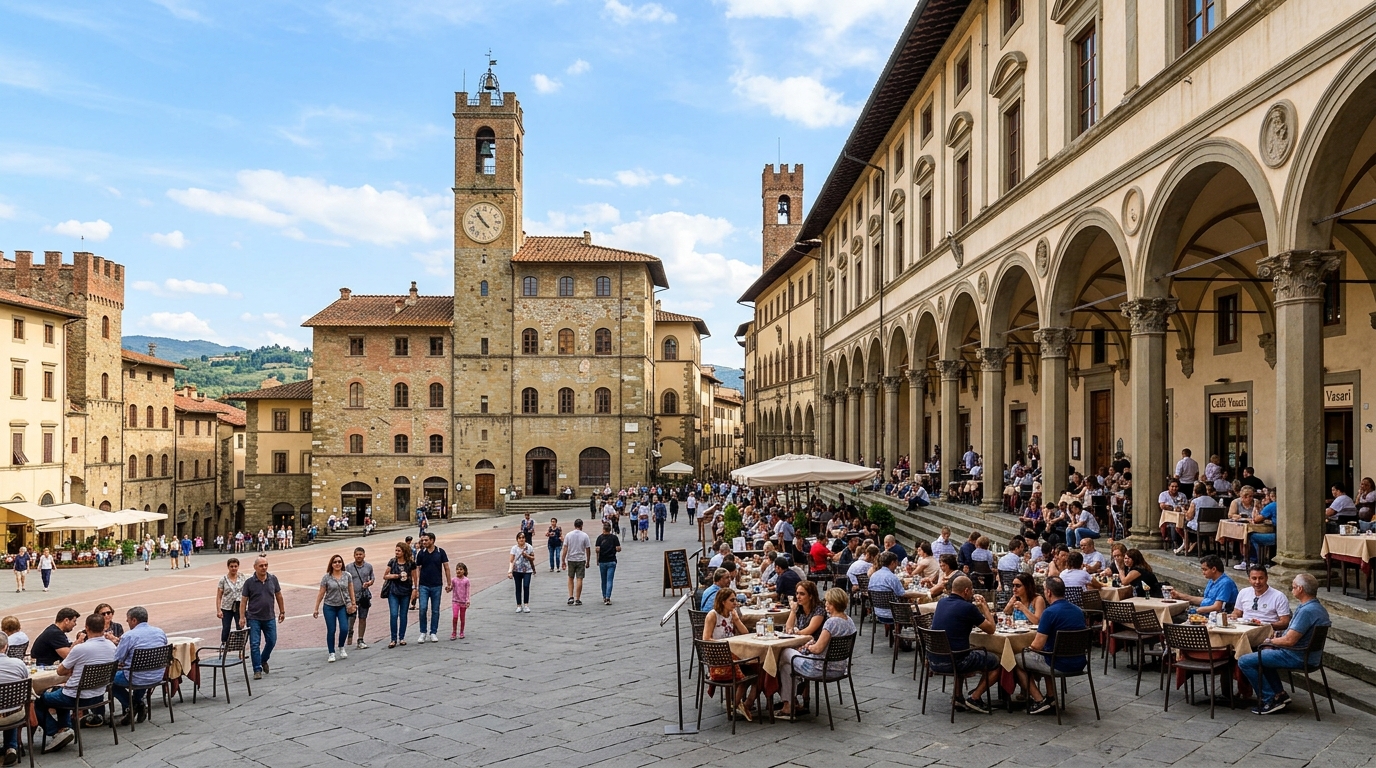
By car A car gives you the most freedom, since many of these towns sit off the main train lines. Roads between them are narrow and winding, so allow more time than a map suggests, especially in Val d’Orcia.
By train Some towns, like Chiusi or Montepulciano’s train station, connect to the main lines run by Trenitalia, but from the station you often still need a taxi or local bus to reach the town center. San Gimignano and Monteriggioni have no train access at all, so a car or organized tour is the only realistic option for those two.
Guided tours If you are staying in Florence without a car, day tours from the city cover the best small towns to visit in Tuscany without the stress of driving unfamiliar roads. This works especially well for Val d’Orcia, since the towns sit close together.
This is the part most guides skip entirely.
Trying to fit more than three towns into one day usually backfires. The roads are slow, and rushing defeats the entire point of visiting small towns in the first place.
Late spring and early autumn bring the best weather and fewer crowds than peak summer. July and August are beautiful but busy, and some towns, especially San Gimignano, can feel overwhelming by early afternoon. If you want quiet streets and good light for photos, aim for a morning visit no matter the season.
You can read more about the region’s food and wine traditions on the official Visit Tuscany site, which also lists seasonal events in each town.
Some towns work better than others. Pienza and Montepulciano have flatter central streets that are easier for strollers or slower walkers. San Gimignano, Cortona, and Volterra involve steeper hills and uneven stone paths, which can be tiring for young kids or anyone with mobility concerns. If you are traveling with family, build your day around the easier towns first.
The best small towns to visit in Tuscany are not just the famous five that show up on every list. Quiet places like Volterra, Monteriggioni, and Bagno Vignoni offer just as much charm, often with far fewer crowds. With the right pairing and a realistic pace, you can experience the real Tuscany instead of rushing through it.
If you are building a wider Italy trip, our guides on the 3 day Rome itinerary, the Florence 2 day plan, and the 3 day Venice itinerary pair naturally with a Tuscany stop, and you can browse more of our Italy travel guides for additional ideas.
For general visitor information and event calendars across the region, the Italian National Tourist Board is a useful resource before you go.
Pienza is often named the prettiest, thanks to its planned Renaissance layout and views over the Val d’Orcia. San Gimignano is a close second for its medieval towers.
A car makes visiting easier, since several towns, including San Gimignano and Monteriggioni, have no train access. Trains work for towns near the main rail lines, like Montepulciano, but you may still need a taxi from the station.
Two to three towns is realistic if they sit close together, such as Pienza, Montepulciano, and Montalcino. Trying to fit in more usually means rushing and missing what makes each town special.
Late April through June and September through October offer good weather with smaller crowds than peak summer.
Not necessarily. Walking through most towns is free, and wine tastings booked directly with small producers often cost less than tours. Museums and towers usually charge a small entry fee.