Nashville grabs you the moment you arrive. Step onto Broadway and live music spills from every doorway, blending country, rock, and soul into an unforgettable soundtrack. By your second evening, you may find yourself skipping dinner plans just to hear one more incredible performance.
Music City truly lives up to its name. Yet Nashville offers far more than honky tonks and cowboy boots. Beyond Broadway, you’ll discover vibrant neighborhoods, outstanding Southern food, rich history, and a creative local culture that makes the city one of the South’s most exciting destinations.


This guide covers both the iconic attractions and the hidden gems, with practical advice on the best times to visit, where to stay, how to explore, and how to make the most of your budget.
Three days is the right amount for a first visit. That covers Broadway properly, at least one museum, East Nashville, a Grand Ole Opry show or Ryman performance, and enough time to eat your way through the city without rushing.
Two days is enough for the highlights if your schedule is tight, but you will have to make choices between neighborhoods. Four or five days suits anyone who wants to add day trips to Franklin, go deeper into the music history, or simply spend more time in the neighborhoods that are worth lingering in.
Downtown Nashville and the area around Broadway is entirely walkable once you are there. The John Seigenthaler Pedestrian Bridge connects downtown to East Nashville on foot and is worth walking across for the Cumberland River views alone.
For longer distances, Uber and Lyft both work well throughout the city. The Grand Ole Opry is about 15 miles east of downtown, too far to walk, so rideshare or a rental car is essential for that trip. One practical note: leaving the Opry after a show puts hundreds of people trying to order rideshares simultaneously. Book your ride about 15 minutes before the show ends and designate a specific pickup point away from the main exit, since drivers cannot navigate the main lot efficiently in that crowd.
The Music City Circuit trolley runs a free loop through key downtown areas and is useful for getting between Broadway, the Gulch, and Midtown without paying for every short rideshare trip.
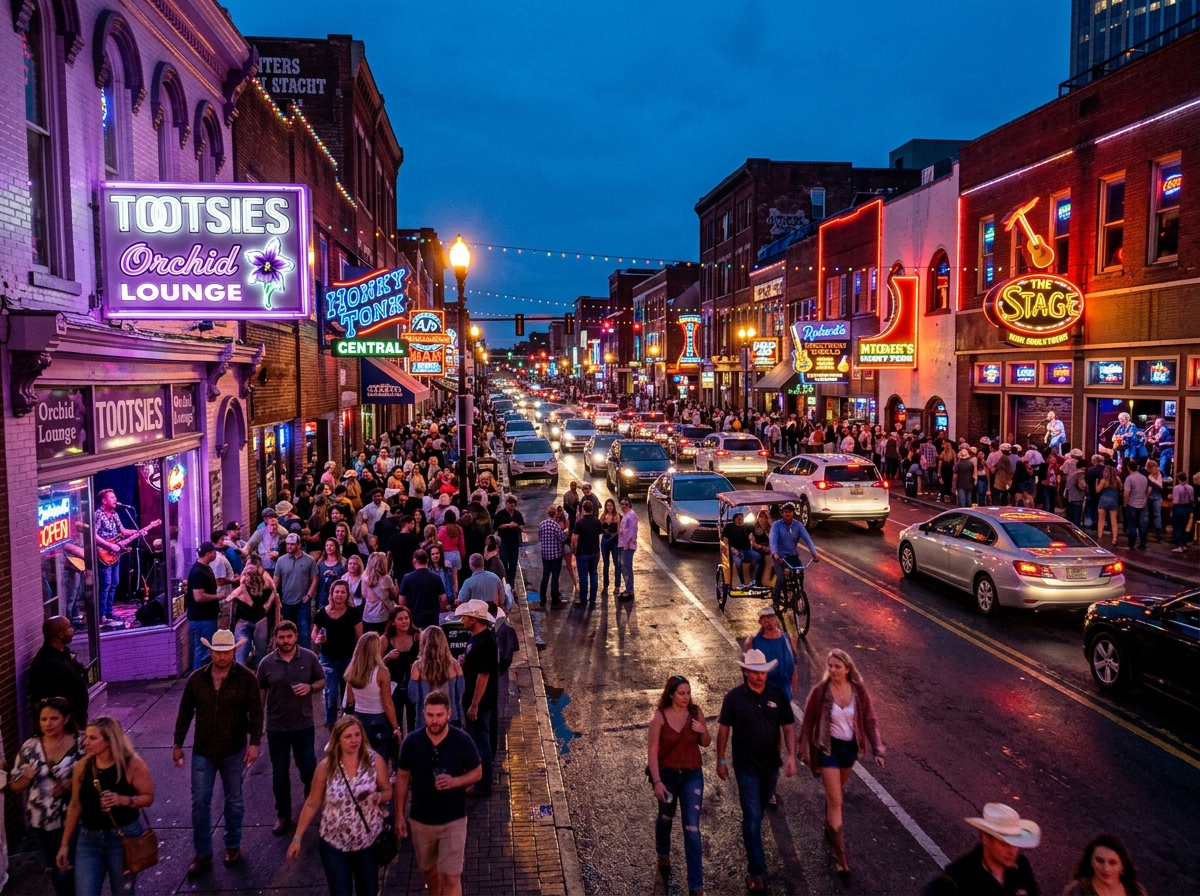
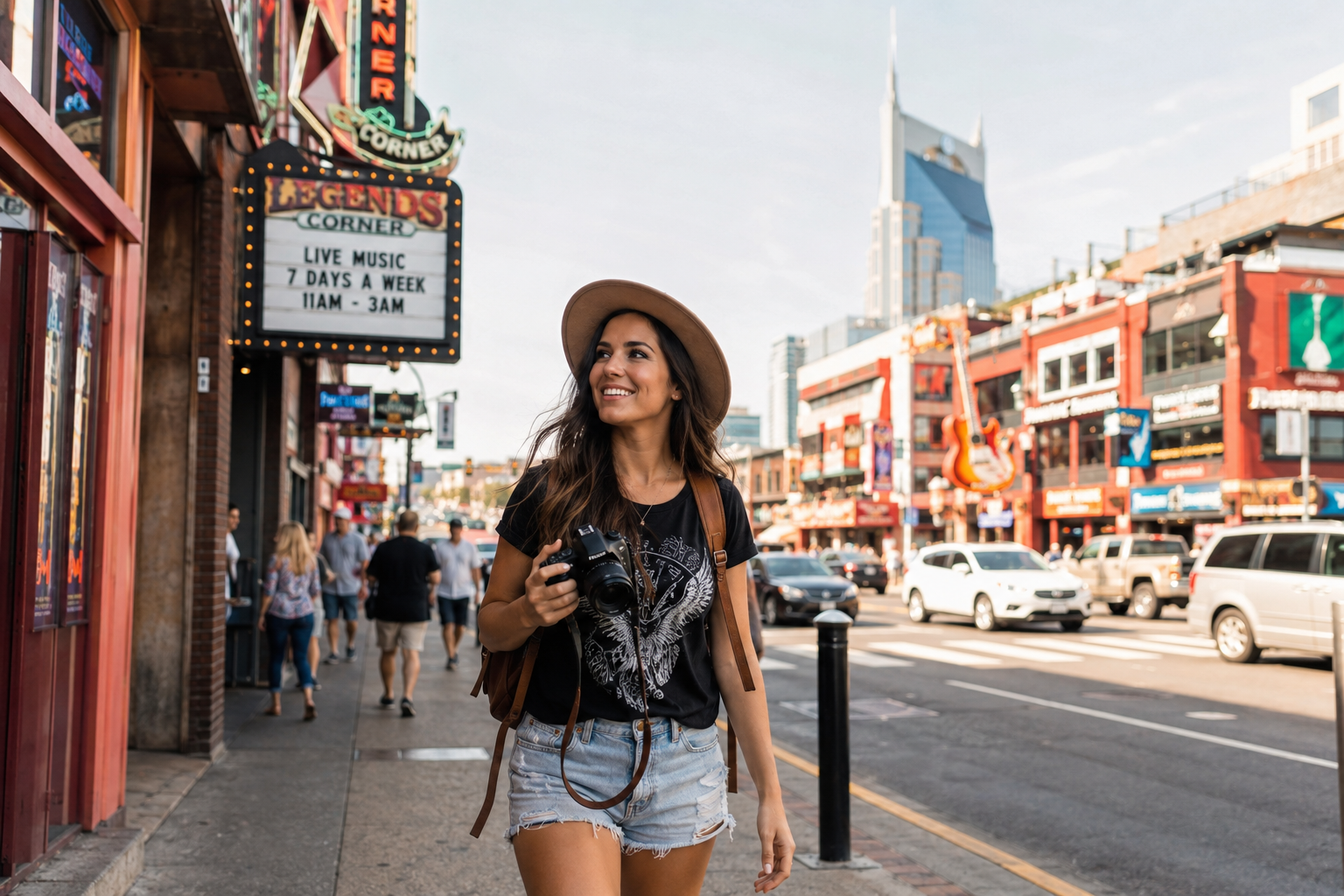
Lower Broadway is the beating heart of Nashville, a stretch of neon lit bars and live music venues where bands play from around 10am until 3am seven days a week. Every bar has multiple floors, often multiple stages, and live music on all of them simultaneously. Tootsie’s Orchid Lounge, Legends Corner, and Robert’s Western World are the most historically rooted venues. Jason Aldean’s Kitchen and Rooftop Bar added a rooftop with skyline views that has become one of the most popular spots in the strip since it opened.
Entry to every bar on Broadway is free. You pay only for drinks. A round of beers runs around 25 to 35 dollars at most venues. The music is constant and the performers are often genuinely excellent, not background music but skilled musicians who know exactly what they are doing.
Timing matters here more than most guides explain. Weekday evenings between 6 and 9pm are the sweet spot, with full live music energy but manageable crowds. Weekends after 8pm are packed to the point of being uncomfortable in many venues. Midday on any day is surprisingly lively and gives you a different, more relaxed version of the same experience.
If Broadway starts to feel overwhelming, which it will eventually, walking two blocks in either direction immediately puts you in quieter streets where the city breathes at a normal pace.
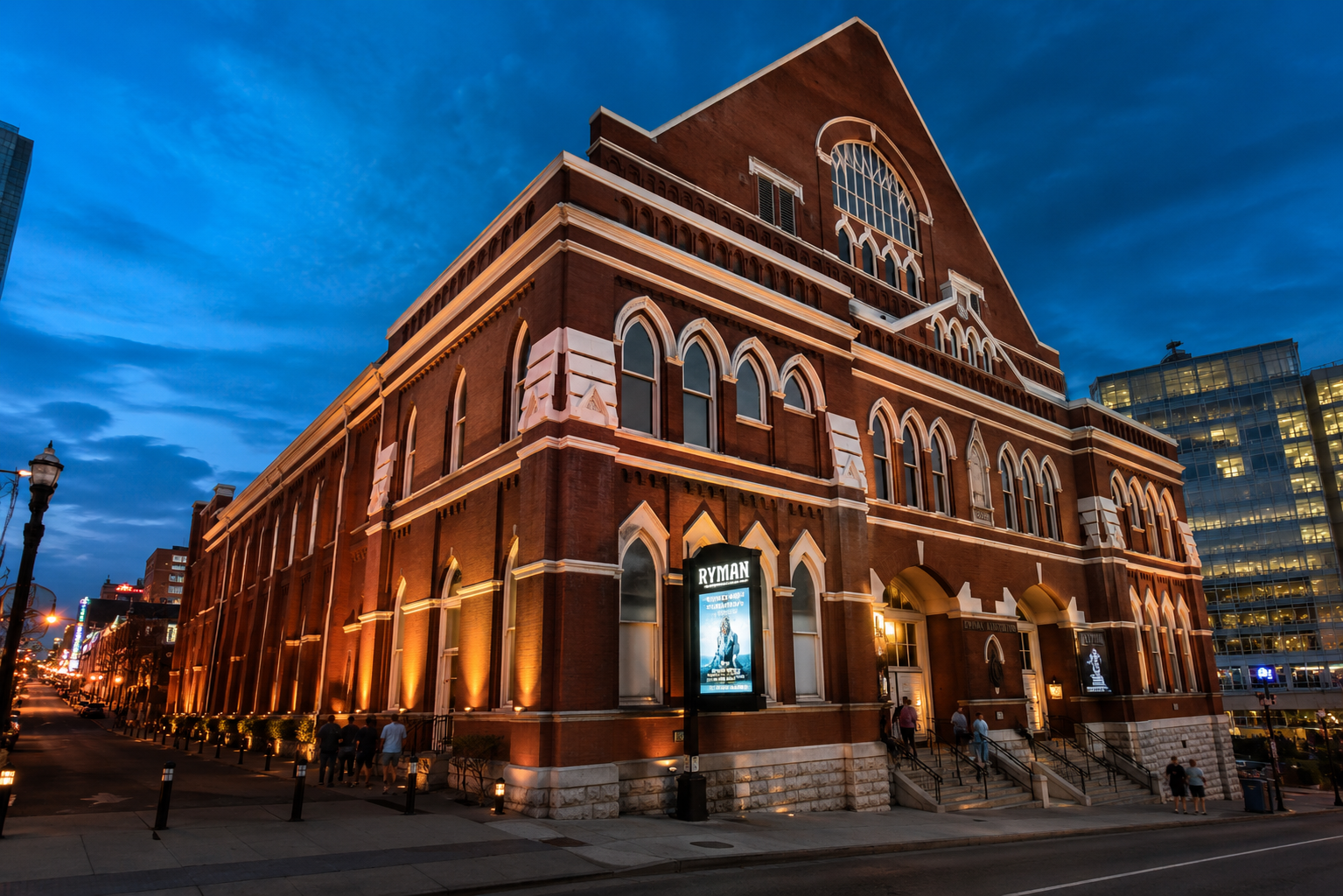
The Ryman Auditorium is the most important venue in Nashville’s music history. Originally built as a tabernacle in 1892, it became the home of the Grand Ole Opry from 1943 to 1974 and hosted virtually every significant country music performer of that era. Hank Williams, Patsy Cline, Johnny Cash, and Elvis Presley all performed on this stage. Today it books a diverse lineup across country, folk, rock, and everything adjacent.
Daytime tours let you walk the venue, learn the history, and stand on the stage where those performances happened. Evening shows are how the Ryman is meant to be experienced. The acoustics are exceptional. The pew seating is original and hard, so if comfort matters bring a small cushion, though it is absolutely worth it. Check the calendar before you book your trip dates since the lineup changes weekly.

The Grand Ole Opry moved to its current home at Opryland in 1974 and has run continuously ever since, currently celebrating its 100th anniversary. The show runs on Friday and Saturday evenings and some Tuesday nights, featuring a rotating roster of country music artists across three hours, structured in the traditional radio broadcast format with between eight and twelve performers each doing two or three songs.
It is not a single artist concert. It is a variety show rooted in a century of tradition, and it is genuinely enjoyable even if country music is not usually your thing, because the energy of the room and the scale of the history make it something different from a regular gig. Book tickets online in advance, especially for Saturday shows, since popular nights sell out weeks ahead.
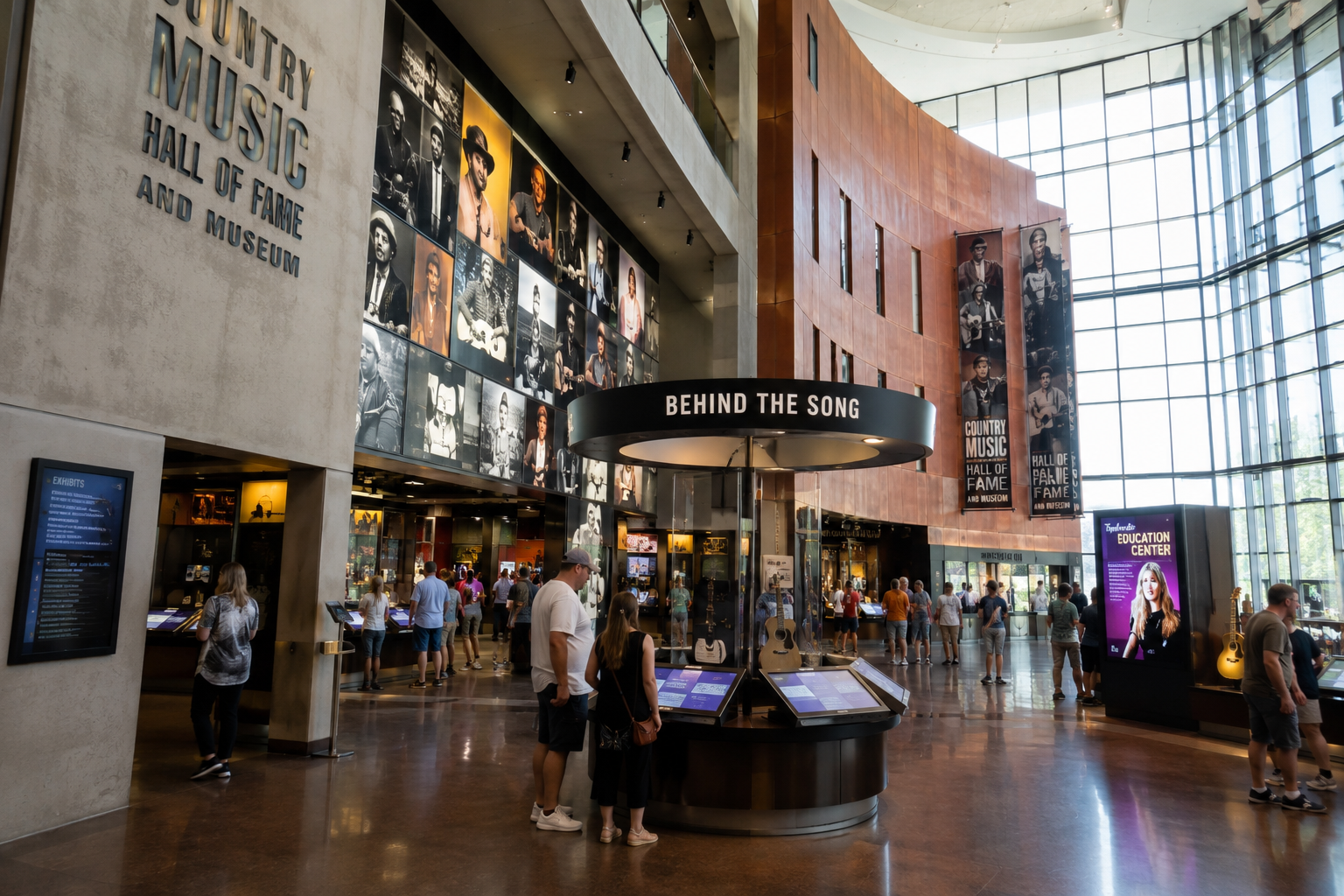
The Country Music Hall of Fame is the most comprehensive music museum in Nashville and one of the best music museums in the world. Over 2.5 million artifacts cover the history of country music from its Appalachian folk roots through to current artists, including Elvis Presley’s gold plated Cadillac, handwritten song lyrics from multiple legends, and a Taylor Swift education center with a replica of her tour bus.
The separately ticketed tour of Historic RCA Studio B is worth adding. This is the actual recording studio where Elvis, Dolly Parton, Roy Orbison, and hundreds of other artists recorded between 1957 and 1977. You stand at the original recording console and hear recordings made in that room. It is genuinely moving if music history means anything to you. The combo ticket for the Hall of Fame and RCA Studio B runs around 40 to 50 dollars.
Allow at least two to three hours for the main museum. More if you want to linger in the exhibit sections properly.

East Nashville is the neighborhood most first time visitors never cross the river to see, and it is the single most interesting local area in the city. It is where musicians actually live, where independent restaurants have been pushing Nashville’s food scene for the past decade, and where the city feels like a real place rather than a tourism product.
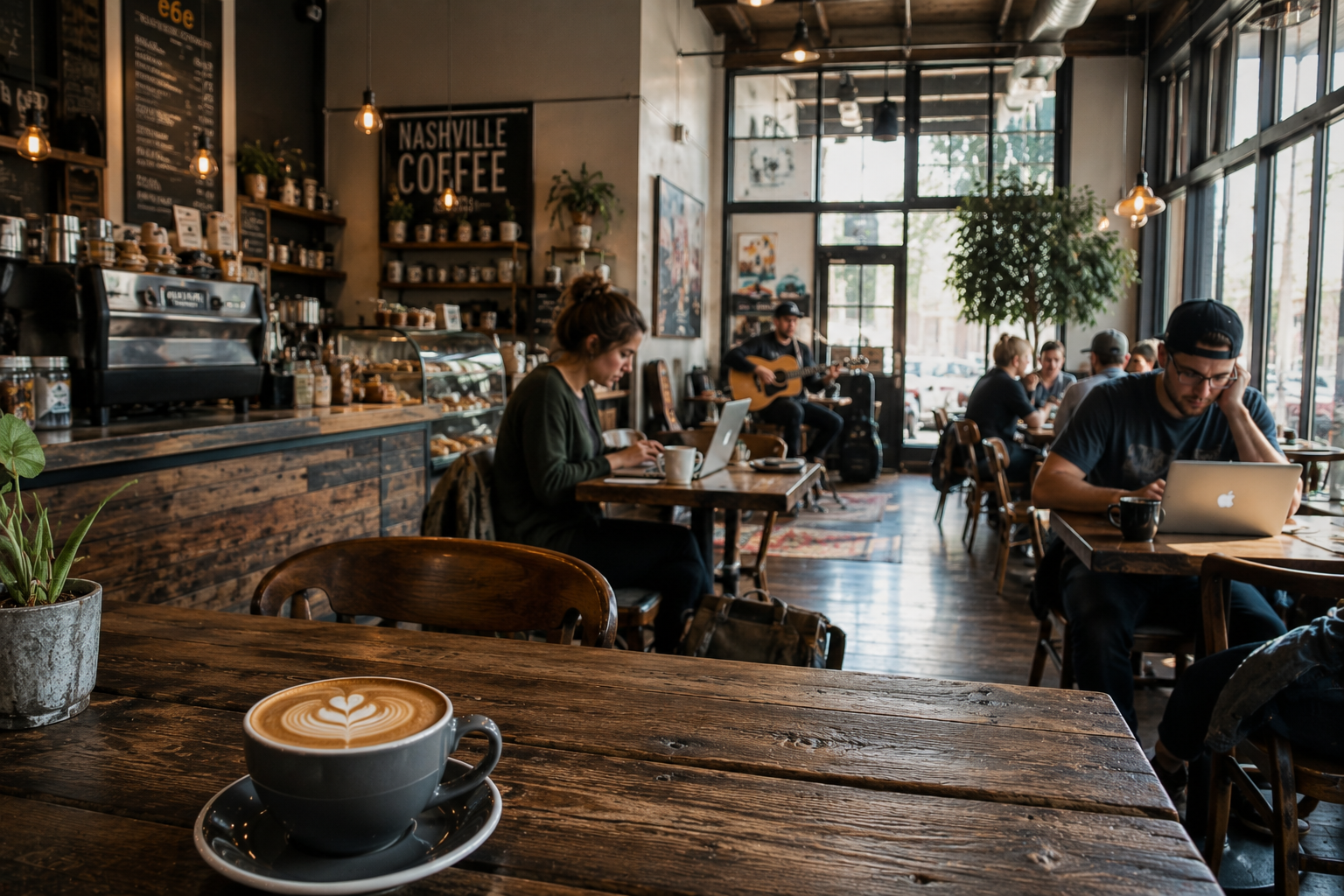
The main drag of Gallatin Avenue and the surrounding streets of Five Points have coffee shops, vintage stores, record shops, and restaurants that reflect what Nashville actually looks like outside the spotlight. Grimey’s New and Preloved Music is one of the best independent record shops in the South. Rolf and Daughters is consistently named one of the best restaurants in Nashville and sits in an old industrial building in Germantown, just across from East Nashville proper.
If your trip only has time for one neighborhood beyond Broadway, East Nashville is the right choice. Plan a morning here with breakfast at a local cafe and a wander without a fixed agenda.
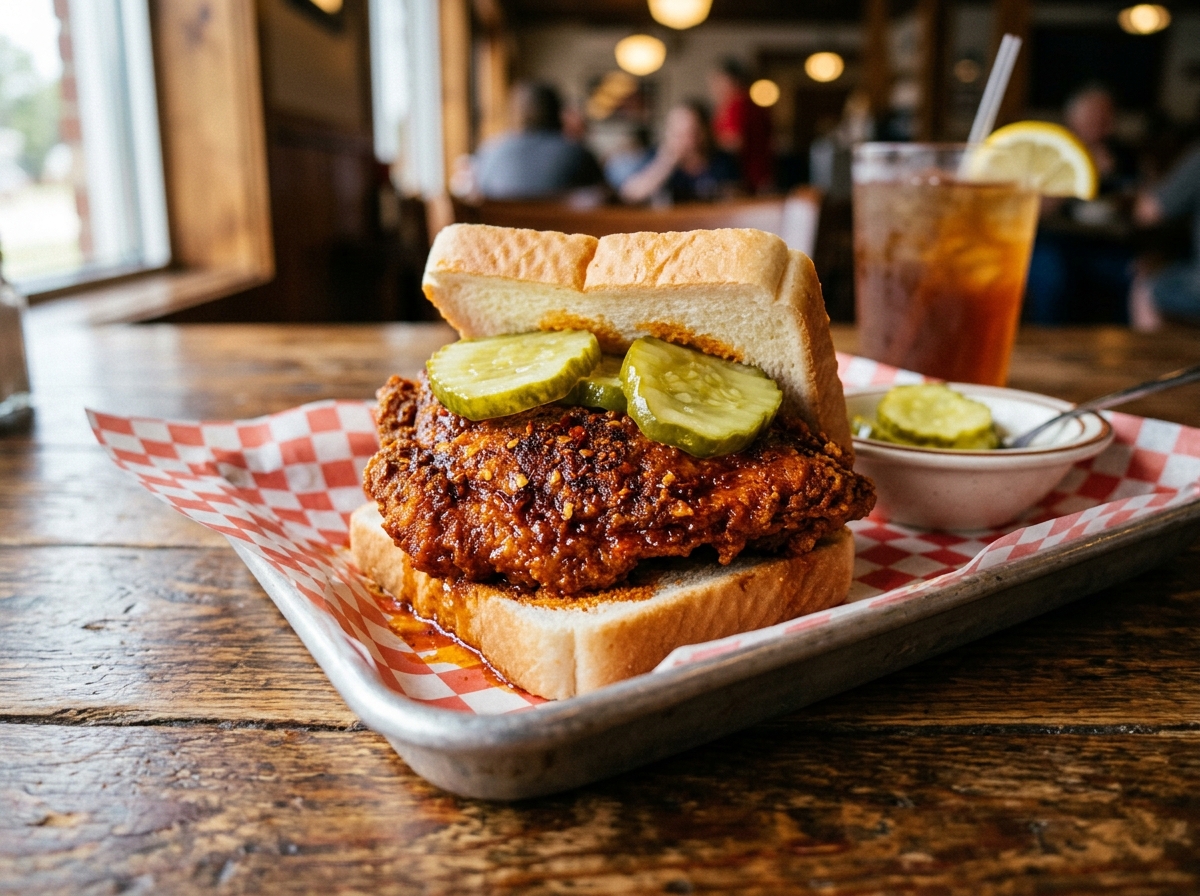
Nashville hot chicken is not just spicy fried chicken. It is a specific thing: fried chicken coated in a paste of cayenne and spices that ranges from mild to levels that genuinely challenge experienced heat lovers, served on white bread with pickle chips.
Prince’s Hot Chicken is the original, operating since the 1940s, and still considered the benchmark by most people who take this seriously. It is not in a convenient location and the wait can be long, but it is the real thing. Hattie B’s has multiple locations including one downtown, is easier to access, and is consistently excellent. Bolton’s Spicy Chicken and Fish is a smaller, lower profile spot that many locals rate as highly as either of the above.
The heat levels are real. Extra hot at any of these establishments is genuinely challenging. Medium is a reasonable starting point for most visitors who enjoy spicy food. Come hungry and do not order on an empty stomach unless you have real heat tolerance.

The National Museum of African American Music opened in 2021 on Broadway and remains one of the most undervisited major attractions in Nashville, despite consistently excellent reviews from people who actually go. The museum covers the full history of African American musical traditions, from gospel and blues through jazz, R and B, soul, funk, hip hop, and their influence on country and rock, tracing a lineage that shaped virtually all American popular music.
It is a deeply moving and comprehensive museum that fills in significant context around every other musical experience in Nashville. Entry costs around 25 dollars and a visit takes roughly 90 minutes to two hours. The interactive exhibits, including a recording booth where you can add your voice to a gospel choir track, are genuinely well designed rather than token interactivity.
If you are spending time at the Country Music Hall of Fame, the National Museum of African American Music is a natural companion visit given they are both on Broadway within walking distance.
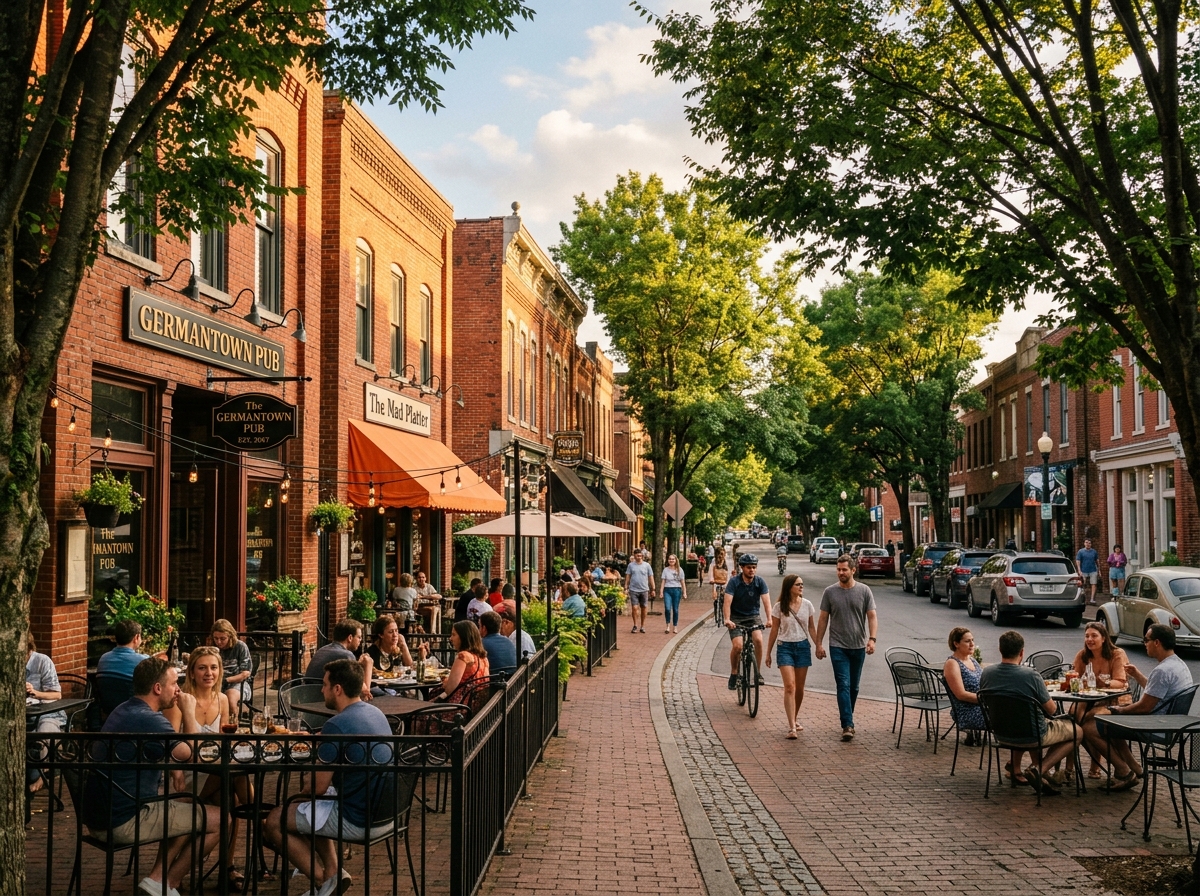
Germantown is the neighborhood immediately north of downtown, a small grid of beautifully restored 19th century brick buildings, leafy streets, and some of the most acclaimed restaurants in Nashville. It sits next to the Bicentennial Capitol Mall State Park, a free outdoor space with a scale map of Tennessee in granite and views up to the Tennessee State Capitol building.
The Tennessee Farmers Market operates here and is worth visiting on a weekend morning for local produce, food stalls, and a crowd of locals going about their Saturday in a way that feels entirely separate from the Broadway tourist zone.
Dinner in Germantown at one of the neighborhood’s flagship restaurants is one of the best food experiences Nashville offers. The area has none of the neon energy of Broadway and all of the quality.

This one sounds like something you would skip until you actually see it. Nashville’s Centennial Park contains a full scale concrete replica of the Parthenon in Athens, built for the 1897 Tennessee Centennial Exposition and originally intended as a temporary structure. It has been standing for over a century and houses the largest indoor sculpture in the United States, a 42 foot gilded statue of Athena.
Note that the Parthenon is closed for renovations through June 2026, so check current status before planning around it. The park itself is free, pleasant, and home to Musicians Corner, Nashville’s beloved outdoor concert series that runs free shows in spring and fall.
Nashville sells itself on country music, which puts off some visitors who assume the city only works if that is your genre. It genuinely does not matter.
The Ryman’s lineup includes folk, rock, soul, and Americana alongside country. The Station Inn is one of the best bluegrass venues in the country and draws musicians who actively dislike mainstream country. The 5 Spot in East Nashville runs Motown nights on Mondays that have nothing to do with country music. Bobby’s Idle Hour on Music Row is a genuine dive bar with a rotating cast of musicians playing for fun rather than for tips.
Nashville works for anyone who enjoys live music in any form. The genre is almost irrelevant because the quality of musicianship here is consistently high across the board.
Nashville has become noticeably more expensive in recent years, particularly for accommodation, but many of the best experiences remain free or cheap.
Broadway bars charge no entry and live music is included in the price of a drink. Centennial Park and the pedestrian bridge are free. The Tennessee State Museum, which holds everything from First People of Tennessee artifacts to a Dolly Parton stage costume, is also completely free.
Budget travelers staying in a hostel or budget hotel outside the immediate downtown area, eating hot chicken for lunch and grabbing street food in the evening, can manage on around 80 to 120 dollars per day.
Mid range travelers in a comfortable downtown hotel with sit down meals and two or three paid attractions should plan for 180 to 250 dollars per day.
Accommodation in The Gulch and immediately downtown runs high. East Nashville and Midtown offer better rates for equivalent comfort and keep you close enough to everything.
Nashville is generally comfortable for solo female travelers, but Broadway at peak hours on weekend nights gets rowdy enough to warrant a few practical notes.
The honky tonk strip after 10pm on weekends involves large, energetic crowds with significant alcohol consumption. Solo bar hopping here is fine but having a plan for how you are getting home before you start the evening is worth doing. Pre book a rideshare or know exactly where your pickup spot is before you leave the last bar.
East Nashville, Germantown, and Midtown are all comfortable neighborhoods for solo dining and evening exploring at any reasonable hour.
Nashville has a particular kind of warmth toward visitors that you find in very few large American cities. Strangers genuinely start conversations. Bar staff are often unusually friendly and helpful. The city has a culture of welcome that makes solo travel here feel easier than in most comparable destinations.
Just as cities like Kyoto reward solo female travelers with a calm, orderly culture of helpfulness, the best things to do in Kyoto guide covers a completely different but equally solo friendly destination if you are building a broader travel list.

Hot chicken is the obvious one and it is covered above. Beyond that, Nashville has a genuine food scene that extends well past Southern comfort food.
Biscuits in Nashville are taken seriously in a way that surprises visitors from outside the South. The Loveless Cafe, about 20 minutes from downtown, is the classic reference point, with scratch made biscuits that have been the standard for decades.
The Gulch and Germantown have the highest concentration of serious restaurants if you want dinner beyond pub food. Rolf and Daughters and The Catbird Seat are both nationally recognized and require reservations made weeks in advance for weekend dining.
Meat and three restaurants, a Southern tradition where you pick a protein and three side dishes for a set price, are the best value lunch option in the city. Arnold’s Country Kitchen is the most famous and the line at lunch is worth it.
Bourbon is everywhere and taken seriously. The Johnny Cash Museum has a bar called the One Hitter that serves a well curated whiskey selection in a small, atmospheric space. Barlines on Broadway and L27 Rooftop Lounge both offer good cocktail programs in completely different settings.

Wear boots if you have them or want an excuse to buy them. Nashville is one of the few places in the world where cowboy boots are genuinely appropriate footwear in every context, from bars to restaurants to a morning walk, and the city has excellent boot shops if you want to come home with a pair. Lucchese and Imogene and Willie are both worth a visit regardless of what you buy.
A portable phone charger is genuinely useful here. Long evenings out on Broadway, constant navigation between neighborhoods, and the habit of photographing everything means your battery will be depleted well before the night is over. This compact power bank on Amazon keeps a phone fully charged through a full day and evening of Nashville exploring without adding noticeable weight to a bag.
The weather in Nashville changes more than visitors expect. Spring and fall can swing between warm afternoons and cold evenings within the same day. A lightweight packable layer that goes from bar to street without looking out of place is worth having. This packable travel jacket on Amazon compresses into its own pocket, works in the Nashville heat during the day, and handles cooler evenings without needing to carry a heavier coat.
Book Grand Ole Opry and Ryman tickets before you travel. Both sell out. This is not an exaggeration for peak season. Same day availability exists sometimes but banking on it is a mistake.
How many days do you need in Nashville? Three days covers the highlights comfortably. Two days is possible with planning. Four or five days allows for day trips and deeper neighborhood exploration.
Is Nashville worth visiting if you do not like country music? Yes, genuinely. The Ryman’s lineup spans genres, East Nashville has a thriving indie music scene, and the food and neighborhood culture make Nashville worth visiting regardless of musical taste.
What is the best time to visit Nashville? April through May and September through October offer the best weather with manageable crowds. Summer is hot and busy. Winter is mild but some outdoor attractions are less enjoyable.
Is Nashville safe for solo female travelers? Yes, with standard urban awareness. Broadway gets rowdy on weekend nights, so having a rideshare plan before you start the evening is worth doing. Neighborhoods like East Nashville, Germantown, and Midtown are comfortable at any hour.
What neighborhood should I stay in for a first visit? Downtown or The Gulch for walkable access to Broadway and the main attractions. East Nashville for a more local feel with slightly lower prices and better restaurant options.
What is Nashville hot chicken? It is fried chicken coated in a cayenne spice paste, served on white bread with pickle chips, and available in heat levels from mild to extremely hot. Prince’s Hot Chicken is the original and still considered the best.
Is Nashville expensive? Broadway bars are free entry, live music is included in the cost of a drink, and several major attractions including the Tennessee State Museum are free. Accommodation has become expensive, particularly downtown. Mid range visitors should budget around 180 to 250 dollars per day overall.
Do I need a car in Nashville? Not for downtown and Broadway. A rideshare or rental car is needed for the Grand Ole Opry, East Nashville, and any day trips outside the center.
Nashville is one of those American cities that earns more affection the more time you spend in it. The first evening on Broadway is an experience. The second day, when you get off Broadway and start finding the neighborhoods and the food and the musicians playing in bars nobody has photographed yet, is when the city actually gets you.
Come for the honky tonks. Stay long enough to find the rest of it.