
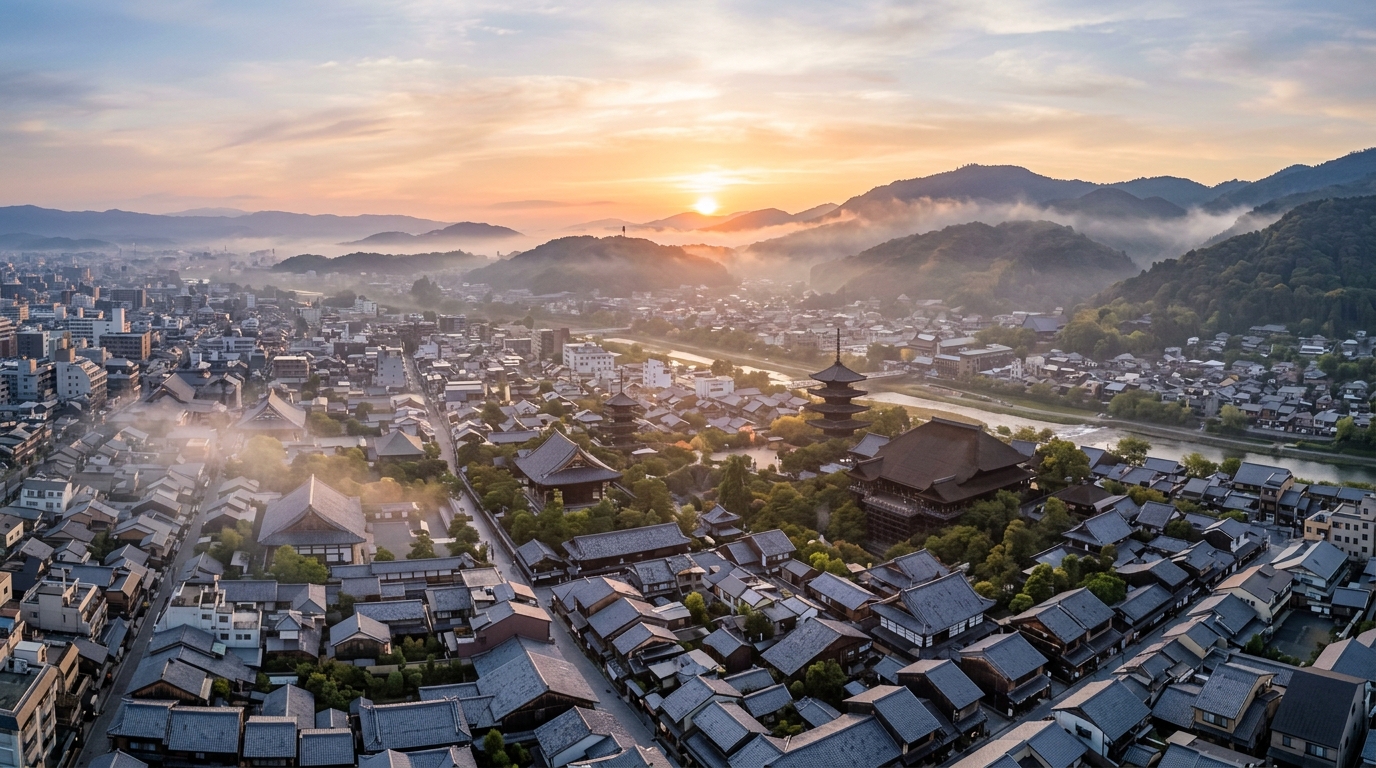
This guide covers everything you need for a first visit, organized honestly, with specific advice on when to arrive at each major attraction, where to actually stay, and what the experience is like beyond the photographs.
Three to four days is the right amount for a first visit. Three very full days gives you plenty to see and do, while four days allows a more relaxed pace. If you are also visiting Osaka, which most people pair with Kyoto, allocate more time to Kyoto rather than splitting evenly. Two days in Osaka and three to four days in Kyoto is a better split, given how much more there is to see in Kyoto.
Five days or more makes sense if you want to add a day trip to Nara, deeper exploration of the Arashiyama area, or time to slow down and actually sit in a temple garden for an hour rather than moving through it quickly.
Kyoto does not have its own airport. The closest major airport is Kansai International Airport (KIX), about 75 minutes away by direct train. The Limousine Bus to Kyoto Station is an easy alternative, taking around 90 minutes, requires coins or 1,000 yen notes for payment, and is regular and punctual.
From Tokyo, the Shinkansen to Kyoto takes approximately 2 hours and 15 minutes and is by far the fastest and most comfortable option.
For getting around Kyoto itself, the IC card system is the most practical solution. Suica and ICOCA cards work on buses, trains, and subway lines across the city, and can be loaded with yen and tapped at entry and exit points. Downloading the Suica card onto your phone as well as having an eSIM for navigation makes life significantly easier in Kyoto.
The bus network covers most tourist areas, and a single bus ride costs 230 yen. Day pass bus tickets are available for 700 yen and are worth buying on days when you plan to travel between neighborhoods.
Cycling is excellent in the flatter central areas of the city, and bike rentals are widely available near Kyoto Station and in Higashiyama.
Kyoto’s most famous attractions are genuinely extraordinary. They are also among the most crowded tourist destinations in all of Japan, and the gap between seeing Fushimi Inari at dawn with mist still in the gates versus seeing it at 10am in a crowd of several hundred people is enormous.
Crowds tend to gather later in the day at Kyoto’s biggest attractions, so getting a head start by waking early makes a significant difference.
The practical rule for any major Kyoto site: aim to arrive at opening time or before, specifically between 6 and 8am for places that are accessible this early. This applies to Fushimi Inari, Arashiyama Bamboo Grove, and the Philosopher’s Path. For temples with ticketed entry that open at 9am, being among the first 20 people through the gate changes the experience entirely compared to arriving mid morning.
There is a reason Fushimi Inari Taisha ranks high on every visitor’s list. The thousands of vibrant orange torii gates snaking up the hill create the ultimate visual experience. The practice of donating a gate to the shrine began in the Edo period and continues today, which means the pathway of gates is constantly being extended and renewed.
It is worth taking the time to do the full climb to avoid the crowds that usually populate the lower levels. The full loop to the summit of Mount Inari and back takes 2 to 3 hours. If you only have an hour, hiking to Yotsutsuji intersection, about halfway up, gives you the best views over Kyoto below with significantly fewer people than the famous lower gate section.
A sunrise visit is worth considering, when local monks make their way up the hill to work and the resident cat population is out to play. This is the specific advice that turns a good Fushimi Inari visit into an exceptional one. Arrive by 6am in summer and by 6:30am in winter.
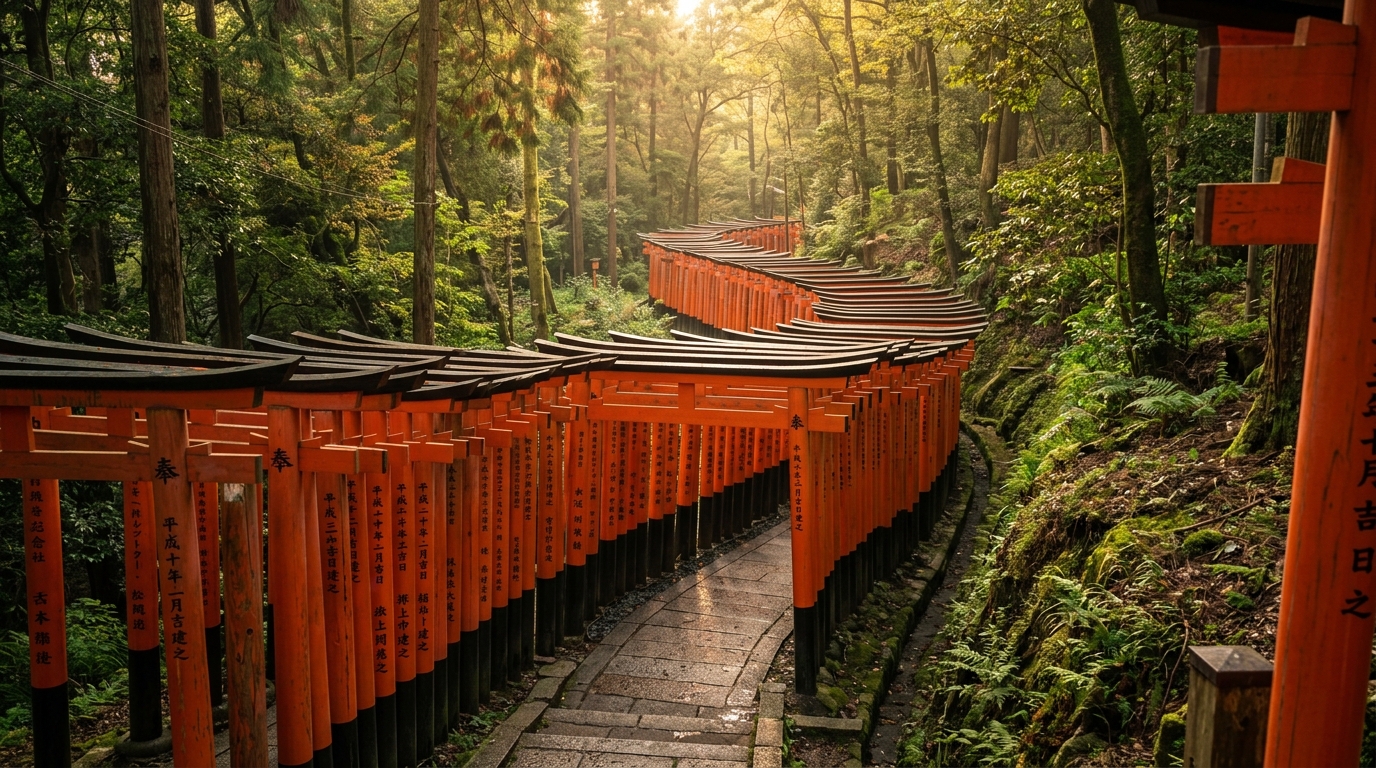
The shrine is free to enter at all hours.
Gion is Kyoto’s geisha district and probably the most atmospheric neighborhood in the city. Walking it is worth doing at least twice: once during the day when the wooden machiya townhouses are lit by natural light, and once in the early evening when the ochaya teahouses come alive and you have a real chance of spotting a geiko or maiko moving between appointments.
The etiquette here matters. Do not follow geiko or maiko. Do not photograph them without permission. Do not touch their kimono or hair. These are working professionals, not a spectacle. Gion has had to put up signs and issue guidelines around tourist behavior in recent years.
The streets of Hanamikoji and Shinbashi are the most visually striking, with wooden teahouse facades, stone lanterns, and the occasional figure in full kimono creating a scene that feels genuinely unchanged from a century ago. Evening, between 5 and 7pm, is the best time.
The Arashiyama Bamboo Grove is one of the most photographed places in Japan, a pathway through towering stalks that create a natural tunnel and produce a distinctive sound in the wind unlike anything else. The bamboo grove is open 24 hours, so visiting around dawn gives you the experience without the crowds that build from mid morning onward.
Most visitors see the grove and leave. The area around it has some of the best things to do in Kyoto beyond the main path.
Tenryu-ji Temple nearby is a UNESCO World Heritage Site with peaceful gardens and mountain views that serve as a backdrop to one of the finest Zen gardens in the country. Entry costs around 500 yen for the garden and 800 yen including the main hall.
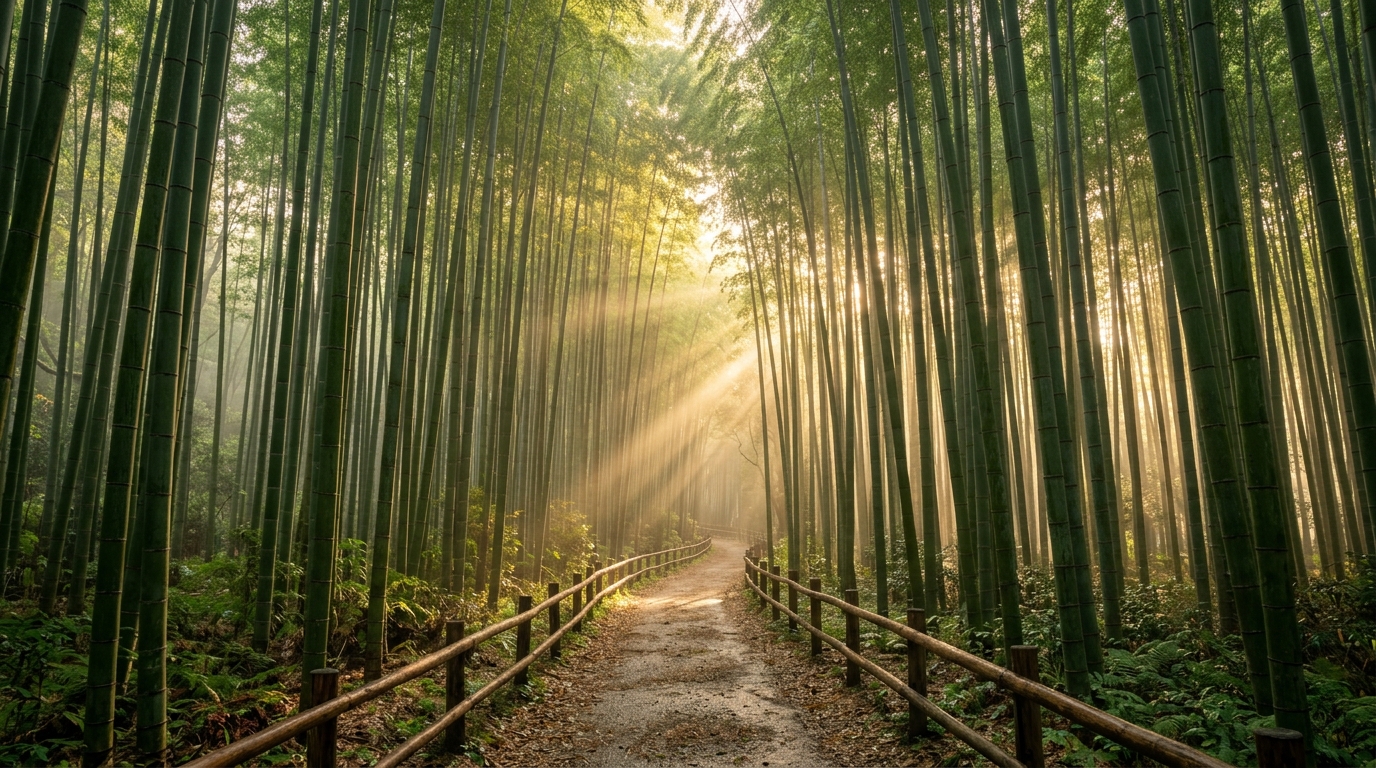
The former home of 1920s samurai film actor Okochi Denjiro sits at the end of the bamboo grove path and is often overlooked. The villa at the top of a hill offers excellent city views, and the carefully landscaped Japanese gardens provide a welcome break from the crowds. A cup of matcha and sweet treats at the traditional teahouse are included in the entry price.
Kinkaku-ji is nicknamed the Golden Pavilion for its gold leaf covered upper tiers. It is a magnificent sight at any time of year, and one-way foot traffic flows fairly consistently, though crowds do tend to bunch directly in front of the temple for the reflection shot in the pond.
Entry costs 500 yen. The grounds are genuinely beautiful rather than just the pavilion itself, with a circular garden path around the reflecting pond that takes 20 to 30 minutes to walk. Visiting on a weekday reduces the crowds noticeably.
The tea ceremony, or chado, is not really just about the tea. It is about presence and tradition. You watch and emulate the host in preparing a bowl of matcha through a sequence of gestures refined over centuries.
Look for small, traditional tearooms rather than touristy venues. Camellia Flower Tea House in Higashiyama and En Tea Ceremony in Gion are excellent choices, both led by professional tea masters who explain each step from the whisking of matcha to the precise movements of the host.
If you have the option to try on a kimono at the same time, it adds another layer to the experience. Wearing kimono while walking through Higashiyama’s stone paved lanes is one of the most genuinely memorable things you can do in Kyoto, and rental shops are available throughout the neighborhood from around 3,000 yen for a few hours.
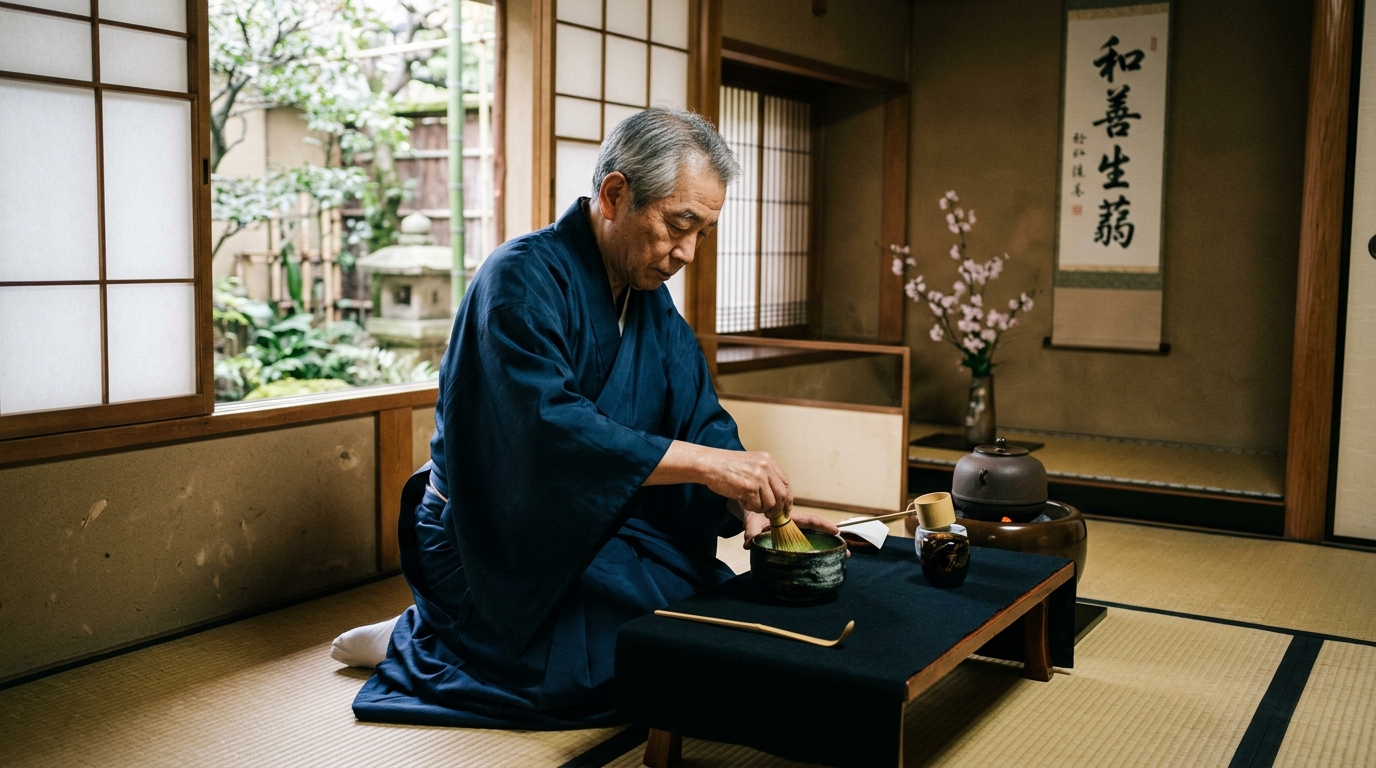
Kyoto’s tea ceremony culture is deeply rooted in place in a way that parallels how hammam traditions belong to Marrakech. If you are building an itinerary around experiencing living cultural traditions in their original settings, things to do in Marrakech cover the hammam and souk traditions there with the same depth.
The Philosopher’s Path is a stone walkway along a canal in eastern Kyoto, lined with hundreds of cherry trees that make it arguably the most beautiful place in the city during blossom season and equally pleasant in other seasons. The path stretches roughly 2 kilometers between Nanzenji Temple and Ginkaku-ji (the Silver Pavilion).
The best time to walk it is early morning before the canal side cafes open and before tour groups arrive. The residential streets parallel to the path, full of small pottery studios, independent coffee shops, and crafts galleries, are worth wandering on both sides.
Ginkaku-ji at the northern end of the path is often overlooked relative to the Golden Pavilion but many visitors find it more satisfying. The dry sand garden and moss garden behind the main hall are among the finest examples of Higashiyama period design in the country.
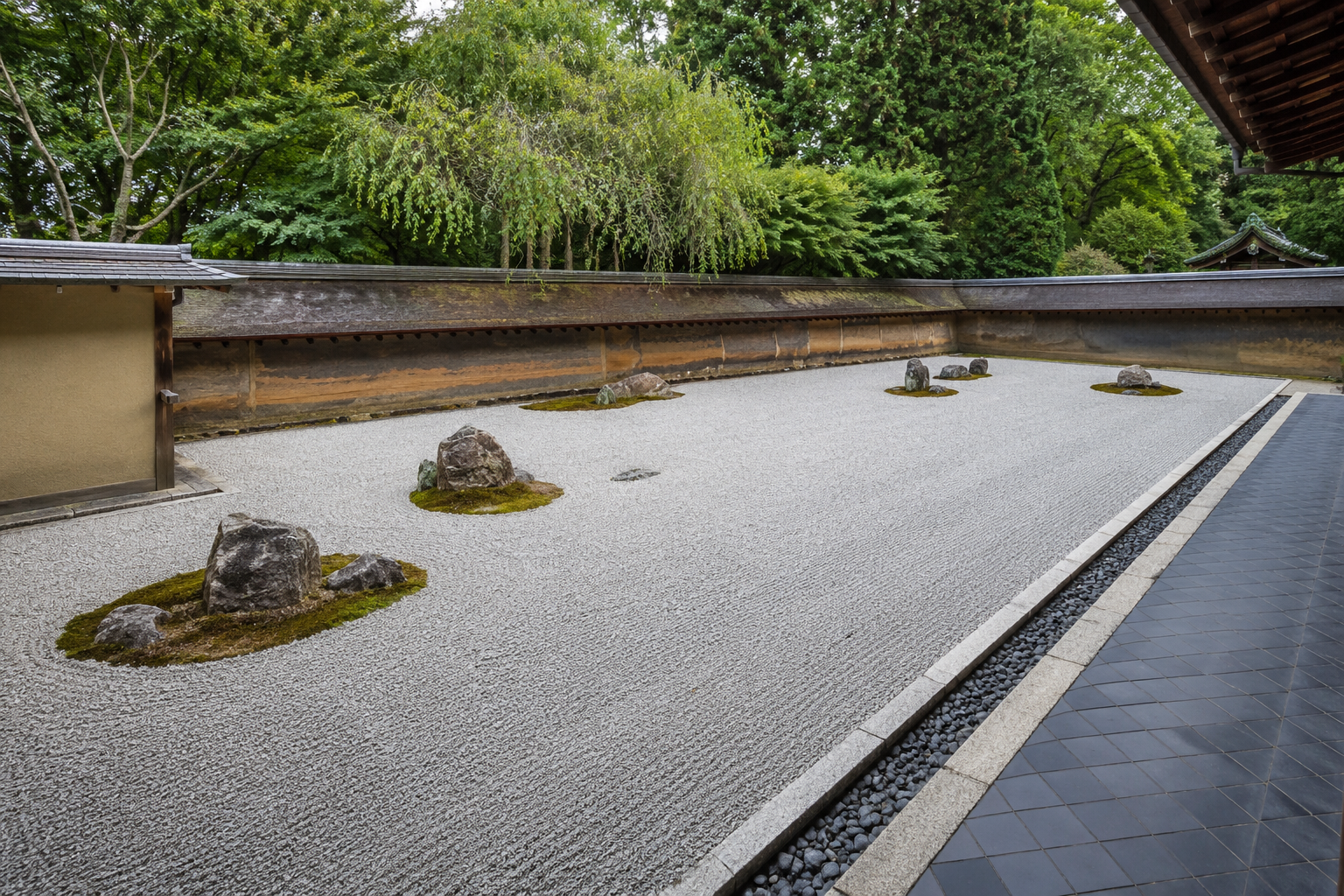
Ryoan-ji stands out among Kyoto’s many UNESCO World Heritage temples for its rock garden, perhaps the most famous in Japan. Various theories exist about the meaning of the meditative arrangement. Decide for yourself while gazing across the rocks.
The garden consists of 15 rocks arranged in raked white gravel, enclosed by low earthen walls. It is designed so that no matter where you sit along the viewing platform, one rock is always hidden from view. It takes less than an hour to experience properly, but rushing through it misses the point entirely. Sit for at least fifteen minutes and let the design work on you.
Nishiki Market features more than 100 vendors in a narrow covered pedestrian arcade, selling everything from fresh seafood to candies, Kyoto style pickles, and Japanese sweets. Many vendors offer free samples. Visiting close to opening or closing hours avoids the elbow to elbow busy periods.
The market has been operating since the 17th century and remains genuinely functional rather than purely tourist facing, with locals shopping alongside visitors. It is a 10 minute walk from Gion and combines naturally with an afternoon in that neighborhood.
As of October 2025, there is a new digital art museum in Kyoto. TeamLab Biovortex Kyoto is full of interactive visual and sound installations that explore ideas of life, perception, and environment in creative ways. Entry is 3,400 yen and spending two hours here is genuinely immersive.
This one barely appears in most Kyoto guides because it is new and sits somewhat outside the traditional cultural itinerary. It is worth including, particularly for visitors who want variety beyond temples and gardens, or who are traveling with people who might find pure temple touring less engaging.
Kyoto sits at a mid to high price point within Japan, which is itself a more expensive destination than most of Southeast Asia but very reasonable compared to Western European capitals.
Budget travelers staying in capsule hotels or hostels, eating convenience store breakfasts and noodle shop lunches, can manage on 5,000 to 8,000 yen per day (roughly 35 to 55 USD), covering accommodation, meals, and entry fees for two or three attractions.
Mid range travelers staying in a business hotel or small ryokan, eating at proper sit down restaurants for at least one meal per day, and visiting four or five paid attractions should plan for 15,000 to 25,000 yen per day (roughly 100 to 170 USD).
Luxury travelers in a traditional ryokan with kaiseki dinner included can spend 50,000 yen and above per night for accommodation alone.
Staying in the Old Town area puts you in a quieter, more residential neighborhood close to all the main public transport routes.
Higashiyama is the most atmospheric choice for first time visitors, placing you within walking distance of Gion, Nishiki Market, and the Philosopher’s Path, and close to excellent bus connections to Fushimi Inari and Arashiyama.
Staying around Kawaramachi in central Kyoto makes it easier to explore the city’s highlights with less travel time, combining good transport connections with proximity to Gion and the central shopping and restaurant areas.
Kyoto Station area is the most convenient for arrivals and day trip logistics to Nara and Osaka, but feels less distinctly Kyoto than the eastern neighborhoods.
Most Kyoto guides focus exclusively on temples and gardens and almost never mention the onsen and sento (public bathhouse) culture that is equally central to Japanese daily life and deeply satisfying to experience.
Sento are neighborhood public baths, often affordable at around 500 to 800 yen, which welcome visitors as long as you follow the basic etiquette: wash thoroughly at the shower stations before entering the communal bath, tattoos may be restricted at some facilities, and silence and calm are the norm.
Kurama Onsen, about 30 minutes from central Kyoto by Eizan Railway, is an accessible outdoor hot spring with mountain scenery that works well as a half day trip combined with a short hike through Kurama village.
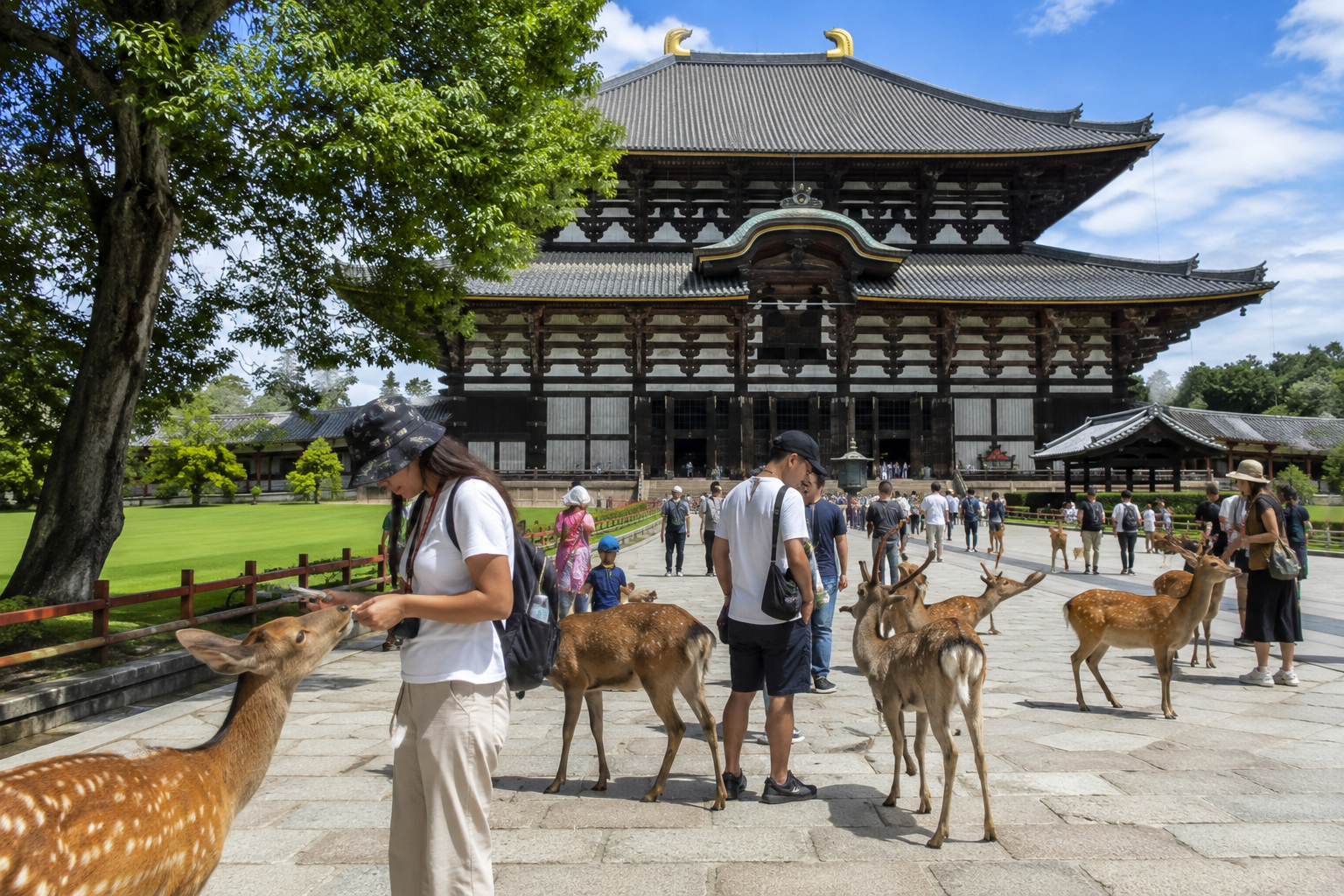
Nara is Japan’s ancient capital, famous for its temples and freely roaming deer. It is a popular day trip from Kyoto, reachable by the JR Nara Line in approximately 45 minutes.
Todai-ji Temple in Nara contains the largest bronze Buddha statue in Japan, housed in a wooden hall that was itself the largest wooden building in the world for centuries. The deer that roam freely through Nara Park are genuinely tame and interact with visitors throughout the day. Deer crackers are sold at stalls throughout the park.
Combining a morning in Nara with an afternoon back in a quieter Kyoto neighborhood is one of the most satisfying day structures in the Kansai region.
Matcha appears everywhere in Kyoto and the quality is genuinely higher here than anywhere else in Japan. A simple matcha and wagashi (traditional sweet) set at a tea house near any major temple runs around 800 to 1,200 yen and is one of the best value experiences in the city.
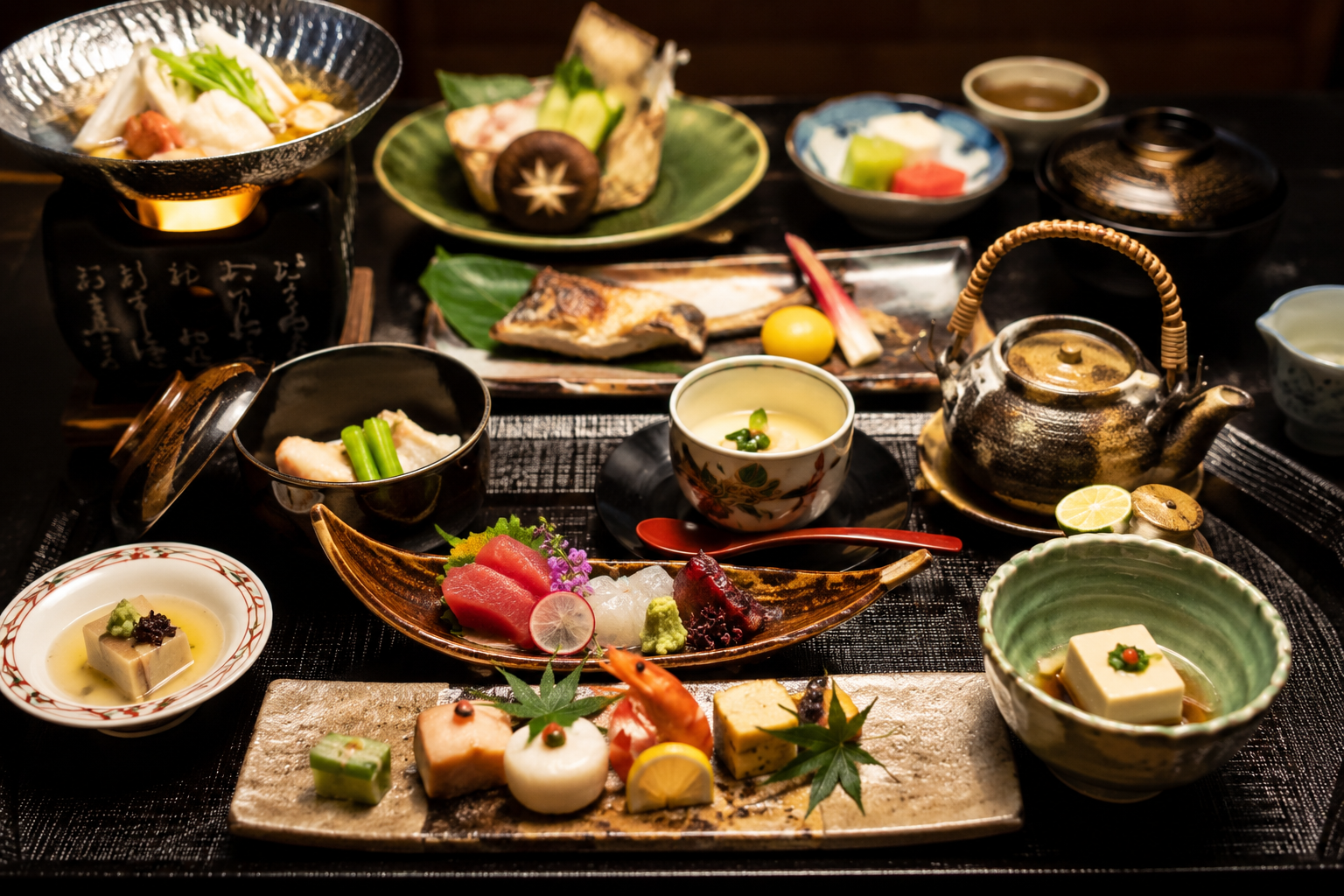
Kaiseki is Kyoto’s signature cuisine, a multi course meal rooted in the seasonal ingredients and refinement that defined imperial court cooking. A kaiseki dinner at a proper restaurant starts at around 10,000 yen per person and represents one of the most sophisticated dining experiences in Japan.
Tofu cuisine, called kyo-kaiseki tofu, is a Kyoto specialty tied to the Buddhist temple culture that does not eat meat. The yudofu, silken tofu simmered at the table, served in the neighborhoods around Nanzenji Temple, is worth trying for lunch.
Nishiki Market is the most convenient place to sample multiple Kyoto food specialties including pickled vegetables, grilled skewers, fresh tofu, and traditional sweets in one walk through.
How many days should I spend in Kyoto?
Three to four days is ideal for a first visit. Three days covers the main highlights at a full pace. Four days allows for a slower, more enjoyable rhythm.
What is the best time of year to visit Kyoto?
Kyoto changes dramatically with the seasons and there is no bad time to go. Spring (March through April) brings cherry blossoms, and autumn (November through early December) brings vivid red maple leaves. Both are high season with larger crowds. Winter offers the fewest visitors and genuinely beautiful snow on temple rooftops.
Is Kyoto expensive to visit?
Mid range, at 100 to 170 USD per day, is comfortable for good accommodation, proper meals, and paid attraction entry. Budget travelers can manage on less with hostel accommodation and convenience store meals.
How do I get around Kyoto?
Bus is the most practical option covering most tourist areas. An IC card (Suica or ICOCA) loaded with yen works on buses, trains, and subway. Cycling is excellent in the flat central areas.
What is the best thing to do in Kyoto in one day?
Fushimi Inari at dawn, Nishiki Market for lunch, Gion in the early evening, and a tea ceremony somewhere in between covers the essential Kyoto experience in a single well planned day.
Is Kyoto safe for solo female travelers?
Japan consistently ranks among the safest countries in the world for solo female travelers. Kyoto specifically has a calm, orderly atmosphere, excellent public transport, and a culture of genuine helpfulness toward visitors.
What should I eat in Kyoto?
Matcha and wagashi at a traditional tea house, tofu kaiseki near Nanzenji, fresh samples at Nishiki Market, and at least one sit down kaiseki dinner if your budget allows.
Kyoto is the kind of city that becomes more interesting the slower you move through it. The temples are stunning from a walking path but extraordinary when you sit down in front of them for long enough that the other visitors fade into the background.
The tourists who come away loving Kyoto most are usually the ones who planned their mornings carefully and left their afternoons open. The early hours belong to you. By 9am, the city belongs to everyone.