
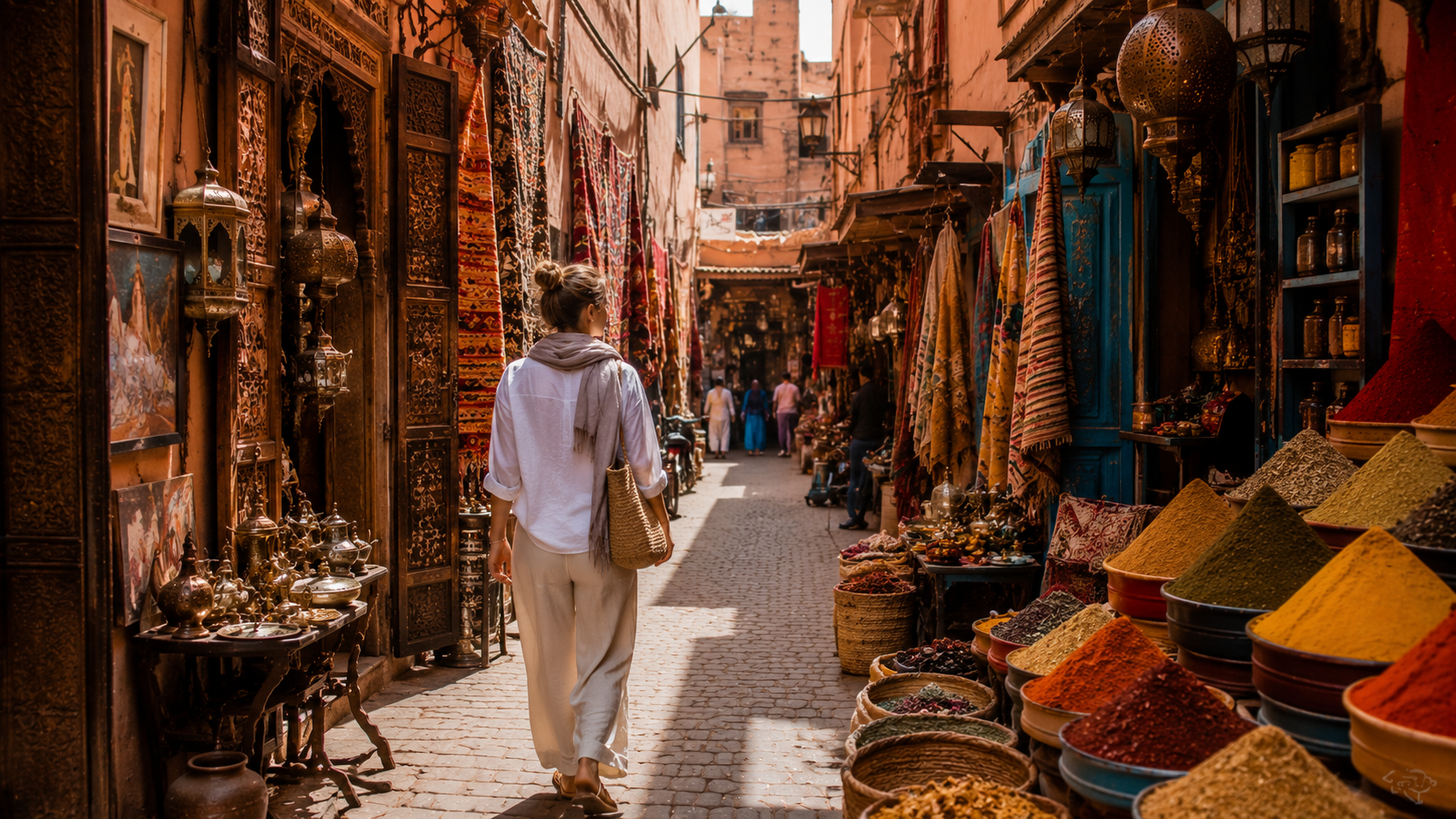
That intensity is exactly why Marrakech is extraordinary. It is also exactly why first time visitors often feel overwhelmed, overspent, and underprepared. This guide exists to fix that. Everything here is the honest version, including the things most travel articles soften or skip entirely.
Three to four days is the right amount for a first visit. Three days covers the main medina landmarks, a day trip outside the city, at least one hammam experience, and enough time to get genuinely lost in the souks rather than rushing through them. Four days allows you to slow down and add an evening in the Palmeraie or a longer Atlas Mountains excursion.
Two days is possible but leaves you feeling like you skimmed the surface. Five days or more makes sense if you want to combine Marrakech with a night in the Agafay Desert or a trip to Essaouira on the coast.
October is widely considered the single best month, with spring from March through May and autumn from September through November offering the most pleasant temperatures at 18 to 26 degrees Celsius.
Summer in Marrakech is serious heat. July and August regularly see temperatures above 40 degrees Celsius. If you visit in summer, plan all outdoor activity for early morning and late afternoon only, and accept that midday belongs to shaded riads and mint tea.
Winter days are mild and pleasant, rarely dropping below 10 degrees at night. December and January are good months to visit, though evenings require layers.
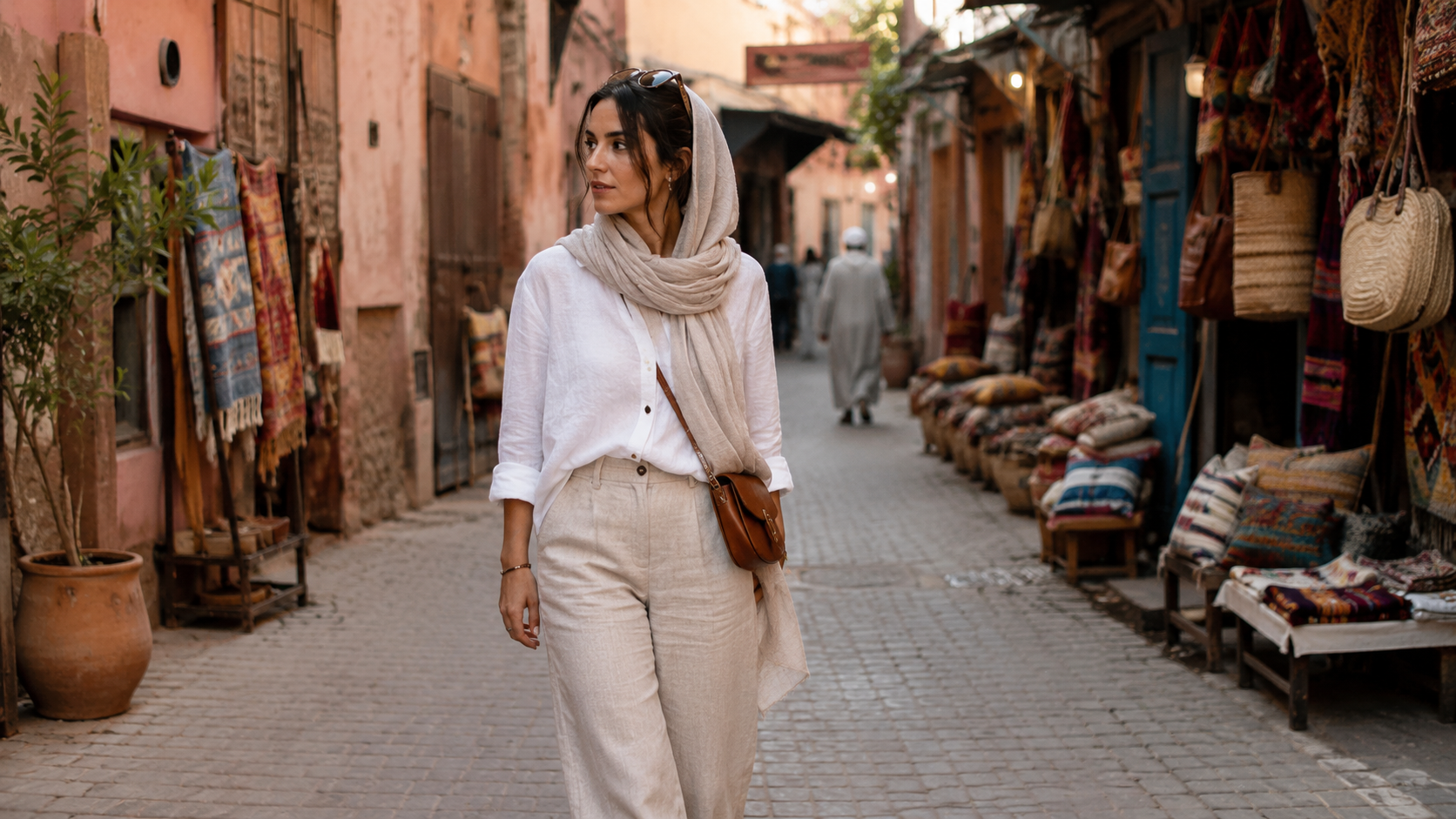
This is the practical detail most guides mention once and move on from. Marrakech is a conservative Muslim city and dressing with awareness of that matters, not just for respect but for your own comfort.
Shoulders and knees covered is the baseline for anywhere in the medina, souks, and near mosques. Loose, lightweight cotton clothing works best for both the climate and the context. A long linen trousers and a loose top combination covers you practically and stays cool in the heat.
Carry a light scarf in your bag. It serves multiple purposes: covering your hair if you choose to in more traditional areas, an extra layer on cool evenings, and a quick cover up over a sleeveless top if needed. Avoid tight fitting or revealing clothing in the medina specifically. In the newer Gueliz neighborhood outside the medina walls, the dress code is considerably more relaxed.
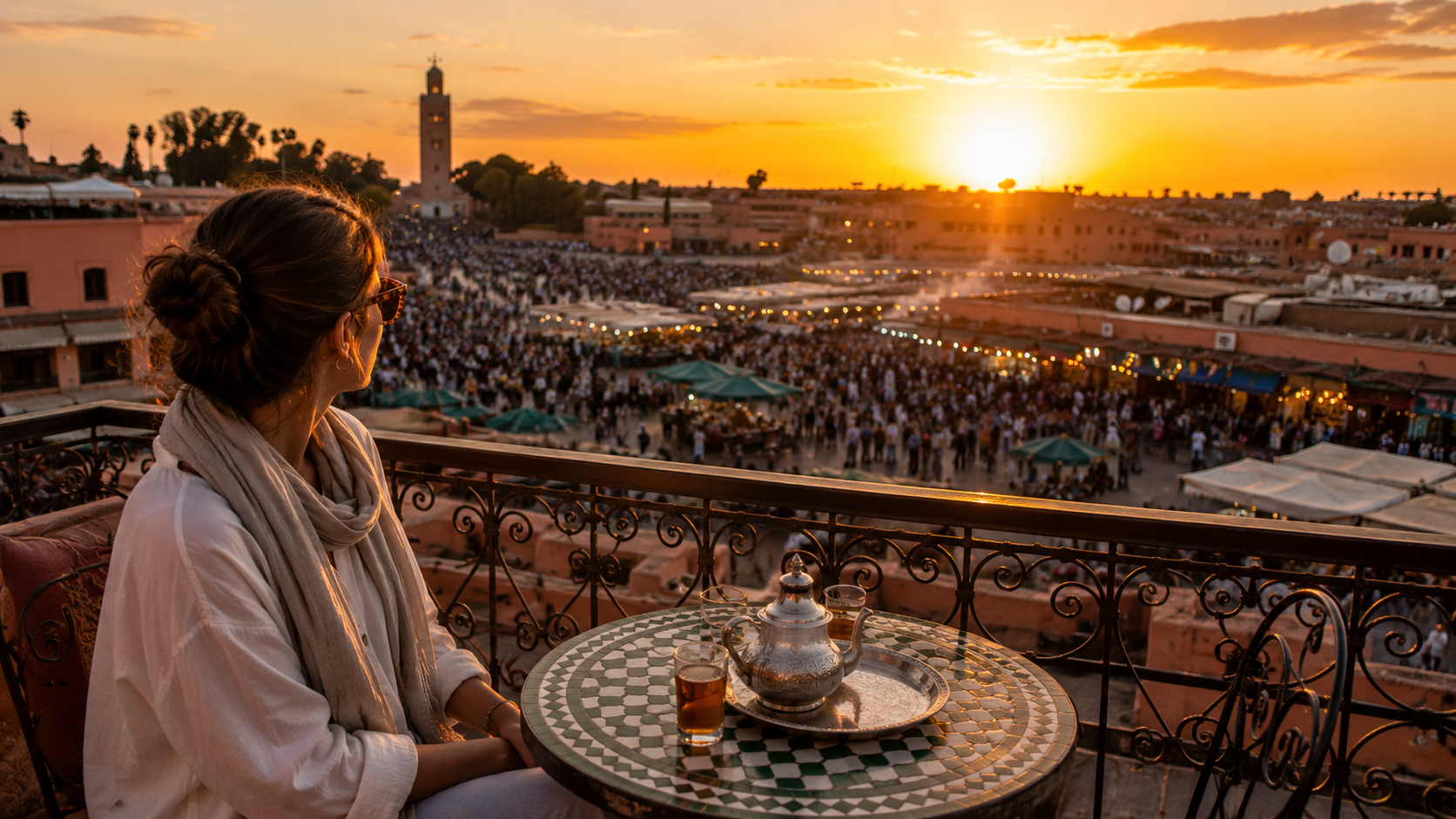
No discussion of what to do in Marrakech can begin anywhere other than Jemaa el-Fna square. By day it is a staging ground for orange juice vendors, henna artists, snake charmers, and Gnawa musicians. By dusk it transforms into one of the world’s great outdoor spectacles: hundreds of food stalls roll out across the square, smoke rises from dozens of grills, and the crowd swells to thousands.
The square is free to walk through and absorb. The food stalls are worth eating at, though agree the price before sitting down and be clear about what is included. Fresh squeezed orange juice from the stalls at the edges costs around 5 to 7 dirhams and is one of the best cheap things in the city.
Do not let anyone put henna on your hands without agreeing on the price first. This is one of the most consistent scams targeting first time visitors, where a price is never mentioned, the henna is applied before you can object, and then a significant amount is demanded. If someone approaches with henna, say no clearly and keep walking.
The best view of the square at dusk is from a rooftop cafe. Several restaurants and cafes on the upper floors of buildings around the perimeter sell tea and coffee and let you watch the square transform from above. Cafe de France and Cafe Argana both have rooftop terraces looking directly over the action.
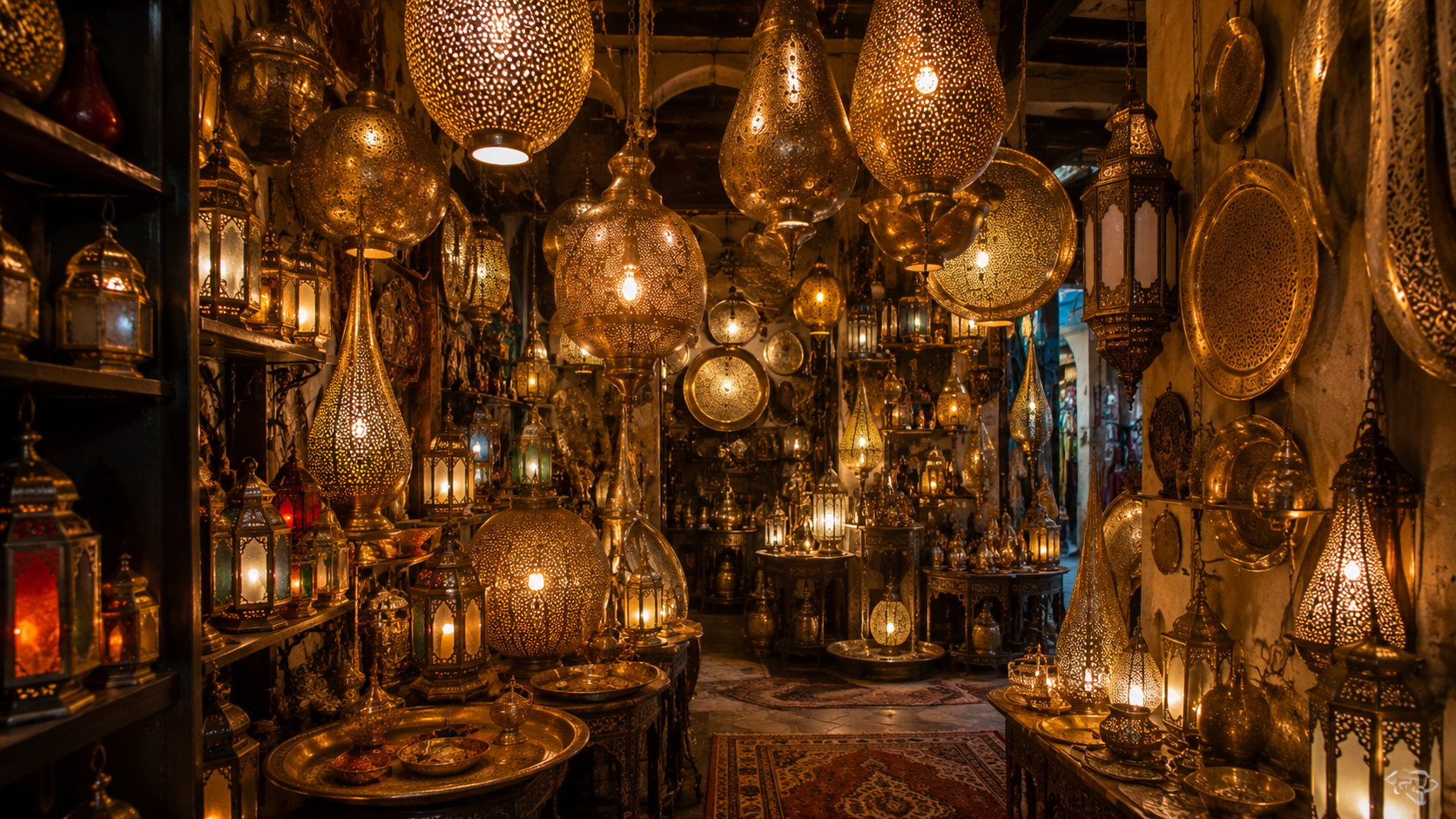
The souks of Marrakech spread across a large area north of Jemaa el-Fna, organized loosely by trade in a system that has existed for centuries. The central Souk Semmarine is the main artery, branching off into the spice market of Rahba Kedima, the blacksmiths alley of Souk Haddadine, the leather tanners at Souk Cherratine, and dozens of smaller passages.
Getting partially lost here is part of the experience, not a navigation failure. Carry a phone with maps downloaded offline before you enter, because cell service becomes patchy inside the narrow covered alleys. Have your accommodation’s address saved as a pin so you can find your way out when you are ready.
Bargaining is expected everywhere in the souks. The first price quoted is always the opening position. A general rule is to start at roughly half the asking price and settle somewhere in between. Do not feel pressured to buy anything during your first pass through a section. Walking away is a completely accepted part of the negotiation and often results in a better offer being called after you.
A crossbody bag worn across your front is the most practical option for souk navigation. You will be navigating narrow spaces, negotiating over items at eye level, and occasionally managing motorbikes that appear without warning. This anti theft crossbody bag on Amazon has a slash proof strap and lockable zips, which makes it practical for dense market environments like these.
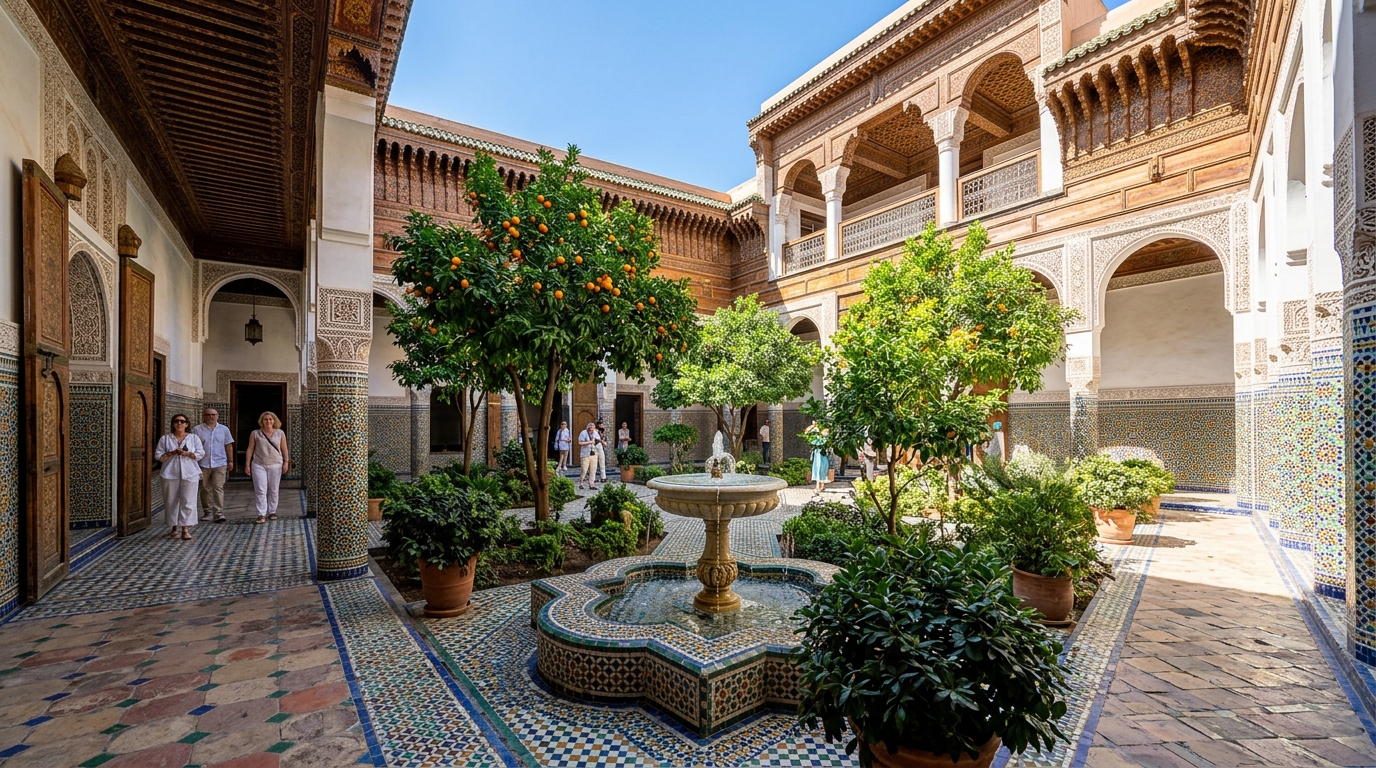
Ben Youssef Madrasa is an architectural marvel and Marrakech’s most important monument, a 14th century religious school that recently underwent a painstaking five year renovation. The rich zellij tiling, ancient cedarwood ceilings, and vine covered stuccowork have been brought back to stunning life.
The central courtyard, with a marble pool reflecting the carved stucco and cedarwood screens above, is one of the most beautiful interiors in all of Morocco. Entry costs around 50 dirhams for foreign visitors. Visiting in the final hour of the day gives you ambient lighting and fewer tour groups.
Built in the late 19th century, Bahia Palace is the finest example of traditional Moroccan palatial architecture in Marrakech. Its name means brilliance, and the interior delivers on that promise: eight hectares of zellij tilework, intricately carved cedarwood ceilings, and serene courtyard gardens that progress from intimate to palatial. Budget at least 45 minutes because the scale consistently surprises visitors.
Entry costs around 70 dirhams. Go in the morning before the organized tour groups arrive, since the palace gets noticeably busier by late morning.
Jardin Majorelle was originally designed by French painter Jacques Majorelle in the 1920s and later restored and preserved by Yves Saint Laurent, who fell in love with Marrakech on his first visit in 1966. The garden is famous for the striking cobalt blue of its buildings, known as Majorelle Blue, set against exotic plants including enormous cacti and bamboo groves.
The garden is incredibly popular, so booking your ticket and time slot online in advance is essential. Tickets sell out quickly. The attached Berber Museum inside the garden complex is excellent and included in the combined ticket, covering the history and material culture of Morocco’s Amazigh people.
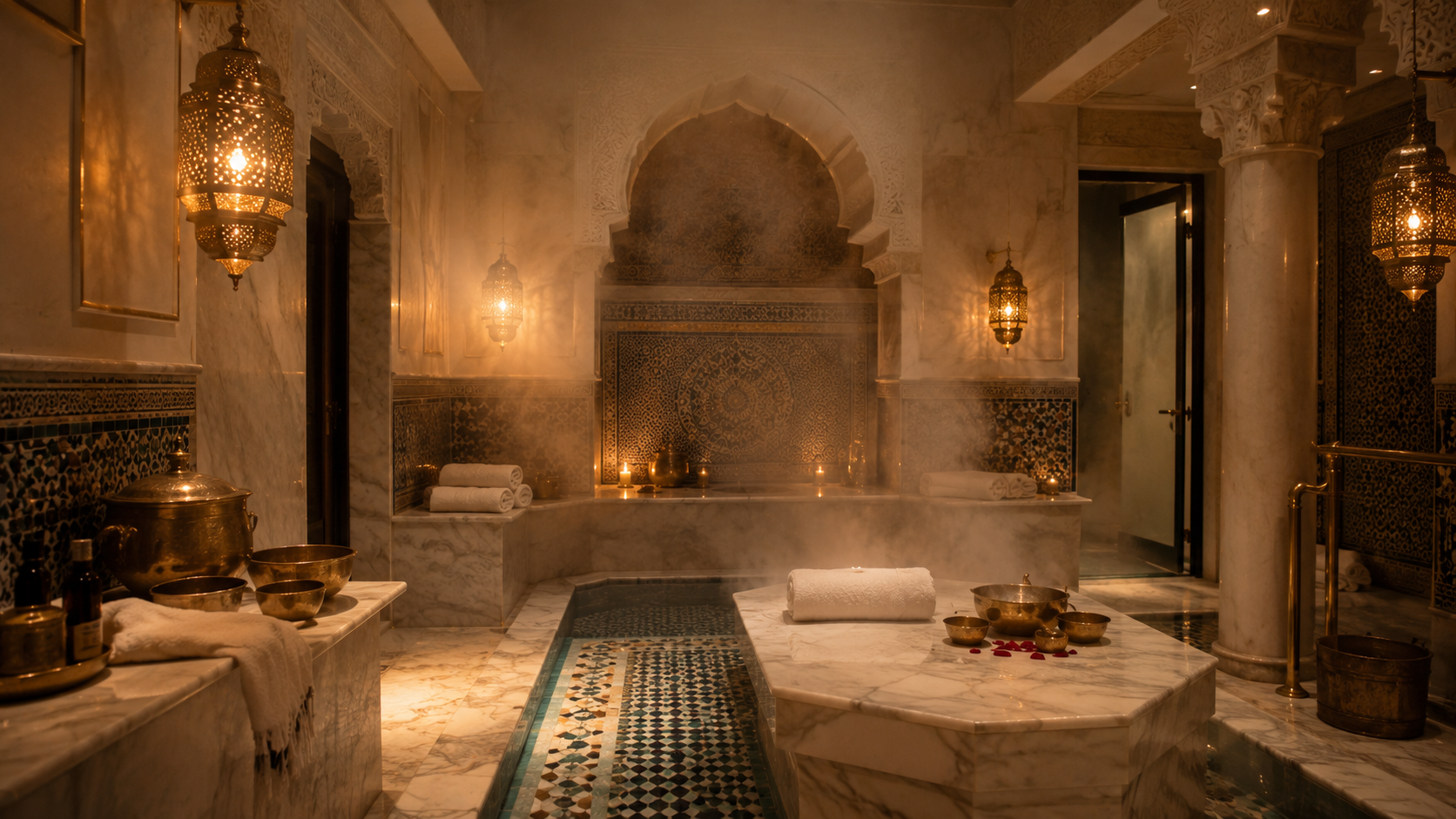
A Marrakech hammam is one of the most memorable experiences the city offers, particularly for women. The traditional sequence involves a steam room, exfoliation with a kessa mitt, black soap scrub, and a rinse. The result is skin that feels genuinely different from anything a regular shower achieves.
There are two distinct types available. Public neighbourhood hammams cost around 15 to 25 dirhams and offer the most authentic local experience, though they require some comfort with the process and usually involve separate women’s sessions at specific hours. Upscale hammam spas within riads and hotels cost 300 to 800 dirhams and offer the same core experience in a more polished environment with English speaking staff who walk you through every step.
For a first visit, a mid range hammam attached to a riad is the most approachable option. Les Bains de Marrakech and Hammam de la Rose are both well regarded and comfortable for first timers.
If the hammam experience in Marrakech leaves you wanting more of Europe’s spa and bathing culture, the best spa destinations in Europe for women covers a full range of thermal bath and hammam traditions from Budapest to Istanbul in detail.
The Saadian Tombs were hidden behind a sealed wall for over two centuries after being deliberately obscured by a rival sultan, and were only rediscovered in 1917 by French colonial aerial photography. The burial site contains the remains of over 60 members of the Saadi dynasty in a series of mausoleums covered in the same intricate zellij and carved plaster work that appears throughout the city’s historic monuments.
Entry costs around 70 dirhams. The site is small and visits are brief, about 20 to 30 minutes, but the combination of history and craftsmanship makes it worthwhile if you are spending more than two days in the medina.
Most guides mention scams exist. Few give you the specific scripts you actually need.
The fake guide: Someone approaches in the medina offering to help you find something, often claiming to work for a nearby hotel. They lead you through streets until you are disoriented, then demand payment. The response: politely but firmly decline any offer of directions from someone who approaches you unsolicited. If you are genuinely lost, step into a shop and ask the shopkeeper.
The henna trap: Already mentioned above, but worth repeating. Never let anyone put henna on your hands without agreeing a specific price first, ideally in writing or shown clearly on a phone.
The carpet shop invitation: Someone invites you in for tea with no sales pressure mentioned. Once inside, there is significant pressure to buy. You do not owe anyone a purchase for accepting tea. Walk out if you want to, politely.
The spice market guide: A man outside the spice market offers to show you around. He leads you inside and you end up buying spices at inflated prices because you feel obligated. Be firm when you say no and be prepared to say it a lot.
None of this means locals are not genuinely friendly, because many are. It means knowing the difference between someone who wants to connect and someone who wants to sell.
Do not drink the tap water or use it to brush your teeth. Avoid anything fresh including salads or even olives served in restaurants that could have been exposed to water. This catches many visitors off guard because restaurants look clean and modern. The issue is not hygiene but tap water quality, which is simply not reliably safe for visitors whose bodies are not acclimatized to it.
Drink bottled water throughout your stay. Stay hydrated actively, especially in summer or if you are walking the medina for hours. A reusable insulated bottle filled daily from sealed bottles works well and cuts down on plastic. This stainless steel insulated travel bottle on Amazon keeps water cold for hours in the Marrakech heat, which makes a genuine practical difference on long walking days.
Marrakech offers excellent value if you know where to spend and where not to.
Budget travelers can manage on 350 to 500 dirhams per day (roughly 35 to 50 USD), covering a simple riad or guesthouse, street food and local restaurant meals, and low cost or free attractions.
Mid range travelers should plan for 800 to 1,500 dirhams per day (roughly 80 to 150 USD), covering a comfortable riad with a rooftop terrace, sit down restaurant meals, entry fees for palaces and gardens, and one hammam session.
Luxury travelers staying at La Mamounia or Oberoi Marrakech should budget 3,000 dirhams per day and above.
Always carry cash. Most businesses will accept card payments, but market stalls in the souks and food stalls will not. ATMs are available throughout the city and give better rates than airport exchange.
Most first time visitors to Marrakech stay in a riad, a traditional Moroccan house built around a central courtyard, often with a rooftop terrace. The architecture and atmosphere are genuinely unlike any hotel experience and staying in a riad puts you in the heart of the medina rather than outside it.
The trade off is that medina riads can be difficult to find. Addresses are vague, alleys look identical, and even taxi drivers sometimes cannot find specific riads. Most properties send a staff member to meet guests at an agreed landmark. Factor this into your arrival plan, particularly if arriving late at night.
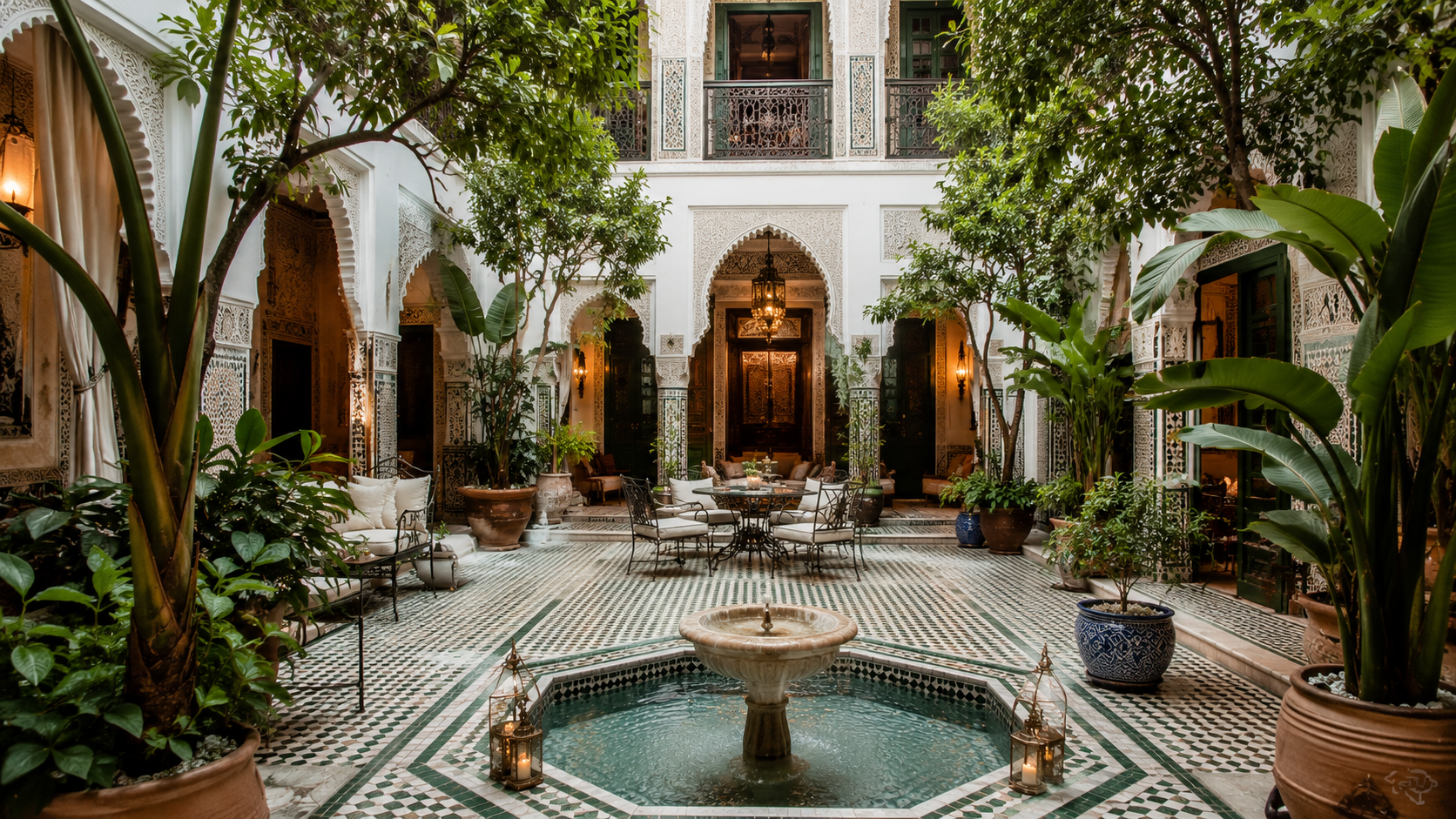
Hotels in the Gueliz neighborhood outside the medina walls offer easier navigation, familiar formats, and slightly lower prices, but you lose the immersive medina atmosphere that makes Marrakech so distinctive. For a first visit, staying in the medina in a riad, even for just part of your stay, is worth the extra effort.
The Ourika Valley, about an hour south of Marrakech, takes you from the dust and noise of the city into green mountain valleys with Berber villages, terraced fields, and a series of waterfalls at the top of the valley above the village of Setti Fadma. The contrast from the medina is dramatic and the drive through the Atlas foothills passes some genuinely beautiful scenery.
Organized day trips from Marrakech to Ourika and Imlil (the starting point for Atlas Mountain trekking) are widely available and work out cheaper than private taxis for solo travelers.
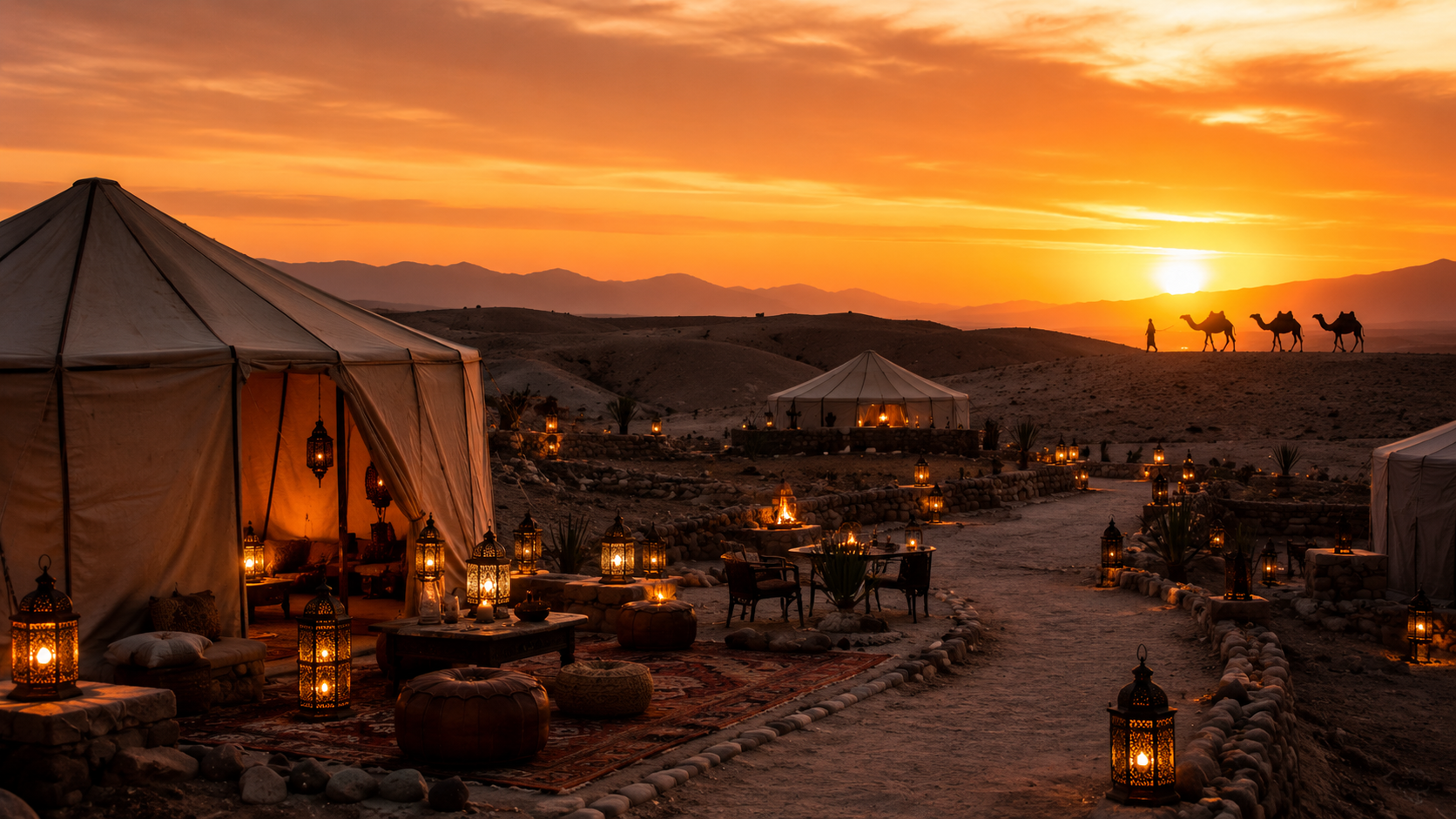
The Agafay Desert is a rocky, semi arid plateau about 40 minutes from Marrakech that offers a desert experience without the three to four hour drive to the Sahara proper. Sunset camel rides, glamping under the stars, and quad biking are all available here and work well as half day or overnight trips from the city.
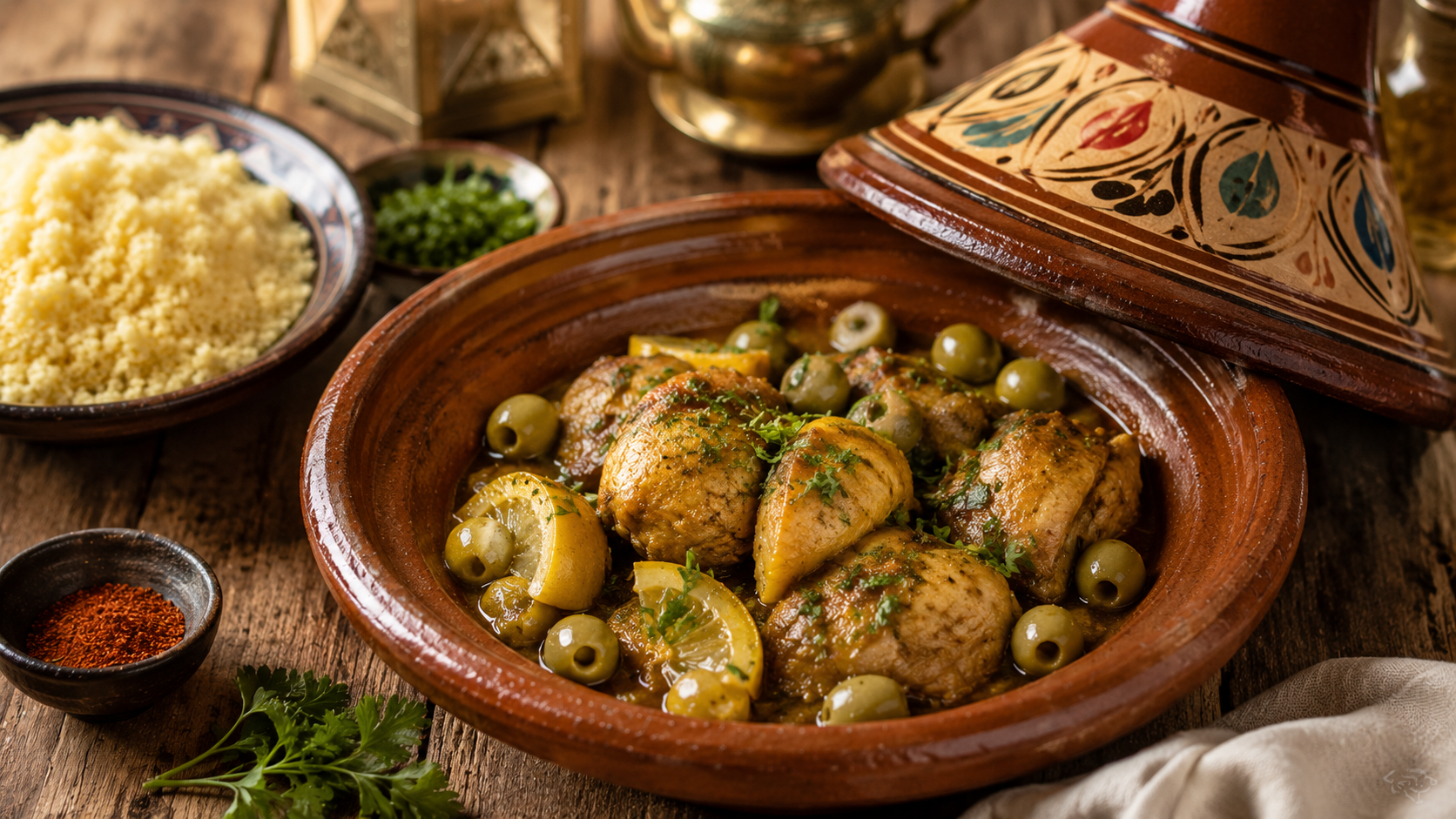
Tagine is the dish most associated with Morocco internationally, and the version served in a proper Moroccan restaurant or a riad kitchen, slow cooked in a clay vessel over charcoal with preserved lemon, olives, and herbs, is genuinely extraordinary. Avoid tagine from the tourist focused stalls around Jemaa el-Fna and look instead for a small neighbourhood restaurant or a cooking class setting.
Couscous is traditionally served on Fridays across Morocco and the best versions are found in family run restaurants rather than tourist spots.
Pastilla is a sweet and savory pie made from layers of thin pastry filled with chicken or pigeon, almonds, and spices, dusted with cinnamon and powdered sugar. It sounds unusual and tastes extraordinary.
Mint tea is served everywhere, always hot, always sweet, and poured from height to create a froth. Accepting a glass of tea at a shop or riad is a gesture of hospitality. There is no obligation to buy anything as a result, despite what some shop owners imply.
Is Marrakech safe for solo female travelers?
Yes, with preparation. The medina can feel intense and persistent sales approaches are common. Having clear, confident responses ready, knowing what to decline, and using reputable taxis or apps like inDrive for transport makes the experience comfortable.
How many days do you need in Marrakech?
Three to four days is ideal. Two days is possible for the main highlights. Five or more days allows day trips to the Atlas Mountains, Agafay Desert, or Essaouira.
What is the best time to visit Marrakech?
March through May and September through November offer the most pleasant conditions. October is widely considered the best single month.
What currency is used in Marrakech?
The Moroccan Dirham (MAD). Cards are accepted at hotels and larger restaurants but cash is essential for the souks, street food, and smaller guesthouses. Withdraw dirhams from ATMs in the city rather than exchanging currency at the airport.
Do I need to cover my head in Marrakech?
No, head covering is not required for visitors. Covering shoulders and knees in the medina is respectful and practical, but head covering is a personal choice rather than a requirement.
Can you drink alcohol in Marrakech?
Alcohol is available at licensed hotels, upscale restaurants, and some rooftop bars but is not served in the medina’s traditional cafes and smaller restaurants. It is not publicly visible in the way it is across Europe.
What is a riad?
A riad is a traditional Moroccan house or palace built around a central interior courtyard, usually with a fountain and garden. Most now operate as boutique guesthouses and offer some of the most atmospheric accommodation in the city.
Marrakech is not a passive destination. It asks something of you. The willingness to navigate streets without a clear plan. The patience to sit with a glass of tea and let the city move at its own pace. The openness to an experience that operates by completely different rules from anywhere you have been before.
Come prepared with the practical details in this guide and then let go of the rest. The best moments in Marrakech are always the unplanned ones.