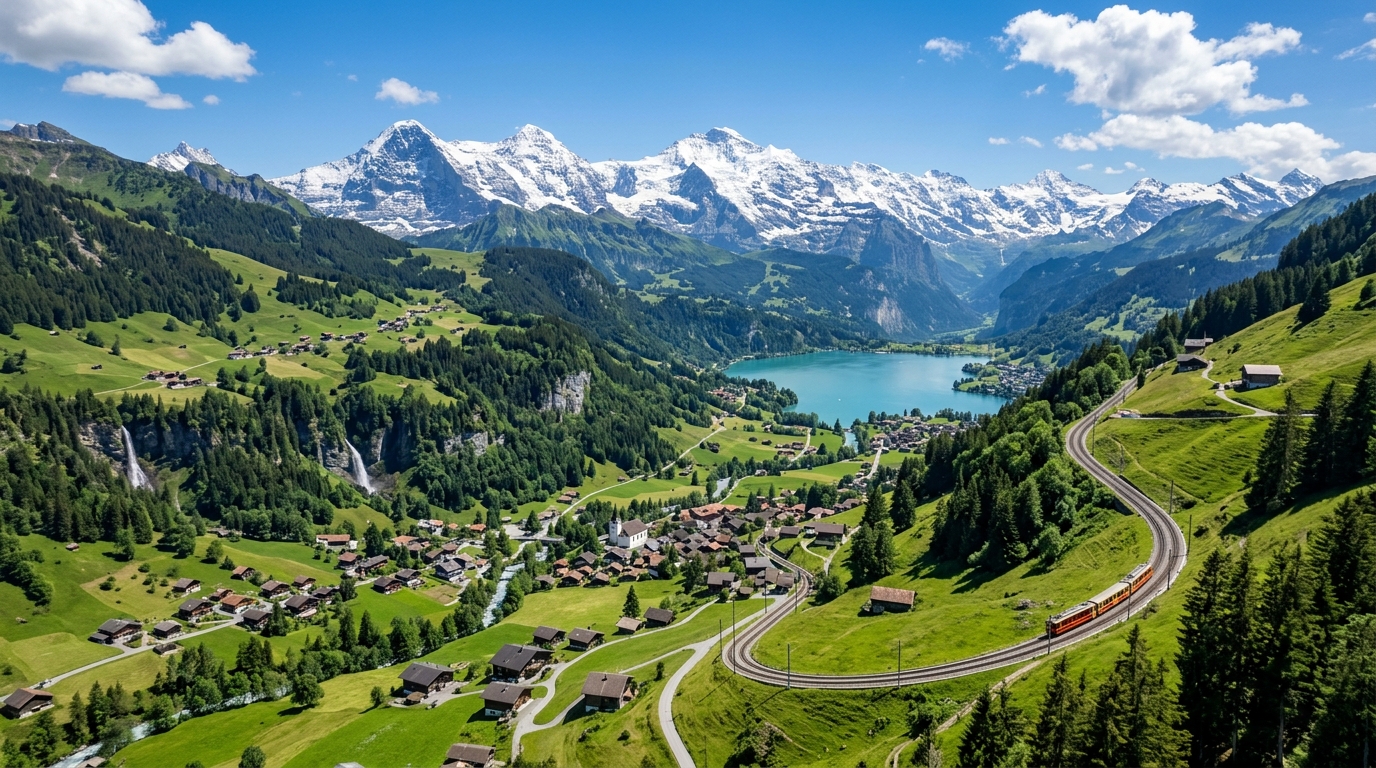
This guide focuses on the experiences that are genuinely worth the effort and the cost, with honest information about what makes Switzerland different from every other Alpine destination.
Switzerland is expensive. Not just “a bit more than average” but genuinely, consistently the most expensive country most travelers will visit in Europe. A coffee costs around 5 to 6 Swiss Francs. A sit down lunch at a mid range restaurant runs 25 to 40 Francs per person. Train tickets add up fast.
The good news is that the Swiss Travel Pass makes a significant difference if you are spending more than a few days here. It covers unlimited train, bus, and boat travel across the country, free entry to over 500 museums, and discounted rates on many mountain railways and cable cars. A 4 day pass costs around 250 Swiss Francs. Do the math against individual ticket prices before you go, because it often pays for itself within the first two days of a serious trip.
A compact packing cube set keeps your luggage organized through multiple village changes, which almost every Swiss Alps trip involves. This lightweight travel organizer set on Amazon is ideal for hopping between Zermatt, Interlaken, and Lucerne without repacking your entire bag each time.
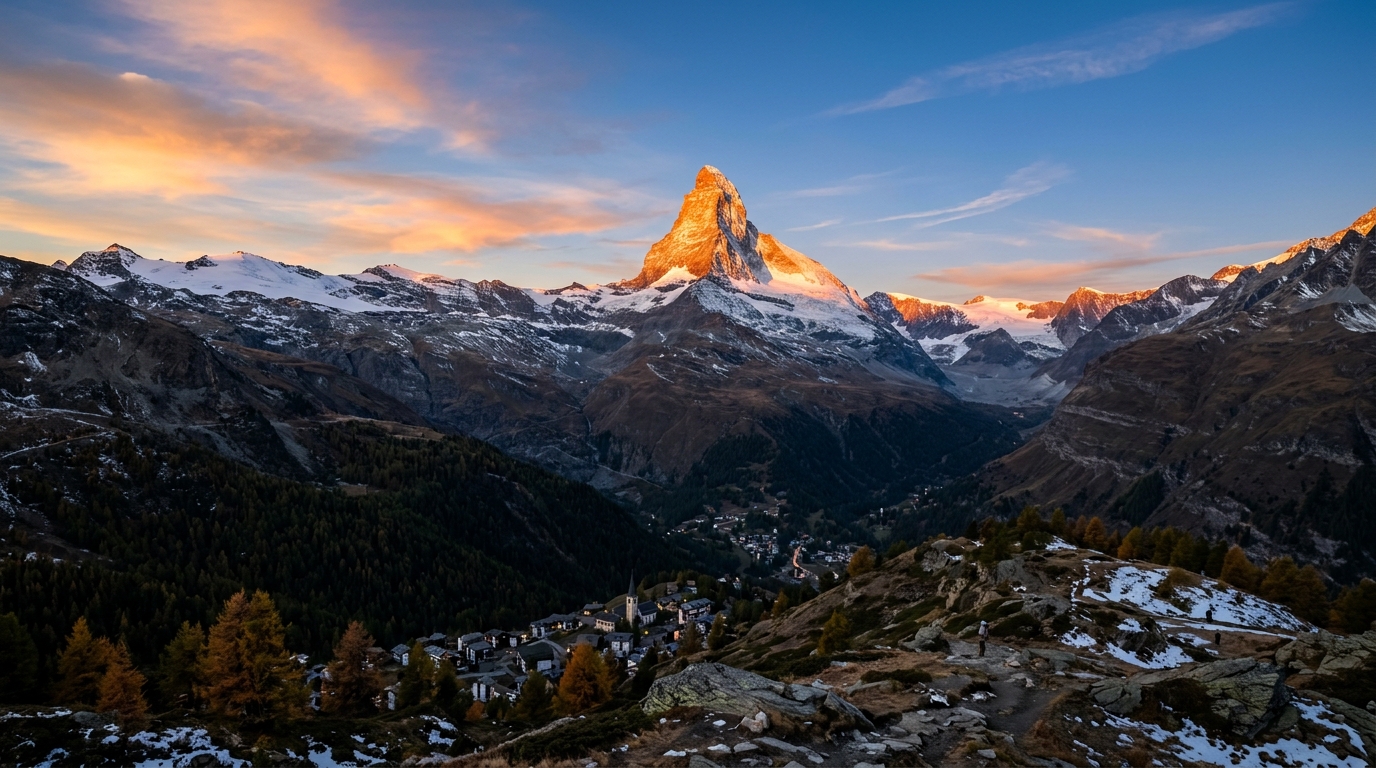
Zermatt is the most famous village in the Swiss Alps and the Matterhorn is the reason. The mountain, with its unmistakable asymmetric pyramid shape, rises to 4,478 meters on the Swiss Italian border and looms over the village in a way that is hard to prepare for, even when you have seen a thousand photos of it.
Zermatt itself is car free, which gives it a calm, almost pedestrianized feel despite being a major tourist destination. Electric taxis and horse drawn carriages are the only transport in the village streets.
The best views of the Matterhorn without hiking to a summit yourself come from two options. The Gornergrat Railway climbs to 3,089 meters and gives you a 360 degree panorama across 29 peaks above 4,000 meters, with the Matterhorn as the centerpiece. It is the highest open air rack railway in Europe and the journey itself is part of the experience.
Alternatively, take the gondola from Zermatt to Blauherd and hike the Five Lakes Walk, a relatively gentle trail that passes five alpine lakes reflecting the Matterhorn on a clear day. The reflection shots here are among the most photographed landscapes in the country.
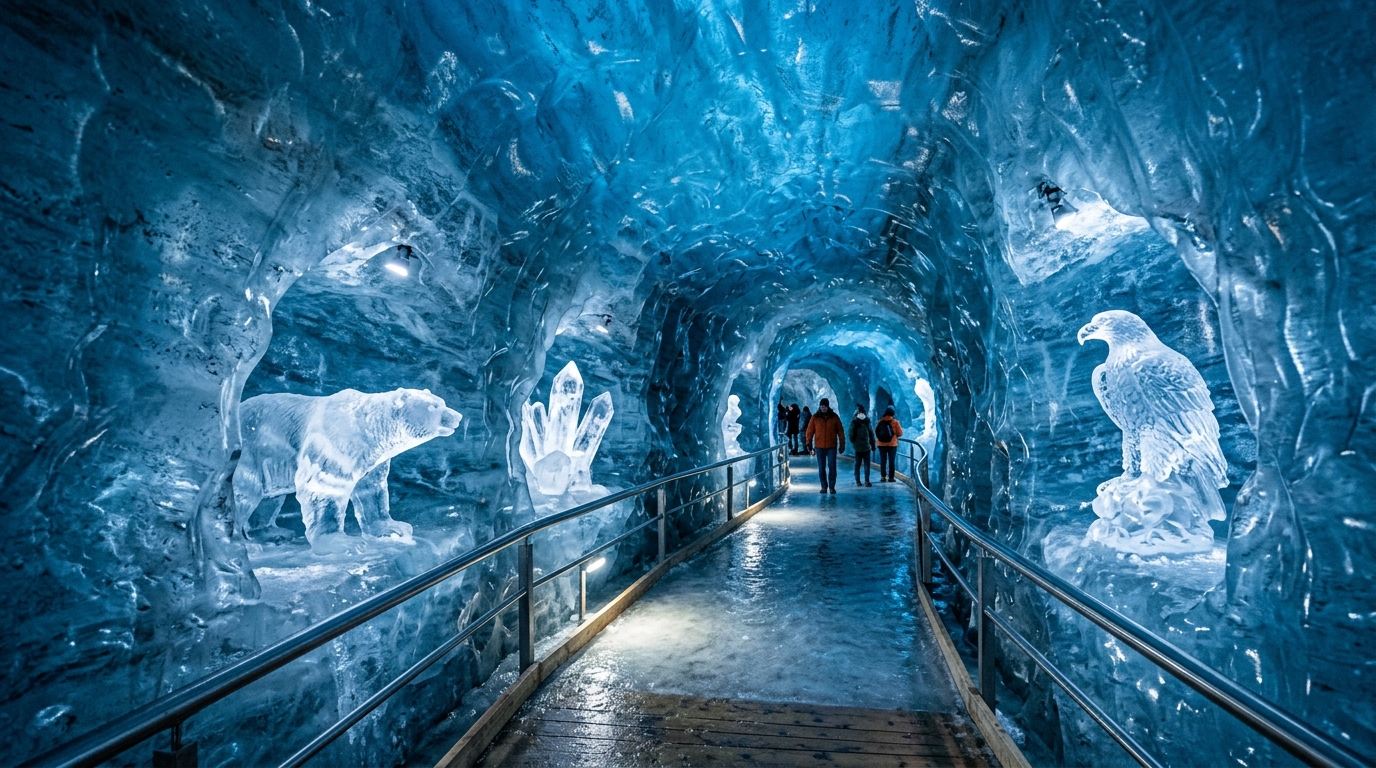
Jungfraujoch sits at 3,454 meters above sea level and holds the title of highest railway station in Europe. The journey there from Interlaken or Grindelwald is extraordinary in itself, climbing through a rack railway tunnel bored through the Eiger and Monch mountains before emerging onto the glacial plateau.
At the top you will find panoramic views across the Aletsch Glacier, the longest glacier in the Alps at over 23 kilometers, an Ice Palace carved into the glacier, and a research station that has been operating at this altitude for over a century.
Be honest with yourself about altitude before going. At 3,454 meters, some visitors experience headaches, dizziness, or breathlessness, even people who are fit and have no issues at lower elevations. Take your time on arrival, move slowly at first, and drink water.
The ticket price is significant, around 200 Swiss Francs for the full journey from Interlaken, but it is one of the most genuinely spectacular experiences in the Alps. Book in advance to secure your preferred departure time.
Lauterbrunnen is a valley in the Bernese Oberland that looks so dramatic most people assume it must be digitally enhanced in photos. A flat valley floor is flanked by sheer 300 meter cliffs on both sides, with 72 waterfalls pouring down the rock faces. The most famous is Staubbach Falls, visible right from the village, which drops 300 meters in a thin ribbon of mist.
The valley is the base for reaching Murren and Wengen, two mountain villages perched on the surrounding plateaus that are both car free and reachable only by cable car or rack railway. Murren has direct access to Schilthorn, the summit where the James Bond film On Her Majesty’s Secret Service was filmed, and where the revolving restaurant Piz Gloria still operates at the top.
Walking the valley floor between Lauterbrunnen village and Stechelberg takes about 90 minutes each way and keeps you alongside the waterfall cliffs the entire time. It is one of the best free things you can do anywhere in the Swiss Alps.
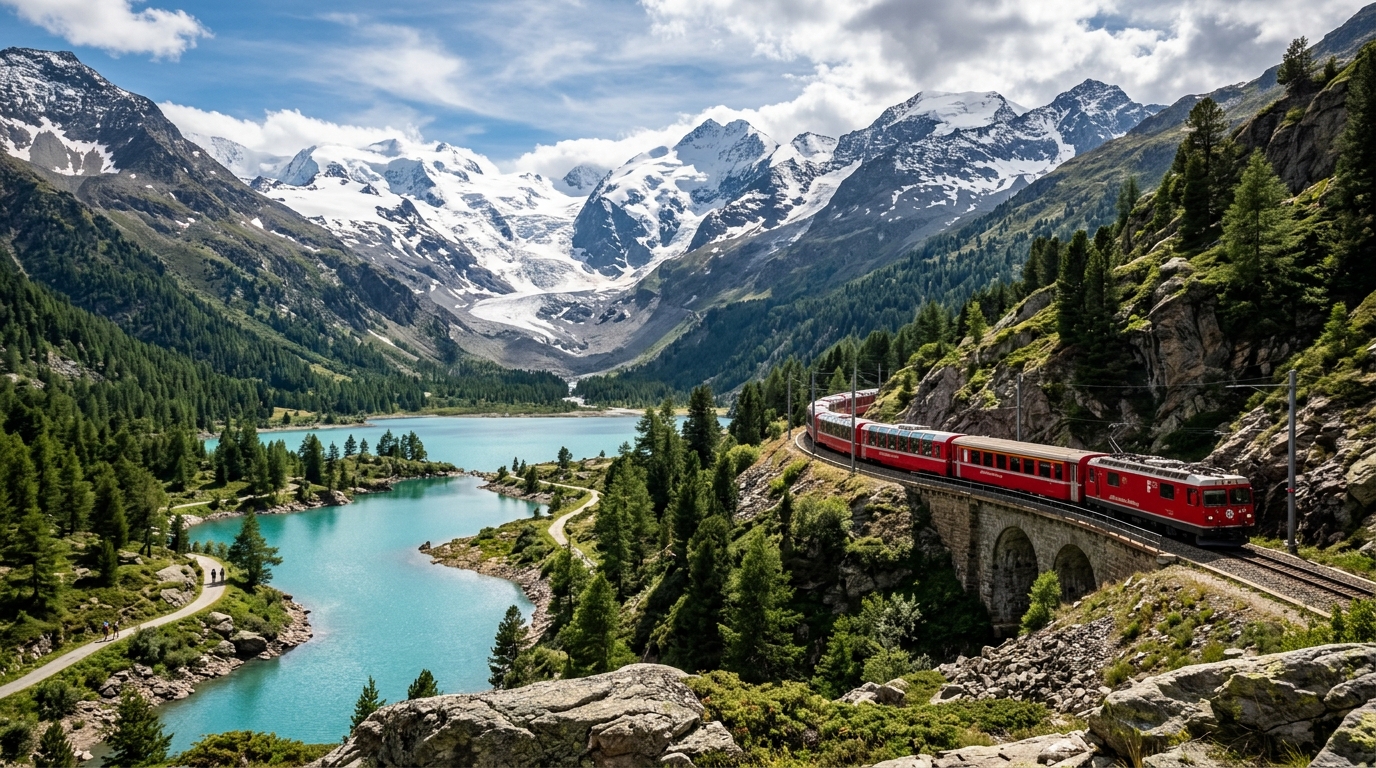
Switzerland’s train network is one of the engineering marvels of Europe, and several routes through the Alps have become destinations in their own right rather than just a way to get from A to B.
The Glacier Express runs between Zermatt and St. Moritz, covering 291 kilometers through deep valleys, over viaducts, and past alpine meadows over roughly 8 hours. The route passes through some of the most remote and beautiful terrain in Switzerland. You book a seat reservation in addition to your rail pass, and panoramic windows make the views visible without craning your neck.
The Bernina Express connects Chur to Tirano in Italy, crossing the Bernina Range at over 2,200 meters and passing through landscapes that change dramatically between the German speaking north and the Italian influenced south. The route is a UNESCO World Heritage Site. It is a shorter journey than the Glacier Express at around 4 hours but equally dramatic.
Both can be done as one way journeys combined with a return by a different route if you are building a circular trip across the country.
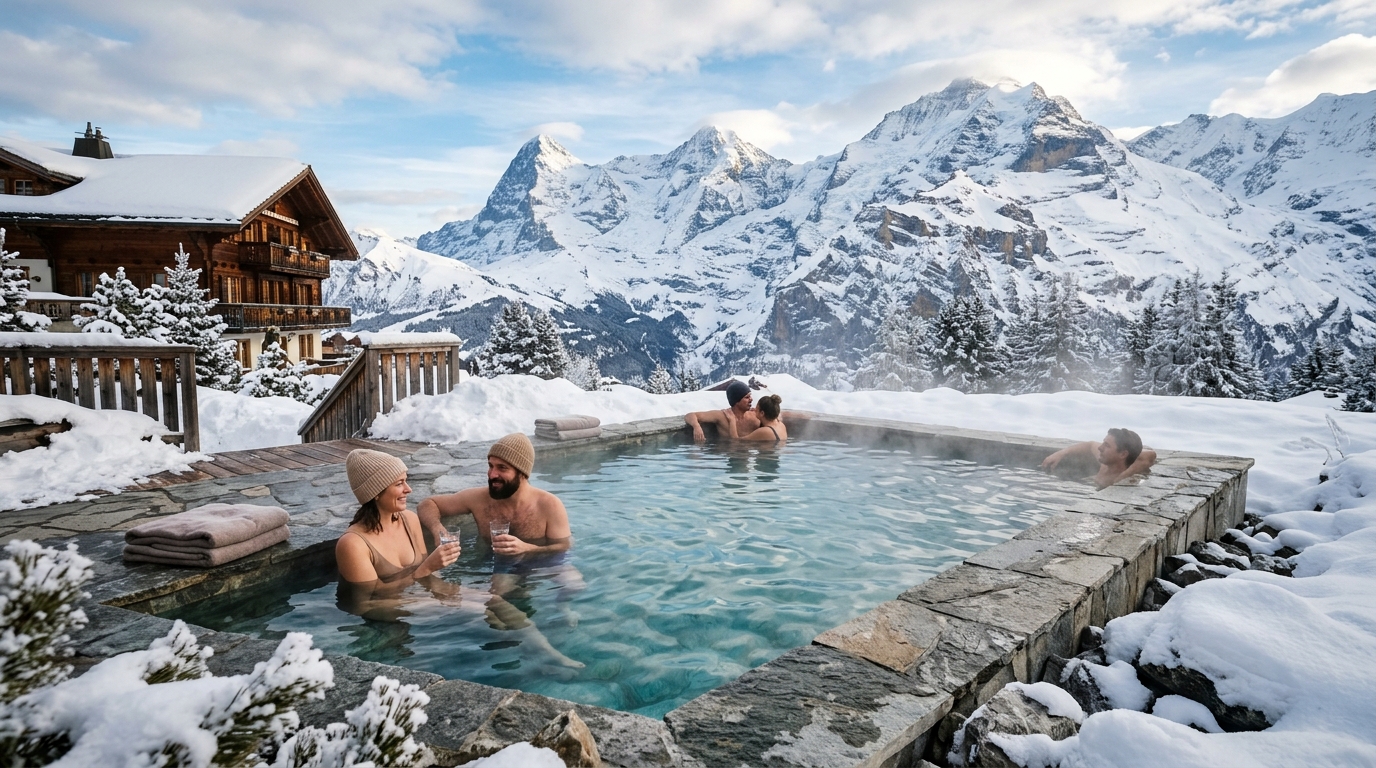
Leukerbad sits in the Valais canton at 1,411 meters and has been a thermal spa destination since Roman times. The natural spring water here reaches temperatures of up to 51 degrees Celsius before being cooled for bathing, and the main public baths include both indoor and outdoor pools with views directly up to the surrounding mountain walls.
The Burgerbad is the main public facility, with thermal pools, waterslides, and a spa area. The Alpentherme is the more upscale option, with an outdoor rooftop pool that overlooks the mountains and a series of Roman Irish bath experiences.
This is not a well known stop on the standard tourist circuit, which means it is noticeably less crowded than Zermatt or Interlaken and feels much more like something locals actually use. Reaching it requires either a car or a combination of rail and postal bus, both of which are covered by the Swiss Travel Pass.
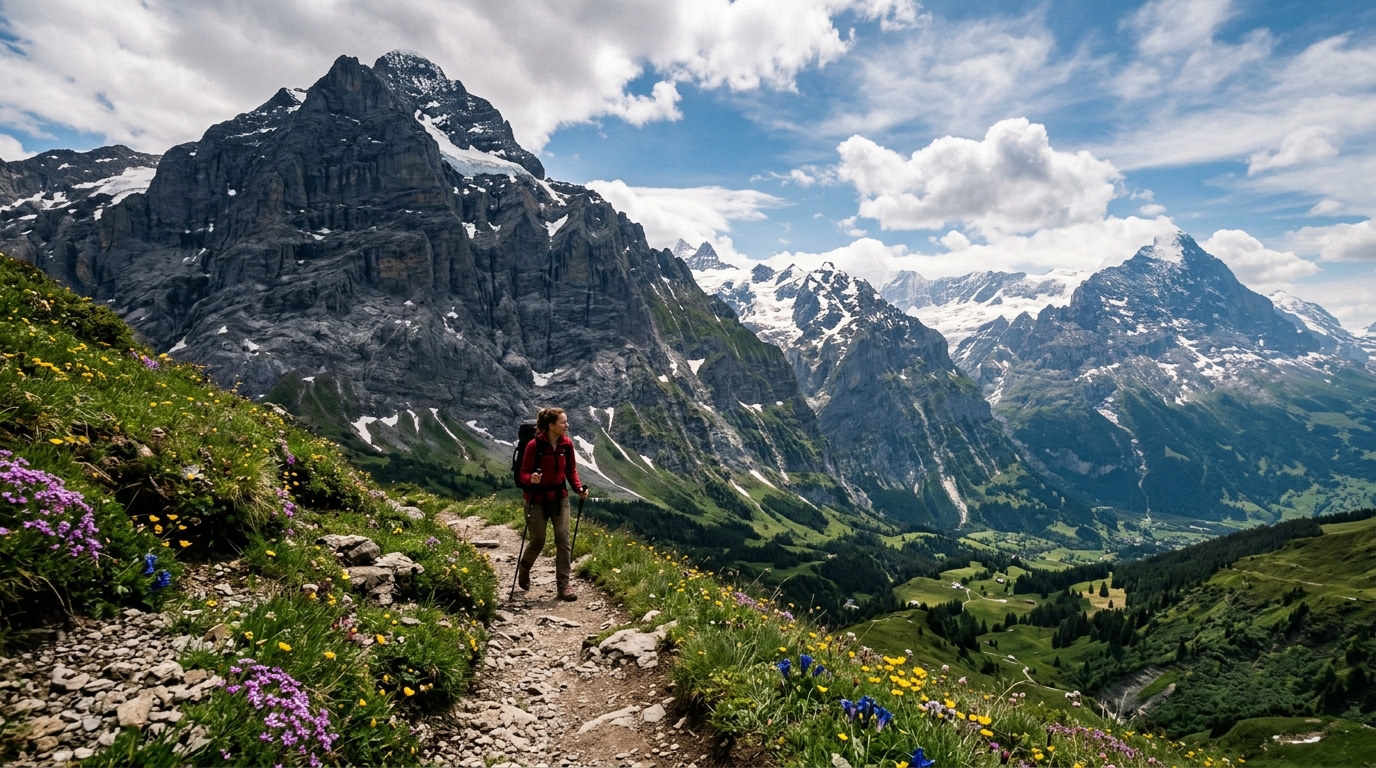
The Eiger’s north face is one of the most iconic and feared walls in mountaineering history, a 1,800 meter sheer face of limestone that claimed dozens of lives throughout the 20th century. You cannot climb it without serious alpine experience, but you can walk right alongside its base on the Eiger Trail.
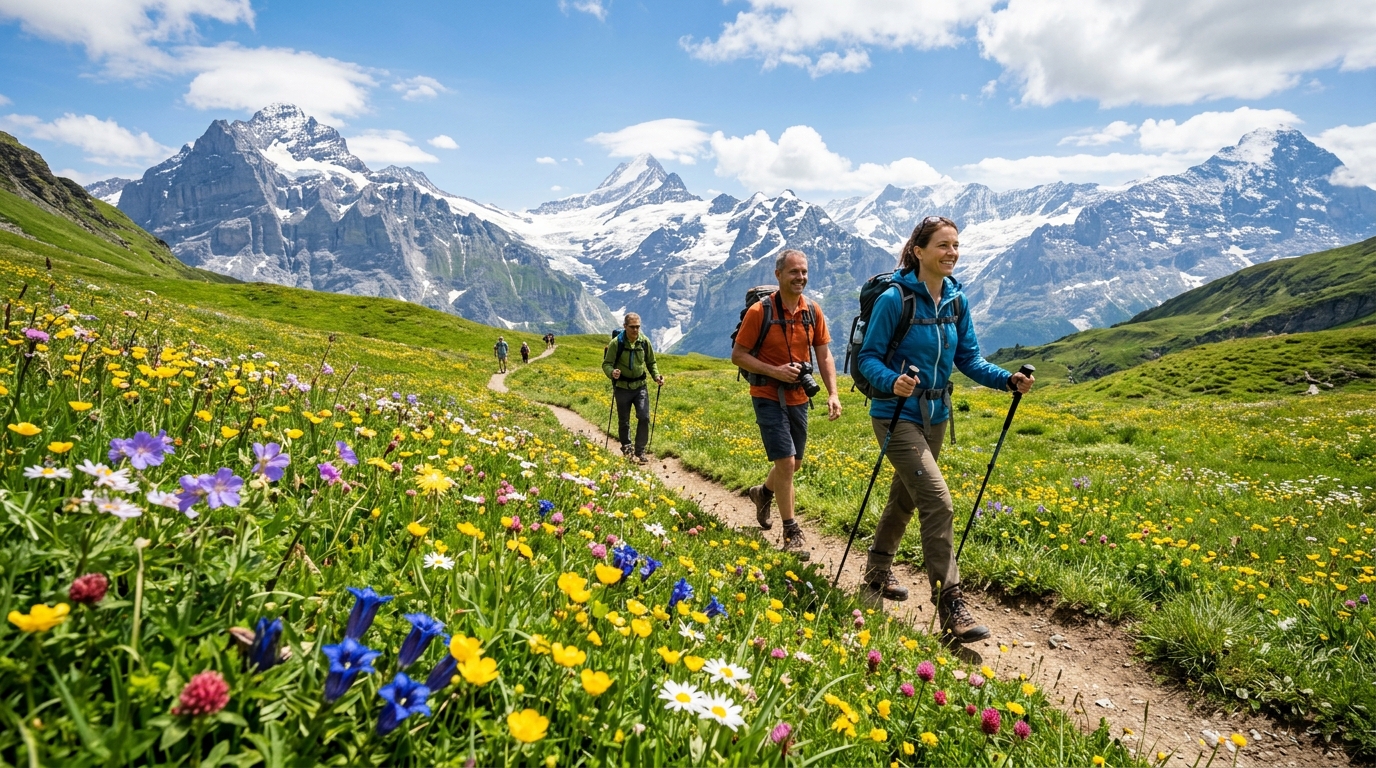
The trail runs from Eigergletscher station to Alpiglen, roughly 6 kilometers and around 2.5 hours at a comfortable pace. It stays close to the base of the north face the entire way, and the scale of the wall above you is unlike anything most hikers experience on a marked trail. The wildflower meadows and views toward Grindelwald in the valley below add to what is already a dramatic landscape.
The trail is rated moderate and does not require technical equipment, but proper walking shoes with grip matter on the rocky sections. This is one of the more accessible genuinely impressive Alpine hikes for non technical visitors.
Swiss food culture is deeply connected to alpine life, and eating fondue in the mountains rather than in a city restaurant is a genuinely different experience. Many mountain restaurants and huts above the cable car stations in Zermatt, Grindelwald, and Murren serve fondue made with local Gruyere and Vacherin cheeses, eaten with bread and small potatoes, with a local white wine alongside.
Raclette, where a wheel of cheese is melted and scraped onto potatoes and pickles, is equally worth trying and is arguably the more traditional mountain food. Both are heavy, warming, and perfectly suited to cold air and high elevation.
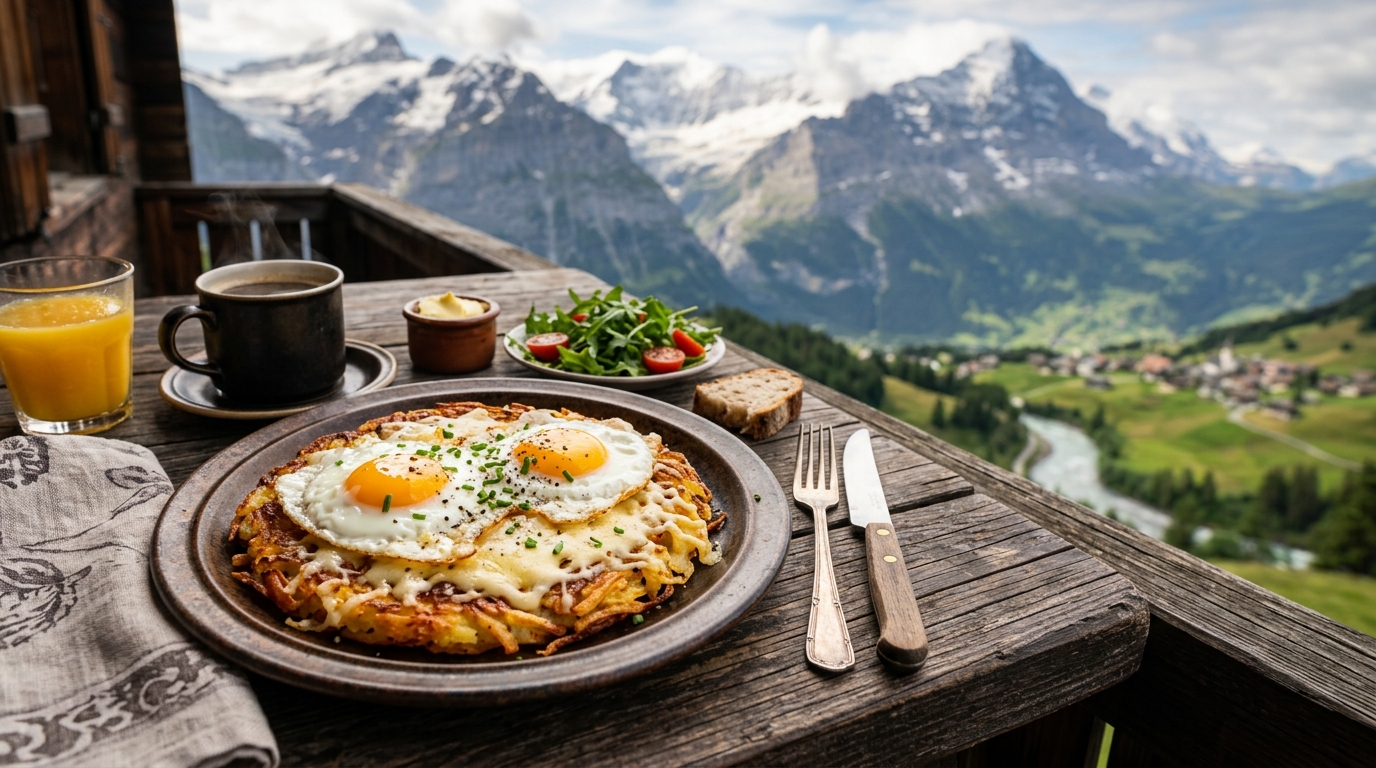
Rosti, a crispy fried potato cake often served alongside eggs or cheese, is the everyday local food that shows up at every level of restaurant from a mountain hut to a hotel breakfast. It is genuinely excellent and easy to find almost everywhere.
Most articles list activities without explaining where to actually stay, and the Swiss Alps are large enough that this matters.
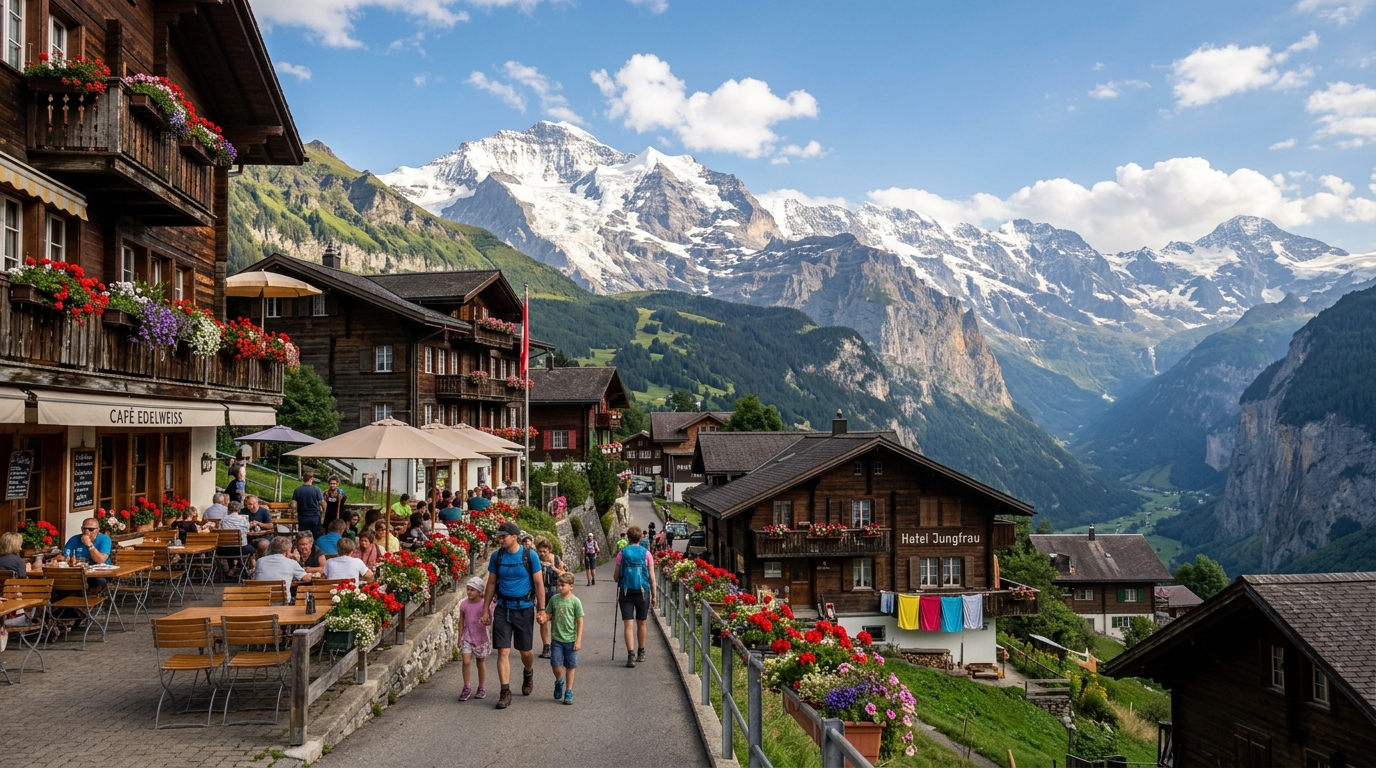
Interlaken is the most central base in the Bernese Oberland, with easy train access to Lauterbrunnen, Grindelwald, Jungfraujoch, and Bern. It is the most popular base for first timers and has the widest range of accommodation at different price points. It is also the busiest, with a very tourist heavy center.
Zermatt is the right choice if seeing the Matterhorn is your main priority. Everything here is oriented around the mountain, and the car free village has genuine charm even with significant tourist numbers.
Grindelwald is a good alternative to Interlaken with better mountain views right from the village, direct access to the Eiger Trail, and a slightly less commercial feel than central Interlaken, though still busy in peak season.
Lucerne is not technically in the Alps but sits at the base of Mount Pilatus and Rigi and gives easy access to Central Switzerland’s mountains while also offering a beautiful medieval lakeside city to explore.
Budget travelers spending carefully can manage on around 120 to 150 Swiss Francs per day, staying in hostels, self catering where possible, and choosing one or two major paid experiences like Jungfraujoch rather than all of them.
Mid range travelers should plan for 250 to 350 Francs per day, covering a comfortable three star hotel, two sit down meals, and transport including cable cars and scenic trains.
Luxury travelers at Zermatt or St. Moritz can spend 600 Francs per day and above without difficulty, with five star hotels, private guides, and helicopter transfers available at both destinations.
Summer (June to September) is for hiking, wildflowers, and mountain railways running full schedules. July and August are the busiest months. June and September offer fewer crowds with nearly identical weather.
Winter (December to March) is for skiing at Zermatt, Verbier, Davos, and St. Moritz, with Zermatt offering year round skiing on the Matterhorn Glacier Paradise above 3,800 meters. The Christmas market in Montreux near Lake Geneva is one of the best in Europe.
Shoulder seasons (April to May and October to November) bring lower prices, but many cable cars and mountain railways close for maintenance, and snow can close higher hiking trails well into May.
A waterproof jacket is essential regardless of season. Alpine weather changes within minutes at elevation, and even a sunny July afternoon can turn cold and wet at 2,000 meters with no warning.
Download train timetables and offline maps before heading into the mountains. Cell service is inconsistent above certain elevations in some areas, and Swiss railway apps work better with cached timetables than live data in remote areas.
Most shops in smaller alpine villages close on Sundays. Stock up on snacks and supplies on Saturday if you are spending a Sunday in a smaller mountain town.
A good insulated water bottle keeps drinks cold during summer hikes or warm during winter days on the slopes. This double walled stainless steel bottle on Amazon holds temperature for hours and handles the bumps of being packed into a hiking daypack without leaking.
Tipping in Switzerland is not obligatory in the way it is in the US, but rounding up the bill or leaving a 5 to 10 percent tip is appreciated at sit down restaurants.
How many days do you need in the Swiss Alps?
Five to seven days covers the main highlights across one or two regions. For a broader trip including Zermatt, the Bernese Oberland, and a scenic train journey, plan for eight to ten days.
Is the Swiss Travel Pass worth buying?
Yes, for most visitors spending more than three or four days in Switzerland. It covers all standard train, bus, and boat travel and provides discounts on many mountain railways. Calculate your planned journeys against individual ticket prices to confirm.
When is the best time to visit the Swiss Alps?
June through September for hiking and outdoor activities. December through March for skiing. July and August are the busiest and most expensive months.
Is Switzerland safe for solo female travelers?
Switzerland is consistently ranked among the safest countries in the world for travelers of all kinds. Solo female travel here, both in cities and mountain villages, is comfortable and well supported by the excellent public transport network.
What is the most famous mountain in the Swiss Alps?
The Matterhorn, rising to 4,478 meters above Zermatt, is the most recognized mountain in Switzerland and one of the most photographed peaks in the world.
What is Jungfraujoch and is it worth visiting?
Jungfraujoch is the highest railway station in Europe at 3,454 meters. The journey there and the views of the Aletsch Glacier from the top make it one of the most impressive experiences in the Alps. It is expensive but genuinely worth it on a clear day.
Do I need to speak German to visit the Swiss Alps?
No. English is widely spoken across the tourist areas of the Swiss Alps, including Zermatt, Interlaken, Grindelwald, and Lucerne. Switzerland has four official languages, but visitors rarely encounter a language barrier in mountain towns.
The Swiss Alps reward visitors who slow down. Spending three days in one valley or village almost always produces a better trip than rushing between five regions in a week. The scenery is extraordinary everywhere, so the quality of your experience depends more on pace than on ticking off the maximum number of destinations.
Pick one or two regions, use the train network to explore from a single base, and leave room in your schedule for a morning hike you did not plan or a meal that runs three hours because the view from the terrace is too good to leave. That is when the Swiss Alps stop being a bucket list and start feeling like somewhere you actually know.