
This guide covers the most famous beaches in Croatia, how to actually get to each one, what to expect when you arrive, and the lesser known spots most guides skip entirely.
A quick note before diving in: Croatian beaches are almost all pebble or rock, not sand. Pack accordingly. Water shoes are not optional here, they are essential, since walking into the sea over smooth but sometimes sharp pebbles barefoot gets uncomfortable fast. These quick dry water shoes on Amazon are a practical pick that work on rocky shores and pack down small in a beach bag.
Timing matters more in Croatia than almost anywhere else in the Mediterranean, because the difference between peak season and shoulder season is dramatic.
July and August bring the warmest water and the most reliable sunshine, but also extreme crowds, expensive parking, fully booked accommodation, and beaches where finding towel space is a genuine challenge, especially at famous spots like Zlatni Rat.
June and September are the sweet spot. The water is still warm, the weather is reliably good, and the crowds thin out considerably compared to peak summer. Many experienced Croatia travelers consider September the best month of the year to visit.
May and October offer beautiful scenery and far fewer people, though the sea can feel noticeably cooler, especially for swimming rather than just wading.
If your schedule is flexible, lean toward the second half of June or the first half of September. You get nearly identical weather to peak summer with a fraction of the crowds.
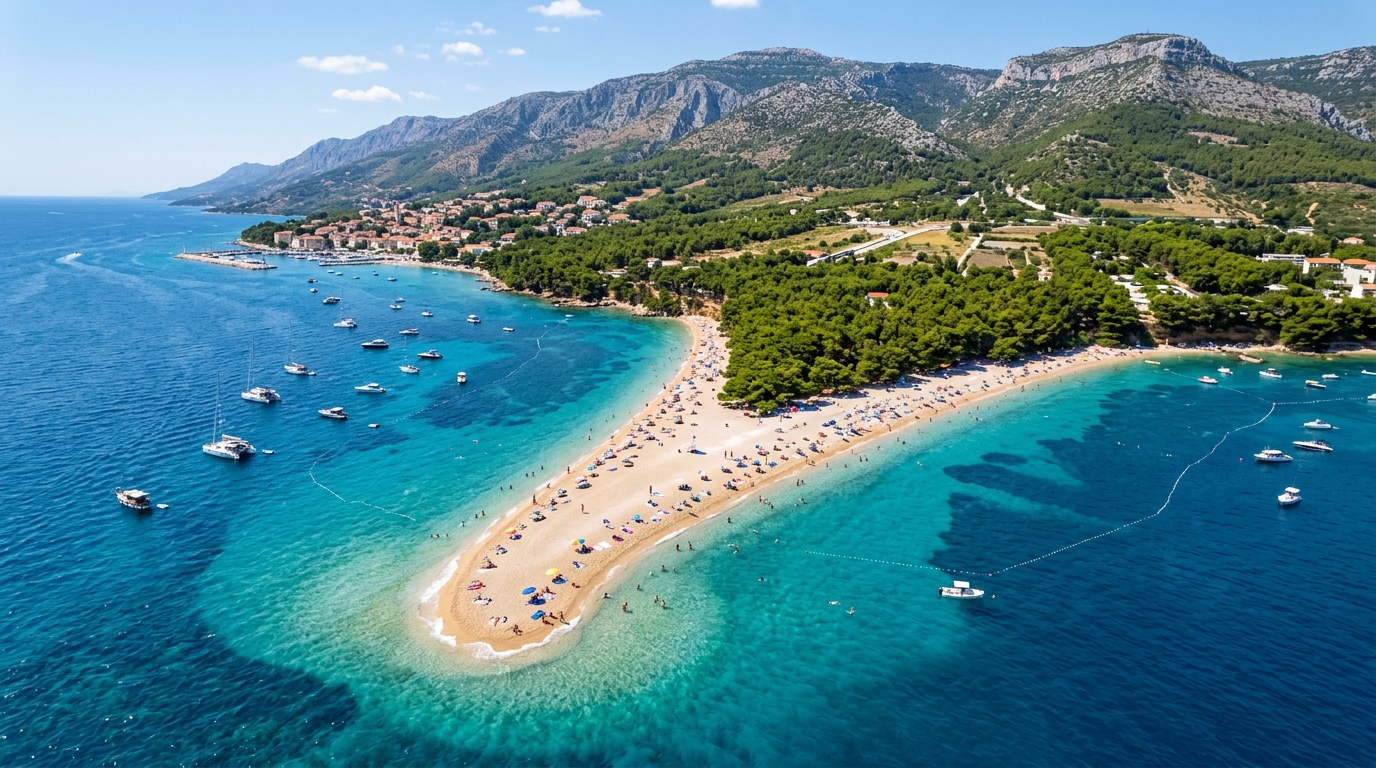
Zlatni Rat is Croatia’s most photographed beach, and the reason becomes obvious the moment you see it. The beach extends out into the Adriatic like a narrow tongue of pale pebbles, and its tip actually shifts slightly over time depending on wind and current, which means the exact shape you see in photos is never quite permanent.
The setting is dramatic. Pine forest backs onto the beach for shade, and a rocky peak called Vidova Gora rises behind it, the highest point in the Adriatic islands at 778 meters, with hiking trails leading up for a panoramic view down onto the beach below.
Getting there: Take a ferry or catamaran from Split to the town of Bol on Brač Island, then walk or take a short taxi ride to the beach itself, about a mile along a shaded coastal path.
What to expect: This is one of the most visited beaches in Croatia and it shows in peak summer. The wind here, called the maestral, makes it a major windsurfing and kitesurfing destination, with several operators renting equipment on site. Arrive in the morning or late afternoon, both for better light and to avoid the strongest winds and the biggest crowds.
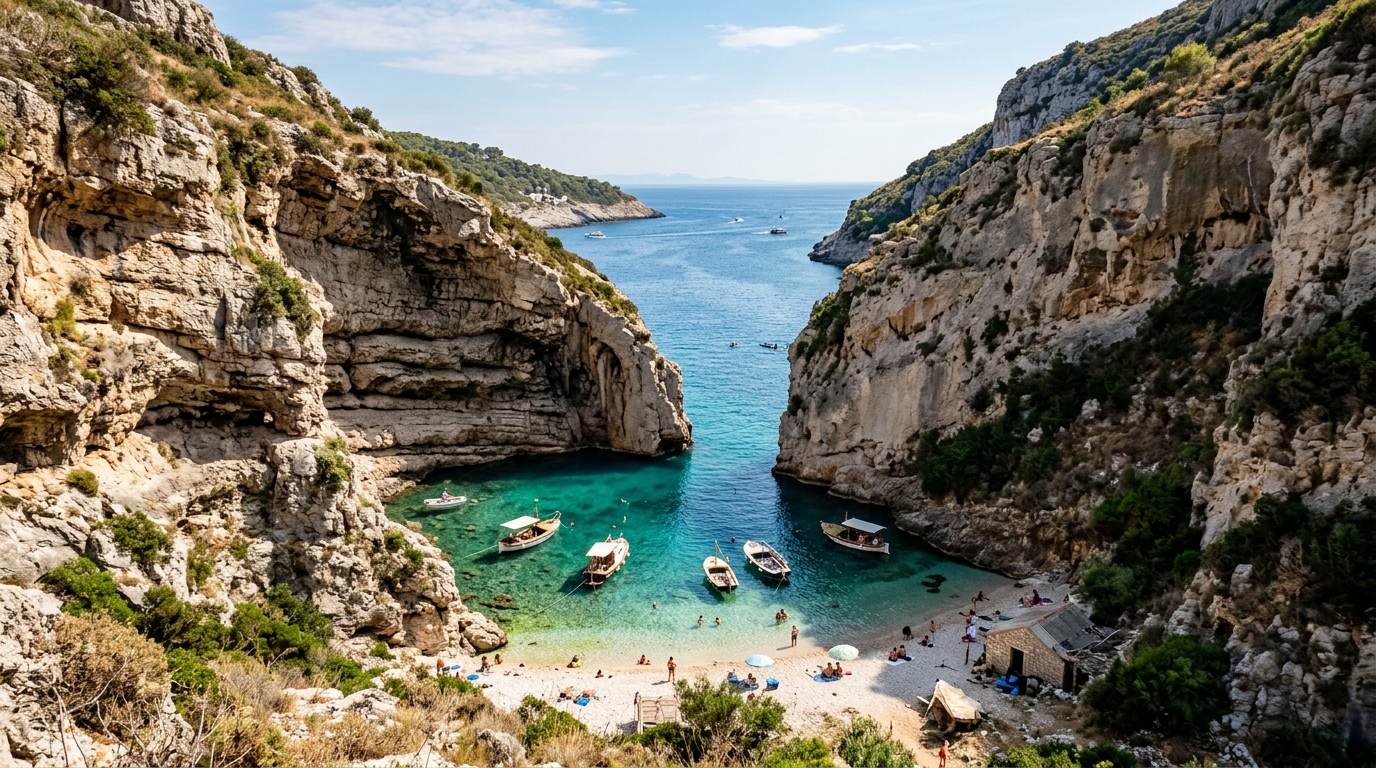
Stiniva is the cove that shows up in nearly every “most beautiful beach in the world” list, and it earns the reputation. A narrow gap in tall limestone cliffs opens into a small, almost perfectly enclosed bay with bright turquoise water.
Getting there: This is genuinely the hardest beach on this list to access, and that difficulty is part of what keeps it special. You can hike down a steep, rocky path from the village of Žužece, which takes around 30 minutes and is not suitable for anyone with mobility concerns or small children. The easier alternative is arriving by boat, either on an organized tour from Vis Town or Komiža, or by chartering a smaller boat directly.
What to expect: Because access is genuinely difficult, Stiniva never gets as crowded as Zlatni Rat, even in August. That said, midday in peak summer still brings a steady stream of boats anchoring just offshore. Early morning or boat arrival before 10am gives you the best chance of having it relatively quiet.
Dubovica is a small bay backed by an old stone farmhouse and olive groves, with calm, shallow water that makes it one of the more family friendly beaches on this list despite its remote feel.
Getting there: A short, well marked walking path leads down from the main road between Hvar Town and Stari Grad. Driving here yourself with a rental car is the most practical option, since the road is not well served by public buses.
What to expect: Smaller and quieter than Zlatni Rat or the more famous Hvar Town beaches, with a beach bar in summer serving simple food and drinks under the olive trees.
For travelers basing themselves in Dubrovnik, Sveti Jakov is the best beach within easy reach of the Old Town, and one most first time visitors completely overlook in favor of the more central but far more crowded Banje Beach.
Getting there: About a 20 to 25 minute walk from the Old Town along the coastal path, or a short bus ride if you would rather skip the walk in summer heat.
What to expect: A view back toward the Old City walls and Lokrum Island that genuinely rivals anything you will see from inside Dubrovnik itself, with noticeably fewer crowds than the beaches right next to the historic center.
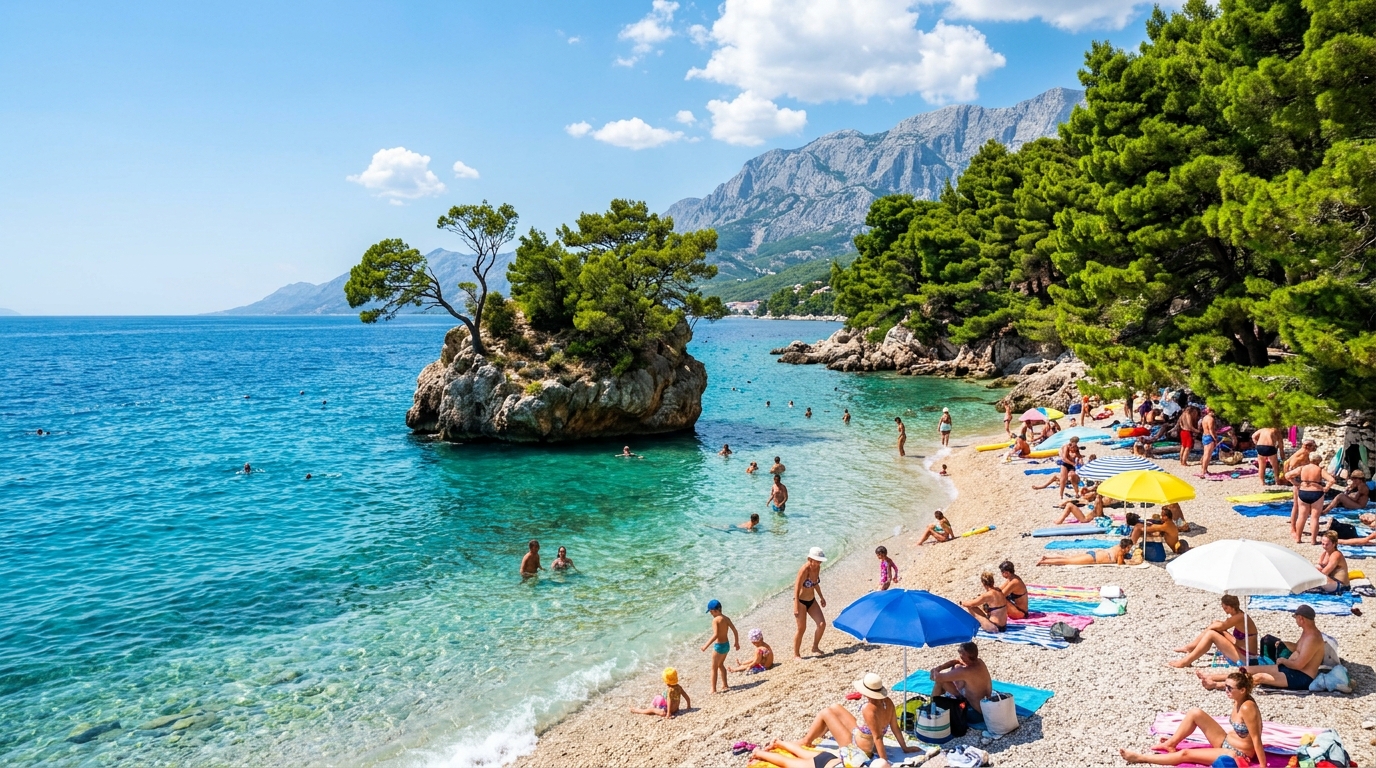
Punta Rata sits on the Makarska Riviera and regularly appears on global best beach rankings, not just Croatian ones. A large rock formation called Kamen Brela sits just offshore, and pine forest provides shade right up to the pebble shoreline.
Getting there: Brela is on the main coastal road and bus route between Split and Dubrovnik, making this one of the more accessible famous beaches on this list, no boat or difficult hike required.
What to expect: Long and relatively wide as Croatian beaches go, which means it absorbs crowds better than smaller coves like Stiniva or Dubovica, even during peak season.
Not to be confused with the more famous Stiniva, Mala Stiniva is a smaller, even more secluded cove also on Vis Island, surrounded by ancient limestone cliffs. Reaching it usually requires a boat, which keeps numbers low even in summer.
One of the rare genuinely sandy beaches in Croatia, Sakarun has shallow, warm, turquoise water that makes it an excellent choice for families or anyone who prefers sand underfoot over pebbles. It sits on Dugi Otok, reachable by ferry from Zadar, and remains far less visited than the Split or Dubrovnik area beaches simply because of the extra travel involved.
Zrće is the exception to every “quiet escape” entry on this list. It is Croatia’s party beach, lined with open air clubs that run all night during summer, drawing a young crowd from across Europe. If a beach club scene with electronic music and daytime pool parties sounds appealing, this is the destination. If you want quiet, skip it entirely.
Worth mentioning because so many people end up here by default, given its location directly below the Old Town walls. The view is genuinely spectacular, looking straight up at the fortifications. The trade off is steep prices for loungers and very heavy crowds in summer. Visit for the view, but consider Sveti Jakov instead if you actually want to swim and relax.
Most articles list beaches and mention “visit early” without explaining the actual logistics. Here is the practical version.
If you are staying overnight near a famous beach like Zlatni Rat or in Vis Town, you have a real advantage over day trippers, since you can be on the beach by 7:30 or 8am before the ferries and boat tours arrive. Day trip visitors from Split typically arrive between 10am and noon, so this early window is consistently quieter regardless of season.
For boat access beaches like Stiniva, booking the first morning tour rather than an afternoon slot makes a significant difference. Ask specifically when booking, since many tour operators offer both options at the same price.
Almost every Croatian beach is pebble or rock, not sand, and this catches first time visitors off guard more than anything else on this list.
Water shoes are essential, not optional, for comfortably walking into the water and standing while swimming. A proper beach towel that can handle uneven, sometimes damp pebble surfaces works better than a thin towel that slides around. A dry bag is genuinely useful for boat trip beaches like Stiniva, keeping your phone and wallet protected if you are getting in and out of small boats.
This packable dry bag on Amazon is a good lightweight option for boat excursions to harder to reach beaches, keeping electronics safe from sea spray.
Croatia is generally considered very safe for solo female travelers, including at beaches and on boat tours, but a few practical notes make the experience smoother.
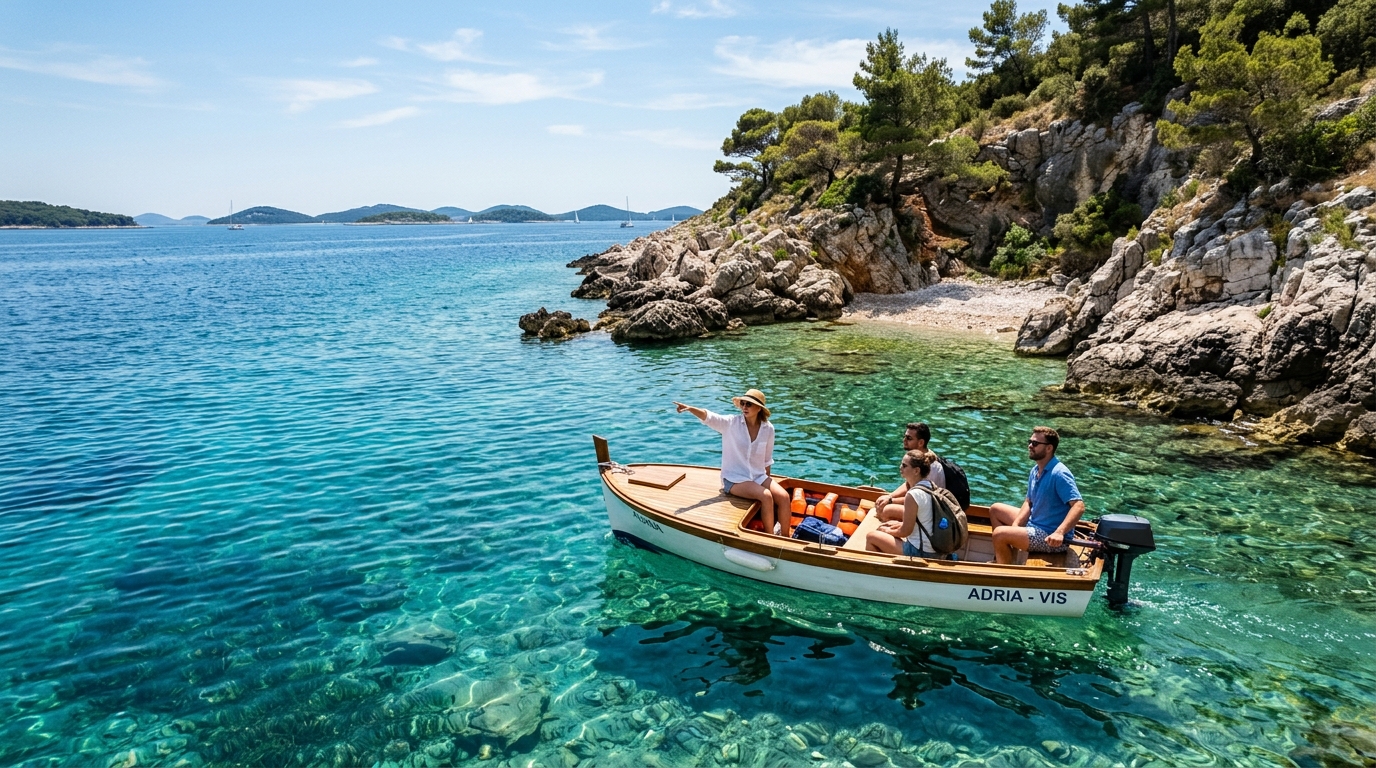
Organized boat tours to harder to reach beaches like Stiniva or Mala Stiniva are a good option for solo travelers specifically because they remove the need to navigate difficult terrain or hire a private boat alone. Group boat tours from Split, Hvar, or Vis Town are widely available, reasonably priced, and a comfortable way to see multiple beaches in one day.
Beach clubs and more remote coves are generally safe during the day, but as with anywhere, walking alone on isolated coastal paths after dark is not advisable. Most beach access paths, including the hike down to Stiniva, are far better and safer when attempted in daylight.
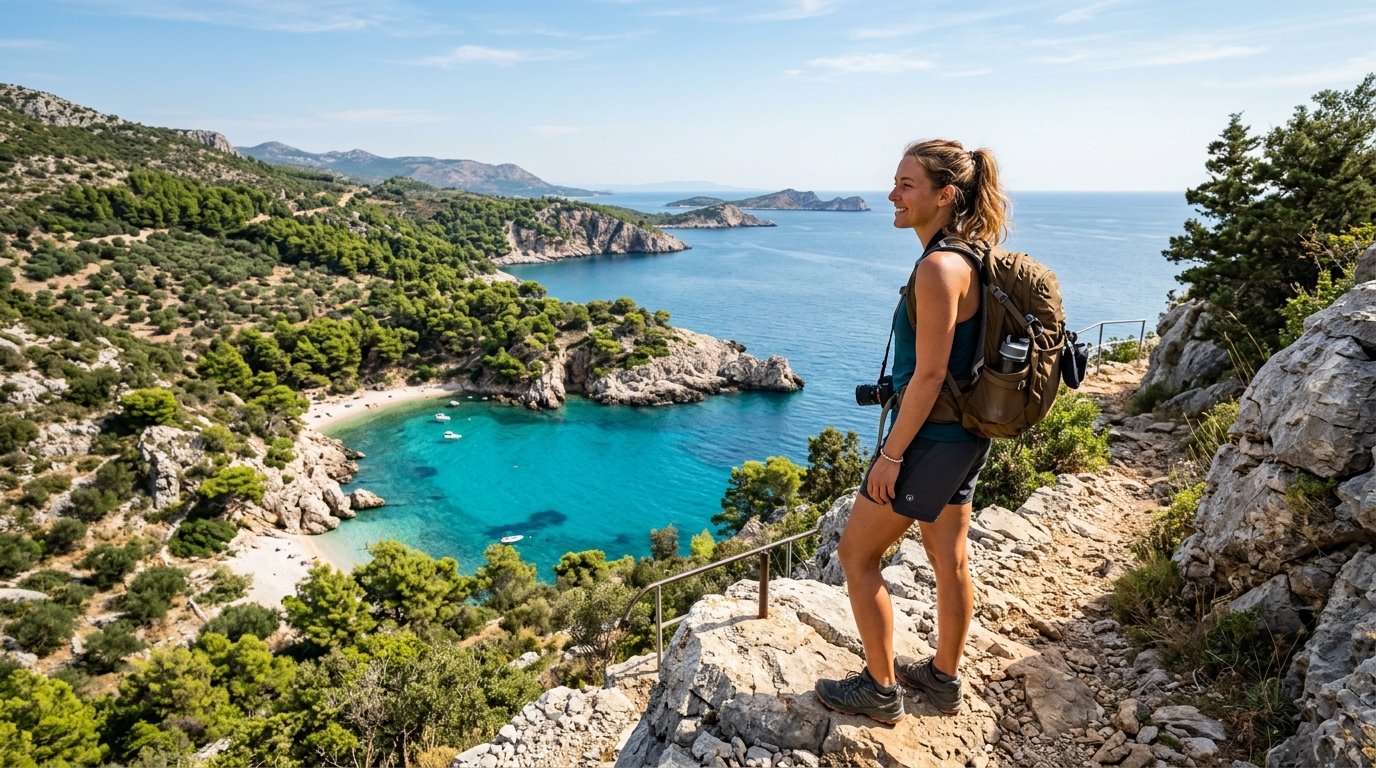
The combination of reflective water and pale pebbles in Croatia increases sun exposure beyond what most people expect, even compared to a typical sandy beach. Reapplying sunscreen more frequently than usual matters here, particularly on boat trips where shade is limited for hours at a stretch.
A reef safe sunscreen is worth prioritizing, both for the marine environment around protected coves like Stiniva and because Croatia’s waters are some of the cleanest in the Mediterranean. This reef safe SPF 50 sunscreen on Amazon holds up well during long days on the water and does not leave the heavy white residue some mineral formulas do.
Want the iconic photo and do not mind crowds: Zlatni Rat.
Want the most dramatic, secluded scenery and are comfortable with a boat trip or a steep hike: Stiniva.
Traveling with family and want sand instead of pebbles: Sakarun Beach.
Based in Dubrovnik and want a quieter alternative to Banje: Sveti Jakov.
Want nightlife and a party beach club atmosphere: Zrće Beach.
Easy access without a boat or long hike, but still a famous, beautiful beach: Punta Rata.
Want a quiet, romantic spot away from the main tourist trail: Dubovica.
What is the most beautiful beach in Croatia? Zlatni Rat and Stiniva are most frequently named the most beautiful beaches in Croatia. Zlatni Rat is famous for its unique shifting tail shape, while Stiniva is known for its dramatic cliff enclosed cove.
Are Croatian beaches sandy or rocky? Most Croatian beaches are pebble or rock, not sand. Sakarun Beach on Dugi Otok is one of the few genuinely sandy beaches in the country.
When is the best time to visit Croatian beaches? June and September offer the best balance of warm water and manageable crowds. July and August have the most reliable weather but also the heaviest crowds and highest prices.
How do you get to Stiniva Beach? By a steep 30 minute hiking path down from the village of Žužece, or by boat from Vis Town or Komiža. The boat option is significantly easier and more popular.
Is Zlatni Rat worth visiting despite the crowds? Yes, especially if you visit early morning or late afternoon, or during shoulder season in June or September rather than peak summer.
Do I need a boat to see Croatia’s best beaches? Not for all of them. Beaches like Punta Rata, Sveti Jakov, and Dubovica are reachable by road or a short walk. Beaches like Stiniva and Mala Stiniva are best reached by boat.
Are Croatian beaches good for families? Yes. Sakarun Beach with its sand and shallow water is particularly family friendly, as is Dubovica, which has calm, sheltered water.
What should I pack for a day at a Croatian beach? Water shoes for the pebble shoreline, reef safe sunscreen, a dry bag if you are taking a boat trip, and a sturdy beach towel. Sand is rare here, so flip flops alone are not enough for comfortable swimming.
The famous beaches in Croatia are famous for a real reason, not just marketing. Zlatni Rat genuinely does look like nowhere else. Stiniva genuinely is one of the most dramatic coves in the Mediterranean. The trick is not avoiding the popular spots entirely, it is timing your visit well and knowing what to actually expect when you arrive.
Pick two or three from this list that match how you like to travel, whether that is an early morning swim at a famous spot or a boat trip to somewhere genuinely hard to reach, and build the rest of your Croatia itinerary around them. The coastline rewards exactly that kind of planning.