Ragusa is one of the most unusual cities in Sicily because it is technically two cities in one.
In 1693, a catastrophic earthquake devastated the entire southeastern corner of the island. It killed tens of thousands of people and destroyed almost every town in the region. When Ragusa was rebuilt, the community split.
One group rebuilt higher up on the plateau, creating Ragusa Superiore, a more modern, grid-planned town with wide streets and an 18th-century cathedral.
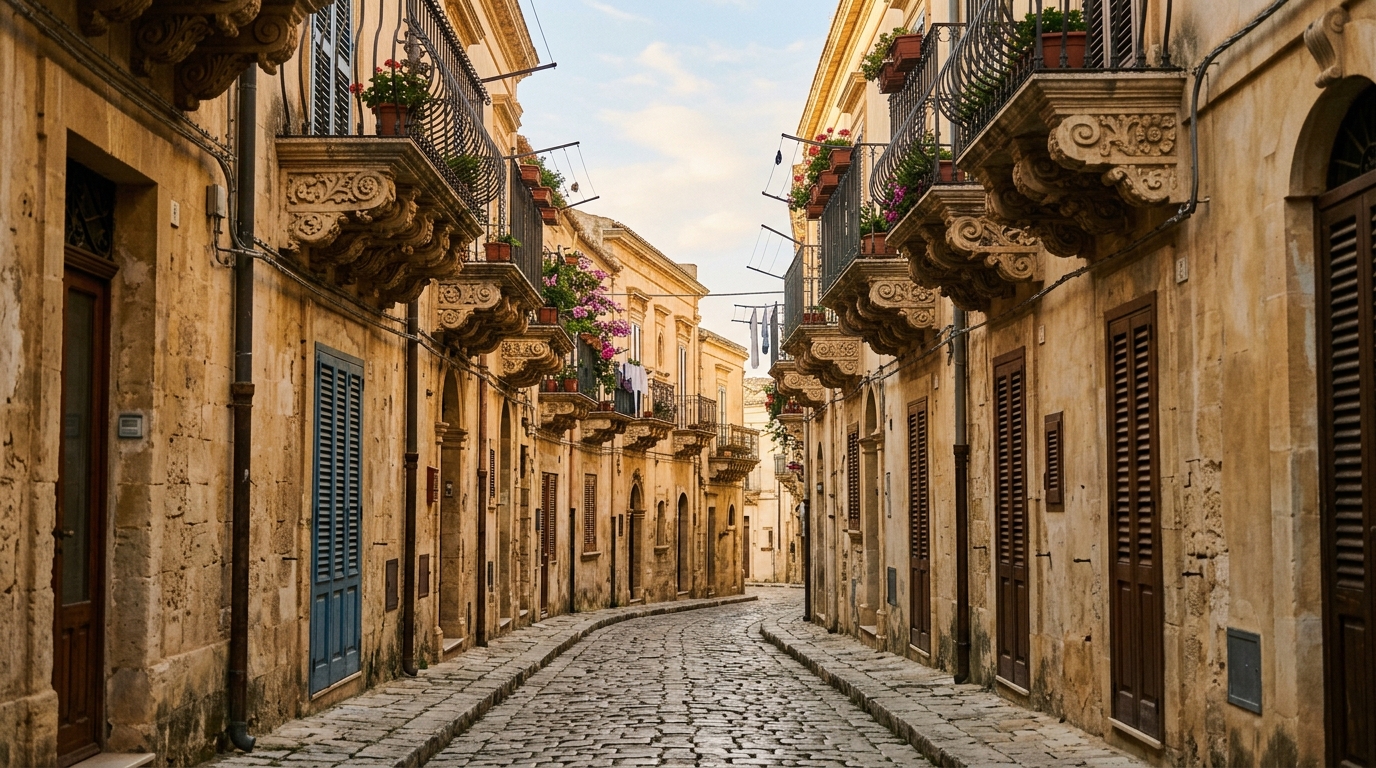
The other group refused to leave the old site and rebuilt lower down in the valley, creating Ragusa Ibla, a dense, labyrinthine old town of Baroque churches, narrow alleys, and stone palazzi clinging to the hillside.
The two towns coexisted for centuries before officially merging in 1927. Today they feel entirely different from each other, and both are worth your time.
Together, Ragusa’s historic center is a UNESCO World Heritage Site, recognized as part of the Late Baroque Towns of the Val di Noto, a network of eight towns rebuilt after the 1693 earthquake in an extraordinary burst of Baroque architecture.
Ragusa Ibla is one of the most beautiful places in Italy.
That is not hyperbole. The combination of golden limestone Baroque buildings, the dramatic hillside setting, the deep gorges surrounding the town on three sides, and the near total absence of tourist crowds creates something that feels genuinely rare.
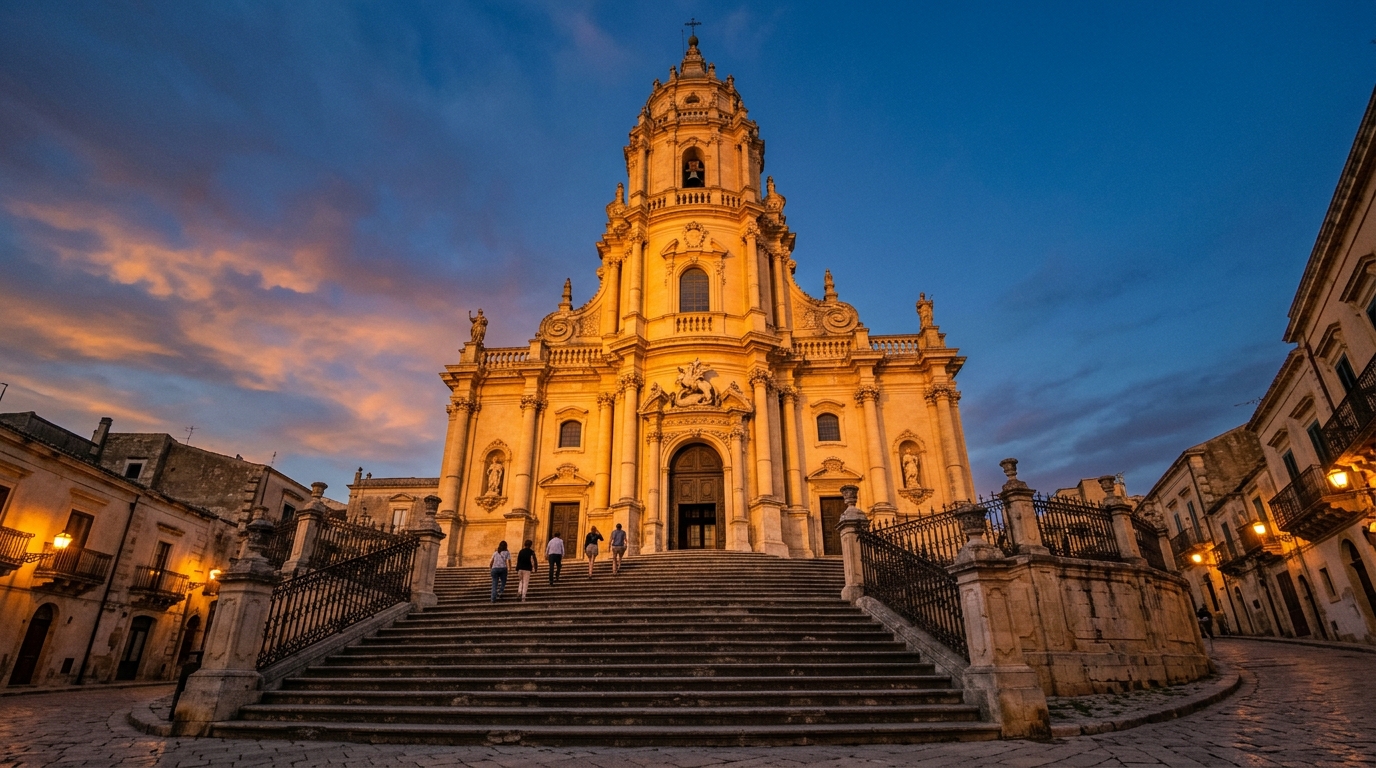
The main square of Ibla is one of the great urban spaces in Sicily. The Piazza Duomo is long and slightly sloping, lined with palazzi and stone benches, and dominated entirely at one end by the Duomo di San Giorgio.
The Duomo di San Giorgio was designed by Rosario Gagliardi and completed in 1775. The facade rises in three curved tiers, each narrower than the last, drawing the eye up to the neoclassical dome that was added in 1820. The deep golden color of the stone changes completely in different lights. At sunset it glows amber. On overcast mornings it turns almost silver.
Inside the church the scale surprises you. It is larger than the exterior suggests. The nave runs deep, the stained glass windows cast colored light across the stone floor, and the soaring dome overhead is genuinely impressive for such a small, quiet town. Entry is free. Go inside even if you are not religious.
Practical tips for Piazza Duomo:
The single best thing you can do in Ragusa Ibla is walk without a plan.
The streets are narrow, the buildings lean toward each other overhead, and every corner reveals something worth stopping for. Wrought-iron balconies decorated with stone figures of lions, mermaids, and grotesque masks. Tiny courtyards with an orange tree in the center. A doorway with carvings so detailed you stand staring for ten minutes.
Corso XXV Aprile is the main pedestrian street through Ibla and connects the entrance of the old town to Piazza Duomo. Walk the full length in both directions. The side alleys off this street are where things get interesting.
Via del Mercato and the streets around it are quieter, more residential, and give you the Ibla that locals actually live in rather than the one organized for tourists.
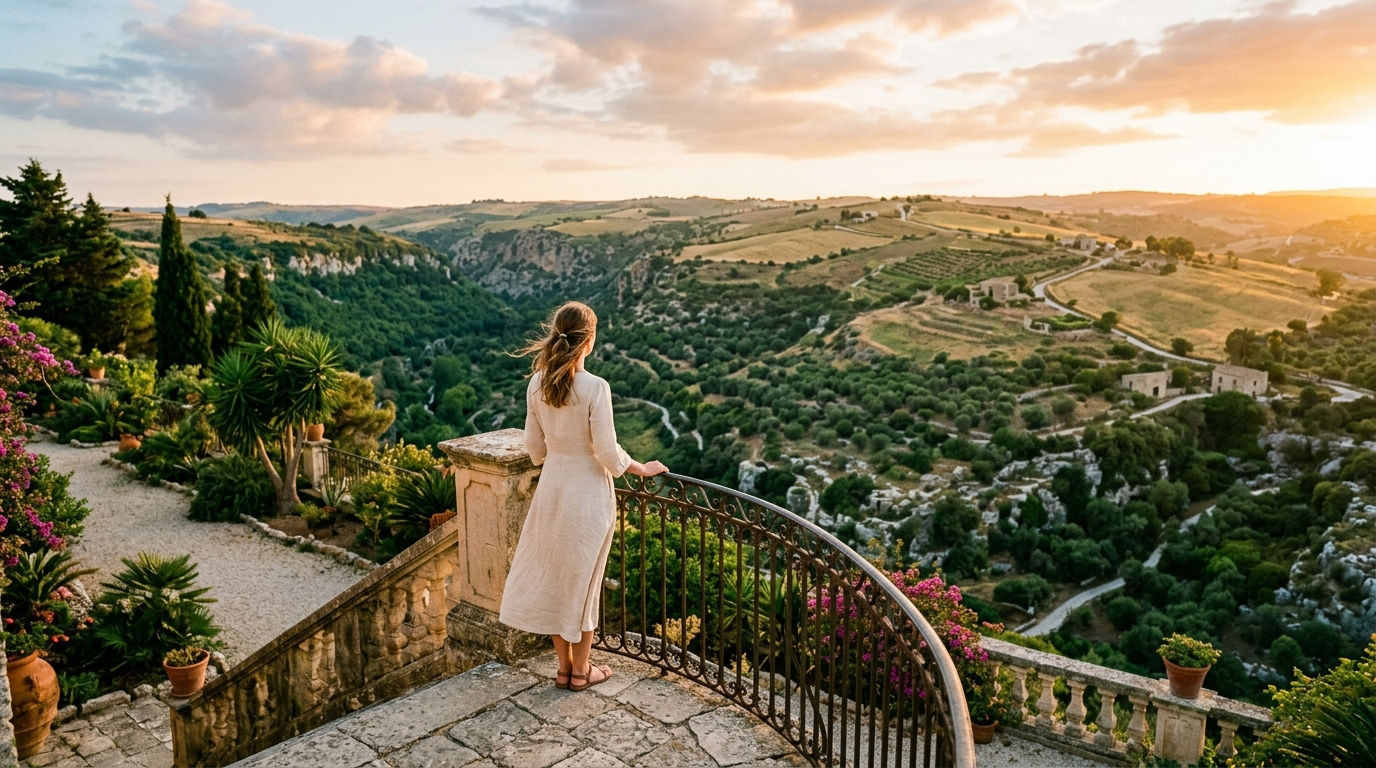
At the far end of Ibla, beyond the Duomo, sits the Giardino Ibleo. This public garden hangs at the edge of the hillside, and the view from its far end across the gorge and the surrounding Sicilian countryside is extraordinary. On a clear day you can see for miles. The valleys below are lined with ancient stone walls separating olive groves and carob trees. The silence is remarkable.
The garden also contains three small churches at its entrance, including the Portal of San Giorgio il Vecchio, a beautiful Gothic-Renaissance doorway that is one of the few things in Ibla that predates the 1693 earthquake. Entry is free. Sunset here is one of the great free experiences in Sicily.
Most guides treat Ragusa Superiore as a place to arrive and leave from on your way down to Ibla. That undersells it significantly.
The main square of Ragusa Superiore is anchored by the Cathedral of San Giovanni Battista, a large Baroque church with a wide-open forecourt and long staircase. It is less dramatic than the Duomo di San Giorgio in Ibla but worth a visit, particularly for the interior.
The piazza has a more local, everyday atmosphere than Piazza Duomo in Ibla. The cafes here serve coffee to Ragusani going about their day rather than tourists. Morning coffee in Piazza San Giovanni is a more authentic experience than almost anything else you will do in the city.
On Via 24 Maggio in Ragusa Superiore, look for Palazzo Bertini, a Baroque palace from the late 1700s. Above the windows are three carved stone faces: a wealthy merchant, an aristocrat, and a poor man.
The story is that the original owner commissioned these faces to represent the three possible fates of any person. Almost nobody stops here. It takes about two minutes and is completely memorable.
This small church sits directly on the ridge between Ragusa Superiore and Ibla, at the top of the long staircase that connects the two towns. The view from here is one of the best in Ragusa, looking directly down onto the rooftops of Ibla with the hills and gorges behind.
This is the best place to understand the geography of Ragusa. Stand here for ten minutes before descending the stairs into Ibla and the whole layout of the city makes sense.
The staircase itself (about 300 steps) is one of the classic ways to move between the two parts of the city.
If you have watched the Italian television series Inspector Montalbano, you have already seen Ragusa dozens of times without knowing it.
The series, based on Andrea Camilleri’s crime novels and set in the fictional Sicilian town of Vigata, was filmed primarily in Ragusa and the surrounding Val di Noto towns. It ran for 36 episodes over 20 years and remains one of Italy’s most popular television exports.
Ragusa Ibla doubles as Vigata throughout the series. The Piazza Duomo, the streets of Ibla, and the surrounding countryside appear constantly. Donnafugata Castle outside Ragusa was used as the residence of a Mafia boss in several episodes.
For fans of the show, Ragusa is a pilgrimage destination. For everyone else, it explains the surprisingly cinematic quality of the city. When you walk through Ibla, you will understand immediately why a television director chose it as their fictional Sicily.
Ragusa is a serious food city. The combination of local produce, Sicilian culinary tradition, and two Michelin-starred restaurants in a town of 70,000 people tells you something important about how seriously the locals take eating.
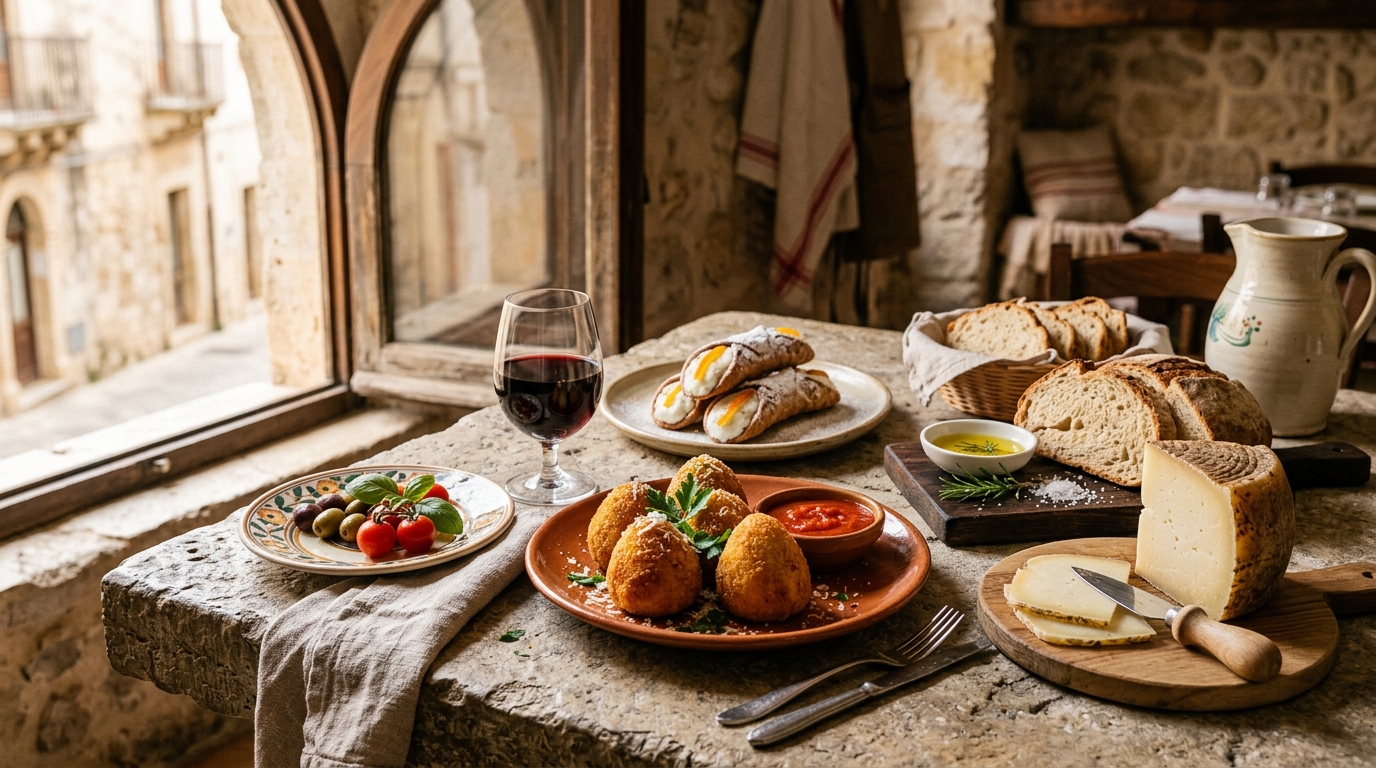
Arancini: Fried rice balls filled with ragù, peas, and mozzarella. The street food version from a rosticceria is one of the great Sicilian snacks.
Scacce ragusane: A Ragusa-specific dish. Flatbread folded multiple times around fillings of tomato and cheese, or onions, or sausage. Sold at local bakeries throughout the city. Essentially impossible to find outside the province.
Caciocavallo Ragusano: A distinctive Sicilian cheese made in the Ragusa area, sold in large rectangular blocks and aged on wooden beams. Buy it at local markets and food shops.
Ricotta fritta: Fried fresh ricotta, often served as an antipasto or light meal. Completely different from anything you have tried before.
Cannoli: The Sicilian classic, but the local version made with sheep’s milk ricotta from the Ragusa area is notably richer and more complex than what is sold elsewhere on the island.
Modica chocolate: Not technically from Ragusa but from nearby Modica, 30 minutes away. Cold-processed Aztec-method chocolate with a grainy texture and no added fats. Unlike any other chocolate in the world. Bring home as much as you can carry.
Trattoria La Bettola in Ibla is one of the most consistently recommended restaurants in the city. Traditional Sicilian food, genuinely local atmosphere, extremely popular. Arrive early or reserve ahead.
That’s a Moro covers local classics and excellent seafood. Good value for the quality.
Njuria is a laid-back bar in Ibla serving sandwiches, charcuterie boards, and local wines. Perfect for a slow lunch.
Gelati Divini on Piazza Duomo does excellent gelato and granita. The pistachio and the almond granita are exceptional.
Duomo Restaurant holds two Michelin stars and is one of the best restaurants in Italy. Chef Ciccio Sultano has been here since 2000 and his tasting menus are rooted entirely in Sicilian ingredients and tradition. Booking weeks in advance is essential. Closed Monday and Tuesday.
La Locanda di Don Serafino holds one Michelin star. Set inside a cave-like space carved into the rock beneath the city. More accessible than Duomo in terms of booking. The atmosphere is completely unique.
Ragusa is 30 minutes from some of the best beaches in Sicily. Most travel articles barely mention this.
Marina di Ragusa is the main beach resort connected to the city, a 30-minute bus ride south. Golden sand, calm clear water, and a long promenade of cafes and restaurants. Completely packed with Italian holidaymakers in July and August, but excellent in June and September.
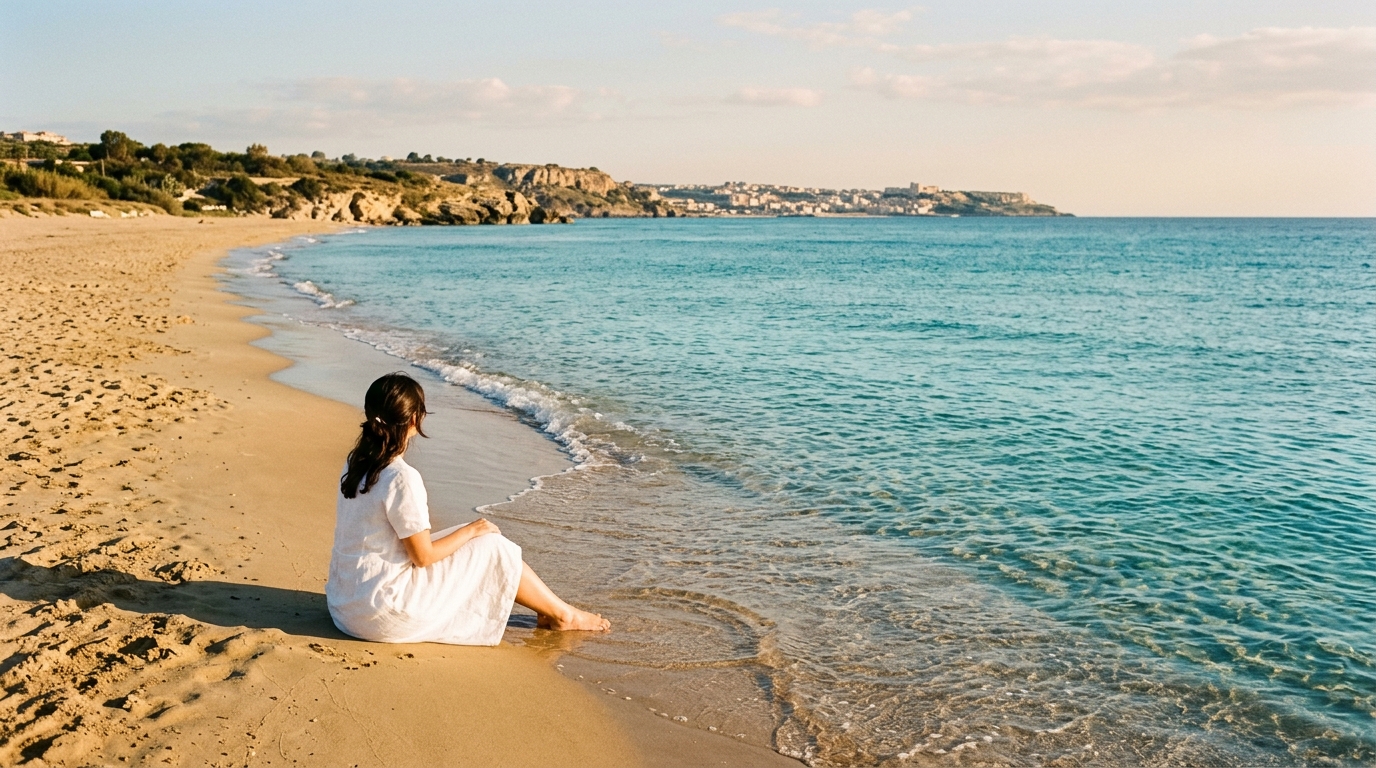
Punta Secca is a smaller, quieter beach town about 35 minutes from Ragusa. Fans of Inspector Montalbano will recognise it immediately as the location of Montalbano’s beach house. The lighthouse at Punta Secca appears in the show’s opening sequence.
Kamarina sits between Marina di Ragusa and Punta Secca and has the remains of an ancient Greek settlement right on the beach. You can walk the archaeological site and swim in the same afternoon.
Getting to the beaches: The Tumino bus company runs services from Ragusa city center to Marina di Ragusa, Punta Secca, and Kamarina. Check their schedule at the bus station in Ragusa Superiore.
Modica is the closest Val di Noto town and deserves at minimum half a day. The Duomo di San Giorgio here is a rival to Ragusa’s in terms of Baroque drama. The town is also the home of Cioccolato di Modica, a cold-processed chocolate made using an Aztec method introduced by the Spanish in the 16th century. Antica Dolceria Bonajuto is the oldest chocolate shop in Sicily and the essential stop.
Scicli is the least visited of the Val di Noto Baroque towns and arguably the most authentic. Fewer tourists, beautifully preserved civic buildings, and a relaxed local atmosphere. The Palazzo Beneventano facade is extraordinary. Come on a weekday morning when the market is running.
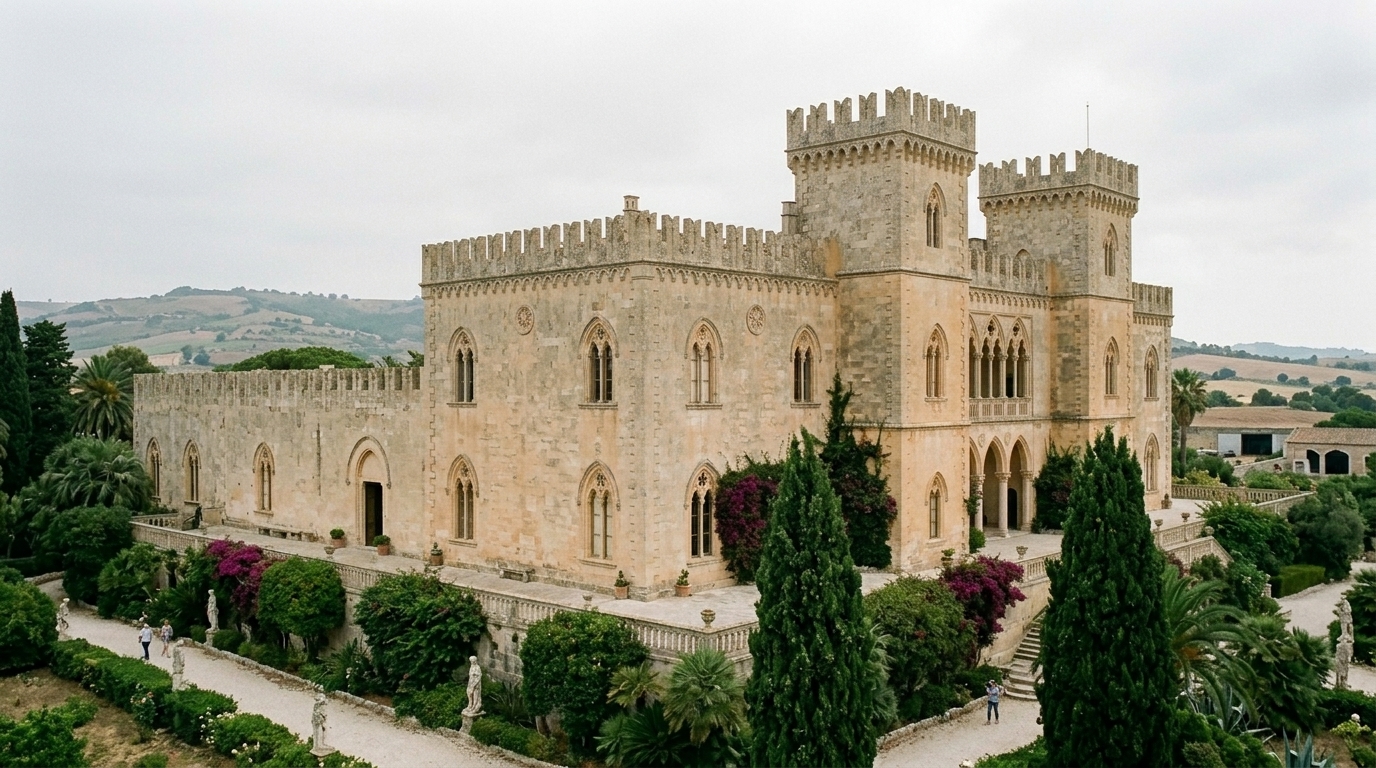
A 19th-century neo-Gothic castle surrounded by extensive grounds and gardens. The name means “runaway woman” and comes from a legend about an imprisoned princess. The castle has 122 rooms, though only the first floor is open to visitors. The formal garden includes a hedge labyrinth. Montalbano fans will recognise it from the show. Open Tuesday to Sunday.
Known as “il Balcone della Sicilia” (Sicily’s Balcony), this hilltop town sits 20 kilometers north of Ragusa with panoramic views stretching from the Gulf of Gela to Mount Etna on clear days. It is also known for exceptional pork products and DOP-certified extra virgin olive oil. A worthwhile half-day trip for food lovers.
The most visually complete of the Val di Noto towns. The entire main street, Corso Vittorio Emanuele, is a single unbroken sequence of Baroque buildings in glowing honey-colored stone. Best visited in late afternoon when the light hits the facades directly.
Syracuse was once the largest city in the ancient Greek world, larger than Athens or Carthage at its peak. The island of Ortigia is one of the most beautiful historic centers in Sicily. A full day trip rather than a quick excursion.
Ragusa involves significant walking on steep, uneven stone surfaces. Ibla in particular has long staircases and sloping cobblestone streets that require proper footwear.
Comfortable walking shoes are essential. The Birkenstock Arizona Sandals work well for Ragusa’s stone streets in summer. Supportive, broken-in, and they handle hours of walking without discomfort. Not ideal if you plan serious uphill hiking, but perfect for a city exploration.
For carrying your essentials through the narrow streets, a small leather crossbody bag keeps things simple and secure. The Travelon Anti-Theft Crossbody Bag has slash-proof straps and locking zips, genuinely useful in any busy Italian town without looking like you are wearing a hiking backpack.
Ragusa in summer is extremely hot. A high-SPF sun protection hat is not optional. The Wallaroo Women’s Petite Audrey Sun Hat provides UPF 50+ protection, packs flat, and looks good enough for a Michelin-starred restaurant terrace.
Ragusa is not the easiest place to reach, which is part of why it remains uncrowded. There is no direct train from Palermo or most major Sicilian cities.
By car: A rental car is the most practical option for visiting Ragusa. From Catania airport, the drive takes about 1.5 hours on the SP25 and SS514. Having a car also makes the day trips to Donnafugata, Chiaramonte Gulfi, and the beaches far easier.
By bus from Catania: Etna Trasporti runs direct buses from Catania airport to Ragusa. The journey takes just under 2 hours and costs around €8.60. This is the best public transport option if you are flying into Catania.
By train: Ragusa Superiore has a train station with connections to Modica, Scicli, Noto, and Syracuse. Trains are less frequent and slower than buses on most routes, but the journey between Ragusa and Modica by train passes through beautiful countryside.
Treno del Barocco: In summer, a special heritage train called the Treno del Barocco connects Syracuse, Ragusa, and the surrounding Baroque towns, including a stop at Donnafugata. Tickets and routes are available through Fondazione FS Italiane.
Between Ragusa Superiore and Ibla: A local bus (lines 11 and 33 Monday to Saturday, line 1 on Sundays) connects the two parts of the city. The bus stops at the entrance to Ibla near the Giardino Ibleo. Alternatively, take the 300-step staircase down from Santa Maria delle Scale, which is the most scenic option.
Within Ibla: Walking is the only option. The streets are too narrow for cars in most areas. Ibla is compact enough that you can cover the main sights on foot in a few hours.
ZTL zones: Ragusa Superiore and Ibla both have ZTL (limited traffic zones) where non-resident vehicles are prohibited during certain hours. If you are driving a rental car, check the ZTL hours carefully to avoid automatic camera fines. Park outside the ZTL zones and walk in.
One day: Possible but rushed. You can cover Ibla’s main sights and eat well, but you will leave feeling like you missed things.
Two days: The sweet spot for most visitors. Day one in Ibla. Day two for Ragusa Superiore, a half-day trip to Modica or Donnafugata, and an afternoon at the beach.
Three to four days: Ideal if you want to use Ragusa as a base for exploring the wider Val di Noto. Covers Ibla, Superiore, Modica, Scicli, Noto, the beaches, and a proper dinner at one of the Michelin-starred restaurants.
Best time to visit: April, May, September, and October. The light is beautiful, temperatures are comfortable for walking, and the tourist numbers are manageable. July and August are very hot and the beaches fill with Italian holidaymakers, but Ibla itself stays surprisingly uncrowded.
Opening hours: Many churches in Ibla open in the morning, close from noon to 4 PM, and reopen in the late afternoon. Plan your visits accordingly.
Cash is useful: Many smaller trattorias, bakeries, and market stalls prefer cash. ATMs are available in Ragusa Superiore but less common in Ibla.
Dress code: Arms and knees covered for church visits. The churches in Ibla are active places of worship, not tourist attractions.
Parking: If driving, park near the Ragusa Superiore bus station and use public transport or the staircase to reach Ibla. Parking inside the ZTL zones will result in automatic fines.
Sunday in Ibla: Sunday afternoons in Piazza Duomo are a local tradition. Families promenade, children run across the square, elderly couples sit on the stone benches. It is one of the most pleasant things you can watch in Sicily.
Is Ragusa worth visiting? Yes, without hesitation. Ragusa Ibla is one of the most beautiful Baroque towns in Europe and one of the least crowded major attractions in Sicily. It rewards visitors who slow down and stay more than a day.
How long do you need in Ragusa? Two days is the ideal minimum. One day covers Ibla’s highlights. The second day adds Ragusa Superiore, a day trip, and a beach afternoon.
What is the difference between Ragusa and Ragusa Ibla? Ragusa refers to the whole city. Ragusa Ibla is the historic lower town, rebuilt after the 1693 earthquake in Baroque style. Ragusa Superiore is the upper, more modern part of the city. Most visitors come primarily for Ibla.
Is Ragusa the filming location for Inspector Montalbano? Yes. The series was filmed primarily in Ragusa Ibla and the surrounding Val di Noto towns. Ragusa Ibla doubles as the fictional town of Vigata throughout the series.
Is Ragusa easy to reach without a car? It is manageable but requires planning. Direct buses run from Catania airport. Trains connect to nearby towns. Within the region, a rental car makes day trips significantly easier.
What is the best beach near Ragusa? Marina di Ragusa is the closest and most popular. Punta Secca is quieter and has Montalbano connections. Kamarina is excellent for combining archaeology and swimming.
What is unique to eat in Ragusa? Scacce ragusane (folded flatbread with local fillings), Caciocavallo Ragusano cheese, ricotta fritta, and excellent arancini. The two Michelin-starred restaurants, Duomo and La Locanda di Don Serafino, are both world-class.
Ragusa is one of those places that quietly becomes your favorite place in a country full of extraordinary places.
It does not shout for attention. It does not have the name recognition of Rome or the Instagram saturation of Positano. It just sits there on its hilltop, golden and patient, letting the people who find it discover for themselves what a genuinely beautiful, genuinely unhurried Sicilian city actually feels like.
Go before everyone else finds out about it.