
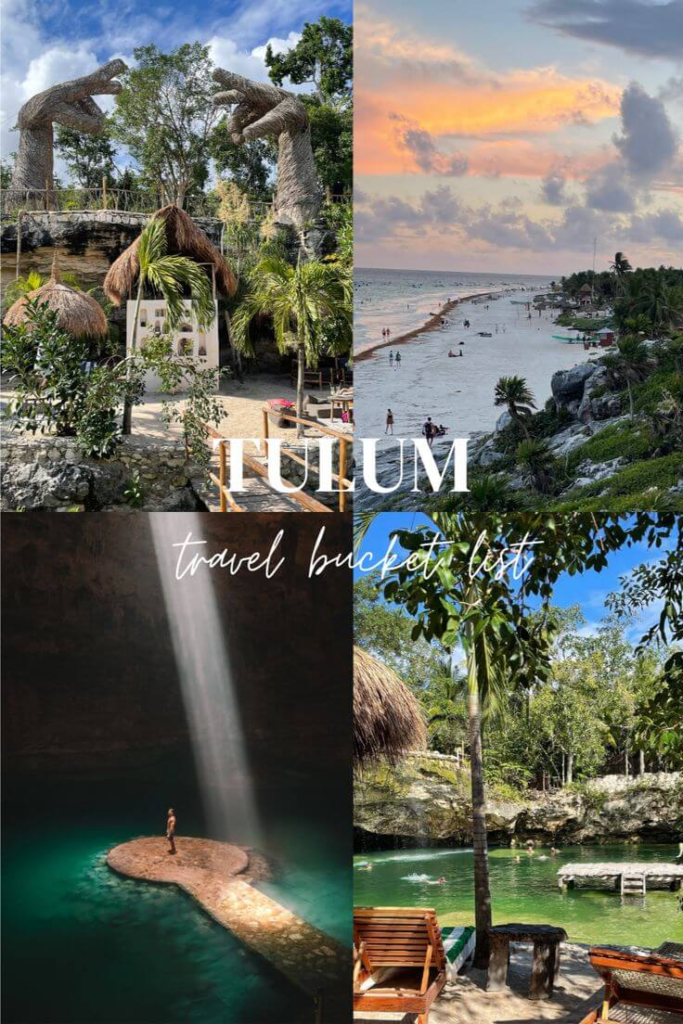
What really matters is how you choose to experience Tulum—where you stay, how you spend your days, and having a clear strategy all impact your time. Tulum has changed over the years, for the better or for the worst, depending on your view, so a little research and a solid game plan help. This remains one of my favorite beach destinations, especially when the intent is to travel slow, disconnect, and stay in inspiring spaces where the architecture and design feel mesmerizing and otherworldly. The atmosphere, buzz, and energy invite you to interact through slow travel and intentional travel—we’re not partiers, skipping late-night beach parties for early morning walks, beach walks, time in nature, and slow afternoons. With a relaxed itinerary, we arrived in Tulum focused on disconnecting from the world and reconnecting with ourselves, making a few reservations at standout restaurants and checking into bucket list hotels like Be Tulum, Habitas with oceanside rooms, Posada Margherita, and spending time along Tulum Beach for lasting design inspiration to take life back at home.
MEXICO TRAVEL GUIDE: WHERE TO EAT, STAY & PLAY: CLICK HERE
Tulum blends stunning beaches, ancient Mayan ruins, and hidden cenotes with a laid-back vibe, making it a perfect destination for travelers seeking both adventure and relaxation.
Tulum is often seen as a year-round destination, but it sits along the Riviera Maya on a major hurricane path, so it’s important to understand the weather patterns before you go. Hurricanes can make landfall each year, with the official hurricane season running from August to the end of October, which are also the rainiest months. During a major hurricane, the airport sometimes closes down, so if you want to risk it for lower prices, have a backup plan and solid travel insurance.
The best time to visit is November through February, when you’ll get great weather, though hotel prices reflect the peak season. The summer months are very hot, especially May to August, making them more suited for off-season travel if you’re okay with heat. Smart travel planning, price fluctuations, and climate awareness go a long way when planning Mexico travel to Tulum.
Getting to Tulum is simple if you plan ahead: you’ll fly into Cancun International Airport (CUN), the major airport, and expect about ~1.5 hours / 1.5 hours getting into Tulum proper by road. If you want to explore a lot, a rental car is one of the easy options—renting a car in Mexico makes it easy to explore easily, cut back on taxi fees, and handle parking in Tulum, even on busy nights like Friday nights and Saturday nights at nearby hotels.
If you plan to stay at your hotel, walk to nearby restaurants, and avoid driving, a roundtrip shuttle service, private transfer, or public transportation like the ADO Bus between Tulum and Cancun works well. Just remember international insurance is required through the rental service; as a Rental Car Tip, many travelers use Discover Cars with full coverage insurance and trusted companies such as Alamo, Hertz, or Sixt, since driving in Mexico is generally easy driving with the right travel planning, transportation options, ground transport, and solid travel logistics for smooth Mexico travel.
You could easily spend a week relaxing along the beach. We also decided to go inland to Cobá during our time which added a few more days.
In Tulum, Spanish is the primary language, but English is widely spoken, and brushing up on the Spanish language is always welcomed by locals. When it comes to currency, the Mexican peso (peso) is used, though some places accept USD / US dollars, just don’t expect a fair exchange or good exchange rate when getting change back. I recommend stopping at a local ATM on arrival to pull out cash, as cash is often needed for tipping, cenotes, and some restaurants. Major places usually accept credit cards, including hotels and bigger restaurants, making payment methods, travel money, travel currency, and cash withdrawal easy to manage with the right language tips and travel communication during Mexico travel.
If you want a local, laid-back vibe with better prices, areas like La Veleta and Aldea Zama are ideal neighborhoods in Tulum Centro (Tulum Town). These neighborhoods are known for beautiful boutique hotels, boutique hotels, cute cafés, cafés, and relaxed coworking spots, making them perfect for a more authentic Tulum experience compared to beachfront resorts and larger resorts.
I personally booked an incredible condo (the condo pictured above) through Kindred, a membership-based home-swapping program that offers home swapping, 1:1 swaps, swaps, and credits to book nights in stunning homes and other homes all around the world. The platform stands out for its incredible customer service, sheer volume of amazing homes to choose from, and great better value for travelers. If you have questions, give me a shout, or use code ANJ.PRI for 5 free nights at properties around the globe. You’ll also find plenty of Tulum rentals and other rentals on Vrbo, all adding to that relaxed local vibe and truly laid-back stay.
If you want ocean views and ample time on the sand, staying in Tulum’s Hotel Zone is ideal for a true oceanfront stay with top beach hotels. A Tulum classic, Nomade Tulum sits at the top of my list thanks to its lively beach club, great restaurants, and DJs performing regularly. Our Habitas Tulum (also known as Habitas Tulum) is sustainable, design-forward, and right on the sand, while Libelula Tulum, a self-described beachfront glamping spot, felt laid back yet effortlessly cool when I spent a day there and absolutely loved it. For a stylish, romantic, and highly-Instagrammed hotspot hotel, Be Tulum stands out, and if you want a luxe hotel with a stunning beach setup, Umi Tulum is an excellent option with breakfast included.
La Yaqueria was hands down my favorite meal in Tulum. It’s tucked away on an unassuming little corner in La Valeta, and honestly, the place looks so simple that you might walk right past it—but don’t. The tacos are superb, and the BBQ jackfruit was genuinely melt-in-your-mouth delicious. What made it even better was the owner, who was incredibly kind and surprised me with a complimentary glass of refreshing lemongrass iced tea.
El Bodegón felt like one of those places you stay longer than planned. The tapas are authentic, there are plenty of veggie options, and the cool ambiance really comes alive when the DJs start playing.
Tierra at Holistika Hotel is the kind of spot where you can easily spend an entire day. Set in a serene jungle setting, the restaurant has an abundance of amazing options on its fully vegan menu, blending Asian and Mexican flavors. I still think about their vegan poke bowl, and the freshly baked pistachio cookie they brought me for dessert felt like a warm, thoughtful touch.
For everyday needs, Gypsea Market was my go-to for healthy groceries and grab-and-go food. I stocked up on breakfast items and snacks like overnight oats, fresh fruit, cereal, oat milk, and trail mix, which made mornings in Tulum super easy.
Raw Love is a fully plant-based spot serving healthy dishes that are mostly raw but still very tasty. It’s light, clean food that makes you feel good after eating, and they also have a location in the Hotel Zone.
Alma Verde quickly became my brunch favorite. The lush patio alone is worth a visit, but the healthy plates sealed the deal. On a hot, humid day, the fresh spring rolls and smoothie I ordered absolutely hit the spot.
Burrito Amor is a local favorite and a solid choice for vegan burrito options. Their vegan burrito includes cactus, and while I’m not a super picky eater, the texture just wasn’t for me. If I went back, I’d simply ask them to leave it out.
Before visiting Tulum, don’t buy into greenwashingprotect claims and always protect your trip with travel medical insurance. It’s best to avoid renting a car unless you have to and get around instead by bike or scooter. Remember not all cenotes are created equal, you can eat street food but don’t drink the water, and stay in Tulum Town if you are on a budget or want a more local experience.
The best things to do in Tulum blend ancient history, stunning nature, and easy beach relaxation, from exploring the iconic Tulum Mayan Ruins overlooking the sea, to swimming and snorkeling in magical cenotes like Gran Cenote and Dos Ojos, relaxing on pristine beaches such as Playa Paraiso, discovering the rich biodiversity of the Sian Ka’an Biosphere Reserve, and enjoying vibrant local art and cuisine.
Tulum is special because it’s located in the state of Quintana Roo, Mexico, on the popular Yucatán peninsula, just a two hours drive from Cancun, yet it feels far more relaxed. With white-sand beaches, a densely forested jungle, and stunning sunset points across Yucatán, it’s considered one of the best beach destinations in Mexico for travelers who want both nature and calm.
In Tulum, whether you can flush toilet paper depends on your stay—if your house is not connected to the sewage system and uses a septic tank or biodigestor, it can clog the system, but if it’s connected to the municipal sewage network, you can safely flush away toilet paper because the system can handle it.