
Three to four days is the sweet spot for a first visit. Long enough to explore properly. Short enough that you’ll leave wanting to come back.
This guide covers everything you actually need to know what to do, what to skip, where to eat, how to get around, and one very important thing most travel guides bury in a footnote.
This needs to be said upfront because most articles mention it in passing and move on: Chiang Mai has a burning season.
Every year from roughly late February through April, farmers across northern Thailand and neighboring countries burn their fields to clear them for the next crop cycle. The smoke settles into Chiang Mai’s valley, and the air quality drops sometimes severely. On the worst days, the AQI (Air Quality Index) can hit 300, 400, or even higher. For context, anything above 100 is considered unhealthy.
The best time to visit is November through January, or April onwards once the rains begin to clear. If you’re visiting between late February and mid-April, go in with realistic expectations and pack N95 masks — not surgical masks, which don’t filter fine particles.
If you’re locked into a March or April trip, it’s still manageable. Temples, cafés, cooking classes, and indoor activities are all fine. Just plan outdoor hikes and day trips for mornings when the air is slightly better, and check the AQI daily at aqicn.org before heading out.
Old City is the best base for first-time visitors. It puts you within walking distance of the main temples, the night markets, and dozens of great cafés and restaurants. The moat that surrounds it is a nice landmark for orientation when you’re still figuring out the layout of the city.
Nimman (Nimmanhaemin Road) is the modern, trendy part of Chiang Mai packed with specialty coffee shops, boutiques, and restaurants. It’s further from the temples but has excellent transport connections and a great atmosphere in the evenings. Many digital nomads and longer-term visitors base themselves here.
The Riverside area is quieter and more relaxed, good for people who want to escape the tourist bustle but still be close enough to explore.
In peak season (November to February), book accommodation at least a few weeks in advance. Good guesthouses in the Old City fill up fast.
Chiang Mai is far more manageable than Bangkok. Most of the Old City is walkable. For everything else:
The Old City is where Chiang Mai began — a walled city surrounded by a moat, founded in 1296 as the capital of the Lanna Kingdom. The walls and moat are still there today, and the area inside is packed with temples, guesthouses, cafés, and the kind of narrow streets that reward slow wandering.
There are over 300 temples in Chiang Mai. You don’t need to see them all. These are the ones actually worth your time:
Wat Phra Singh — the most important temple in the Old City, known for its beautiful Lanna-style architecture and the Phra Singh Buddha image inside the main viharn. Well maintained, not too crowded in the mornings, and genuinely impressive.
Wat Chedi Luang — right in the heart of the Old City, this is the largest ancient monument in Chiang Mai. The main chedi (stupa) dates back to the 14th century. It was once even taller before an earthquake in 1545 brought part of it down. What remains is still enormous and atmospheric. This temple also hosts monk chats — informal conversations between visitors and English-speaking monks about Buddhism and Thai culture. If you’re curious and respectful about it, it’s a genuinely interesting experience.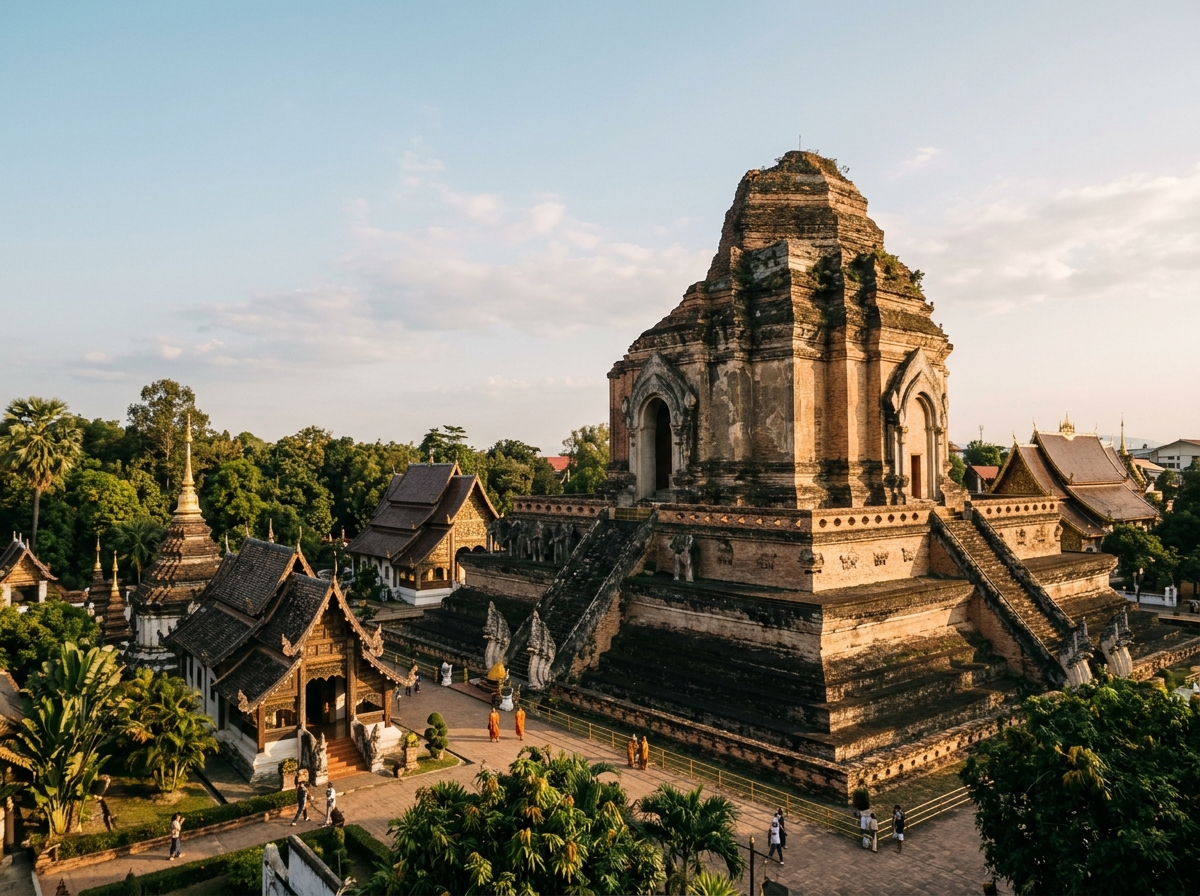
Wat Phan Tao — right next door to Wat Chedi Luang and almost always overlooked because of its famous neighbor. The entire ordination hall is built from teak wood — dark, carved, and beautiful. Worth five minutes of your time.
Wat Suan Dok — slightly outside the Old City walls to the west. The grounds have a hauntingly beautiful mausoleum garden where past rulers of Chiang Mai are buried in white chedis. Much quieter than the Old City temples. Also hosts monk chats on Monday, Wednesday, and Friday evenings.
Temple visiting tips:
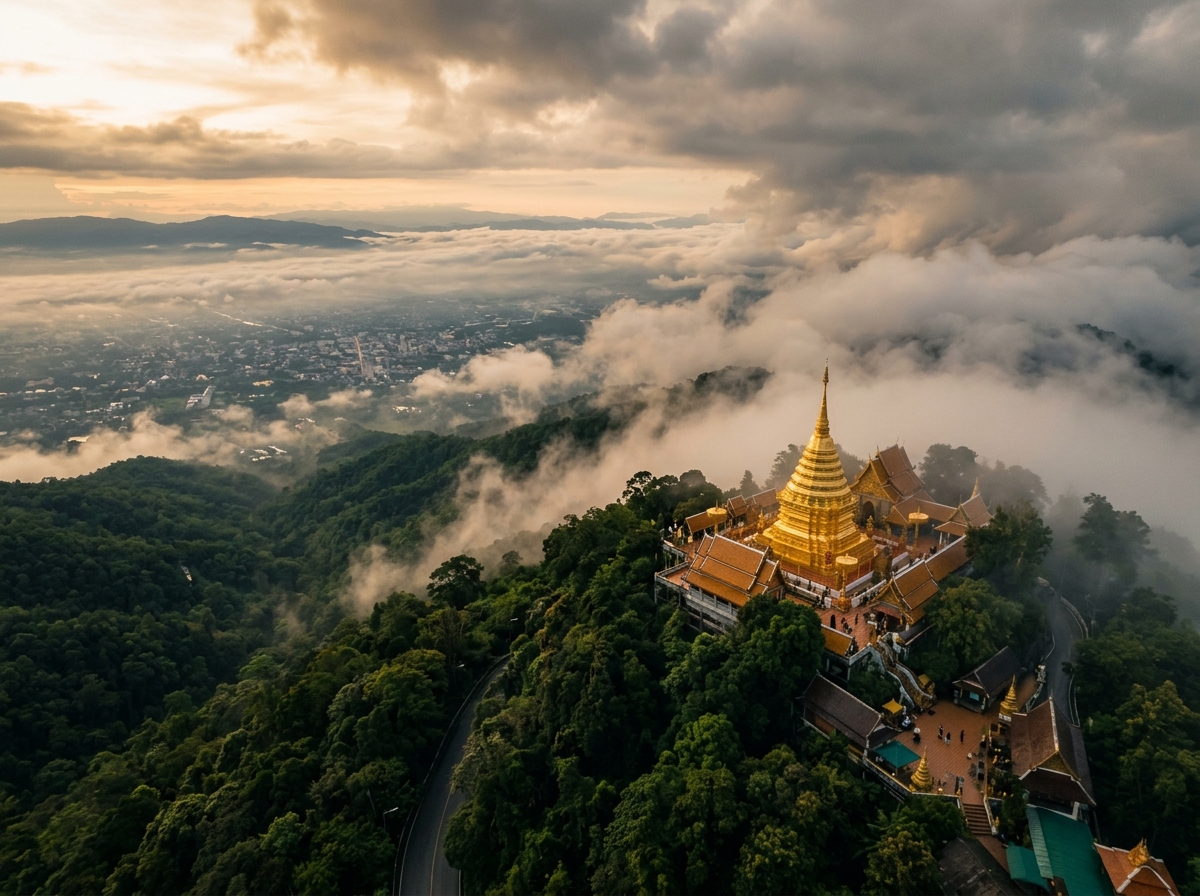
Wat Phra That Doi Suthep sits on a mountain overlooking Chiang Mai — about 15 kilometres from the city centre at an elevation of 1,073 metres. It’s the city’s most iconic landmark and the one experience that almost every visitor includes.
The temple itself is genuinely beautiful — golden chedis, ornate carvings, sweeping views across the Chiang Mai valley below. Getting there involves climbing a 306-step naga (serpent) staircase. It’s steep but manageable. There’s also a funicular for those who’d rather skip the climb.
How to get there: The easiest option is a Grab or a red songthaew from the base of the mountain (about 40 THB per person shared). Songthaews back to the city run regularly from outside the temple entrance.
The hidden stop on the way up: Wat Pha Lat is an ancient jungle temple tucked into the mountainside on the road to Doi Suthep. Most people drive straight past it. If you’re walking the Monk’s Trail — a jungle path that starts near Chiang Mai University and goes up to Doi Suthep — you pass directly through it. The trail takes about 1.5–2 hours and the temple is worth stopping at for as long as you want.
Entrance fee: 50 THB for foreigners.
Best time to visit: Early morning (opens at 6am) before the tour groups arrive. The views are clearest from November through January — burning season haze makes them disappear from February onwards.
This one requires some research before you book, because not all “sanctuaries” are what they claim to be.
The honest picture: elephant riding causes harm to elephants. Bathing with elephants has also come under scrutiny, as the practice often involves stress and forced proximity for the animals. Any show involving performing elephants — painting, tricks, balancing — is not ethical.
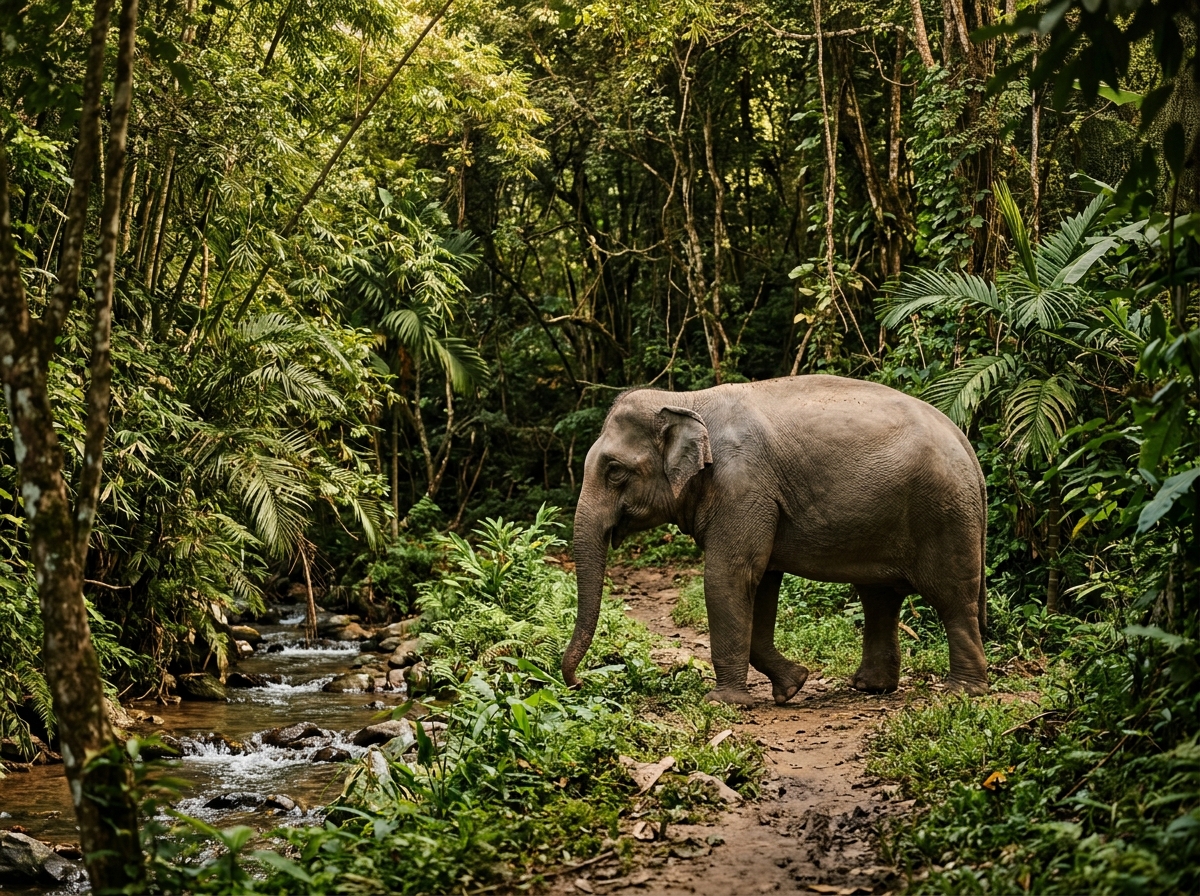
The most commonly recommended ethical option in Chiang Mai is Elephant Nature Park, founded by Sangduen “Lek” Chailert. The park rescues elephants from tourism, logging, and street begging operations. Visitors observe the herd, help prepare food, and watch them from a respectful distance. There is no riding, no bathing, no performances.
It books up weeks in advance. Reserve directly on their website.
Questions to ask before booking any elephant experience:
A genuine sanctuary will welcome all these questions. A place that gets defensive or vague about its practices is worth avoiding.
Chiang Mai is one of the best places in Southeast Asia to take a cooking class, and this is one activity that genuinely lives up to the hype.
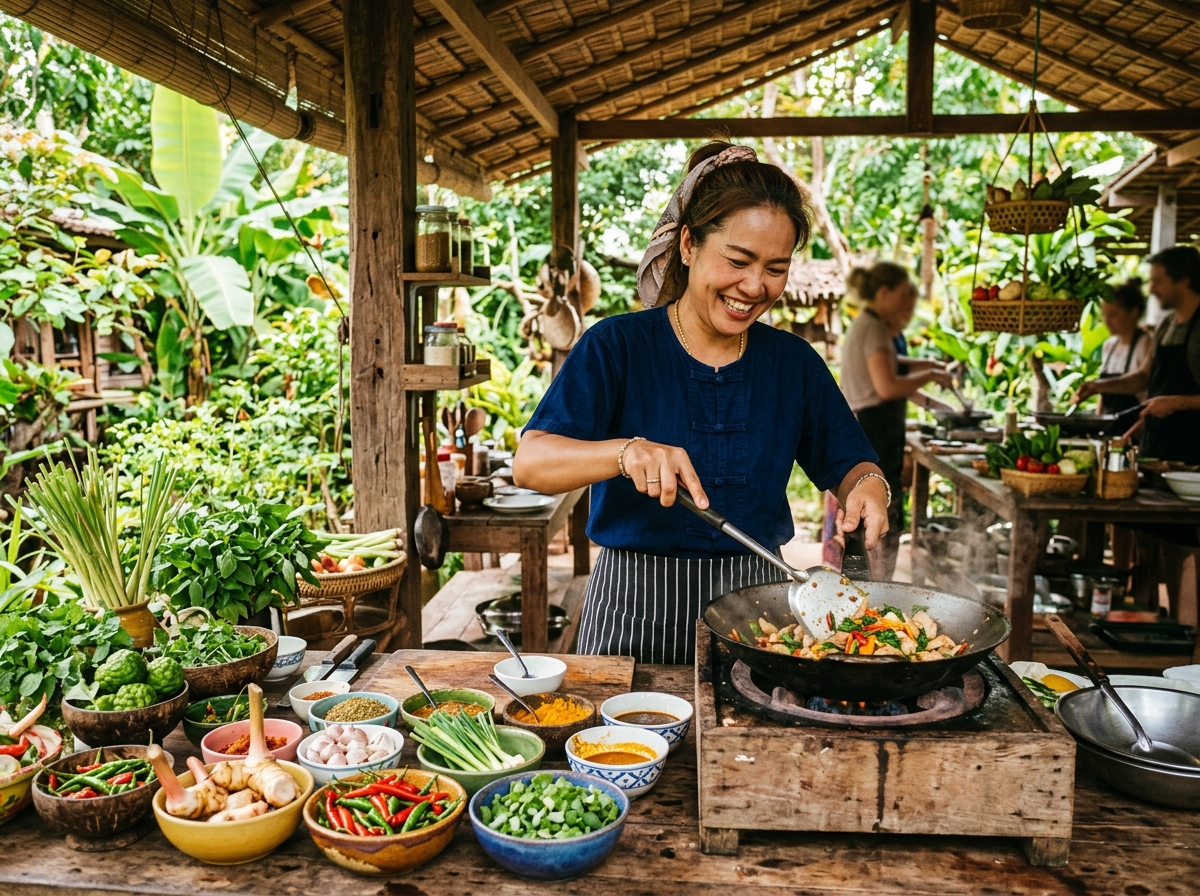
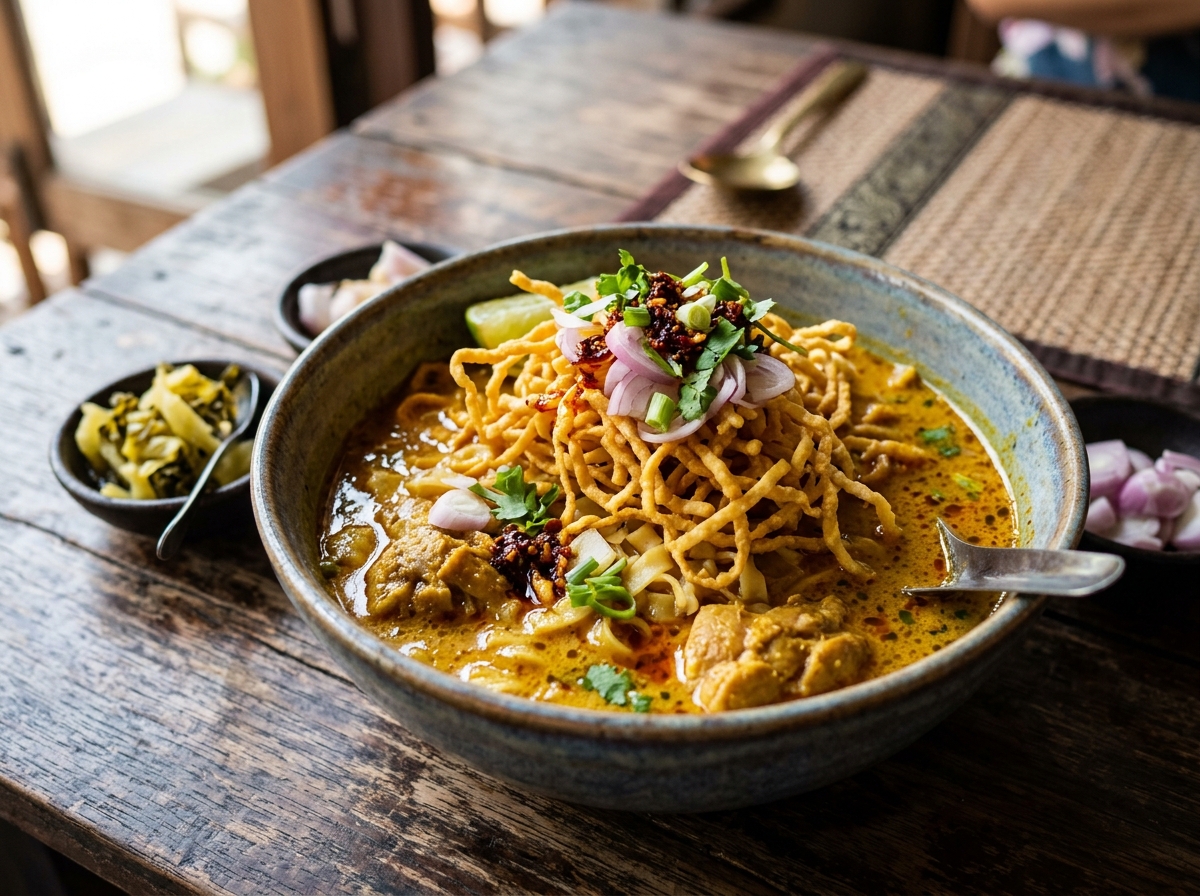
A half-day or full-day class typically includes a market visit to buy ingredients, followed by hands-on cooking of four to six dishes, pad thai, som tam, massaman curry, khao soi (the northern Thai coconut curry noodle soup that is, genuinely, one of the best things you’ll eat in Thailand), and various others depending on the class.
You eat everything you cook. You go home with a recipe booklet. And the skills actually transfer — this isn’t just performance cooking for tourists.
Prices range from 900 to 1,500 THB for a half-day class. Full-day classes with a longer market visit run 1,200–1,800 THB. Book a day or two ahead, especially in peak season.
A few well-regarded options: Thai Farm Cooking School (includes a visit to their organic farm), Zabb-E-Lee (good for authentic northern Thai dishes), and the Chiang Mai Thai Cookery School (one of the oldest, consistently recommended).
Chiang Mai’s night markets are genuinely good — better than most places in Southeast Asia for the quality and variety of what’s on offer.
Sunday Night Market (Walking Street) — the biggest and most popular. Rachadamnoen Road in the Old City is completely closed to traffic and transformed into a sprawling market of handmade crafts, clothes, artwork, street food, live music, and massage stalls. If you’re in Chiang Mai on a Sunday, this is not optional. Get there by 6:30–7pm to browse before the crowds peak.
Saturday Night Market — similar format, runs along Wualai Road (the silversmith street) south of the Old City. Slightly smaller than Sunday’s market but often considered more authentic, with more local artisans and less tourist merchandise. Wat Sri Suphan (the Silver Temple, with a stunning all-silver interior) is at the end of the street and worth a look.
Chiang Mai Night Bazaar — open every night near Tha Phae Gate. More commercial than the walking street markets — fixed stalls, more mainstream goods, and a slightly higher-pressure sales environment. Still worth walking through for the food court area.
Market tips:
If you have a spare day and you want to get outside the city, Doi Inthanon is one of the best day trips from Chiang Mai.
Doi Inthanon is Thailand’s highest peak at 2,565 metres. The national park around it has waterfalls, cloud forests, hill tribe villages, two royal chedis with panoramic views, and some of the best birdwatching in Southeast Asia. It’s genuinely beautiful, a completely different landscape from the city below.
The park is about 90 kilometers from Chiang Mai. Most people join an organized day tour (600–1,200 THB including transport and entrance fees) or rent a scooter if they’re experienced riders. Getting there independently by public transport is complicated — a tour or private car is much easier.
The entrance fee for the national park is 300 THB for foreigners.
Go in the morning to beat the crowds and catch the waterfalls at their best. November to February gives the clearest skies for the summit views.
Chiang Mai has its own distinct food culture — Northern Thai cuisine is quite different from what you’ll eat in Bangkok or on the islands.
Khao Soi is the dish you must try. A rich coconut curry broth with egg noodles, topped with crispy fried noodles, served with pickled mustard greens, shallots, and lime on the side. It’s everything. Khao Soi Khun Yai and Khao Soi Mae Sai are both consistently recommended local spots.
Other northern Thai dishes to seek out:
Where to eat:
A meal at a local restaurant costs 60–150 THB. Even a sit-down meal at a nicer spot rarely exceeds 300 THB per person.
Northern Thailand’s mountains and hill tribe villages are within easy reach of Chiang Mai, and a one or two-day trek is one of the most memorable things you can do in the region.
Most treks include a combination of jungle hiking, visits to Karen, Akha, or Hmong hill tribe villages, and sometimes an overnight stay in a village guesthouse. The scenery, forested mountains, river valleys, and bamboo groves are beautiful.
Important: Do your research before booking. Some trekking operations exploit hill tribe communities as tourist attractions, paying little back to the villages and treating residents as performers. Look for operators that work directly with communities, employ local guides, and donate part of their income back to village development.
Trek Chiang Mai and Hike Thailand are two operators that have consistently good reputations for responsible trekking. Ask directly how they work with hill tribe communities before you book.
One-day treks run around 700–1,200 THB. Overnight treks are 1,500–2,500 THB, including accommodation and meals.
One of the most enjoyable ways to spend a day in Chiang Mai is simply renting a bicycle and exploring at your own pace.
The Old City is relatively compact and flat, easy cycling territory. From there, you can pedal along the moat, cross into the Nimman area, follow the Ping River south, or wander into quiet residential streets lined with old teak houses and local temples that most tourists never find.
Early morning is the best time — the heat is manageable, the streets are quieter, and the light is beautiful for photos.
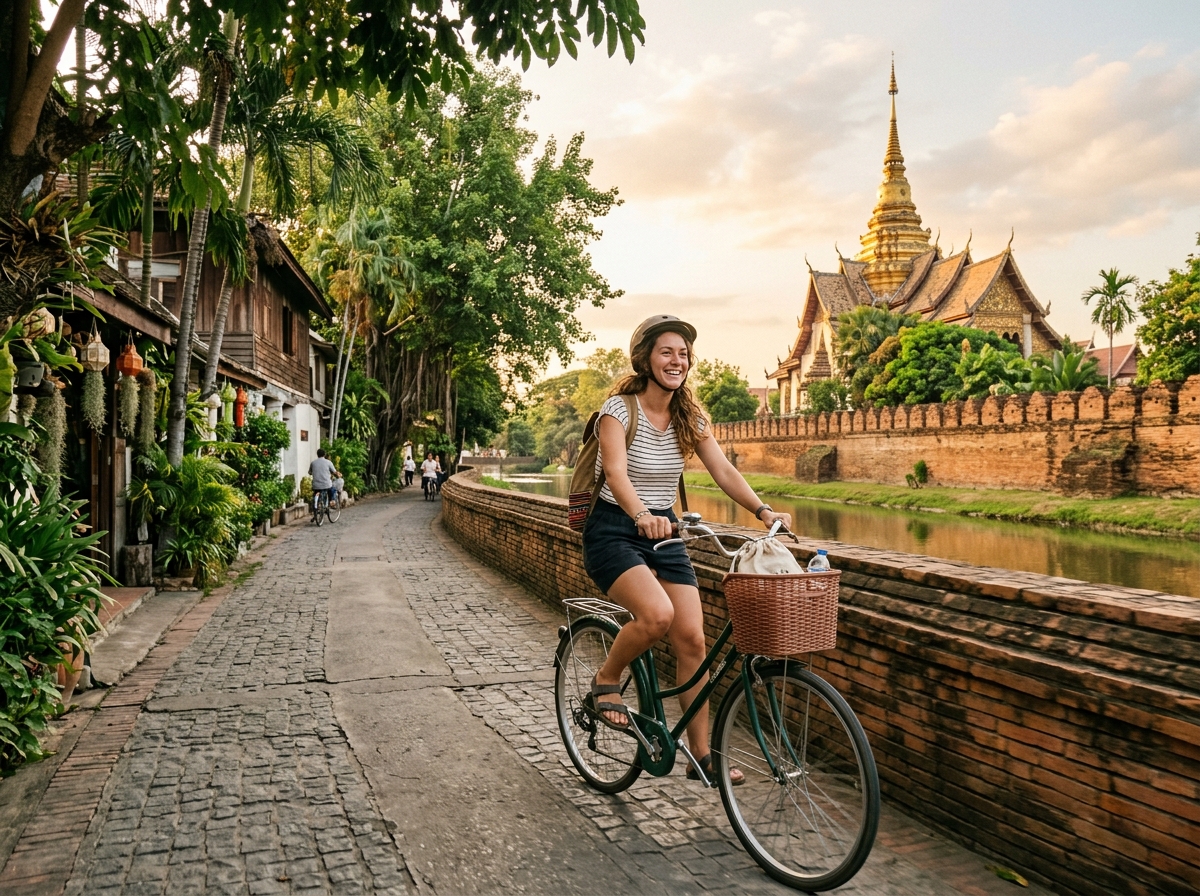
Bicycles rent for 50–80 THB per day from most guesthouses and many shops around the Old City. Bring a water bottle — staying hydrated matters more than you’d think even in cooler weather.
A Hydro Flask 32oz water bottle (available on Amazon) is worth packing for this kind of trip. It keeps water cold for hours, which makes a genuine difference when you’re cycling in tropical heat.
Thai massage in Chiang Mai is excellent and cheap — significantly better value than in Bangkok tourist areas, where the quality has become inconsistent.
A proper traditional Thai massage works on pressure points and stretches rather than the Swedish-style relaxation massage most Western visitors expect. It can be intense. It’s not uncommon to hear joints cracking. But the results are real, if you’ve been walking long distances with a heavy bag, an hour of Thai massage will fix things you didn’t know were wrong.
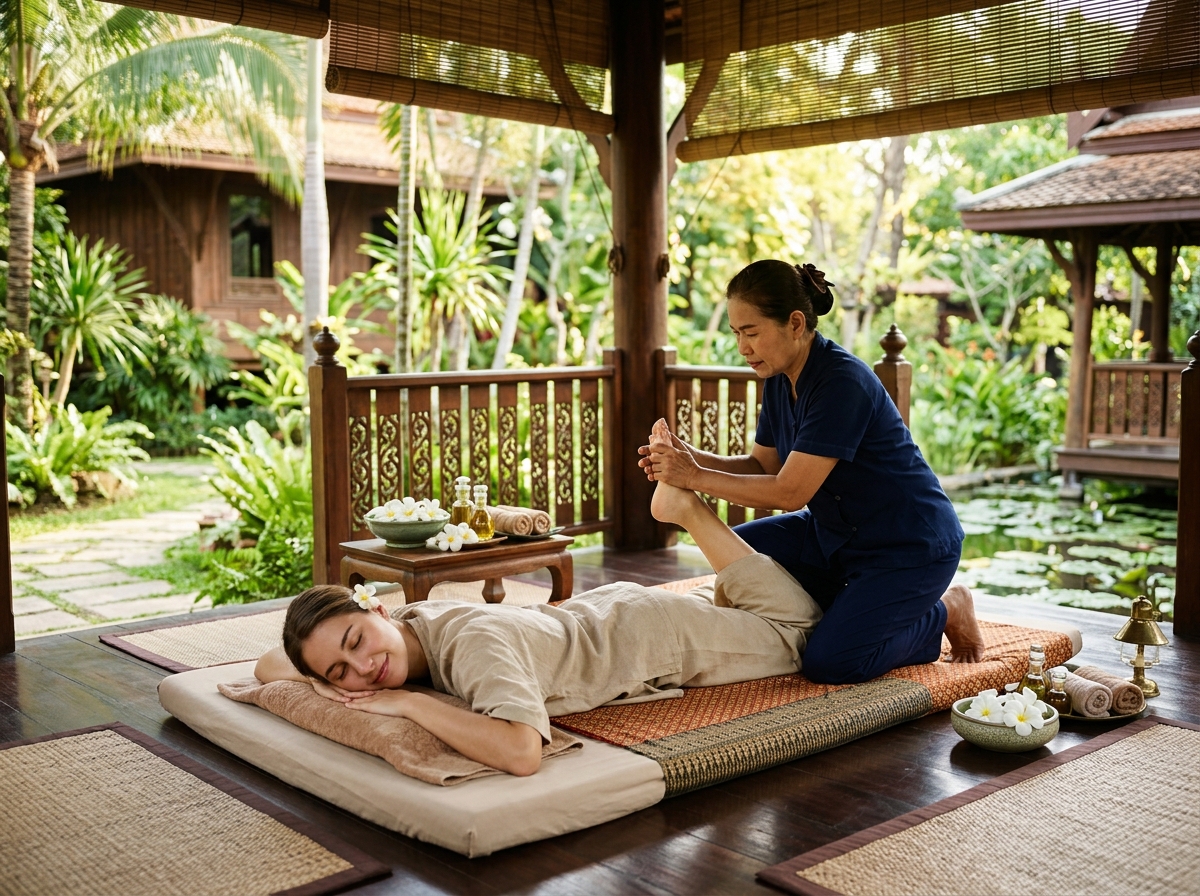
Prices in Chiang Mai run 200–350 THB per hour for a good traditional massage. Foot massages are 150–200 THB for 45 minutes. Avoid the cheapest-looking places near the tourist markets — quality drops fast below 200 THB.
The Chiang Mai Women’s Correctional Institution Massage Centre is run by the prison and trains women as a rehabilitation program. It’s widely regarded as having some of the best traditional massage in the city at very fair prices. It sounds unusual; it’s genuinely worth going.
Tiger Kingdom and similar attractions — any place that allows tourists to handle, pet, or take photos with tigers is not operating ethically. Tigers that are calm enough for tourist photos are almost always drugged or kept in conditions that cause significant stress. Skip it.
Elephant riding — covered above, but worth repeating. No ethical sanctuary allows riding.
Zip-lining in the jungle — not inherently bad, but the quality varies wildly between operators. Some courses are genuinely thrilling and well-maintained. Others are outdated with questionable safety equipment. Read recent reviews carefully before booking.
The Grand Canyon Chiang Mai — a small man-made reservoir popular on Instagram. It’s fine, but not worth a significant detour unless cliff jumping is specifically on your list.
Chiang Mai is cooler than Bangkok and southern Thailand, especially at higher elevations and in the evenings from November through February. But it’s still tropical; packing light still applies.
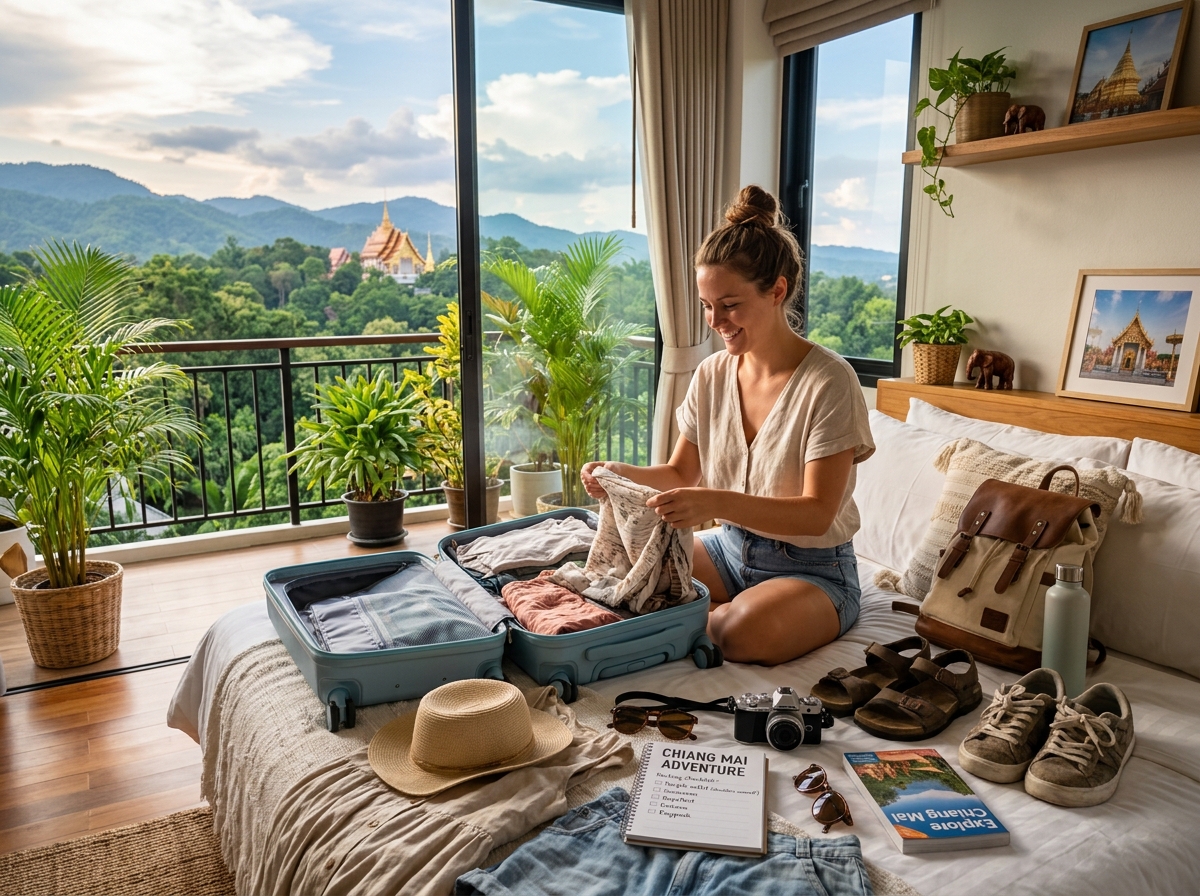
For longer days out, especially at Doi Inthanon or on treks, a good quality daypack makes a real difference. The Osprey Daylite 13L (available on Amazon) is lightweight, has enough room for a day’s essentials, and is comfortable enough to wear for hours without shoulder strain.
If you’re visiting during or near burning season (February to April), pack N95 respirator masks. The 3M 8511 N95 respirator (available on Amazon) is a good option — it filters PM2.5 particles, which is what you need. Regular surgical masks don’t provide adequate protection against the fine particles in wildfire smoke.
Chiang Mai is one of the most affordable cities in Southeast Asia. Here’s a realistic breakdown:
| Category | Budget | Mid-Range |
|---|---|---|
| Accommodation (per night) | $10–20 (hostel/guesthouse) | $35–70 (hotel) |
| Food (3 meals) | $6–12 (local restaurants, street food) | $15–30 |
| Transport (per day) | $3–6 (songthaews, bicycle) | $8–15 (Grab, tuk-tuk) |
| Activities | $5–15 (temples, markets) | $20–50 (cooking class, elephant sanctuary) |
| Total per day | $24–53 | $78–165 |
The biggest single expense is usually the elephant sanctuary — Elephant Nature Park charges around 2,500–3,500 THB ($70–100) for a full day. It’s worth it, but factor it in separately.
Carry cash. Many temples, street food stalls, and smaller guesthouses don’t accept cards. ATMs are easy to find in the Old City but charge fees. Take out larger amounts less often.
The AQI app is useful year-round. Even outside burning season, air quality can fluctuate. Download IQAir or check aqicn.org before planning outdoor activities.
Book popular activities in advance. Elephant Nature Park, cooking classes, and popular guesthouses fill up weeks ahead in peak season (November to February). Don’t assume you can sort it when you arrive.
Morning is the best time for almost everything. Temples, markets, trekking, and cycling are all better before 10am. The heat and the crowds both build through the day.
Nimman Road is great for an evening. The neighborhood around Nimman Road has excellent restaurants, bars, and some of the best independent coffee shops in Southeast Asia. Worth spending at least one evening here.
Respect the culture. Chiang Mai is more conservative than Bangkok’s tourist areas. Dress modestly outside the tourist zones, keep voices down in temples, and be patient when things don’t move quickly. The pace of life here is deliberately slow.
How many days do you need in Chiang Mai?
Three to four days is ideal for a first visit. You can cover the main temples, do one day trip (Doi Suthep or Doi Inthanon), take a cooking class, and spend time at the markets without feeling rushed. Five to seven days allows for trekking, more day trips, and a slower pace.
Is Chiang Mai worth visiting?
Yes. It’s genuinely one of the best cities in Southeast Asia — easy to navigate, rich in culture, excellent food, and far more affordable than equivalent experiences elsewhere. It’s worth including in any Thailand itinerary that has more than one week.
When is the best time to visit Chiang Mai?
November to February. The weather is dry, temperatures are comfortable (25–30°C during the day, cooler at night), and the mountains are clearly visible. This is also peak tourist season, so book ahead. Avoid late February through April if possible due to burning season air quality.
Is Chiang Mai safe for solo female travelers?
Yes. Chiang Mai is one of the safer destinations in Southeast Asia for solo female travel. The city has a strong traveler community, good infrastructure, and generally welcoming locals. Standard precautions apply — trust your instincts, use Grab instead of negotiating with individual drivers at night, and let someone know your plans for remote treks or day trips.
What is Chiang Mai famous for?
Primarily its ancient temples (over 300 in total), the Lanna Kingdom history, ethical elephant experiences, Thai cooking classes, night markets, and its position as a gateway to northern Thailand’s mountains and national parks. It’s also increasingly well known for its coffee scene. Northern Thailand grows excellent coffee, and Chiang Mai has a genuinely impressive number of specialty cafés.
Is it worth renting a scooter in Chiang Mai?
Only if you’re an experienced rider. The Old City itself is very manageable on foot or bicycle. For day trips like Doi Suthep or Doi Inthanon, a Grab or organized tour is safer and easier. Road accidents are a leading cause of injury among tourists in Thailand — don’t rent a scooter if you haven’t ridden one before.
What is the burning season in Chiang Mai?
A period of significant air pollution that occurs annually from roughly late February through April. Farmers across northern Thailand and neighboring countries burn crop residue and forests after harvest, and the smoke settles into Chiang Mai’s valley. On bad days, the air quality is genuinely hazardous. The best advice is to time your visit for November through January, or May onwards when the rains arrive.
How do I get to Chiang Mai from Bangkok?
Three options: fly (1 hour, often very cheap on AirAsia or Thai Lion Air — sometimes cheaper than the train), take the overnight train (12–14 hours, scenic and comfortable, great budget option), or take the overnight bus (10–12 hours, cheapest option). The overnight train is the most popular option for travelers who want to save a night’s accommodation while getting there comfortably.
Chiang Mai earns its reputation. It’s a city that manages to feel genuinely alive without being overwhelming, which is a harder balance to strike than it sounds.
The temples are beautiful. The food is exceptional. The surrounding mountains offer as much adventure as you want. And the city itself, especially the Old City in the early morning before the heat sets in, is the kind of place that slows you down in the best possible way.
Plan your timing around the burning season, book the elephant sanctuary early, take at least one cooking class, and give yourself enough time to wander without a plan. That’s really all you need.