You come for the scenery. You leave talking about the fresh lobster, warm locals, and sunsets that stop you in your tracks.
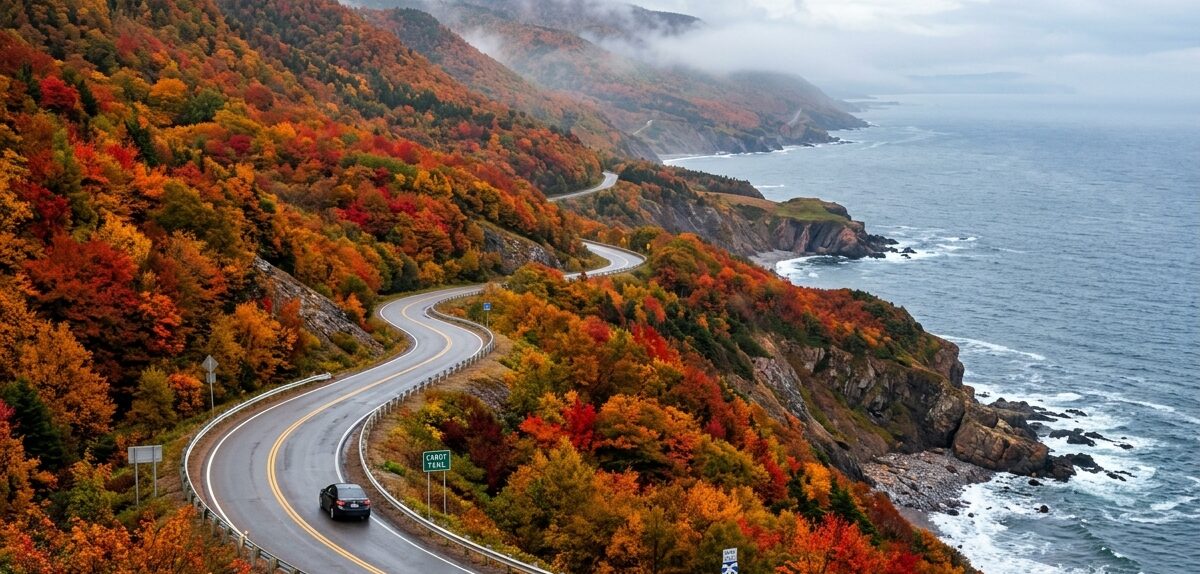
It’s more than stunning views. The route connects three living cultures: Mi’kmaq communities, Acadian villages famous for hooked rugs and fiddle music, and Gaelic settlements with traditional ceilidhs. The road is paved and well-maintained, but it has real character: tight curves, steep hills, and pullouts that make you want to stop every few kilometres.
July and August are warmest but busiest. September to mid-October brings fiery fall colours and thinner crowds. May and June offer wildflowers, rushing waterfalls, and lower prices, though some places open later. Shoulder seasons usually give you the best mix of good weather, fewer people, and easier parking.
Most visitors fly into Halifax or Sydney, rent a car, and head to Baddeck, the usual starting point. The drive from Halifax takes about four hours.
You can drive the loop clockwise or counterclockwise. Counterclockwise (Baddeck → Ingonish → Dingwall → Chéticamp → back to Baddeck) keeps the ocean on your right for the best views and easier pullouts. Clockwise is sometimes better for RVs or anyone nervous about heights because the climbs feel gentler. Pick one direction and stick with it. Fill up your tank before entering the park; gas stations inside are limited.
Day 1: Baddeck to Ingonish Morning in Baddeck, then drive to Ingonish Beach for a swim in the warm lake. Hike the short Middle Head Trail for peninsula views and end with dinner at Keltic Lodge.
Day 2: Ingonish to Dingwall / Cape North
Head to the northern tip. Stop at Meat Cove for dramatic cliff views and scan for whales from Lakie’s Head. Stay overnight in Dingwall or nearby.
Day 3: Dingwall to Chéticamp This is the most scenic stretch through the park. Enjoy the MacKenzie Mountain lookouts, Lone Shieling forest, and Cap Rouge. In Chéticamp, try Acadian food and visit Les Trois Pignons for rug-hooking history.
Day 4: Chéticamp back to Baddeck Catch the Skyline Trail at sunset if timing works, then head through the Margaree Valley or add a quick side trip before closing the loop.
Three days is the minimum needed to see the highlights. Five days feels relaxed.
Don’t rush these stops: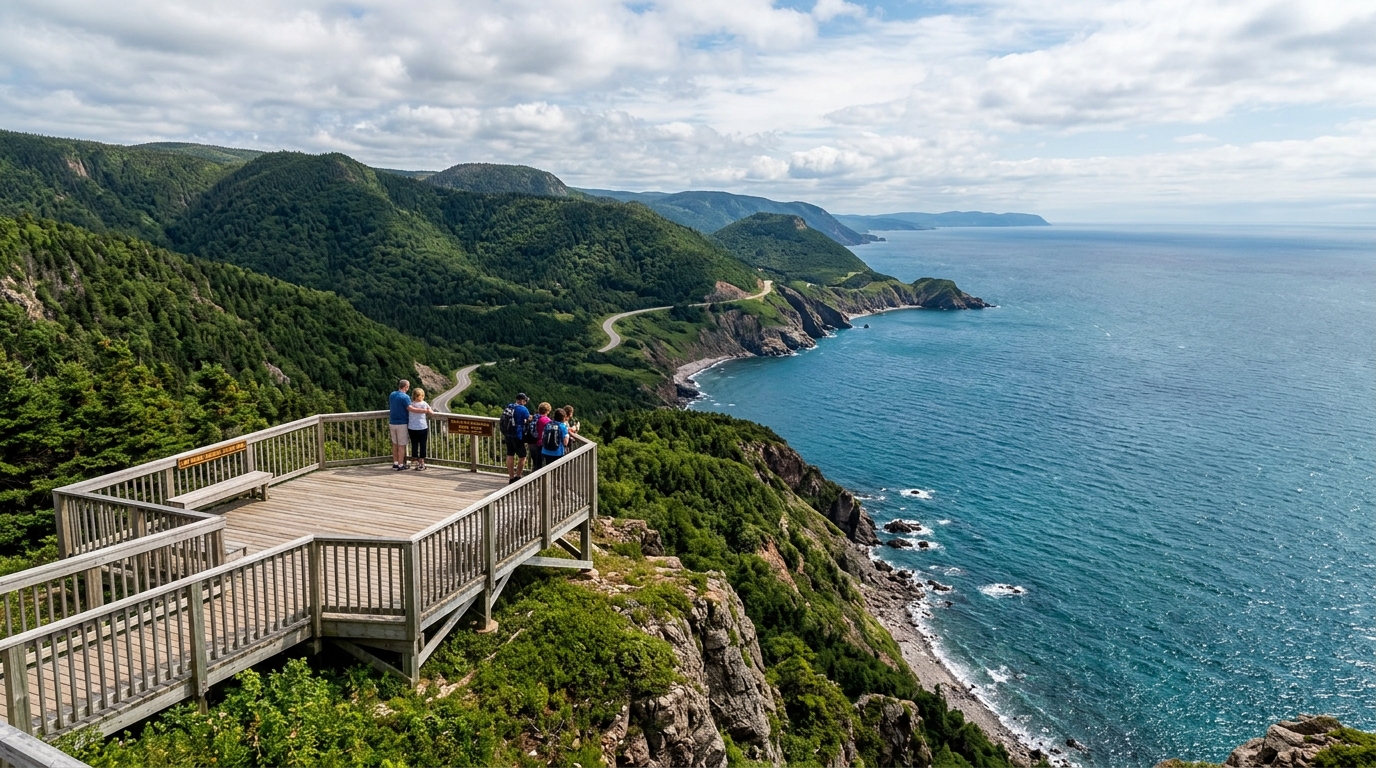
The light and weather change the same view completely, so stopping is always worth it.
The park has 26 trails. The standouts are:
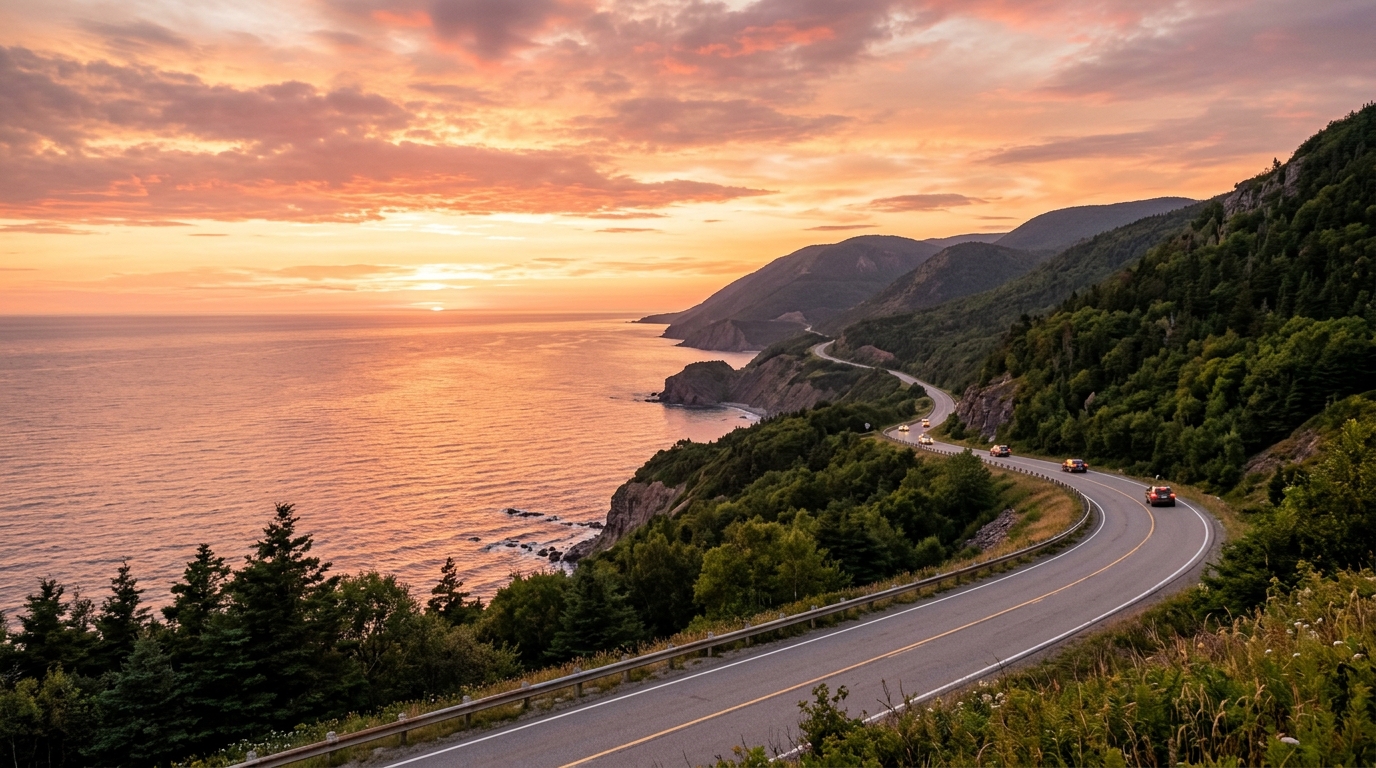
Wear proper shoes. Most trails have excellent footing, but roots and rocks show up after rain.
These short stops turn the drive into something more than scenery.
Base yourself in Baddeck, Ingonish, or Chéticamp. You’ll find everything from historic lodges like Keltic Lodge to cozy inns and modern chalets. Book ahead for summer and fall.
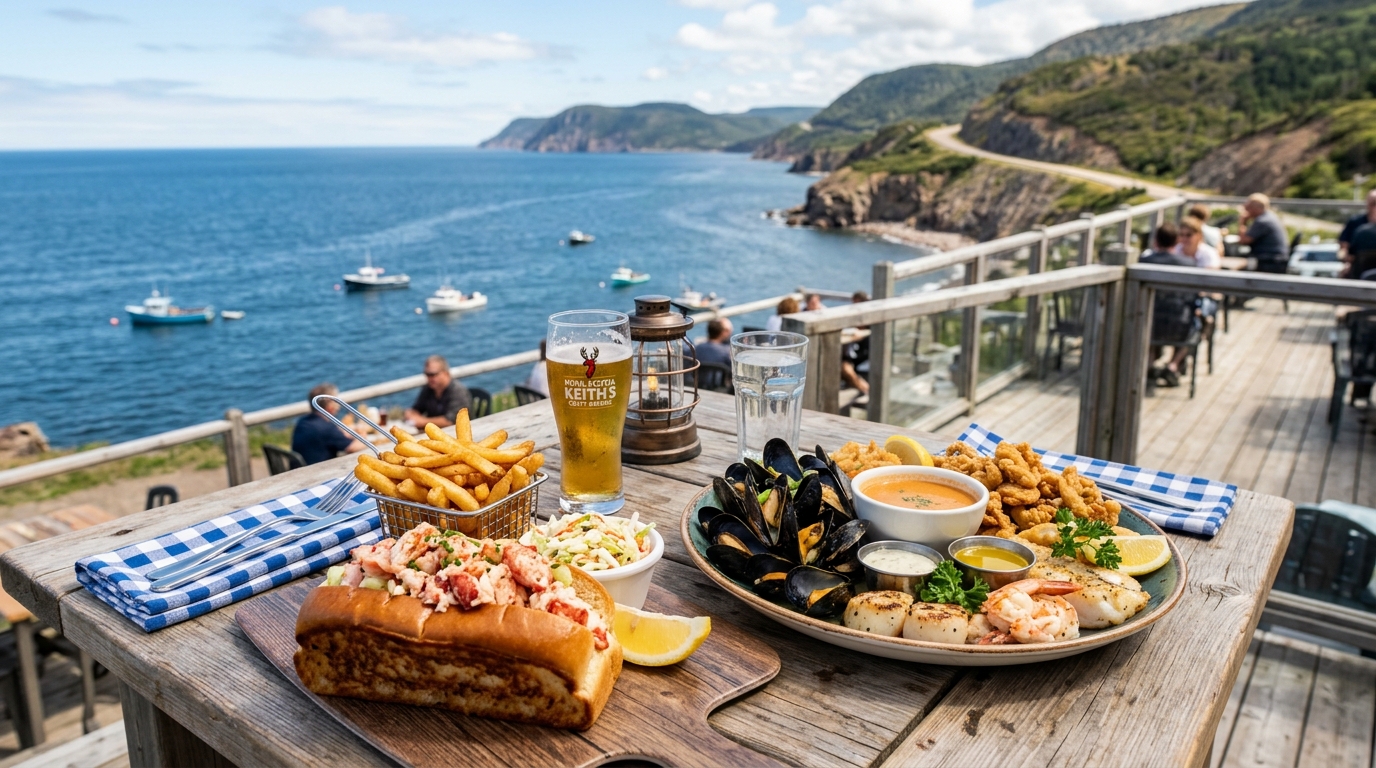
Food is fresh and simple: lobster rolls, mussels, chowder, oatcakes, and Acadian meat pies. Locals recommend Aucoin Bakery in Chéticamp and Baddeck Lobster Suppers.
The trail works well for families, seniors, and RVs if you choose the gentler direction and pick shorter walks.
These are the items people actually wish they had packed: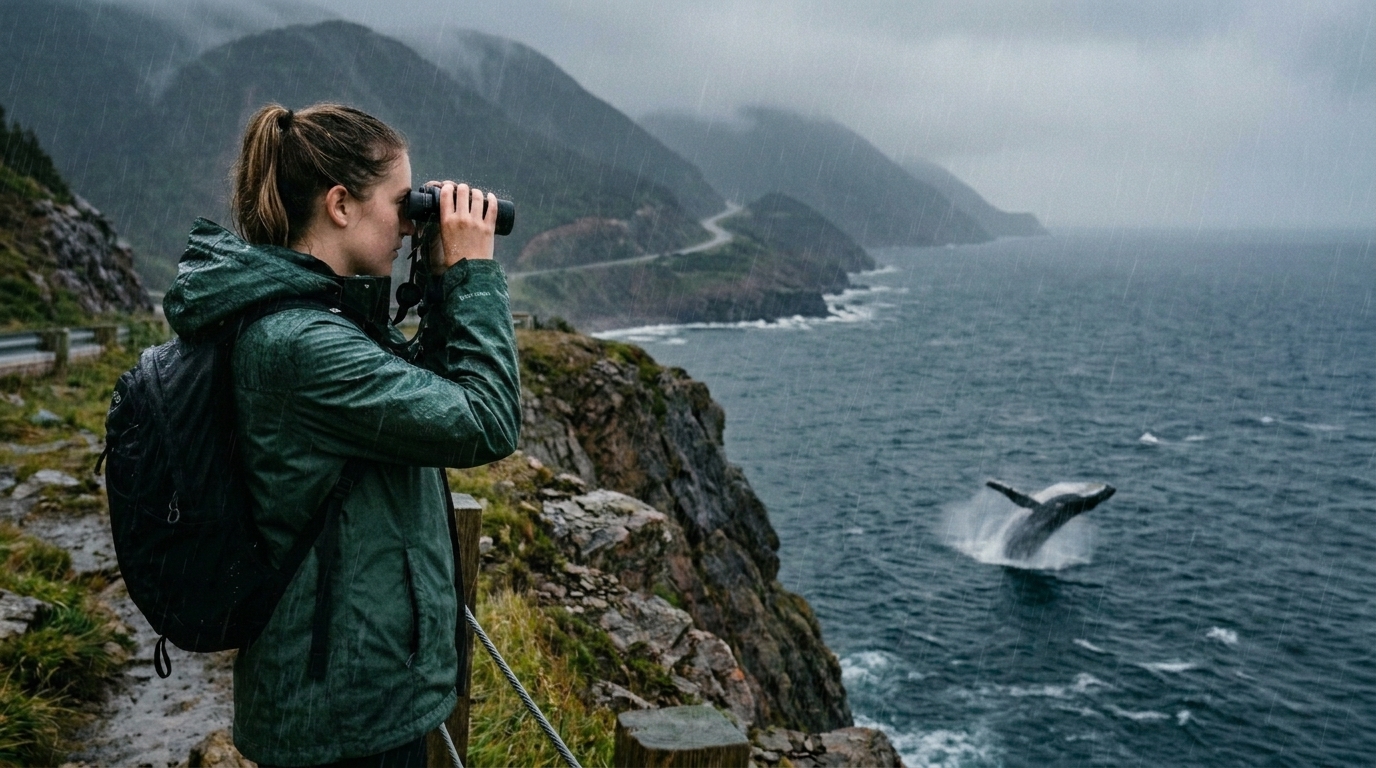
The Cabot Trail rewards the people who slow down. Pull over at the look-offs. Chat with the locals. Eat the lobster. Hike at least one trail at sunset. You’ll come home with stories, not just photos.
This corner of Nova Scotia still feels special because it hasn’t been over-polished. Go now, while the roads are quiet and the experiences still feel personal. You won’t regret it.
How long does it take to drive the Cabot Trail?
One very long day is possible, but plan 3–5 days to actually enjoy it.
Is the Cabot Trail difficult to drive?
Paved and well-signed. Some steep curves and grades, but most passenger cars and careful drivers handle it fine.
What’s the best month to visit?
September for foliage and fewer crowds. July–August for warm weather and open services.
Do I need a park pass?
Yes, if you stop at look-offs or hike inside Cape Breton Highlands National Park (May–October).
Can I do it with kids or seniors?
Absolutely. Choose shorter, flatter trails and base in one town to minimize driving.
Are there moose?
Yes, drive carefully, especially at dawn and dusk.
What about RVs or motorcycles?
Both are popular. Motorcyclists often prefer counterclockwise for the views, while RVs sometimes choose clockwise for gentler climbs.
Is it worth it?
Every single time. The combination of scenery, culture, and fresh air is hard to beat anywhere in North America.