
 If England is your focus for this trip, it pairs well with our guide to hidden gems in the Cotswolds and our castles and palaces roundup if you want to build these into a longer England itinerary rather than a single day trip.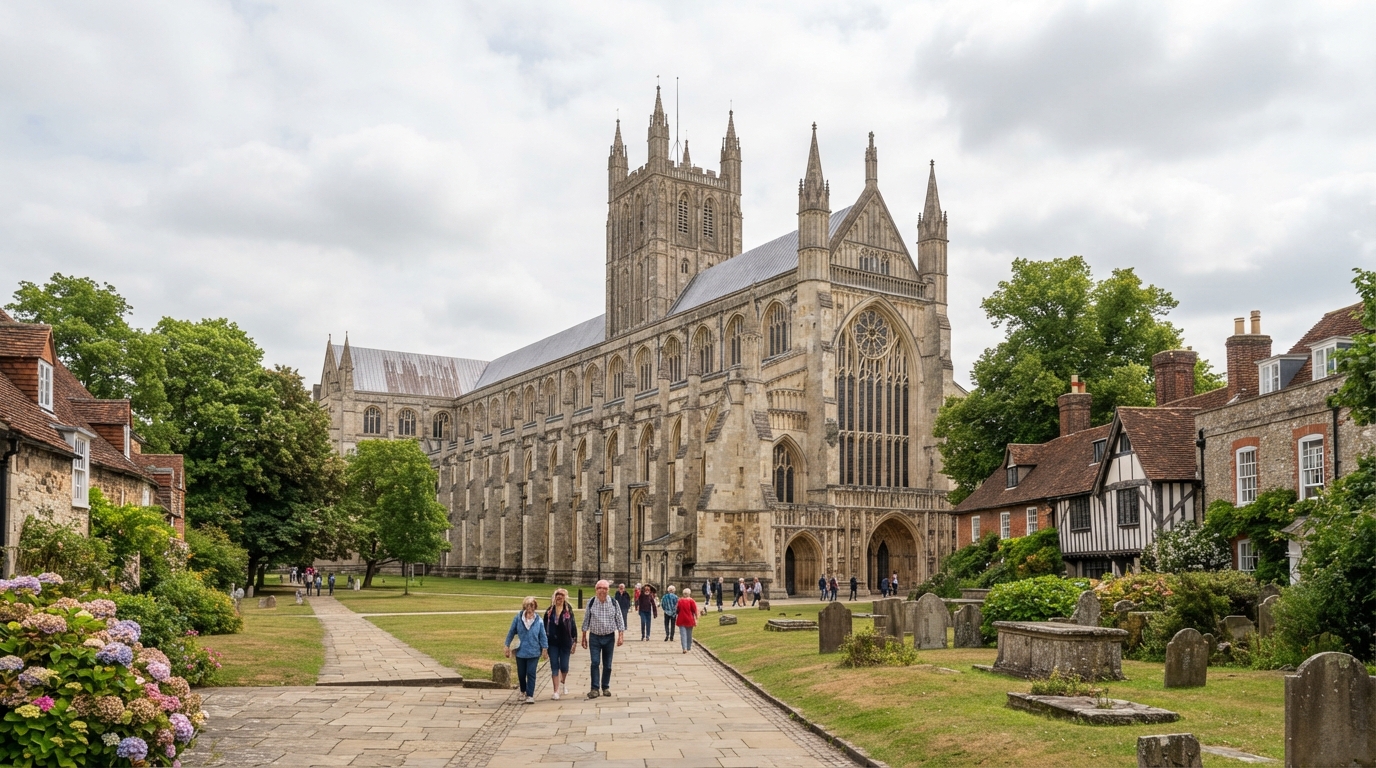
If you’re short on time, these are the towns you can reach in under an hour, door to door:
Everything else on this list runs between 55 minutes and just over an hour.
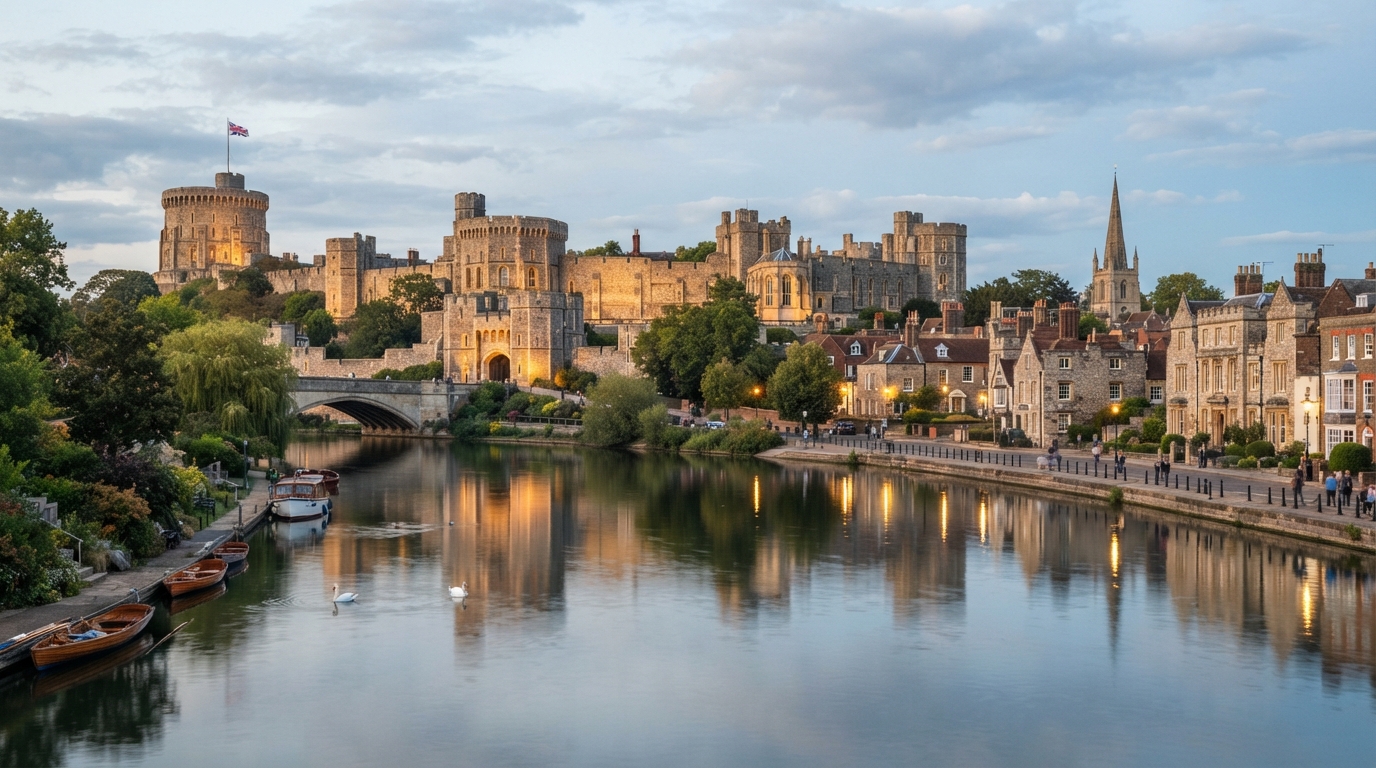
Journey: ~20–35 minutes from Paddington (change at Slough), longer if travelling direct from Waterloo. Windsor is the obvious pick and it earns the hype. Windsor Castle is the working royal residence check opening days before you go, as State Apartments close for state events with little notice. Skip the main-street chain shops and walk down to the riverside path along the Thames instead; it’s where Windsor stops feeling like a coach-tour stop. Eton is a 10-minute walk across the bridge if you want the full “small English town” contrast in one trip.
Journey: ~47 minutes fastest from Marylebone, one change (usually at Maidenhead or Bourne End). Marlow is the town most Londoners haven’t heard of and most Chilterns locals won’t shut up about. A genuinely pretty suspension bridge over the Thames, a compact high street with better-than-average independent restaurants, and none of the coach-tour crowds Windsor gets. Good one for a lazy riverside lunch rather than a landmark-ticking day.
Journey: ~44 minutes fastest from Paddington, one change (usually at Twyford). Best known for the Royal Regatta in early July, but worth visiting outside regatta season when you’ll have the riverside to yourself. The River & Rowing Museum is small but genuinely well done, and there are several good pubs directly on the water.
Journey: ~35 minutes direct from Waterloo. Surrey’s county town, and one of the most underrated on this list. The cobbled High Street runs steeply from the castle ruins down to the River Wey, where you can hire a rowing boat in summer. Good independent restaurant scene for a town this size.
Journey: ~55–60 minutes from Waterloo. Technically a city by ecclesiastical status (it has a cathedral), but it functions and feels like a small town walkable core, no sprawl. Winchester Cathedral holds one of the longest medieval naves in Europe, and the station is a flat five-minute walk to the centre.
Journey: ~1 hour 10 minutes from St Pancras (change at Ashford International), or a similar time via Charing Cross depending on route. Rye is the storybook one cobbled Mermaid Street, timber-framed houses, the whole postcard. It’s small enough to properly finish in a day, though we’d argue it deserves a weekend if you can manage it, since the town empties out after the day-trip coaches leave and that’s when it’s at its best.
Journey: just over 1 hour from Victoria. A Norman castle you can climb for county views, the Anne of Cleves House museum, and a genuinely good independent bookshop and bakery scene on the high street. Less photographed than Rye, which we’d count as a point in its favour.
Journey: ~30–45 minutes from Charing Cross or London Bridge; Hever Castle and Chartwell both require a taxi or bus connection from the station, so budget extra time. Sevenoaks itself is a pleasant if unremarkable town, but it’s your access point to three major country estates: Knole (walkable from the station), Hever Castle (Anne Boleyn’s childhood home), and Chartwell (Churchill’s home). Worth building a full day around rather than treating as a quick stop.
Journey: under 20 minutes from St Pancras — the fastest genuine small-town escape from London. Roman ruins in Verulamium Park, a Norman cathedral, a proper market, and Ye Olde Fighting Cocks, which claims to be the oldest pub in England (a claim several other pubs also make, for what it’s worth). Good option if you only have half a day.
Journey: ~1 hour from Liverpool Street, plus a short bus connection from Audley End station. One of the best-preserved medieval towns in Essex, with pargeted (decoratively plastered) timber buildings and a genuinely huge parish church for a town its size. Combine with nearby Audley End House if you want to make a full day of it the estate is a short walk from the station itself.
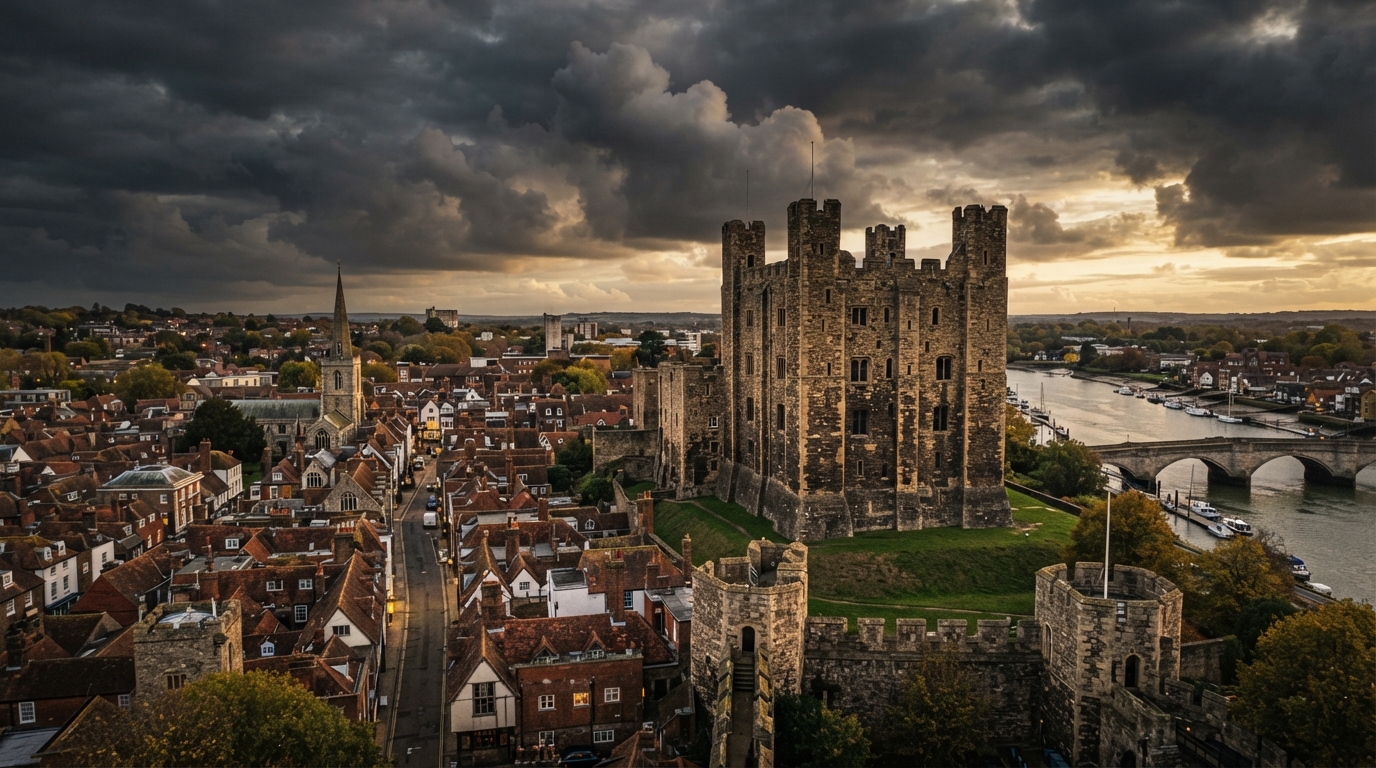
Journey: ~35–40 minutes from Victoria or St Pancras. Rochester’s Norman castle keep is one of the best-preserved in England, and the whole old town cathedral, cobbled high street, Dickens connections sits within easy walking distance of the station. One of the easiest, lowest-effort options on this list.
Not every “town” that shows up in these lists deserves the ticket price:
What is the closest small town to London by train?
St Albans, at under 20 minutes from London St Pancras, is the fastest genuine small-town escape from central London.
Can you visit these towns without a car?
Yes, for the majority. Windsor, Marlow, Henley, Guildford, Winchester, Rye, Lewes, St Albans, and Rochester are all walkable from their stations. Hever Castle and Chartwell (near Sevenoaks) require a short taxi or seasonal bus connection.
Is it cheaper to book train tickets in advance?
Generally yes. Advance tickets released up to 12 weeks before travel are usually the cheapest option, followed by off-peak fares. Anytime tickets, bought on the day, are typically the most expensive.
What’s the difference between a “town” and the “cities” that show up in these lists?
In England, city status is a formally granted title (often tied to having a cathedral), not a population threshold which is why Winchester and Ely are technically cities despite feeling like small towns, while some large towns never received city status at all. For this list we prioritized how a place actually feels to visit walkable, single-centre, low crowding over its official designation.